Tuesday, December 16, 2025

Important Update: Sacred Sobriety Is Moving

For many years, Sacred Sobriety: A Path for the Soul has served as a quiet refuge—a place for reflection, healing, and Christ-centered recovery. I’m deeply grateful for every person who has read, shared, or found strength in the words published here.

As my ministry continues to grow, especially through the Faith and Reason community on Patreon, I’m consolidating and archiving content to create a more focused, sustainable, and spiritually grounded experience for those walking the path of recovery and discipleship.

What’s Changing

All existing content from Sacred Sobriety is being moved and archived within the Faith and Reason Patreon community. This shift allows everything—devotionals, recovery reflections, spiritual tools, and new teachings—to live in one organized, intentional space.

No new content will be posted on this WordPress site. The site will remain available as an access point, but ongoing updates, resources, and community interaction will take place elsewhere.

Where You Can Continue the Journey

You can stay connected with my work and the broader ministry in two places:

✅ Main Website – Timothy R. Berman

For updates on writing, ministry projects, and creative work

✅ Faith and Reason Patreon Community

For archived Sacred Sobriety content, new devotionals, recovery-focused teachings, and community engagement

Your support—whether through reading, sharing, or participating—means more than you know. This transition helps me continue offering thoughtful, spiritually rich content while building a community centered on faith, healing, and meaningful Christian living.

Thank you for walking this path with me. I look forward to continuing the journey together in the new space.

New Guidance on Bible Translations for Latter-day Saints

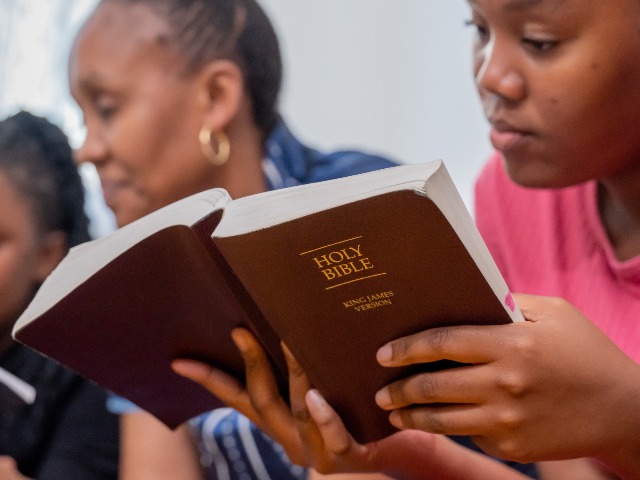
The latest wave of updates to the “General Handbook: Serving in The Church of Jesus Christ of Latter-day Saints” includes an adjustment to a portion about editions and translations of the Holy Bible.

The handbook notes that “generally, members should use a preferred or Church-published edition of the Bible in Church classes and meetings.” In English, that is the King James Version.

The adjusted handbook section also points to examples of English Bible translations that members can consider as they seek to better understand the teachings of the Hebrew Bible and the New Testament.

Source: New Guidance on Bible Translations for Latter-day Saints

Understanding Church Hurt: Compassion and Accountability

Church hurt is real—and it’s time we stop shaming people for feeling wounded. In this video, I share my thoughts on a meme that says, “If being hurt by the church causes you to lose faith in God, then your faith was in people, not God.” While it sounds spiritual, it often becomes a passive‑aggressive tool that invalidates real pain and protects unhealthy church culture.

As a Latter-day Saint Christian content creator, I’m addressing why this message is harmful, how it perpetuates shame in both Latter‑day Saint and Evangelical communities, and what Jesus actually taught about dealing with offense, betrayal, and spiritual injury—especially through Matthew 18.

I'll explore:

✅ What “church hurt” really means

✅ Why dismissing pain damages faith instead of strengthening it

✅ How to minister to the wounded with compassion and accountability

✅ What modern psychology says about spiritual abuse and trauma

✅ How recent General Conference messages emphasize validation, belonging, and Christlike ministering

✅ Practical steps for healing, boundaries, and healthy conflict resolution

✅ How Matthew 18 provides a biblical framework for safety, dignity, and restoration

This is not about attacking churches or leaders.

This is about ending shame culture, validating lived experience, and learning how to minister like Christ—who never blamed the wounded for bleeding. If you’ve experienced church hurt, spiritual abuse, or betrayal from people you trusted, this video offers clarity, comfort, and a path forward.

Saturday, December 6, 2025

The Whispering House: Reason Meta is Considering Leaving and What it Means for Our Soul

The Whispering House: Reason Meta is Considering Leaving and What it Means for Our Soul

In D.H. Lawrence’s tragic short story The Rocking-Horse Winner, a family lives in a beautiful home that is haunted by a terrible secret. Though they have style, status, and luxury, the walls themselves seem to breathe with an unspoken anxiety. The children hear it at night. The toys hear it in the nursery. It is a constant, maddening whisper that says one thing over and over:

"There must be more money! There must be more money!"

Today, I believe the state of Washington has become that whispering house.

We saw the proof this week with the reports that Meta (Facebook) is halting its expansion in Bellevue, surrendering development rights and signaling a major retreat from the region. On the surface, this is a story about tax policy—specifically, the "socialistic idealism" of a one-party leadership that believes it can endlessly extract wealth from employers to fund utopian fantasies.

But if you look closer, this isn't just about economics. It is a symptom of a deeper spiritual pathology.

In my latest Op-Ed on Medium, I argue that we are living through a real-time reenactment of Lawrence’s tragedy, while simultaneously ignoring the prophetic warnings given by Ezra Taft Benson nearly sixty years ago. We are seeing what happens when a culture becomes addicted to the "rocking horse" of material security while dismantling the moral fiber of family, faith, and liberty.

Despair is easy, but it is not a covenant response. So, how do we stand firm when the house is whispering?

Read the Full Article on Medium - The Whispering House of Olympia: Meta, Madness, and the Prophetic Warning (NOTE: The link lets you read for free. If you want to leave a comment or clap, you'll just need a free Medium login).