Friday, January 30, 2026

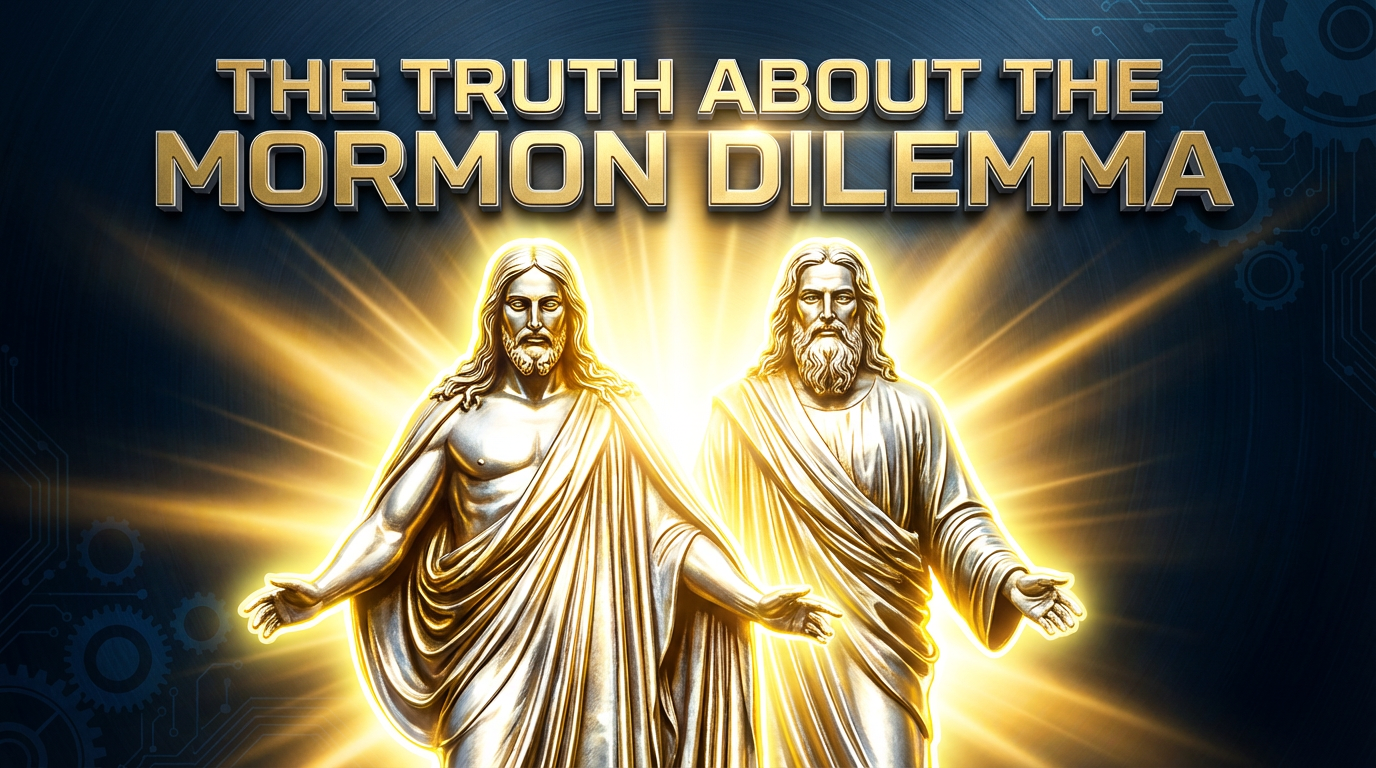
The TRUTH About the "Mormon Dilemma" (Response to Armor and Ash)

The TRUTH About the "Mormon Dilemma" (Response to Armor and Ash)

Is the foundation of the Restoration built on a logical contradiction? Critics are claiming they’ve found the 'smoking gun' that proves Joseph Smith was a false prophet. They call it the 'Mormon Dilemma.' But is this a genuine theological collapse, or just a fundamental misunderstanding of how God reveals truth to mankind?

Here at Faith & Reason | Grace & Sobriety, we don’t run from the hard questions. Our mission is to approach these historical and theological challenges with a clear mind and a steady heart. We aren't here for the 'gotcha' moments; we're here for the truth that stands up to scrutiny. If you're looking for a sober, faithful, and intellectually honest look at the restoration of the Godhead, you're in the right place.

In a recent viral presentation by Armor and Ash, a bold claim was made: Joseph Smith’s theology didn’t just grow—it self-destructed. The argument is simple but heavy:

  • They point to the Book of Mormon, specifically passages like 2 Nephi 31:21 and Ether 3:14, arguing these teach a Trinitarian or even 'Modalist' view where the Father and Son are one personage.
  • Then, they contrast this with later revelations like Doctrine and Covenants 130:22, which describes a Godhead of distinct, corporeal personages with bodies of flesh and bone.

The 'dilemma' they’ve constructed is this: If the Book of Mormon is true, Joseph’s later teachings are false. If his later teachings are true, the Book of Mormon is false. By invoking the test of a prophet in Deuteronomy 18, they conclude that this doctrinal shift is proof of a failed prophet, paralleling the famous 'Islamic Dilemma' used against the Qur'an.

It’s a powerful logic trap—if you accept their premises. But here at Faith & Reason | Grace & Sobriety, we believe the truth is far more nuanced. Does doctrinal development automatically equal a self-refuting contradiction? Or are we seeing the natural expansion of progressive revelation?

Today, we’re going beyond the surface-level proof-texting. We’re going to look at why the Book of Mormon wasn't a 'Nicene accident,' but a targeted correction to the creeds of the 19th century—and why Joseph’s later clarity on the physical nature of God is the logical fulfillment of the Restoration, not its undoing. Let’s look at the facts with a sober mind and a steady heart.

Wednesday, January 28, 2026

Episode 6: The Church of the first Century - Part 2

What to Look for in this Lesson:

  1. Most of the religions of the first century of the Christian era stressed the acquisition of salvation through mystical initiatory rites or elaborate ceremonies. Christianity ignored these aspects of religion and stressed a high standard of moral conduct.
  2. Christianity was a rapidly expanding movement in the first century. Arrangements were made for supervision so that it would not become disunited.

Enrichment material.

In Apostasy from the Divine Church, pp. 39-77 can be found some unique quotations and comments concerning the doctrines and worship of the early Christian church.

The Nature of Pristine Christian Religion

In the previous lesson, we examined several biblical illustrations that reveal two defining characteristics of the earliest Christian community. First, its leaders were deeply committed to bearing witness of what they had personally “seen and heard” of the Savior. Their authority rested not on abstract speculation but on lived encounter and testimony.1 Second, the early church operated as a Spirit‑guided body. Individual will, desire, and personal interest were consciously subordinated to the will of God as revealed through the promptings of the Holy Spirit. This yielded a community whose leadership was shaped by discernment, humility, and responsiveness rather than institutional rigidity.2

These two principles—apostolic witness and Spirit‑guided governance—formed the foundation of early Christian life. Yet they do not exhaust the picture. Another essential dimension concerns the religious life of the believer: not merely what Christians believed about God (theology), but how they were taught to live before God (ethics and practice). Understanding this distinction is crucial for evaluating whether later Christian developments represent a Reformation of the original faith or whether a more radical Restoration was required.

A brief survey of contemporary religious expressions illustrates a tension that also existed in antiquity. Some people gravitate toward religions that emphasize moral values, ethical conduct, and patterns of life. Others are drawn to traditions that highlight ritual, sacramental ceremony, or mystical interpretations of life’s great questions. These two impulses—ethical simplicity and ritual complexity—often stand in stark contrast, yet both claim continuity with “Christianity.” This raises a central historical question: What did the earliest Christian church actually emphasize in its approach to humanity’s need for God?

One of Christ’s most fundamental teachings was that His followers must live by faith. No accumulation of worldly knowledge can grant mortals absolute understanding of eternal realities. Paul articulates this epistemic humility in 1 Corinthians 13, noting that in mortality “we know in part” and “see through a glass, darkly.”3 The Epistle to the Hebrews echoes this theme, portraying faith not as intellectual certainty but as a forward‑looking trust in God’s future action (Hebrews 11). Early Christian leaders did not present the first‑century church as a community possessing exhaustive theological knowledge. Instead, they taught that discipleship required confidence in God’s unfolding purposes.

Modern scholarship—LDS and non‑LDS alike—supports this portrayal. Studies of early Christian epistemology consistently highlight the movement’s eschatological expectation and partial understanding. Believers recognized that God had acted decisively in Christ, yet they did not presume that all mysteries had been resolved or that revelation had ceased.4 This scholarly consensus aligns closely with Latter‑day Saint theology, which affirms that divine revelation is ongoing and that God continues to disclose His will “line upon line.” The earliest Christians lived in precisely this posture: trusting that God would reveal more in His own time rather than assuming that theological understanding had reached its final form.5

Recent LDS scholarship reinforces this interpretation. T. T. Nakasone argues that early Christian faith was characterized by “responsive openness to divine disclosure,” a posture that resonates with the Restoration’s emphasis on continuing revelation.6 G. D. Anderson similarly notes that early Christian epistemology was marked by “humility before the unknown,” a theme that parallels modern Latter‑day Saint teachings on the relationship between faith and knowledge.7

Non‑LDS scholars reach comparable conclusions. J. Brooks describes early Christianity as a tradition defined by “epistemic modesty,” in which believers acknowledged the limits of mortal understanding while trusting in God’s future unveiling.[fn8]8 R. A. Horsley highlights how early Christian communities lived with a “heritage of hope,” expecting further divine action and revelation as part of their eschatological worldview.9

Contemporary Latter‑day Saint leaders have also emphasized this continuity. President Russell M. Nelson teaches that the future of the Church depends on our willingness to seek and receive ongoing revelation, echoing the early Christian conviction that God’s work is not finished.10 Elder Dallin H. Oaks similarly stresses that faith in Christ provides the foundation for navigating life’s uncertainties, mirroring the early church’s reliance on trust rather than complete knowledge.11

Taken together, these scriptural, historical, and scholarly perspectives reveal a consistent pattern: pristine Christianity was a faith defined by witness, guided by the Spirit, grounded in ethical living, and marked by humble expectation of further revelation. This understanding provides a crucial lens for evaluating later Christian developments and for assessing whether the modern world requires a Reformation of inherited traditions or a Restoration of the original apostolic pattern.

The Stress Placed on Conduct

What the Christian lacked by way of absolute knowledge was more than compensated for by the certainty with which the Christian leaders taught patterns for Christian conduct. A quick survey of the teachings of Jesus in the four Gospels would indicate that parables, sermons and illustrations were frequently recorded in which the Savior had taught that one must not only believe but also have a good conduct record as well. This Christian message had been exemplified in the parables of the Good Samaritan, Jesus’ encounter with the lawyer, (out of which came the definition of the second commandment), and a number of other incidents. Certainly, Jesus’ religion had no place in it for the individual who tried to divorce conduct from faith in God.

The Book of Acts relates a number of instances in which bad conduct is condemned and good conduct is praised. The story of Ananias and Sapphira, the choosing of seven men to care for the distribution of food to the widows, the standards ascribed to Cornelius and the rebuke given the priest of Jupiter (Zeus) at Lystra are all indicative of the emphasis placed on proper conduct rather than on mystical experience as a way to salvation. With the exception of the four Gospels and the Book of Acts, the bulk of the New Testament is made up of letters written by Paul to various churches or people. Much of what Paul wrote dealt with very basic problems of Christian morality or discipline of desires. Beginning with his Roman correspondence and continuing to the end of his epistles, there is a constant sequence of instructions concerning conduct. In the twelfth chapter of Romans he taught the standards by which a Christian would be judged. In the following chapter he discussed the duties that a Christian owes toward magistrates who safeguard the law. |

With I Corinthians, fifth chapter, Paul commenced a discussion with the Corinthian saints concerning what he found wrong with their conduct, how it violated true Christian behavior. He deplored fornication, suing each other at law, marriage vows, tendencies toward licentiousness, consideration due other people because of their different feelings, collecting funds for the destitute saints at Jerusalem, the obligation of Christian slaves faithfully to serve their masters, and a great number of similar topics. An analysis of the New Testament will reveal many illustrations in this field which will indicate that the church of the first century was very conscious of its social and economic obligations. What a contrast this offers to conditions and ideals found in the Christian church a few centuries later. Perhaps the most positive writing in the New Testament in this regard is the Book of James, in which the author goes so far as to teach that even faith can only be proved through avenues of Christian works. His thesis that Christianity is one of active effort is summarized in his statement:

But be ye doers of the word, and not hearers only, deceiving your own selves.

For if any be a hearer of the word, and not a doer, he is like unto a man beholding his natural face in a glass [mirror |.

For he beholdeth himself, and goeth his way, and straitway forgetteth what manner of man he was.'

The Absence of Mysticism in Apostolic Christianity

By way of contrast, there is almost a total absence in the New Testament of the mystical or ecstatic expression of Christian faith. It is true that the Apostle Paul speaks of Christianity as a mystery. However, he applies it to the atonement and resurrection of the Savior or else to the doctrine of the universal resurrection.” These are certainly mysteries because they go beyond the compre-~hension of the finite mind to fathom their full implication as well as their possibility. But there the mysteries cease. There is no evidence that Paul tried to make a mystical experience out of the sacrament of the Lord’s Supper. On the contrary, he rebuked the Corinthian saints for turning their sacrament service into what bore a resemblance to a pagan feast. He urged them to return to the simple memorial feast of bread and wine in which they partook with a full consciousness of its implication for their faith.’

Nowhere in the New Testament is mention made of shrines of places associated with Christ. No importance was given to objects which might have had intimate relationship to the apostles. There is no mention of pilgrimages to shrines or an attitude of reverence for

James 1:22-24.

7 Cor. 2:7 and 15:51, 3] Cor. 11:20-34.

tangible objects which were connected with Jesus, His mother, His home, or His public ministry. As far as Peter and Paul were concerned, or Luke, or Matthew, or other writers, there appears to be no evidence that they were interested in that phase of devotion which produced esoteric attitudes toward things or places.

Again this contrasts with pagan ceremonies and practices introduced into the apostate church of following centuries.

Doctrinal Teachings of the First Century Church

During the years 1958 and 1959 the Melchizedek Priesthood quorums studied the New Testament. The various lessons pointed out the basic teachings of that volume. For that reason, no attempt will be made in this course of lessons to elaborate upon the study of the last two years. However, here is a list giving the salient points which were characteristic of the doctrines of the first century church:

Theological Doctrines:

God the Father is a loving, infinitely wise and kind Father.

Jesus Christ is the literal Son of God, distinct from His Father in bodily existence.

Jesus Christ was an antemortal God, with His Father in heaven.

The Holy Ghost is a Being separate and distinct from either the Father or the Son.

Man had a pre-existence as a conscious spiritentity.

God the Father was the father of the spirits of all mankind.

Man, being of divine origin, was capable of eternal progression.

Religious Doctrines Christianity must be taught by both precept and example.

The second great commandment is to love one’s neighbor as himself.

There was a democratic contre! within the church.

Man was accountable to God for the exercise of his freedom of choice.

Asceticism was condemned.

Man was accountable for his own transgressions.

The Gospel

The Gospel was older than the world, having been known at the pre-existent Council in Heaven.

There had been various dispensations when the Gospel had been on earth prior to the dispensation that Jesus brought.

Faith is the first principle of the Gospel, which should be followed by repentance.

Baptism by immersion for the remission of personal sins opens the way to the reception of the Holy Ghost.

The gospel was a universal plan designed for the salvation of all.

Jesus was selected at the Council in Heaven to atone for Adam's transgression and redeem all mankind.

All people who have ever experienced mortality, regardless of the age in which they lived, must hear the gospel and exercise their free agency in accepting or rejecting it.

The gospel is made available for the dead.

Christ and the Resurrection

Christ would return and usher in the Millennium.

There would be more than one resurrection.

Resurrection would be universal in its application.

The final judgment would not come until after the Millennium.

The resurrection was literal, the body being raised from the dead, not merely the spirit.*

4See Barker's Apostasy from the Divine Church, pp 39-71, for a

penetrating discussion of these doctrinal points, which he substantiates with

scriptural references and comments from the early Christian Fathers and historians.12

The Universal Jurisdiction of the Apostles Over the Church

One fact seems very evident as the New Testament is studied with a view of discovering the organization of the Church. The command of Jesus that the apostles should-go into all the world and teach the gospel was accepted by them as an assignment which was world-wide in its scope. Unfortunately, we know little of the activities of Peter, or of any of the other apostles in the First Century. Practically all that has been written about their missionary labors, persecutions, and martyrdoms, except what is in the New Testament, is spurious. Fortunately for us, Paul’s fellow-missionary recorded in the Acts of the Apostles some of the early events of the apostolic ministry, but following the fifteenth chapter there is little material other than that related to Paul and his activities. From this meager account, however, we can learn a few vital facts. Wherever Peter traveled among the churches, he was accepted as the head of the church. When persecution was directed at the leadership of the church, it was Peter who was first arrested, which indicated his preeminent position. When a revelation concerning the opening of the gospel to the gentiles was given, it was received by Peter.

When the controversy concerning the Law of Moses and its relationship to Christianity arose, the Apostle Paul and Barnabas (who may have been an apostle by that time) traveled for a great distance to be present at the meeting where the decision was to be made. The account in the fifteenth chapter of Acts indicates that Peter was not the presiding authority in Jerusalem; but rather, James, usually referred to as “The brother of the Lord,” who presided, because it was a question in which Peter was involved and one in which he was to bear testimony concerning the right of a gentile to be accepted into the Christian fold.

Another illustration of this is found in Luke’s account of the successful missionary activity of Paul and Barnabas in the Galatian towns of Posidian Antioch, Iconium, Lystra and Derbe. They had visited the towns in the order here listed, had made converts in each, although forced to endure mob violence because of their success. Having completed their work, they did not settle down and preside there, but Luke wrote that they retraced their steps, strengthening the saints they had converted. Then he related:

And when they had ordained them elders in every church, and had prayed with fasting, they commended them to the Lord, on whom they believed.®

After their journey to Jerusalem to participate in the council, Paul again returned to investigate how the churches were functioning under the local rulers. Luke related:

And some days after Paul said to Barnabas, Let us go again and visit our brethren in every city where we have preached the word of the Lord, and see how they do.°

Certainly, this indicates a supervisor concept on the part of Paul and his jurisdiction over a large area. He told the saints at Galatia that sometime after his admission into the church he visited Jerusalem with Barnabas and Peter, James and John gave him and Barnabas jurisdiction over the missionary work among the gentiles, while the other apostles were to search for the House of Israel.

Such statements indicate the manner in which those called to the apostleship directed the expansion of the Christian church in the ancient world. The simplicity of this method was either abandoned or vitally changed when apostasy had overtaken the Christian church.

REFERENCES FOR ADDITIONAL STUDY

Barker, Apostasy from the Divine Church, pp. 71-77 contains much material drawn from the early Christian writers concerning the nature and spirit of the early church,

Acts 14:23, 6Acts 15:36. Galatians 2:9,

Footnotes

  1. Acts 1:21–22. The Holy Bible: King James Version. Annotation: These verses establish that apostolic authority required firsthand witness of Jesus’ ministry and resurrection. They ground the early church’s leadership structure in lived experience rather than abstract theology.

    1 John 1:1–3. The Holy Bible: King James Version. Annotation: John emphasizes sensory, personal encounter (“heard,” “seen,” “handled”), reinforcing that early Christian proclamation was rooted in eyewitness testimony.

    Brooks, James. “The Epistemic Modesty of Early Christianity.” Theological Studies, vol. 81, no. 3, 2020, pp. 525–546. Annotation: Brooks argues that early Christian communities embraced epistemic humility, relying on testimony rather than exhaustive knowledge. This supports the claim that apostolic witness, not speculative theology, defined the earliest church.
  2. Acts 13:1–4. The Holy Bible: King James Version. Annotation: This passage describes the Holy Spirit directing missionary assignments, illustrating how early Christian leadership decisions were Spirit‑guided rather than institutionally mandated.

    Acts 15:28. The Holy Bible: King James Version. Annotation: The Jerusalem Council’s decision is framed as jointly discerned by “the Holy Ghost, and us,” demonstrating communal spiritual discernment.

    Horsley, Richard A. “Eschatology and the Early Christian Communities: A Heritage of Hope.” Journal of Early Christian Studies, vol. 27, no. 2, 2019, pp. 231–250. Annotation: Horsley shows that early Christian communities relied on the Spirit for guidance amid eschatological expectation. His work supports the argument that the early church was governed through spiritual discernment rather than ritual or hierarchy.
  3. 1 Corinthians 13:9–12. The Holy Bible: King James Version. Annotation: Paul’s metaphor of “seeing through a glass, darkly” articulates the early Christian understanding of partial knowledge, forming the theological basis for faith as trust rather than certainty.

    Hebrews 11. The Holy Bible: King James Version. Annotation: This chapter defines faith as forward‑looking trust in God’s future action, reinforcing the theme of epistemic humility.

    Brooks, James. (See annotation under Endnote 1.)

    Anderson, Gary D. “Faith, Knowledge, and the Search for Truth.” Journal of Mormon History, vol. 47, no. 1, 2021, pp. 45–70.** Annotation: Anderson explores how early Christian epistemology parallels Latter‑day Saint teachings on faith and continuing revelation. His analysis strengthens the connection between Pauline humility and Restoration theology.
  4. Horsley, Richard A. (See annotation under Endnote 2.); Brooks, James. (See annotation under Endnote 1.): Annotation: Together, Horsley and Brooks demonstrate that early Christian communities lived with a sense of incompleteness and expectation, supporting the argument that early Christianity did not claim final theological closure.
  5. Nakasone, T. T. “Continuing Revelation: Responding to Uncertainty.” BYU Studies Quarterly, vol. 57, no. 4, 2018, pp. 7–27. Annotation: Nakasone argues that continuing revelation is essential for navigating uncertainty, paralleling early Christian openness to future divine disclosure. Anderson, Gary D. (See annotation under Endnote 3.)

    Nelson, Russell M. “The Future of the Church: A Prophetic Vision.” Ensign, May 2021. Annotation: President Nelson emphasizes the necessity of ongoing revelation in the modern Church, echoing the early Christian expectation of future divine guidance.

    Oaks, Dallin H. “Faith in Christ: A Foundation for Resolving Life’s Questions.” Ensign, Nov. 2020.Annotation: Elder Oaks teaches that faith, not perfect knowledge, is the foundation for discipleship—mirroring the early Christian emphasis on trust amid uncertainty.
  6. Nakasone, T. T. (See annotation under Endnote 5.) Annotation: This specifically supports the claim that early Christians practiced “responsive openness” to revelation, a concept Nakasone articulates in modern LDS terms.
  7. Anderson, Gary D. (See annotation under Endnote 3.) Annotation: This footnote anchors the statement about “humility before the unknown,” which Anderson identifies as a shared trait between early Christianity and Latter‑day Saint theology.
  8. Brooks, James. (See annotation under Endnote 1.) Annotation: This supports the phrase “epistemic modesty,” a term Brooks uses to describe early Christian attitudes toward knowledge.
  9. Horsley, R. A. (2019)
  10. Nelson, Russell M. (2021)
  11. Oaks (2020)
  12. See Barker's Apostasy from the Divine Church, pp 39-71, for a penetrating discussion of these doctrinal points, which he substantiates with scriptural references and comments from the early Christian Fathers and historians.
Tuesday, January 27, 2026

Sacred Sobriety: Genesis 12:1-3 "The Call that Blesses the Broken

Sacred Sobriety: Genesis 12:1-3 "The Call that Blesses the Broken

There comes a moment in every recovery journey when God whispers a direction that feels both terrifying and holy. It is the moment when He calls us out of what is familiar—not to punish us, but to bless us. The call of Abram is the call of every soul longing for sobriety, healing, and covenant belonging. God does not wait for us to be strong before He speaks; He speaks so that we may become strong.

Welcome, fellow travelers, to today’s step along the Sacred Sobriety path. Whether you are wrestling with addiction, codependency, fear, shame, or the ache of past wounds, you are not walking alone. The God who called Abram out of Ur is the same God who calls you into a life shaped by promise, presence, and purpose. This journey may seem daunting, but remember that each step you take is infused with divine guidance and love.

As you navigate this sacred path, lean into your challenges as opportunities for growth. Each struggle can serve as a catalyst for transformation, an invitation to discover the depths of your resilience. Embrace the uncertain moments; they often bring the most profound revelations. The divine whispers may not always be clear, but they beckon you toward a future filled with hope and authenticity.

Surround yourself with a supportive community of fellow seekers who understand this journey. Share your fears, your victories, and your dreams. Together, you can uplift one another and embody the strength that flows from shared experience. Allow the stories of others to inspire you as you forge ahead on your personal quest for healing and wholeness.

In this sacred work of sobriety, remember that you are being shaped and molded by an unyielding grace that wants nothing more than for you to thrive. The story of Abram is also your story—a narrative of risk, faith, and eventual restoration. Trust the process, believe in the possibility of renewal, and know that God is walking with you every step of the way.

Monday, January 26, 2026

Sacred Sobriety: Genesis 9:1, 9 - "Blessing Through Covenant: A Call to Faithful Obedience"

Sacred Sobriety: Genesis 9:1, 9 - "Blessing Through Covenant: A Call to Faithful Obedience"

There are moments in recovery when God speaks into the ruins of what we once knew and calls us into a future we cannot yet imagine. Infusing hope into our despair and urging us to rise from the ashes. Genesis 9 is one of those profound moments—a divine reset after devastation, where God re-establishes His promise to humanity and paints a picture of renewal amidst chaos. In this chapter, God blesses Noah, not because Noah was perfect, but because Noah walked in faithful obedience, demonstrating a heart attuned to divine guidance and a spirit willing to follow. This blessing is significant, as it serves to remind us that grace is often bestowed upon those who trust in the journey. Despite our limitations, weaknesses, and imperfections. Blessing always flows through covenant, and covenant always calls us into disciplined trust, inviting us to anchor our lives in faith and to embrace a transformative path that leads us closer to God’s vision for our lives. Through this covenant, we are reminded that even in our lowest moments, there is an opportunity for restoration and purpose, as God's faithfulness paves the way for our own renewed journey.

Hello and welcome back, fellow travelers, to our ongoing devotional series as we walk through the Old Testament as part of our journey through recovery and thriving in faith and sobriety. Whether you are navigating codependency, toxic relationships, addiction, fear, shame, or guilt, this space is for you—a sanctuary where we can gather, reflect, and support one another in our individual struggles and triumphs. Genesis 9 meets us in the aftermath of storms—when the floodwaters have receded, but the memories remain, lingering like shadows in our hearts and minds. It reminds us that God does not simply rescue; He restores, renews, and re‑commissions, breathing new life into our weary souls. His blessings are not random—they are covenantal, intentional, and deeply relational, woven into the tapestry of our lives and designed to uplift us in our darkest moments. As we revisit these passages, let us open our hearts to the transformative power of His love and grace, allowing it to guide us toward healing and wholeness on this sacred path of faith.

Anchor Verse - Genesis 9:1, 9 (NASB202)

Then God blessed Noah and his sons and said to them, ‘Be fruitful and multiply, and fill the earth.’ … ‘Now behold, I Myself am establishing My covenant with you, and with your descendants after you.’

Sunday, January 25, 2026

The Zen of Storytelling: How Mindfulness Elevates Fiction Writing

The Zen of Storytelling: How Mindfulness Elevates Fiction Writing

"Good company in a journey makes the way seem shorter." — Izaak Walton

We have all been there. You sit in front of your blank screen, staring at the blinking cursor, that relentless metronome of your creative anxiety. You wait eagerly for a scene to spark to life, but often, the characters feel disappointingly flat, their dialogue forced and lacking depth. You know how to write sentences; you’ve mastered the mechanics of language, yet you find yourself struggling to capture the soul of the story that desperately wants to be told.

What truly separates a technically "good" writer from a truly successful storyteller? It's a question that many aspiring authors grapple with, and the answer extends far beyond having a larger vocabulary or a better grasp of grammar. It lies in the ability to tap into deep emotional truths and translate them onto the page. Successful writing is not merely a skill; it is a spiritual conduit through which creativity flows. It possesses the power to provoke emotional experiences, inspire profound actions, and facilitate an awakening in your reader's heart and mind.

But there’s a catch: you cannot take a reader somewhere you haven't journeyed yourself. Your own experiences, emotions, and insights are the raw materials from which great stories are crafted. This is precisely where mindfulness enters the equation, bridging the gap between technique and authenticity in a writer's narrative.

The techniques I will share with you are not mere abstract creative theories; they are rooted in psychological principles that I have effectively utilized in clinical settings—particularly during my work with patients in outpatient clinics. These methods have been crucial in helping individuals process complex emotions and navigate their internal conflicts. If these simple yet powerful tools can assist someone in rebuilding their life narrative in a therapeutic context, just imagine the tremendous impact they can have on your characters and the authenticity of your storytelling.

To write a character that feels alive and breathing, you must first master the art of observation. This journey begins with being a disciplined student of the present moment. Becoming fully immersed in your observations not only enhances your writing but also enriches your life experience. Pay attention to the world around you—notice the nuances of human behavior, the subtleties of emotion woven into everyday interactions. Each detail you capture becomes a thread in the tapestry of your story, adding complexity and richness.

What makes a writer successful? Often, we equate success with an impressive vocabulary, intricate plot structures, or even lucrative publishing deals. But the truth is that true success starts from within. It stems from a deep understanding that writing is a vital life skill—an empowerment that allows us to express our ideas, passions, and fears convincingly.

Beyond skill, however, writing is fundamentally a passion for sharing stories. We write to provoke emotional experiences, to spark spiritual awakenings, and to bring people to action or awareness. Each story is an opportunity to connect deeply with others, to offer insights, and to create a space for conversation and understanding.

So, how do we bridge the gap between technical skill and emotional resonance? The answer lies in Mindfulness. A successful writer is one who is not just knowledgeable but is also disciplined in observation and attuned to the subtleties of life. By utilizing mindfulness as a tool, you can enhance your storytelling experience, make it more impactful, and breathe life into your characters, allowing them to resonate deeply with your readers.

As you embark on this journey of becoming not just a writer, but a true storyteller, remember that your experiences, your awareness, and your practice of mindfulness can make all the difference. Dive deep into your emotions, observe the world with intent, and let your heart guide your pen; in doing so, you will discover the magic of storytelling that lies within you.

CFM - Jan 26 - Feb 1 | Genesis 5; Moses 6: "Teach These Things Freely unto Your Children"

CFM - Jan 26 - Feb 1 | Genesis 5; Moses 6: "Teach These Things Freely unto Your Children"

Many of us most likely assume the gospel began in the New Testament. Yet Genesis 5 and Moses 6 reveal something astonishing: the fullness of the gospel—faith in Christ, repentance, baptism, the Holy Ghost, priesthood, and covenant discipleship—was taught from the very beginning. These chapters unveil a sweeping narrative of divine instruction, generational faithfulness, and the sacred responsibility to teach truth to rising generations.

For many of us, navigating a morally chaotic world can be incredibly challenging. In these turbulent times, these chapters offer a profound blueprint for spiritual resilience. The teachings found within Genesis and Moses not only provide guidance but also serve as a reminder that the principles of the gospel are timeless. They anchor us in our faith and help us to cultivate a sense of moral clarity amid confusion and chaos. For those in recovery, these scriptures reveal the ancient pattern of redemption, rebirth, and transformation through Christ, showcasing how individuals have consistently turned to God for restoration and new beginnings.

This study for the Come Follow Me - Old Testament invites us to delve deeply into the genealogies, doctrines, and prophetic ministries of pivotal figures like Adam, Seth, and Enoch, along with their descendants. It illuminates the remarkable legacy of faith that was passed down through generations. The narratives of these early prophets illustrate how their teachings and life experiences reflect Christ’s redemptive work. They emphasize the importance of our covenantal responsibility to “teach these things freely unto your children” (Moses 6:58), urging us to carry forward the torch of faith and truth to future generations.

As we engage with these ancient texts, we not only gain insights into the foundations of our beliefs but also discover the imperative to be proactive stewards of spiritual knowledge. In doing so, we can empower those around us to withstand the pressures of the world, fostering a community that thrives on the principles of the gospel. By sharing the stories and teachings of our ancestors, we reaffirm the enduring relevance of their faith and the everlasting hope that can be found in Christ.

Saturday, January 24, 2026

Discover Christ’s Redemptive Work Through the Genealogy of Genesis 5

Discover Christ’s Redemptive Work Through the Genealogy of Genesis 5

Have you ever paused to wonder why genealogies exist in the Bible, especially Genesis 5? To many, it might seem like just a list of names and ages, but there’s profound meaning hidden within the lineage from Adam to Noah. Far from being dry details, these names reveal God’s redemptive plan and reflect His mercy, grace, and call to righteousness. Each figure, from Adam to Noah, carries a deeper message about faith, obedience, and the promises fulfilled through Christ, serving as testimonies of faithfulness that transcend generations.

This genealogy illustrates how God's purpose unfolds through history, highlighting the significance of each individual's role in the divine narrative. Each name serves as a bridge, connecting various aspects of God's work in the world, linking us to the ancestors of our faith. By tracing the lineage from Adam, who represents humanity's fall, to Noah, who represents a fresh start for mankind, we see the movement of God’s grace through generations, emphasizing that even in chaos, God remains sovereign.

Connecting the dots between the past and the future is essential in understanding the full narrative of Scripture. The genealogy emphasizes the importance of lineage in carrying forth God's promises. It’s a vivid reminder that history is not just a series of events but is intricately woven into the tapestry of divine purpose. The names on this list are not mere placeholders; they embody individuals called and chosen by God, each with unique stories that contribute to the unfolding of His redemptive plan.

This genealogy isn’t just history—it’s a portrait of God’s covenant, showcasing the hope that arises from His faithful promises. It is also a reminder of His ongoing work in the lives of His people, demonstrating that every name represents a story of perseverance and hope, echoing across time. These genealogies remind us that God's plan is both personal and universal, extending beyond individual lives to encompass all of humanity.

If you’ve ever felt burdened by sin or wondered how God’s love extends through time, this chapter holds answers that could reshape your understanding of redemption. It invites us to reevaluate the narrative of our lives, revealing that God's grace is not limited by our human frailty but is ever-present, inviting us into His family regardless of our past mistakes. Each name serves as a testament that redemption is available, underscoring the truth that God actively works through His people, weaving their stories into a larger, divine story of love, grace, and hope that is eternal. As believers, we are called to reflect on our own heritage of faith, embracing the lessons learned from those who walked before us in their journeys of trust and obedience.

Two Stories Reborn: Announcing the Updated Editions of Mourning Ellyn and Lost Girls: Eden’s Descent

Two Stories Reborn: Announcing the Updated Editions of Mourning Ellyn and Lost Girls: Eden’s Descent

Every story has a season. Some arrive quietly, shaping us in ways we don’t fully understand until years later. Others burn their way into existence, demanding to be told. Over the past several months, I’ve been revisiting two stories that have shaped my own creative journey in profound ways — Mourning Ellyn and Lost Girls: Eden’s Descent.

Both books are returning in March 2026, each with a renewed vision, expanded depth, and a clearer sense of the worlds they belong to. These new editions come as a result of endless reflections and conversations with fellow writers and readers who have connected with these narratives. The process of revisiting these works has been cathartic; it has allowed me to recognize the layers of meaning embedded within the characters and their journeys.

In Mourning Ellyn, readers can expect an enriched portrayal of loss and resilience. The protagonist’s struggles will resonate even more deeply as I explore the various facets of grief and healing through her eyes. We will delve into the nuances of her relationships and how they are intertwined with her quest for understanding and acceptance.

Similarly, Lost Girls: Eden’s Descent will unveil a more expansive universe filled with complex characters and richly woven plots. The vibrant landscapes that serve as a backdrop for their adventures will be more fleshed out, drawing readers into an immersive experience. I aim to deepen the exploration of the themes of identity and empowerment that run throughout the narrative.

Today, I want to share a glimpse into what’s coming. Expect fresh insights, new characters, and enhanced storytelling that remains true to the core messages these stories convey. I am excited to bring these reimagined tales to life, inviting both loyal fans and new readers to join me on this journey. These tales are not merely sequels; they are reawakening moments, offering a chance to swim deeper into the currents of emotion and revelation that each character embodies. As the release date approaches, I look forward to sharing more about the journey of transformation these books have undergone.

Wednesday, January 21, 2026

Sacred Sobriety: Genesis 8:1-5 - "When God Remembers You: The Waters Begin to Subside"

Sacred Sobriety: Genesis 8:1-5 - "When God Remembers You: The Waters Begin to Subside"

There comes a moment in every journey when the floodwaters stop rising, the chaos begins to settle, and the first signs of hope appear, like gentle rays of sunshine breaking through the clouds after a torrential rain. You may not see dry land yet, but something shifts—quietly, powerfully, unmistakably, as if the very fabric of the universe is adjusting to align with your deepest longings and unyielding faith. Scripture calls this moment: “But God remembered…”. In this profound recollection, when God remembers, everything changes; the heaviness of despair begins to lift, new possibilities emerge, and you find strength you didn’t know you possessed. This transformation is not just a fleeting moment; it is the beginning of restoration, a divine promise that you are seen, valued, and guided toward brighter days ahead.

Introduction

Welcome, fellow travelers. Today we step into one of the most tender turning points in all of Scripture. After months of silence, isolation, confinement, and waiting, Noah hears nothing from heaven—until the text breaks open with four life‑altering words: “But God remembered Noah.” This divine remembrance is not simply an act of recall as humans experience it; rather, it reflects a profound, covenantal attention that transcends time and circumstance. It embodies divine intervention, where God steps into the human story, offering hope and faithful deliverance at the most desperate moments. For everyone walking through recovery, grief, transition, or spiritual rebuilding, Genesis 8:1–5 is your timely reminder that God never forgets His own; His love is relentless, reaching out with grace, compassion, and a promise of restoration. Just as Noah found favor in God’s eyes, we too are invited to believe in the faithfulness of the One who knows our struggles and yearns to bring us through to brighter days ahead.

Anchor Passage — Genesis 8:1–5 (NASB2020)

But God remembered Noah and all the animals and all the livestock that were with him in the ark; and God caused a wind to pass over the earth, and the water subsided. Also the fountains of the deep and the floodgates of the sky were closed, and the rain from the sky was restrained; and the water receded steadily from the earth, and at the end of 150 days the water decreased. Then in the seventh month, on the seventeenth day of the month, the ark rested upon the mountains of Ararat. And the water decreased steadily until the tenth month; in the tenth month, on the first day of the month, the tops of the mountains became visible.

God remembers Noah as he looks upon the ark, sends a warm wind over the earth to gently caress the surface of the waters, allowing them to recede slowly. He closes the fountains of the deep, silencing the chaos of the great flood, and begins the slow, deliberate unveiling of new creation as the ark comes to rest on the majestic peaks of Ararat, signaling the end of one era and the dawning of another, filled with hope, promise, and the chance for new life to flourish once more on the cleansed earth.

Sacred Sobriety: Genesis 7:17-20 - When the Flood Prevails - Faith Endures

Sacred Sobriety: Genesis 7:17-20 - When the Flood Prevails - Faith Endures

Every one of us knows what it feels like when the waters rise—when circumstances swell beyond our strength, when emotions surge without warning, when old patterns threaten to drown the progress we’ve made. Yet Scripture reveals a deeper truth: when the flood prevails, God prevails even more. The waters that overwhelm us never overwhelm Him.

Introduction

Welcome, fellow travelers. As we continue our journey through the Daily Exodus, we step into a moment where the floodwaters rise, the ark lifts, and God’s covenant faithfulness becomes the only stable ground in a world filled with uncertainty. In this tumultuous landscape, we find solace in the assurance that we are never alone. Today’s anchor verse reminds us that God does not merely rescue us from the flood—He carries us through it, guiding us with His unwavering love and strength. The same God who lifted Noah above the waters lifts us above addiction, shame, fear, and the remnants of our old life, empowering us to cultivate resilience and hope amidst adversity.

Anchor Verse — Genesis 7:17–20 (NASB2020)

“Then the flood came upon the earth for forty days, and the water increased and lifted up the ark, so that it rose above the earth. And the water prevailed and increased greatly upon the earth, and the ark floated on the surface of the water. And the water prevailed more and more upon the earth, so that all the high mountains everywhere under the heavens were covered. The water prevailed fifteen cubits higher, and the mountains were covered.”

As we traverse this challenging terrain together, let us hold fast to the promise that, just as the ark provided refuge during the storm, our faith acts as our shield, protecting us on this rugged path toward redemption and renewal. In the face of adversity, it is this unwavering belief that offers us solace and strength, enabling us to navigate the darkest valleys and climb the steepest mountains. Each step we take is guided by the light of our convictions, illuminating the way forward. Together, we can draw upon the deep well of inspiration that our shared journey nurtures, fostering resilience and hope as we strive for the brighter horizons that await us beyond the clouds of doubt and despair.

Tuesday, January 20, 2026

Grace & Sobriety: Moses 4:3 "the Gift of Agency" Choosing Deliverance over Deception

Grace & Sobriety: Moses 4:3 "the Gift of Agency" Choosing Deliverance over Deception

Latter-day Saints who are walking a path of recovery, there is a real battle over your soul that began long before each of us were ever born. it was fought in the councils of heaven, waged over one sacred principle: your agency. Satan sought to destroy it. Christ offered to preserve it. And today, in the path of recovery, you stand at the same crossroads where that ancient conflict still echoes. The adversary still seeks to bind, deceive, and compel. The Savior still invites, empowers, and liberates. When you understand the divine gift of moral agency, you begin to understand the divine path of deliverance.

Introduction

Hello and welcome fellow travelers to Grace & Sobriety. Today, we are stepping into the very heart of deliverance. Genesis 3 and Moses 4 reveal not only the Fall of Adam and Eve but the cosmic conflict that preceded it. In this narrative, we discovery the reason recovery is not merely behavioral change - it is spiritual reclamation. It is the process of taking back what the adversary has attempted to steal: your own personal agency, your identity, your divine capacity to choose Christ. This devotional invites you to see recovery through the lens of the plan of salvation, where agency is the hinge upon which deliverance turns.

Anchor Verse

Moses 4:3 — “Satan… sought to destroy the agency of man… and I caused that he should be cast down.”

Agency is not merely the ability to choose — it is the power to become, to mold our very essence through the decisions we make each day. Satan’s rebellion was an assault on your eternal potential, challenging the divine gifts bestowed upon each of us. Christ’s atonement was the defense of your divine identity, a sacred act that restores hope and purpose to our lives. Recovery is the daily discipline of choosing Christ over compulsion, truth over deception, and grace over shame, a journey that requires unwavering commitment and resilience. In this devotional, we explore how agency becomes the foundation of deliverance for every Latter‑day Saint in recovery, emphasizing the profound impact of intentional choices that align with our spiritual truths. Through reflection and prayer, we can learn to harness our agency to not only overcome our challenges but also to empower us to reach our fullest potential and embrace the divine plan that awaits each of us.

Monday, January 19, 2026

Grace & Sobriety: Episode 5 - The Stillness of Trust

Grace & Sobriety: Episode 5 - The Stillness of Trust

For Latter-day Saint Christians in recovery, there comes a pivotal moment of our journey where the noise quiets, the striving slows, and the soul needs to decide whether it will trust God in the silence or not. Not because the path is clear, but because He is clear. Trust is not passive - it is the very courageous stillness that allows God to work where our own strength cannot. Consider the profound truth of Be still and know that I am God (Psalm 46:10).

Stillness is one of the most demanding spiritual disciplines because it requires our willingness to trust God without visible evidence. Recovery sharpens this truth: when the noise fades, when the familiar coping mechanisms fall silent, we discover whether our faith rests in God or in our own frantic activity. Stillness is not passive - it is the very courageous posture of the soul learning to trust the Lord's timing, voice, and very divine presence.

Welcome fellow travelers to Grace and Sobriety. Today, I want to step into this sacred invitation: to be still before God and allow Him to do the work we cannot. Stillness is where recovery deepens, where identity stabilizes, and where grace becomes more than a doctrine - it becomes the very breath of life for our thriving in recovery and sobriety. For Latter-day Saint Christians walking a covenantal path of healing, forgiveness, and restoration - stillness is not about an escape; it a covenantal path of genuine discipleship.

Anchor Verse

“Be still, and know that I am God.” — Psalm 46:10 (KJV); Doctrine and Covenants 101:16

Sunday, January 18, 2026

CFM January 19-25 | Genesis 3-4; Moses 4-5: The Fall of Adam and Eve

CFM January 19-25 | Genesis 3-4; Moses 4-5: The Fall of Adam and Eve

The Shattered Vase or the Cracked Egg? A Comprehensive Theological Comparative of the Fall of Humanity

Picture a flawless porcelain vase sitting on a mantle. Now, picture a bird’s egg resting in a nest. If you break the vase, you have destroyed something beautiful; you have created a tragedy. But if you break the egg... you haven't destroyed anything. You have birthed something alive.

For nearly 1,600 years, the majority of Western Christianity has viewed the Garden of Eden through the lens of the shattered vase—a cosmic catastrophe known as "The Fall." But what if that lens is cracked?

Few questions carry as much theological weight as "What happened in the Garden?" The answer dictates how you view human nature, the purpose of suffering, and the very character of God.

  • Did Eve ruin paradise, or did she bravely open the door to human potential?
  • Is humanity born with a "sin nature" that requires depravity, or are we born with a "divine nature" that requires development?
  • Why do Jewish rabbis and Latter-day Saints vehemently disagree with the traditional Christian view of "Original Sin"?

This isn't just another Sunday School summary. In this comprehensive 4,500-word analysis, we are going to dismantle centuries of theological assumption. We will walk through the ancient Rabbinic rejection of the "Fall," examine the "Soul-Making" theodicy of early Church Fathers like Irenaeus, and dive deep into the distinct Latter-day Saint doctrine of the "Fortunate Fall." Backed by rigorous scholarship and heavily annotated sources, this post invites you to look at Genesis 3 not as the moment the universe broke, but perhaps, as the moment it finally started working.

Genesis 7:1-5 - "The Discipline of Deliverance: Why God uses Floods to Lift You, not Drown You"

Genesis 7:1-5 - "The Discipline of Deliverance: Why God uses Floods to Lift You, not Drown You"

There comes a moment in every recovery journey when God calls us out of the storm—not because the storm has ended, but because He has prepared a place of refuge within it. Deliverance rarely begins with calm skies. It begins with obedience in the middle of chaos. When everything around us shakes, God invites us into a covenant that cannot be shaken. This is where trust is forged, where faith becomes more than belief, and where sobriety becomes more than survival—it becomes sacred. (Psalm 46:1–2; Isaiah 26:3–4)

Welcome, fellow travelers, to Sacred Sobriety: A Path for the Soul. Today we step deeper into our Daily Exodus—this discipline of deliverance where God leads us out of bondage and into His covenantal protection. When we come into relationship with who God truly is, He establishes a covenant of protection and provision as we navigate the storms of life. He does not merely calm the waters; He often destroys the very structures of our past that once held us captive. (Psalm 91:1–4; Isaiah 43:2)

Our anchor verse today is Genesis 7:1–5 (NASB2020), where God calls Noah into the ark before the floodwaters rise, sealing him into divine safety while judgment falls on everything that once defined the world he knew.

Friday, January 16, 2026

Truth to Mormons Exposed: Deconstructing Bill Young’s "Idol" Claim

Truth to Mormons Exposed: Deconstructing Bill Young’s "Idol" Claim

Latter-day Saints are often exposed to someone who attempts to tell them who their God really is. Not by seeking understanding, but by speaking over them—loudly, confidently, and often inaccurately. When that happens, the question isn’t just, “How do I respond?” It’s, “How do I stay grounded in truth without losing my peace?”

Bill Young’s recent Truth to Mormons episode, “Watch Mormon God Idol Worship,” is the latest in a long line of videos that claim to “expose” Latter-day Saint belief. But beneath the sensational title lies something deeper: a pattern of misrepresentation that doesn’t just distort doctrine—it wounds real people. Many who watch these videos aren’t looking for a fight; they’re looking for clarity, stability, and a faith that can withstand scrutiny without collapsing into fear.

And the sad reality: Like most critics - Bill Young holds himself above any form of teaching, correction, rebuke, or refutation (2 Timothy 3:16).

This article steps into that space—not to trade blows, but to offer light. I am not here to defend God as if He were fragile. I am here to defend the conversation—to show that faith can be examined without being caricatured, and that discipleship grows stronger when we refuse to let someone else narrate our beliefs for us.

I write this as someone who has spent years in recovery, scripture study, apologetics, and theological study—someone who understands how spiritual distortion can harm the soul just as deeply as addiction harms the body. My goal isn’t to “win” against Bill Young or anyone else. My goal is to create a safe, honest, intellectually rigorous space where readers can breathe again, reclaim their spiritual footing, and see their faith through the lens of scripture, history, and lived discipleship—not through the lens of someone else’s outrage.

If you’ve ever felt shaken by videos like this, or if you’re simply seeking clarity in a noisy world, you’re in the right place. Let’s walk through this together with calm minds, open scriptures, and a commitment to truth that doesn’t need to shout to be strong.

Exaltation, Eternal Life, and the Biblical Promise: A Response to Common Misreadings of Scripture

Exaltation, Eternal Life, and the Biblical Promise: A Response to Common Misreadings of Scripture

Every so often, a post circulates on Facebook claiming to “defend biblical truth” while warning Christians about supposed “Mormon distortions” of Scripture. These posts often sound confident, even authoritative—but confidence is not the same as accuracy. And when Scripture is handled carelessly, God’s people are left with fear instead of clarity, suspicion instead of understanding, and slogans instead of Scripture.

You deserve better than that. You deserve context, exegesis, and the whole counsel of God. Engaging with Scripture requires a dedication to understanding its original intent, cultural background, and the intricate layers of meaning that inform its teachings. It is crucial that we approach biblical texts with a framework that seeks the truth, not merely to validate preconceived notions or biases.

This article is not about defending a denomination. It’s about defending the Bible from misuse, the gospel from reduction, and the promises of God from being shrunk down to fit someone’s theological anxieties. When individuals take snippets of Scripture out of context, or rely on misinterpretations to make sweeping claims about others, it creates a barrier to genuine dialogue and understanding. Instead of fostering unity and exploring our shared beliefs in a respectful manner, it often leads to division and an atmosphere of mistrust.

In exploring differing theological perspectives, we must strive for empathy and open-mindedness. By learning to articulate our own beliefs while honestly engaging with the beliefs of others, we can cultivate a deeper comprehension of the richness of Christian doctrine. This journey is not merely academic; it is a spiritual pursuit that invites us to reflect on our convictions and be willing to grow in our faith.

Ultimately, a robust understanding of Scripture encourages believers to embrace the fullness of God’s word, appreciate the diversity within the body of Christ, and engage with one another as fellow travelers seeking truth, rather than adversaries in a theological battleground. We are called to love and uplift one another, striving for a deep-seated comprehension of the message that binds us together.

Episode 10: Building an Ark in a Toxic World — Grace, Boundaries, and the Obedience of Faith (Genesis 6:8-9, 22)

Episode 10: Building an Ark in a Toxic World — Grace, Boundaries, and the Obedience of Faith (Genesis 6:8-9, 22)

When the world around you feels like it’s rotting from the inside out… when family systems are chaotic, culture is loud, and temptation is relentless… God still raises up people who walk differently. Noah didn’t survive the flood because he was strong—he survived because he responded to grace. Today, we’re learning how to build an ark in a toxic world: with grace, with boundaries, and with the obedience of faith.

Introduction

Hello and welcome, fellow Travelers, to Sacred Sobriety: A Path for the Soul. Today, we step into one of the most misunderstood chapters in Scripture—not as historians, but as people in recovery who know what it feels like to live in a world drowning in compromise. Genesis 6 isn’t just about judgment; it’s about survival. It’s about the God who gives grace before He gives instructions, who forms character before He forms assignments, and who teaches us to build safety in a world that refuses to repent.

Our anchor verses—Genesis 6:8–9 and 6:22—give us a three‑part pattern for recovery: Grace, Boundaries, and Obedience. This is how we build our ark.

Anchor Verses (NASB 2020)

Genesis 6:8–9, 22 “But Noah found favor in the eyes of the Lord… Noah was a righteous man, blameless in his generation; Noah walked with God… Thus Noah did; according to all that God had commanded him, so he did.”

Prayer

Heavenly Father, thank You that recovery begins with Your grace, not our goodness. Teach us to walk with You in a world that pulls us in every direction. Strengthen our boundaries, steady our steps, and empower our obedience. Help us build what will carry us through the storms ahead. In Jesus’ name, amen.

Thursday, January 15, 2026

EPISODE 9: Genesis 4:6-7 — “Sin at the Door: The Battle Before the Fall”

EPISODE 9: Genesis 4:6-7 — “Sin at the Door: The Battle Before the Fall”

Every relapse begins long before the drink, the click, the lie, or the outburst. It begins at the door of the heart — where sin waits, patient and persuasive. Genesis 4 doesn’t just tell Cain’s story; it exposes ours. The battle is not “out there.” It is the quiet moment before the choice, the whisper before the fall, the emotion before the action. God does not shame Cain. He questions him. He invites him. He warns him. He offers a way out. The same God speaks to us with the same clarity, compassion, and authority.

Hello and welcome, fellow travelers, to Sacred Sobriety: A Path for the Soul. Today, we step into one of Scripture’s most honest scenes — a moment where God reveals the anatomy of temptation and the mercy of early intervention. Genesis 4:6–7 is not a story of failure; it is a story of warning, wisdom, and the possibility of victory. For anyone in recovery, this passage is a mirror and a map.

Genesis 4:6–7 (NASB 2020) “Then the Lord said to Cain, ‘Why are you angry? And why is your face gloomy? If you do well, will your face not be cheerful? And if you do not do well, sin is lurking at the door; and its desire is for you, but you must master it.’”

Wednesday, January 14, 2026

Episode 8: From Hiding to Healing - The God Who Calls Us Out of Shame (Genesis 3:8–10)

Episode 8: From Hiding to Healing - The God Who Calls Us Out of Shame (Genesis 3:8–10)

There comes a moment in every person's journey—especially in recovery—when the sound of God’s presence stirs something deep within us. We feel the pull to step out from hiding, yet the weight of shame, fear, and regret urges us to remain in the shadows. But the God who seeks us is not hunting us down to condemn us; He is calling us back to life. This devotional invites you to walk out of the trees and into His restoring light.

Introduction

“Hello and welcome, fellow travelers, to Sacred Sobriety: A Path for the Soul.” Today we continue our journey through the Discipline of Deliverance by returning to one of Scripture’s most haunting and hopeful moments—when God walked into the garden calling for His children. In recovery, we know this moment well: the tension between hiding and healing, between fear and freedom. Let us listen again to the God who still calls our name.

Prayer

Heavenly Father, we come before You with open hands and trembling hearts. Teach us to hear Your voice without running from it. Strip away the fear that keeps us hidden and clothe us with Your mercy, Your truth, and Your restoring love. Breathe courage into our souls as we step into Your presence. Amen.

Anchor Verse — Genesis 3:8–10 (NASB 2020)

“They heard the sound of the Lord God walking in the garden in the cool of the day, and the man and his wife hid themselves from the presence of the Lord God among the trees of the garden. Then the Lord God called to the man, and said to him, ‘Where are you?’ He said, ‘I heard the sound of You in the garden, and I was afraid because I was naked; so I hid myself.’”

Tuesday, January 13, 2026

The Garment of Adam: Unraveling Its Legacy from Garden of Eden to Book of Mormon

The Garment of Adam: Unraveling Its Legacy from Garden of Eden to Book of Mormon

The Garment of Adam is one of the most fascinating, yet often overlooked, elements in biblical history. This sacred attire, mentioned in various apocryphal writings, provides a unique lens through which to view not only the story of Adam and Eve but also the lineage of early biblical figures. Today, we're going to explore the rich narrative surrounding the Garment of Adam, considering Jewish, Muslim, and Christian traditions.

Introduction to the Topic

The concept of Adam's Garment spans multiple religious traditions, each offering unique interpretations and insights. This blog post delves into these apocryphal texts to provide a fuller understanding of the significance and legacy of this mystical garment.

Episode 7: Genesis 2:7 | Breath of Life: Daily Steps to Spiritual Recovery

Episode 7: Genesis 2:7 | Breath of Life: Daily Steps to Spiritual Recovery

Breath is the first miracle: a single divine inhalation that turns dust into a living soul. The truth is that our recovery is not primarily a program it is about our Heavenly Father who breathes life where addiction has hollowed us out. When God breathes, we awaken to our need and to a new capacity for obedience, hope, and steady change. This episode shows how the same breath that formed Adam animates our daily exodus from bondage, shaping small habits into lasting freedom. You are not asked to manufacture life by willpower alone. Trust the One who breathes; practice the disciplines that position you to receive His breath each day and let community and prayer carry the air you cannot hold alone.

Introduction

Hello and welcome Fellow Travelers to Sacred Sobriety. We continue our series Daily Exodus — Discipline of Deliverance. Daily exodus names the steady, faithful leaving of what enslaves us and the deliberate walking toward what frees us. Deliverance becomes a discipline when we choose, day by day, to depend on God, to practice obedience, and to seek His guidance as the path out of darkness and chaos.

Anchor Verse:

Then the LORD God formed the man of dust from the ground, and breathed into his nostrils the breath of life; and the man became a living person. ~ Genesis 2:7, NASB20

Prayer

Lord God, breathe into us. Where we are dry and brittle, send Your wind; where we are bound, send Your hand to loosen the cords. Teach us to rise each morning as those who have been formed by Your breath, and to walk in the freedom You give. Amen.

Monday, January 12, 2026

When Abuse Hides Behind Faith: Why So Many Christians Carry Frozen Anger

When Abuse Hides Behind Faith: Why So Many Christians Carry Frozen Anger

Some stories don’t break us because of what happened in the past. They break us because of the moment we finally hear the truth spoken out loud — the moment someone confirms our deepest fear: that the people who hurt us never saw us at all. This revelation often surfaces unexpectedly, like a sudden chill in the air, a stark reminder that our pain went unnoticed and unacknowledged. It becomes a weight we carry, a haunting echo that reverberates through our memories, reminding us of the moments when our vulnerability was met with indifference. In that instant, we realize how profoundly we craved understanding and empathy, yet instead found only shadows where we hoped for light. Each word spoken unveils layers of grief, revealing that the wounds, although buried, still fester beneath the surface, waiting to be addressed, validated, and ultimately healed.

When I read her words — the moment her mother said, “It wasn’t that bad. I never broke my arm beating you” — I felt the familiar chill of frozen anger. Not outrage. Recognition.

What she described isn’t rare. It’s not an outlier. It’s the quiet, unspoken reality of countless Christians who grew up in homes where faith and harm were intertwined, a painful experience that often goes unnoticed by those outside these communities. Many individuals bear the scars of this complex relationship, where the teachings of love and forgiveness coexist with experiences of emotional and sometimes physical abuse. For them, faith becomes a double-edged sword, instilling a sense of guilt and confusion as they grapple with their beliefs amid conflicting messages about holiness and worth. The struggle to reconcile these childhood experiences with their adult spirituality can lead to a profound sense of isolation, as they seek solace and understanding in a world that often fails to acknowledge their plight.

Genesis 1:26–28: Created for Fellowship, Fruitfulness, and Freedom

Genesis 1:26–28: Created for Fellowship, Fruitfulness, and Freedom

When God created humanity, He didn’t begin with rules, shame, or expectations. He began with blessing, purpose, and relationship. Before we ever failed, He called us very good. And for those of us walking the long road of recovery — from addiction, fear, codependency, or spiritual exhaustion — Genesis 1 reminds us of something we often forget: God’s original intention for us has not changed. He still loves us, still calls us, and still longs to bless us as we surrender to Him.

Hello and welcome, fellow Travelers.

Today, I want to walk with you as we continue our journey through Genesis, exploring what it means to walk in Sacred Sobriety — a path where God restores what was lost, heals what was broken, and reclaims what fear and shame tried to steal. Our anchor verse is Genesis 1:26–28, a passage that reveals God’s heart for us from the very beginning.

ANCHOR VERSE — Genesis 1:26–28 (NASB)

Then God said, “Let Us make mankind in Our image, according to Our likeness; and let them rule…” God created mankind in His own image… male and female He created them. God blessed them; and God said to them, “Be fruitful and multiply, and fill the earth…”

PRAYER

Heavenly Father, we come to You as people in need of Your restoring touch. Thank you for opening our hearts to Your original intention for us — fellowship, fruitfulness, and blessing. Thank you for healing the places where fear, pride, and shame have distorted our view of You. Teach us to surrender, not out of fear, but out of trust. In Jesus’ name, amen.

Saturday, January 10, 2026

Come Follow Me January 12–18 | “In the Beginning God Created the Heaven and the Earth” - Genesis 1–2; Moses 2–3; Abraham 4–5

Come Follow Me January 12–18 | “In the Beginning God Created the Heaven and the Earth” - Genesis 1–2; Moses 2–3; Abraham 4–5

The Creation accounts in Genesis, Moses, and Abraham reveal a unified, deeply intentional pattern of divine order, purpose, and covenant identity—far richer than most readers ever realize.

Latter‑day Saints are uniquely blessed with three scriptural witnesses of Creation. When studied together, they unveil a coherent temple‑patterned narrative that ancient Judaism preserved in fragments and that modern scholarship increasingly recognizes.

This study draws from Come Follow Me, the Church student manuals, BYU Studies, RSC scholarship, and ancient Jewish sources such as Pesachim 54a, Bereshit Rabbah, and 2 Baruch.

Friday, January 9, 2026

THE MELCHIZEDEK PRIESTHOOD: A SCHOLARLY RESPONSE TO GLEN E. CHATFIELD

THE MELCHIZEDEK PRIESTHOOD: A SCHOLARLY RESPONSE TO GLEN E. CHATFIELD

Note to Readers: The following piece was originally written in 2014, a pivotal time when I first re-engaged with apologetics from a Latter-day Saint perspective. During this period, I encountered numerous challenges and questions that shaped my understanding of faith and doctrine. While the original message remains intact, I have taken the time to revise and expand this version significantly to better address current questions and provide a more comprehensive analysis. This updated content not only reflects my personal growth and deeper insights but also engages with contemporary issues faced by Latter-day Saints today, ensuring that readers can find relevant and thought-provoking material that resonates with their experiences and spiritual journeys.

Thursday, January 8, 2026

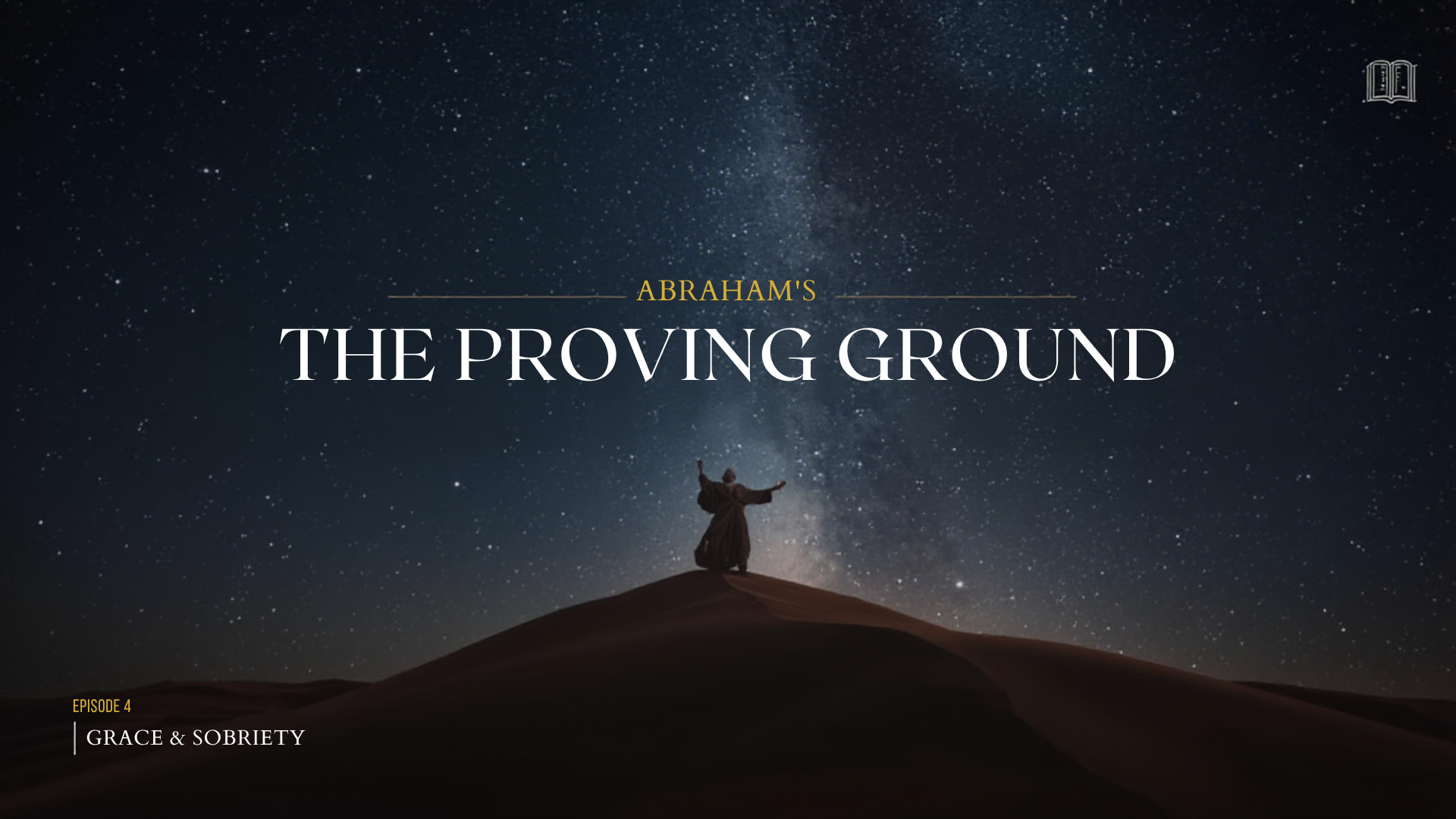
Episode 4: The Proving Ground

Episode 4: The Proving Ground

Welcome fellow travelers. This is Grace and Sobriety for Latter-day Saints on a path of recovery and living a sober life through Jesus Christ and His Gospel.

Does it ever feel like the moment you decide to get sober or fix your life, everything suddenly gets harder? That resistance isn't failure—it's actually proof that you're on the right path

In this episode, we’re looking at Abraham 3 to discover why God calls this life a 'proving ground.' We’re going to learn how to turn that intense pressure into the power you need to break your chains.

I want to share with you today how we’re going to prove that you are one of the 'noble and great ones.' Let's get into it and like, share, and subscribe - following this content and all other content.

Anchor Verse:

"And we will prove them herewith, to see if they will do all things whatsoever the Lord their God shall command them." — Abraham 3:25

In our previous episodes, we established our nothingness without God (Moses 1), claimed our identity as His children (Moses 1), and found the courage to seek a better way (Abraham 1).

Episode 3: The Courage to Seek

Episode 3: The Courage to Seek

Welcome fellow travelers. This is Grace and Sobriety for Latter-day Saints on a path of recovery and living a sober life through Jesus Christ and His Gospel.

We often think our battle is just against a behavior, a bottle, or a doubt. But what if the real war is actually over your name? The adversary wants you to believe you are just your past mistakes.

But in this week’s study of Moses 1 and Abraham 3, God takes us back before the beginning to settle the score once and for all. He reminds Moses—and He’s reminding you—that before you were anything else, you were His.

Today, we are going to learn how to use your divine identity to silence the darkness. Welcome to the devotional message.

Anchor Verse:

"And, finding there was greater happiness and peace and rest for me, I sought for the blessings of the fathers... desiring also to be one who possessed great knowledge, and to be a greater follower of righteousness, and to possess a greater knowledge, and to be a father of many nations, a prince of peace." — Abraham 1:2

In our previous devotionals, we explored Moses 1: first, the humility of realizing our own "nothingness" without God (Day 1), and second, the power of claiming our divine identity when the adversary tries to define us by our past (Day 2).

Additional Scriptures:

  • Moses 1:20: "And it came to pass that Moses began to fear exceedingly; and as he began to fear, he saw the bitterness of hell. Nevertheless, calling upon God, he received strength." (The pivot from fear to action).
  • Abraham 1:5: "My fathers, having turned from their righteousness... refused to hearken to my voice." (The reality that we often have to recover despite our environment).

Today, we transition to Abraham 1, which serves as the perfect companion to Moses’s stand. While Moses illustrates standing your ground against darkness, Abraham illustrates walking away from it. Abraham lived in a toxic environment—Ur of the Chaldees—surrounded by the idolatry of his fathers and a culture of spiritual death. Yet, instead of succumbing to the environment or merely coping with it, Abraham sought something better. He didn't just want to escape the bad; he hungered for "greater happiness and peace."

The Greater and Lesser Lights - Learning to Live by God's Order, Not Our Moods

The Greater and Lesser Lights - Learning to Live by God's Order, Not Our Moods

Welcome, fellow travelers. This is Sacred Sobriety: A Path for the Soul, and I am your host, Timothy Berman.

We are continuing our journey through Genesis—not as distant theology, but as a living pattern for recovery, faith renewal, and disciplined deliverance.

Today, we come to a turning point in creation: God sets lights in the heavens—not merely to shine, but to govern time, seasons, and direction.

If you’ve ever lived by your emotions, your cravings, or your fears—this episode is for you.

Introduction

After God establishes dry ground and fruitfulness, He does something unexpected. He does not immediately create life. Instead, He creates orientation first. The sun and moon are not merely sources of light—they serve as governing lights. Their purpose transcends simple illumination; they are central to regulating time, defining seasons, establishing rhythms, and creating boundaries. These celestial bodies impart a sense of order and structure within the cosmos.

Before embarking on the task of filling the earth with living creatures, God ensures that creation will not be left to the whims of chaos or unchecked impulse. Instead, He designates time and cycles that everything within creation can adhere to, thus fostering an environment where life can thrive beautifully and sustainably. The concept of ordered cycles lays a foundation for harmony within creation, ensuring that each aspect of life has its place and function.

This idea of establishing order before life can be seen as a profound principle, one that resonates deeply within the journey of recovery as well. Recovery requires the same wisdom; it’s not simply about putting back the pieces of what was lost but about creating a structure and a framework that supports the rebuilding process. Just as God regulated the world through the sun and moon, individuals seeking recovery must find that guiding light which helps them navigate through challenges, allowing for growth within a controlled and stabilized environment. By prioritizing order over chaos, recovery becomes not merely a reaction to circumstances but a proactive journey toward wholeness and fulfillment.

Wednesday, January 7, 2026

Theological Insights: Theosis and Salvation Explained

Theological Insights: Theosis and Salvation Explained

Is it possible to be 100% sincere, biblically literate, and yet still miss the full picture of what God is doing today? In this video, we see a passionate Pastor engaging with young missionaries. It’s a scene that plays out thousands of times a day: a collision of two worldviews that both claim to love Jesus. But if we look past the surface-level debate, we find that the questions being asked—Who is God? How are we saved? Can we become like Him? —have answers that are far more profound, ancient, and biblically supported than the standard 'creedal' narrative suggests.

We aren't here to attack this, Pastor. He clearly loves the Bible and cares about salvation. Instead, we are going to do something rare in internet comments: we are going to treat his arguments with respect, 'steelman' his position, and then demonstrate why the Restored Gospel offers a more robust, scripturally complete answer to the very questions he raises.

There is a YouTube video of a Pastor engaging in a discussion with Latter-day Saint Missionaries that seems to be making rounds on Facebook. In one group, a person posted this video with the caption: Can humans become gods? In this powerful gospel conversation with two Mormon Missionaries, we talk about what the Bible actually teaches about Salvation. The post also includes a link to Pastor confronts Mormon Claim: "We Can Become Gods".

In response to this intriguing video, I suggested in the comments that it would be beneficial to host a livestream discussion to delve deeper into the topic. A live format would allow for real-time interaction and a more dynamic exchange of ideas, enabling us to explore the complexities of this theological debate as they arise. Engaging in a live discussion can provide clarity and foster a better understanding of the perspectives from both sides, especially when critics are making public claims regarding the LDS Faith.

Episode 4: The God Who Knows You — and Calls You Back into His Presence

Episode 4: The God Who Knows You — and Calls You Back into His Presence

Hello and welcome fellow travelers. I want to ask you something: Are there moments in recovery and moments in faith crisis when you feel like Moses? Feel like you want to collapse to the ground, emptied out, unsure if you are ever able to stand in God's presence again? What if the distance you feel isn't evidence of God abandoning you. Instead, it is where God is preparing you to see yourself the way he sees you?

Moses 1 and Abraham 3 reveal a pattern woven into every spiritual journey: God reveals Himself. We feel our weakness. The adversary attacks our identity. And then—God calls us back into His presence with deeper clarity and greater purpose.

This episode explores that pattern through the lens of recovery and reconstruction. We’ll look at why Moses collapses after divine glory, why Satan shows up when he does, and why Abraham is shown the stars, the intelligences, and the premortal council at the exact moment he needs reassurance.

These chapters aren’t ancient theology. They’re a roadmap for anyone who has ever relapsed, doubted, or wondered if God still knows their name.

I’m walking with you as someone who understands the terrain—someone who has lived the distance, the collapse, the confusion, and the return. These devotionals are crafted for Latter‑day Saints who love the Restoration but are wrestling with wounds, questions, or the long work of sobriety. Together, we’ll draw strength from scripture, clarity from doctrine, and hope from the God who knew you long before your struggles began.

You’re not trying to earn your way back to Him. You’re learning to recognize the God who has never stopped calling you.

Deconstructing the Narrative of Theft: A Historical Refutation of Lilith Helstrom’s Claims on Christianity and Genocide

Deconstructing the Narrative of Theft: A Historical Refutation of Lilith Helstrom’s Claims on Christianity and Genocide

Is a person who identifies as a Christian possess stolen faith? If you have read Lilith Helstrom’s recent feature article, Jesus Caused The Palestinian Genocide, in Deconstructing Christianity, you’ve likely felt the sting of her central accusation: That Christianity is nothing more than a “religion of thievery” — a theological kleptomania that stole its holidays from pagans, its God from the Jews, and now, she claims, fuels the fires of genocide in Gaza.

Christians will say that the major theme of their religion is forgiveness and second chance.

I disagree. The most prominent theme in all of Christianity is thievery.

So many gods died and rose again before Christianity existed, including Osiris, Adonis, Attis, and Dionysus. The Sumerian goddess, Inna, was even dead three days and three nights before she was resurrected.

So how did Christians get their forgiveness story of Jesus dying on the cross and rising again? Through theological thievery.

Our culture is in a moment where people seem to be deconstructing from everything — gender, institutions, government, and now even the foundations of history itself. Helstrom’s argument strikes quite a nerve. It is a polemic weave of a terrifying narrative that connects the resurrection of Jesus to the so‑called “Jewish Problem” and the horrors of modern antisemitism.

Is the viral “history” actually historical? Or is it a dangerous distortion that conflates ancient myth with eyewitness reality?

Helstrom’s article is not a mere atheistic critique; it is a sweeping cultural indictment. She argues that because Christianity supposedly “stole” its resurrection story from myths like Osiris and Dionysus, it created a subconscious crisis — a Jewish Problem — that forces Christians either to assimilate Jews (under the guise of Christian Nationalism) or annihilate them (Nazism) to cover up the theft. In her telling, the Christian God becomes the architect of genocide, with a straight line drawn from the empty tomb to the current violence in Palestine.

These are heavy charges, and they demand more than a defensive shrug. They require forensic examination of history. If Christianity is merely a copycat religion, then its moral authority is indeed bankrupt. But if the similarities between pagan myths and the gospel are not evidence of theft, but of a “Divine Pattern” — echoes of truth scattered throughout time to prepare the world for a reality that actually happened — then her entire house of cards collapses.