Sunday, September 27, 2026

Doctrinal Lesson 7: The Atonement of Jesus Christ | What Will the Atonement Do for You?


An Updated Latter-day Saint Covenantal Study Based on Doctrinal Lesson 7 of the 1974–75 Melchizedek Priesthood Manual When Thou Art Converted, Strengthen Thy Brethren

Note to Reader

This study is an expanded contemporary treatment of Doctrinal Lesson 7, “The Atonement of Jesus Christ,” from the 1974–75 Melchizedek Priesthood study manual When Thou Art Converted, Strengthen Thy Brethren. The purpose of this updated presentation is not to replace the original lesson or to present new official curriculum for The Church of Jesus Christ of Latter-day Saints. Rather, it seeks to preserve the central doctrinal questions raised in that lesson while examining them through the additional scriptural, prophetic, and covenantal teachings that have continued to illuminate the doctrine of Jesus Christ during the decades since the manual was published.

The approach here is intentionally Christ-centered, Restoration-centered, covenantal, and apologetic. It is written first for Latter-day Saints who desire to deepen their understanding of the Savior’s Atonement, but it is also intended for Christians of other traditions who sincerely want to understand what Latter-day Saints actually believe about Jesus Christ, salvation, grace, repentance, covenant discipleship, resurrection, and eternal life. The hope is that readers will see that the restored gospel does not place ordinances, commandments, priesthood, or covenants in competition with Jesus Christ. Rather, these things derive their saving meaning from Him and draw disciples into an increasingly intimate covenant relationship with the One who alone has power to redeem.

There is a profound difference between intellectually believing that Jesus Christ atoned for the sins of the world and personally discovering that His Atonement reaches into your own life. A person may understand doctrines concerning Gethsemane, Calvary, resurrection, grace, repentance, ordinances, and covenants, yet still carry yesterday’s guilt into today. We may confidently testify that Christ can forgive humanity while quietly wondering whether our own mistakes, sins, failures, or repeated weaknesses somehow fall outside the reach of His mercy.

That struggle is not unique to our generation. President Joseph Fielding Smith described men who came to him burdened by precisely that anguish, saying that he had known “big, strong, husky fellows” who were nevertheless trembling because of the torment they felt over their sins. 

I have known of men and have had men come to me — big, strong, husky fellows — trembling with mental torment because of their sins, wondering if there was any way possible for them to get relief. They have come in the anguish of their souls. (For Ye Are Bought with a Price, p. 5. italics added.)

Their question was essentially the same question many people continue to ask today: Is there really a way to become clean again, and can I genuinely know that God has forgiven me?

The restored gospel answers those questions with the person and mission of Jesus Christ. Forgiveness is not merely a theological possibility to be discussed in Sunday School, nor is the Atonement merely an event to be analyzed historically. The Atonement of Jesus Christ is something whose blessings are meant to be experienced in the life of the disciple through faith, repentance, covenant relationship, the sanctifying power of the Holy Ghost, and continued reliance upon the grace of the Savior.

Saturday, September 26, 2026

Cross-Examining The "New Mormonism" Thesis: Episode 1, Part One - Steelmanning the Prosecution's Case


What if the strongest evidence for a Latter-day Saint “Great Apostasy” is not that Christianity disappeared—but that Christianity survived while covenantal authority, ordinances, doctrine, and ecclesiastical unity fractured?

That distinction matters.

Bill Young’s case against what he calls “New Mormonism” depends heavily upon collapsing several very different propositions into one. He moves repeatedly from “Latter-day Saint leaders historically spoke harshly about apostate Christianity” to “therefore modern Latter-day Saints who acknowledge truth, goodness, and authentic Christian discipleship outside the restored Church are rewriting Mormonism.”

But those propositions are not equivalent.

Historic Latter-day Saint restorationism has never required the belief that every Christian between the apostolic age and Joseph Smith was wicked, spiritually dead, devoid of truth, incapable of knowing Christ, or rejected by God. What Restoration theology actually requires is something more specific: that the covenantal fullness Christ entrusted to His apostolic Church—including divine commission, priesthood authority, authoritative ordinances, revelatory governance, and certain doctrines—was no longer present in its original fullness and therefore required restoration rather than mere reform.

That is an entirely different claim.

And once that distinction is placed on the witness stand, much of the prosecution’s case begins to look less decisive than advertised.

Wednesday, September 23, 2026

Rise Above Weaknesses: When Other People Fail, Choose Faithfulness


Some of the hardest threats to our recovery are not always cravings, substances, compulsive behaviors, or obvious temptations. Sometimes the greater danger is resentment. Someone disappoints us. Someone in the Church acts hypocritically. A trusted friend betrays us. A family member wounds us. A fellow traveler relapses. A leader fails to live up to what we expected. Perhaps the person who disappoints us most is the one staring back at us from the mirror. In moments like these, weakness becomes more than an abstract theological idea. It becomes personal, painful, and difficult to ignore.

What do we do when weakness becomes impossible to overlook? Do we allow another person’s behavior to determine the direction of our faith? Do we surrender our recovery because somebody else failed us? Do we condemn an entire community because one person behaved badly? And when the weakness belongs to us, do we conclude that our mistakes have permanently disqualified us from grace? President Gordon B. Hinckley’s counsel for September 23 in Stand a Little Taller offers a simple but demanding response: remain faithful and remain true.

Anchor Verse: “And blessed is he that is found faithful unto my name at the last day, for he shall be lifted up to dwell in the kingdom prepared for him from the foundation of the world.” — Ether 4:19

There is something important in the wording of this verse. It does not say blessed is the person who never struggled, never experienced betrayal, never encountered hypocrisy, or never felt the weight of weakness. It does not describe a life without temptation, disappointment, addiction, fear, pain, or failure. The emphasis is on being found faithful. For those of us walking a recovery path, that distinction matters deeply because faithfulness is not the absence of weakness. Faithfulness is what we choose to do when weakness reveals itself.

Monday, September 14, 2026

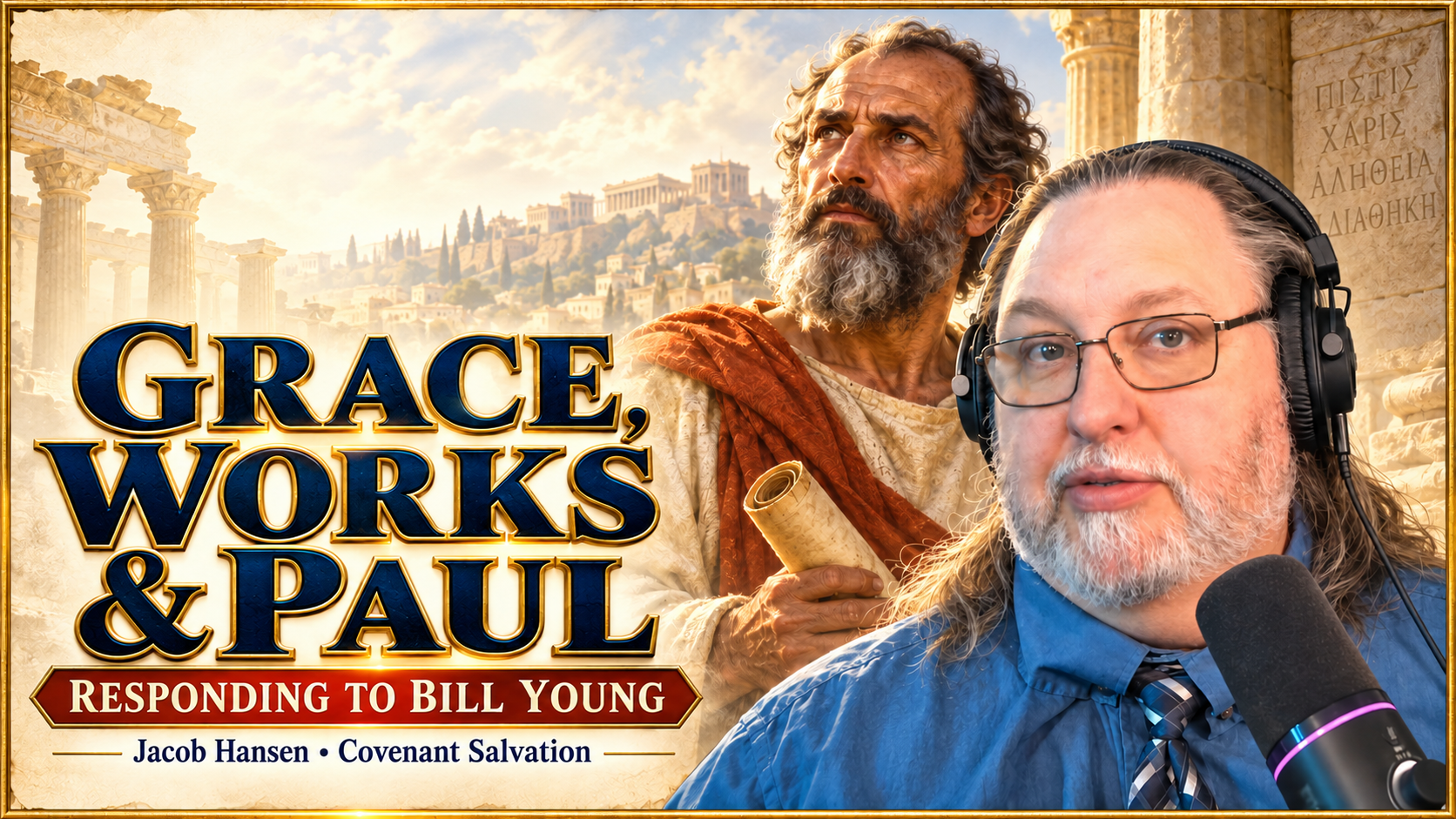
Bill Young's Response to Jacob Hansen: Does Covenant Obedience Deny Grace?

Bill Young's Response to Jacob Hansen: Does Covenant Obedience Deny Grace?

Does obedience turn the gift of salvation into a wage? That is the question beneath Bill Young’s response to Jacob Hansen—and it deserves a better answer than either “Mormonism is counterfeit” or “modern scholarship proves us right.” A Christian can affirm that Christ alone makes salvation possible while still believing that repentance, faithfulness, and a transformed life matter. The dispute begins when we ask how they matter: as payment, as conditions of receiving a gift, as evidence of living faith, or as the life that grace itself creates.

In Episode 104, Young argues that Hansen’s covenant model gives familiar LDS requirements a more attractive vocabulary without changing their function. That objection has force against any explanation that merely renames achievement as relationship. But Young’s broader conclusion—that necessary covenant obedience must therefore amount to earning salvation—requires an additional argument. Neither the presence of conditions nor the fact that human beings actually act establishes that their actions purchase God’s forgiveness.

This response approaches the debate from a Latter-day Saint perspective while taking Protestant objections seriously. It examines the supplied transcript and comment-section record alongside Pauline scholarship, Jewish historical scholarship, LDS sources, and evangelical biblical commentaries. Some of the evidence supports Young’s criticisms of oversimplified apologetics; other evidence directly challenges his portrayal of LDS grace and the scholarly alternatives he dismisses. The purpose is to identify which claims survive careful examination and to hold our treatment of other people to the Christian standard we invoke.

In this response

  • Young’s strongest objection
  • Paul, Judaism, and covenant
  • Grace, necessary works, and merit
  • “After all we can do”
  • What LDS leaders have taught
  • Comments and logical fallacies
  • The Christian standard
  • Frequently asked questions
  • Sources and further reading

What this response examines

The principal source is Young’s “Response to Jacob Hansen’s Covenant Model of Salvation”, identified as Episode 104 in the supplied materials. Quotations below follow the supplied transcript, with punctuation lightly normalized where needed; timestamps identify the relevant passages. The opening Hansen clip is presented within Young’s episode, so this article evaluates the argument as represented there rather than claiming to review every statement Hansen has made elsewhere.

Comment quotations come from the supplied document titled EP 104: Response to Jacob Hansen’s Covenantal Salvation Comment section. Usernames and document paragraph numbers identify excerpts where individual comment permalinks were not supplied. These are selected examples, not a statistical description of the entire audience. The record also contains substantive biblical arguments and objections to mockery. A commenter’s statement is attributed to that account; it is not automatically treated as Young’s own position.