Showing posts with label LDS scripture study. Show all posts

Monday, October 5, 2026

The Micro and the Macro: How Two Scholars Reveal Isaiah’s Hidden Depth

Reader’s Note

This contribution by Jessica Shipp of Christ Pearls explores complementary approaches to Isaiah within Latter-day Saint scholarship. The article’s wording has been preserved as supplied. This reader’s note, the abstract, hyperlinks, contributor presentation, and works cited are editorial additions. The interpretations presented in the article are the contributor’s own.

Abstract

Jessica Shipp compares Donald W. Parry’s close attention to Isaiah’s language and poetic relationships with Avraham Gileadi’s analysis of the book’s larger literary and covenant structure. She argues that their approaches share substantial Restoration commitments while differing in methodology, translation choices, and interpretive emphasis. The discussion considers Ephraim and the Gentiles, layered servant fulfillments, the seven-part bifid structure, and the poetic correspondences of Isaiah 60:1–3. It also distinguishes Shipp’s understanding of Gileadi’s writings from claims about an alternative prophetic authority or a failed Restoration. Her concluding invitation is to study multiple scholarly perspectives alongside scripture, with Jesus Christ, covenant faithfulness, and the gathering of Israel at the center.

As we are immersed in Isaiah for the Come, Follow Me, I thought I would share some of the Latter-day Saint resources that have helped me most in studying this extraordinary book.

Two scholars I return to repeatedly are Donald W. Parry and Avraham Gileadi.

Sometimes I see their work discussed as though they represent two competing interpretations of Isaiah. Having read extensively from both, I don’t think that is the most helpful way to explain them.

Sunday, January 4, 2026

CFM | "This is My Work and My Glory": A Verse-by-Verse Exposition of Moses 1 and Abraham 3

CFM | "This is My Work and My Glory": A Verse-by-Verse Exposition of Moses 1 and Abraham 3

Before the curtain rises on the drama of Creation in Genesis, there is a prologue.

In the King James Bible, we open immediately to "In the beginning." However, the Restoration offers a vital theological frame that Genesis assumes but does not explicitly state. Revealed through the Prophet Joseph Smith, Moses 1 and the Book of Abraham serve as this frame. They are not merely prefaces; they are the twin lenses through which we are meant to view the entire scope of human existence.

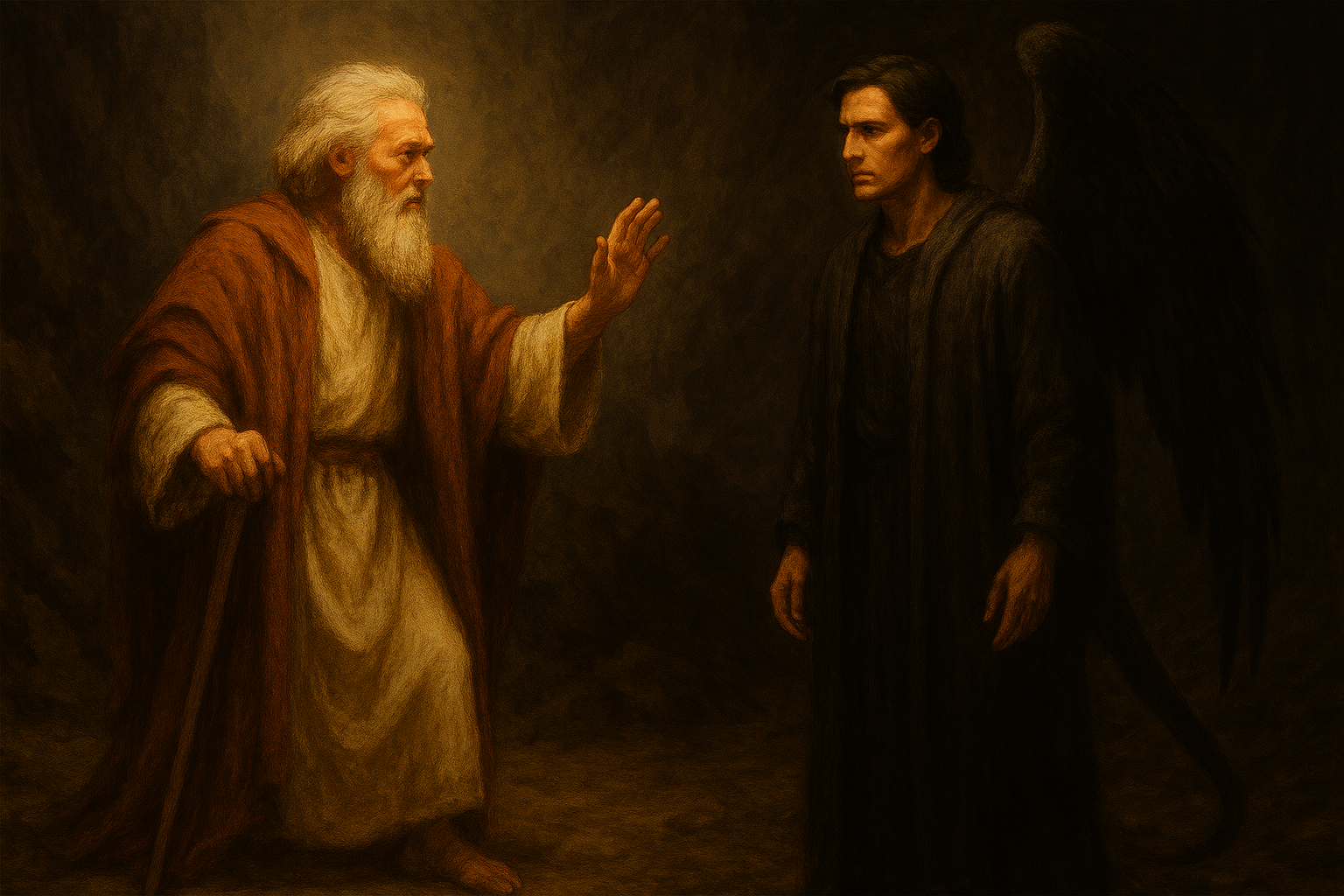
Moses 1 recounts a theophany (an encounter with God), a confrontation with the Adversary, and the ultimate revelation of God’s work and glory. It opens with a profound divine interaction where Moses learns his identity as a "son of God." This chapter grounds us in the personal: it establishes the relationship between the Father and His children and highlights the duality of light and darkness. It reminds us that while we are endowed with agency, we are also met with opposition, encouraging us to discern and choose righteousness amidst temptation.

Complementing this is the account of Abraham, particularly the cosmic revelations of chapter 3. If Moses 1 teaches us who we are, Abraham teaches us where we came from and why we are here. Through the Urim and Thummim, Abraham is shown the governing dynamics of the universe—stars, orbits, and the great star Kolob. But this astronomy lesson is a parable for spiritual reality: just as one star is greater than another, spirits possess varying degrees of intelligence. Abraham takes us behind the scenes to the Grand Council in Heaven, revealing the doctrine of the "First Estate" and the blueprint of the Plan of Salvation before the earth was even formed.

Together, these texts restore the foundations of our faith. Moses leads us up the mountain to see God face-to-face; Abraham leads us into the stars to see the pre-mortal councils. A careful examination of these verses unveils theological depths that speak to our divine lineage, the eternal nature of intelligence, and a plan that stretches far beyond our mortal experiences.

Below is a verse-by-verse expository commentary that explores the deep theological currents of these remarkable texts. As we engage with the prologues of Moses and Abraham, we invite the Spirit to guide our understanding, deepening our connection to the divine narrative that encompasses our lives and the cosmos around us.