Showing posts with label Abrahamic Covenant. Show all posts

Thursday, February 26, 2026

The "All or Nothing" Fallacy: Why Tyson Guess's Logic Fails the Scriptural and Historical Test

The "All or Nothing" Fallacy: Why Tyson Guess's Logic Fails the Scriptural and Historical Test

If there is any given reason for someone to question and leave the Church of Jesus Christ of Latter-day Saints, Tyson Guess has built a shiny logical-looking exit ramp. However, if you are willing to take a moment and slow down to breathe, the architecture of his argument is built on a very sandy foundation - specifically, a fundamental misunderstanding of how God interacts with fallible mortals.

It is in his recent article over at Medium - "One False Revelation Collapses Mormonism" - where he attempts to use the Book of Abraham as a silver bullet to take down the entire Latter-day Saint Faith. He proposes that because the surviving Egyptian papyri does not match the Book of Abraham linguistically, one ought to conclude that Prophet Joseph Smith was a fraud. By extension, he claims that this means the Book of Mormon is a lie perpetuated upon the 19th-Century American populace—and by many individuals today.

What Guess seems to overlook is that faith and belief systems are complex, multifaceted experiences that often transcend mere textual analysis. Having immersed myself in the scriptures and extensively researched various scholarly articles on the Bible, the Book of Mormon, and the Book of Abraham, I am not one to shy away from the hard questions that arise. Indeed, grappling with difficult topics is an integral part of faith development.

Moreover, it is important to remember that neither the Church nor its members need to hide from the papyri or the so-called "missing scroll" theories. These subjects, when approached with integrity and a commitment to truth, can lead to a deepened understanding of the faith. Once we apply proper scriptural exegesis and peer-reviewed scholarship to the questions surrounding these texts, Guess's assertion of an "inescapable conclusion" begins to look more like a desperate reach rather than a definitive argument against the faith.

Ultimately, it's essential to recognize the broader context in which these discussions occur. Many who leave or reconsider their faith do so not only based on intellectual arguments but also due to personal experiences, feelings, and the intricate tapestry of their spiritual lives. Engaging with such matters requires not only scholarly rigor but also compassion and understanding for individual journeys. The dialogue around faith and doubt can be rich and illuminating, offering avenues for personal growth and deeper connections with God and each other.

If the Book of Mormon is true, the Book of Abraham must be true.

The Book of Abraham is demonstrably false.

Therefore the Book of Mormon is false.

That is not a rhetorical flourish. It is a logical necessity rooted in the nature of God himself. God does not put his name on lies. God does not commission a prophet and then authorize that prophet to deliver falsehood as scripture. A divine commission that produces falsehood is not divine. Which means the two books stand or fall together. They claim the same origin: the gift and power of God through Joseph Smith. That origin is either reliable, or it is not. It cannot be selectively reliable. If one product of that commission is demonstrably false, the commission itself is false, and everything resting on it falls with it.

This article proves each premise. By the end, the conclusion is inescapable.

Tyson Guess's argument rests upon presuppositional apologetics and is quite a rigid syllogism where he makes the first point regarding how the Book of Abraham stand or fall together. The second point is how he views the Book of Abraham as "demonstrably false" because it is not a literal linguistic translation of the surviving papyri. And third, he concludes that because the Book of Abraham and the Book of Mormon are false, Joseph Smith, therefore, is a false prophet under the presupposed interpretative understanding of Deuteronomy 18. His argument leads to the conclusion that the entire Latter-day Saint belief system collapses under scrutiny.

Steelmanning Tyson Guess's Assertions

The strongest point he makes is the physical evidence: the Sensen papyri (the fragments recovered in 1967)1 do indeed contain standard Egyptian funerary texts (The Book of Breathings) and do not contain the text of the Book of Abraham. This mismatch is acknowledged by the Church in the Gospel Topics Essays, which lends credibility to his claim. If one's definition of "translation" is strictly limited to a 21st-century academic decoding of hieroglyphs, Guess's point feels quite weighty and compelling.

However, to thoroughly engage with Guess's perspective, it is essential to steelman his position—articulating it in its strongest form—before launching into a counter-argument. A steelman approach involves understanding the nuances of his claims, thus allowing for a more productive discourse. From there, one can examine the logical fallacies that underlie his assertions, such as potential fallacies of composition—implying that the failure of one work invalidates the entirety of a belief system—or false dilemmas that oversimplify complex theological concepts.

In addressing the primary contention regarding translations, scholars advocate for a broader understanding of the term "translation." The restoration of the Book of Abraham is often viewed not merely as a linguistic exercise but as a theological endeavor. Thus, one might argue that the translation in question relies on Divine inspiration rather than strict linguistic fidelity. An exegetical interpretation of the text could highlight its contextual significance within the framework of Latter-day Saint theology, countering Guess's assertion of its demonstrable falsehood.

Engaging with peer-reviewed literature reveals diverse scholarly opinions on ancient texts, translations, and the role of revelatory processes in religious contexts. Numerous Latter-day Saint scholars and Egyptologists have contributed rigorous analyses of the Book of Abraham, arguing that the text retains spiritual truths even if its historical and linguistic basis is complex.

While it is necessary to acknowledge the weight of Tyson Guess's arguments, it is equally important to invite readers to examine the evidence for themselves rigorously. The discourse surrounding the Book of Abraham is multifaceted, integrating historical, linguistic, and theological dimensions. Encouraging critical thought fosters a more robust conversation, allowing individuals to explore the nuances of faith, history, and evidence as they pertain to the Latter-day Saint belief system. Through this lens, one can engage not only with the arguments presented but also with the broader implications for understanding religious texts in a modern context.

Wednesday, February 18, 2026

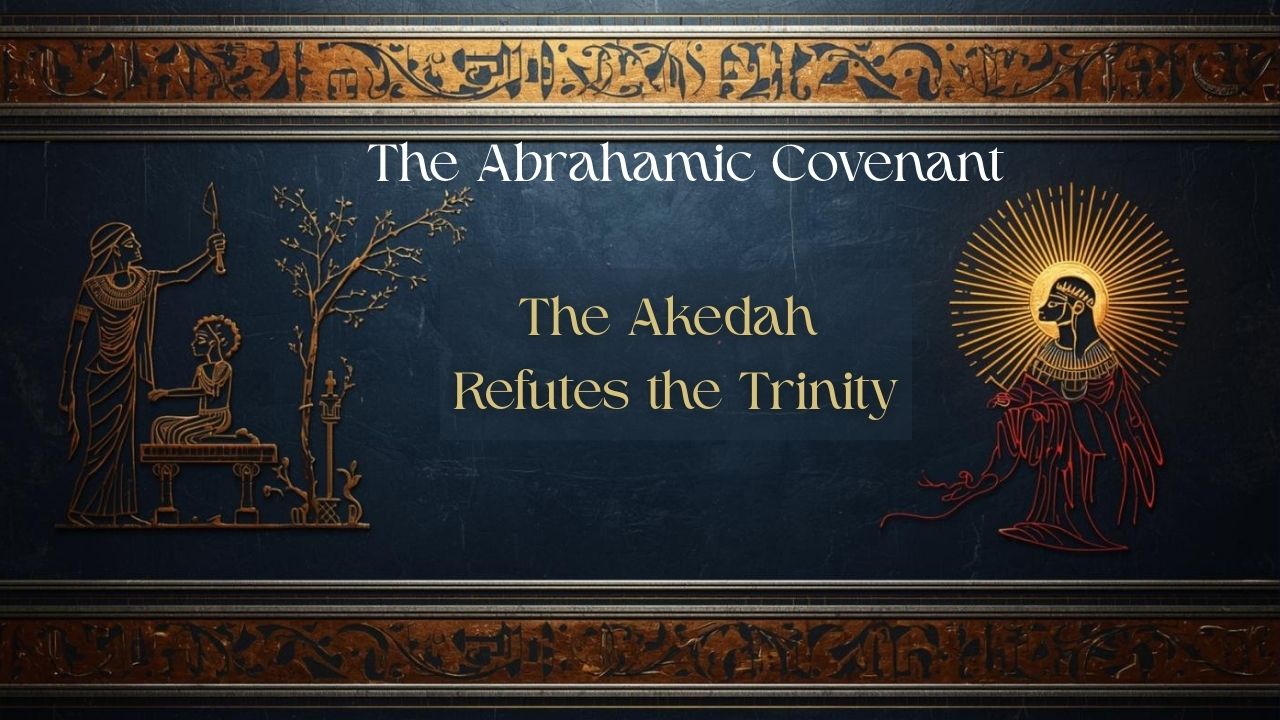
5 Solid Reasons the Abrahamic Covenant Makes the Trinity Impossible: The Father and Son Revealed in Scripture

5 Solid Reasons the Abrahamic Covenant Makes the Trinity Impossible: The Father and Son Revealed in Scripture

For centuries, Christians have read Genesis 22 as a foreshadowing of Christ’s sacrifice. But when you slow down and actually study the text — the covenant structure, the typology, the roles of Abraham, Isaac, and the Angel of the Lord — something startling emerges:

The story only makes sense if the Father and the Son are separate, distinct divine beings. Not one being in three manifestations. Not “without body, parts, or passions.” Not the metaphysics of the 4th‑century creeds.

Genesis 22 quietly dismantles the classical Trinity — not through argument, but through narrative logic. The intricate details within the text draw attention to the unique roles played by each character involved, suggesting a profound relationship rather than a singularity of essence. The distinct actions and motivations of Abraham and Isaac, coupled with the divine intervention of the Angel of the Lord, create a rich tapestry of covenantal dynamics that aligns with the understanding of a separate Father and Son.

And once you see it, you can’t unsee it.

The text itself tells us that Abraham’s offering of Isaac was “a similitude of God and His Only Begotten Son” (Jacob 4:5). That means the story is not merely symbolic — it is covenantal drama. A reenactment. A prophetic preview. It sets up a scenario where the identity of God is not just established by abstract definitions, but by tangible actions and relationships that unfold throughout the narrative, reinforcing the need for distinct divine entities within the story.

  • Abraham = the Father (El Elyon)
  • Isaac = the Son (YHWH / Jesus Christ)
  • The Angel of the Lord = YHWH intervening
  • The Ram = the substitute sacrifice provided by the Son Himself

But here’s the problem for classical Trinitarian theology:

A being cannot covenant with Himself. A being cannot offer Himself to Himself. A being cannot substitute for Himself.

Yet that is exactly what the Abrahamic narrative requires if the Father and the Son are not distinct beings. The narrative requires a sacrificial offering that conveys deep relational significance. The act of Abraham being asked to sacrifice his son not only serves as a test of faith, but also as a prelude to a much greater divine act of love and sacrifice. The intricacies presented in Genesis 22 reflect the essence of divine relationships that contradict the notion of a singular being.

The entire story collapses under Nicene metaphysics — but it becomes beautifully coherent in a Latter‑day Saint reading of the Godhead. This perspective not only makes sense of the narrative but also invites readers to engage with the text in a way that reveals a more nuanced understanding of who God is in a relationship with humanity.

This isn’t sensationalism. It’s careful, text‑driven theology supported by biblical scholarship and restored scripture. Scholars widely recognize Genesis 22 as a covenantal test and a typology of divine sacrifice. The events leading to the sacrificial act have a resonance throughout scripture, inviting further exploration of God’s nature and His intentions toward His children.

The Book of Mormon explicitly identifies the event as a similitude of the Father and the Son (Jacob 4:5), strengthening the argument for distinct divine persons within the Abrahamic narrative. Classical creeds describe God as “without body, parts, or passions” (Westminster Confession). That metaphysical framework cannot sustain the relational, embodied, covenantal drama of Genesis 22. It lacks the relational depth that is essential to understanding the interactions within the story.

In this article, we’ll walk through:

  • Why the Abraham–Isaac narrative presupposes two divine persons in real covenantal relationship.
  • How the cut covenant (Genesis 15) requires two parties who can engage in meaningful interaction.
  • Why the Angel of the Lord is best understood as YHWH, the premortal Christ, intervening in history with divine purpose.
  • Why the ram, not a lamb, matters significantly as a symbol of substitutionary sacrifice.
  • And how all of this aligns seamlessly with Latter‑day Saint theology while exposing the weaknesses of post‑biblical Trinitarian formulations.

If you’ve ever sensed that the God of the creeds feels abstract, distant, or philosophically over‑engineered, Genesis 22 offers a different vision — one rooted in relationship, embodiment, covenant, and divine love that is anything but passionless. Through this lens, one can find a God who is intimately involved in the lives of His people, crafting a narrative of redemption that resonates with both ancient and modern believers.

Tuesday, February 17, 2026

Come Follow Me: Feb 16-22 - Genesis 12-17; Abraham 1-2 | "To be a Greater Follower of Righteousness

Come Follow Me: Feb 16-22 - Genesis 12-17; Abraham 1-2 | "To be a Greater Follower of Righteousness

Abraham’s story is more than ancient history — it is the blueprint for every disciple who seeks covenant belonging, divine protection, and a future filled with hope. This week’s Come, Follow Me study reveals how God transforms ordinary people into extraordinary instruments of righteousness. The narrative not only showcases the life of Abraham but also serves as a powerful reminder that faith can lead to significant change and divine outcomes.

From Abraham’s near‑sacrifice in Ur to the sweeping promises of the Abrahamic Covenant, these chapters unveil the pattern of deliverance, faith, priesthood, and covenant identity that defines the gospel of Jesus Christ. Each event in Abraham’s journey can be viewed as a stepping stone toward understanding how God interacts with humankind and the purpose He has for each of us in fulfilling His divine plan.

Drawing from Genesis, the Book of Abraham, the Pearl of Great Price Student Manual, and the Come, Follow Me 2026 manual, this commentary provides doctrinal clarity, historical context, and practical application for modern disciples. This comprehensive approach allows readers to see the relevancy of Abraham's story in today's context, encouraging them to deepen their understanding of their own faith journeys.

Abraham’s life is a witness that righteous desires shape destiny. Though born into a family steeped in idolatry, Abraham “sought for the blessings of the fathers” and desired “to be a greater follower of righteousness” (Abraham 1:2). His story demonstrates that God honors righteous desire with revelation, deliverance, and covenant belonging. This ideal underscores the power of longing for a deeper connection with God and striving for righteousness, emphasizing that such pursuits are met with divine support and guidance.

This study argues that:

Abraham’s early trials reveal the pattern of divine deliverance. Each trial faced by Abraham not only tested his faith but also set the stage for miraculous intervention by the Lord, reinforcing the belief that faith often precedes divine action.

The Abrahamic Covenant is the foundation of all latter‑day covenant identity. This covenant is essential in understanding the relationship between God and His people, serving as a framework for spiritual growth and community among believers.

Abraham’s life models what it means to walk the covenant path with faith, sacrifice, and obedience. His unwavering commitment in the face of uncertainty illustrates the essence of discipleship. Disciples today are called to emulate this model, highlighting the importance of perseverance, trust, and dedication on their own journeys.

Ultimately, the exploration of Abraham's life serves as both an educational and inspirational guide for individuals seeking to embrace a deeper sense of identity within their covenant relationship with God. It challenges readers to reflect on their own journeys, urging them to strive for the kind of faith that transforms lives and leads to lasting hope.

God often begins His work in the quiet soil of longing, where dreams lie dormant, waiting for the gentle touch of faith to cultivate them. In this sacred space, where silence speaks volumes and sincere desires take root, the heart learns to hope anew, nurturing seeds of potential that, with time and devotion, will blossom into a beautiful manifestation of His divine purpose. It is here that we discover the deep connection between our longings and the unfolding of His plans, reminding us that even in the stillness, something remarkable is taking shape beneath the surface, preparing us for the amazing journey ahead.

Thursday, August 15, 2024

Covenants and Commitments in Alma 53: Exploring Unwavering Faith

Exploring Alma 53 and Our Sacred Covenants with God

In navigating the pages of Alma 53, a profound reality emerges about the covenants we make with God. Far more than mere promises, these covenants anchor us in faith and guide us through life's storms. The story of the Anti-Nephi-Lehies illustrates the unwavering commitment to their sacred covenants, even under the shadow of war.

Our journey through this text unveils the power and significance of keeping these sacred promises, particularly when trials test our resolve. As we engage with these teachings, we're urged to reflect on our own covenantal commitments. Why do we make covenants, and how do we stay true to them amid life's challenges? These questions cut to the heart of our spiritual journeys, inviting us to deepen our faith and trust in a God whose promises are steadfast.

With this exploration, I aim to provide insight into how keeping covenants not only transforms our lives but also strengthens our communities. Embracing the lessons from Alma 53 can inspire us to uphold our commitments, fostering a spirit of loyalty and devotion that echoes through eternity.

The Importance of Keeping Covenants Before God

Keeping covenants with God is more than just fulfilling a promise—it's about living a life aligned with divine guidance and purpose. A covenant with God is like a sacred agreement, offering spiritual strength and a sense of purpose. In challenging times, these sacred promises illuminate the path ahead, helping us stay grounded and connected to something greater than ourselves.

Covenants as Lifelines in Dark Times

Imagine you're lost at sea, surrounded by endless waves and no clear direction. A covenant is like a lighthouse in that storm. When life feels overwhelming and challenges seem insurmountable, our covenants serve as steadfast guides. They help us navigate through the darkest moments, keeping us anchored in faith. But how exactly do covenants provide such profound support?

  1. Spiritual Strength: Covenants are like a spiritual muscle. The more we honor them, the stronger our faith becomes. They empower us to overcome obstacles and endure hardships, knowing we're not alone.
  2. Clear Guidance: Just as a map offers direction, covenants provide a clear path. When life's decisions become murky, these sacred agreements remind us of our commitments and help us make righteous choices.
  3. Enduring Support: Covenants are bonds that connect us to God. In times of despair, they offer unwavering support and reassurance that He's always by our side.

When we embrace our covenants, we form a relationship with God that is unbreakable, just like a tether that holds fast during a storm. As we honor these promises, they shape not only our relationship with God but also who we become. They teach us resilience, compassion, and the true meaning of divine love.

So, in times of need or uncertainty, remember the covenants you've made. They are not just promises but lifelines, guiding and supporting you through the ebb and flow of life's unpredictable tides.

Exploring the Edenic Covenant

The Edenic Covenant isn't just a whisper of a promise; it's an ancient agreement that sets the stage for humanity's relationship with God. Often overlooked, this covenant is the foundation of understanding our sacred commitments and responsibilities. Let's dive into what makes the Edenic Covenant both a historical marvel and a spiritual guide.

What is the Edenic Covenant?

The Edenic Covenant marks one of the earliest agreements between God and humanity. It dates back to the stories of the Garden of Eden, involving Adam and Eve. Although the Bible doesn't specifically label it as a "covenant," scholars see it as an essential agreement. This covenant established the roles and duties of Adam in the idyllic paradise of Eden.

Adam was given the earth to rule over, a promise that came with certain conditions. These conditions were simple yet profound: tend to the garden and refrain from eating the fruit of the tree of knowledge of good and evil. This covenant frames an understanding of stewardship and obedience within spiritual contexts.

Implications of the Edenic Covenant

The implications of the Edenic Covenant are vast and touch many aspects of life. By agreeing to its terms, humankind accepted a responsibility to care for God's creation and follow His instructions. Think of it like a gardener who has to ensure every plant under his care thrives. The covenant taught obedience and trust in divine wisdom.

But what happens when conditions aren't met? The failure to adhere to this covenant led to the fall of man, symbolizing a breach of trust with God. It serves as a cautionary tale about the consequences of breaking promises, underlining the importance of keeping our word before God.

Relating the Edenic Covenant to Sacred Promises

Now, how does this ancient narrative relate to our sacred promises today? The Edenic Covenant acts like a mirror reflecting the core values we hold in any sacred promise. It's about faithfulness, stewardship, and the courage to uphold terms even when tempted otherwise. When we make covenants, whether in religious contexts or personal vows, we echo the essence of Eden's original pact.

Consider how marriage vows, baptismal covenants, or other sacred interpretations often echo the language of fidelity and commitment reminiscent of Eden. In this way, the Edenic Covenant isn't just an ancient story; it's a living tradition that challenges us to nurture trust and uphold the promises we make.

In essence, the Edenic Covenant is more than a biblical narrative; it's a guidepost for our life's covenants, urging us to tread carefully and uphold our sacred commitments with integrity and devotion.

The Adamic Covenant: Foundations of Obedience

Understanding the Adamic Covenant1 is like unraveling a key chapter in the story of humanity. It's the seed from which all covenants with God flow, underscoring the balance of obedience and promise. It reminds us of our accountability to God and the divine promises set forth from the very start. Let’s dig into this foundational agreement and its significance.

Divine Covenant with Humanity

The Adamic Covenant stands as the first pact between God and humanity. Imagine a contract not written in ink but in the very fibers of existence. This covenant wasn’t just a set of rules but a deep promise laid down by God when He created Adam and Eve.

  • Job Description: Adam was given the task to be fruitful, to multiply, and to take care of the earth. Think of it like being appointed the caretaker of a magnificent, sprawling estate.
  • Boundaries Set by God: It also included guidelines—like the infamous instruction to not eat from the tree of knowledge—reminding Adam of the importance of obedience.

Accountability: A Two-Way Street

Accountability in the Adamic Covenant isn't just about following orders. It's about understanding the profound trust God placed in humanity.

  1. Trust and Responsibility: Adam was entrusted not just with tasks, but with the honor of responsibility. The results? A beautiful harmony with God’s creations or fracturing that harmony.
  2. Consequences of Disobedience: Like a parent warning a child, God established consequences for disobedience. When Adam and Eve strayed, they didn’t just break rules—they broke the trust.

Divine Promises Embedded

The Adamic Covenant wasn't only about restrictions and rules. At its heart, it held promises as vibrant as the first sunrise.

  • Hope for Redemption: Despite contravention, God didn’t abandon humanity. Embedded in this covenant was the hope and promise of redemption and renewal.
  • Continuity of Life: Life amid challenges continues, promising that every end heralds a new beginning.

Relating to Our Sacred Covenants Today

Consider how this ancient covenant reflects in our sacred covenants today. Every promise we make before God echoes the Adamic Covenant’s principles.

  • Obedience is Key: Our modern covenants with God emphasize obedience not as a burden but as a blessing—a path to align with divine promises.
  • Promise of Growth: Just like Adam was told to be fruitful, our covenants invite us to grow and nurture faith.

Reflecting on the Adamic Covenant teaches us that these promises and responsibilities, though ancient, remain vivid and relevant. They invite us to ponder: How do we carry forward this foundational covenant in our lives today? Are we keeping our covenant with God a priority, or is it slipping into the background? Recognizing this, let’s realign ourselves with the essence of our promises, just as intended from the very beginning.

Insights from the Enoch Covenant

Exploring the Enoch Covenant offers us profound insights into the notions of faithfulness and community2. Enoch, a figure often overlooked3, holds significant lessons about living with integrity and unity. These insights are not just historical anecdotes; they offer timeless wisdom for our lives today, especially as we strive to keep our sacred covenants.

Commitment to Faithfulness

Enoch's story is a testament to unwavering faithfulness. Imagine a world where commitment is rare. Enoch stands out like a lighthouse in a storm, guiding others toward steadfastness and trust. He teaches us that keeping our covenants requires more than simple acknowledgment; it demands action and dedication.

  • Steadfast Belief: Enoch's unwavering belief in his mission proves that faith isn't passive. It's about taking steps towards your beliefs, even when the path is unclear.
  • Living by Example: By consistently living true to his covenants, Enoch became a model for others. His life was a living sermon, proving that actions truly speak louder than words.

Fostering Community through Covenants

The Enoch Covenant highlights the power of community built on shared values. Think of a community as a tightly woven fabric; each thread adds strength. Enoch's teaching emphasizes that a covenant isn't a solitary journey—it's a communal endeavor.

  • Shared Goals and Values: Covenants unite people with a common purpose. In Enoch's time, these shared goals knit communities closer, creating a sense of belonging and understanding.
  • Support System: Within a covenant community, individuals find support and encouragement. It's a reminder that none of us is alone, and together, we can overcome challenges that seem insurmountable individually.

Relevance in Modern Times

While Enoch's story is ancient, its relevance echoes through time. In today's fast-paced life, where individualism often reigns supreme, the principles of faithfulness and community remain as vital as ever. By reflecting on Enoch's insights, we can find motivation to uphold our covenants, stay true to our values, and foster communities that thrive through shared commitments.

  • Building New Connections: In our digital age, Enoch’s teachings remind us of the importance of human connections. Building real-life relationships grounded in trust and common values is essential.

With Enoch as our guide, we are reminded that maintaining our covenants is more than just a personal journey; it's about uplifting each other and forging a community that stands firm in its commitments.

The Noahic Covenant: A Promise of Preservation

The Noahic Covenant holds a powerful message of hope and renewal4. After the great flood that swept the earth, God established this covenant with Noah, symbolizing a fresh start for humanity and the world5. This biblical agreement is a testament to God's enduring promise to preserve life and creation, offering us insight into the divine commitment to our existence.

Foundation of the Noahic Covenant

The Noahic Covenant, found in the book of Genesis, marks a pivotal moment in biblical history. God speaks to Noah, affirming his promise to never again destroy the earth with a flood. This promise is not just a relief to Noah and his family but an assurance to all generations that come after. By examining this covenant, we can see its impact on our lives and our future.

Symbolism of the Rainbow

One of the most beautiful and vivid symbols in the Noahic Covenant is the rainbow. This colorful arc in the sky serves as a sign of God's promise. Every time a rainbow appears, it is a reminder of the covenant—a visual representation of God's pledge to uphold life. It's as if the sky itself is telling us that we are part of something larger, a divine protection that spans across time.

  • The Rainbow: Represents hope, renewal, and God's presence.
  • A Daily Reminder: Encourages us to remember our duties as stewards of the earth.

Implications for Humanity

This covenant not only reassures us of God's commitment but also invites us to reflect on our responsibilities. As beneficiaries of this divine promise, we are called to maintain the earth and nurture life in all its forms. It challenges us to think about how we treat our environment and the creatures within it. How can we align our actions with this sacred promise?

A Covenant Beyond Time

Unlike other covenants in the Bible, the Noahic Covenant is unconditional and everlasting. It transcends time, touching the lives of every living creature. This aspect gives it a universal appeal and makes it relevant even today. It resonates as a message of stability in a world that often seems unpredictable.

Engaging with the Covenant

To truly understand the Noahic Covenant, we must engage with it beyond mere recognition. It's about viewing ourselves as caretakers of God's creation. By doing so, we demonstrate that we honor this ancient promise and find our place within the cosmic order. Are we preserving the sanctity of this covenant in our daily lives? Reflecting on this question can guide our decisions and reinforce our commitment to the promises we make before God.

In essence, the Noahic Covenant is more than an agreement; it's a profound declaration of God's unwavering desire to sustain life and encourage human beings to live in harmony with His creation.

The Abrahamic Covenant: A Legacy of Faith

The Abrahamic Covenant stands as a remarkable testament to faith and promise, a foundational agreement that echoes throughout history6. It is not just a pact between God and Abraham but a guiding light for believers across generations. This covenant represents an everlasting commitment that inspires believers to live with purpose and devotion. How does this ancient promise continue to resonate with so many today?

The Essence of the Covenant

The Abrahamic Covenant is fundamentally about promise and faithfulness. In this sacred agreement, God promises Abraham that he will become the father of a great nation, and his descendants would be countless like the stars in the sky. The covenant goes beyond material blessings; it embodies spiritual commitments that encourage us to trust and love God fiercely.

  • Land: God promised a specific land, Canaan, to Abraham and his descendants. This symbolizes not just a physical place but a space where God's kingdom is evident.
  • Descendants: The promise of many descendants represents not only a large family but a legacy that would carry forward God's message.
  • Blessing: The covenant ensured blessings for Abraham and all his descendants, extending even to all the world's nations.

An Everlasting Promise

Did you know that the Abrahamic Covenant is unconditional? Unlike other agreements, this covenant does not depend on Abraham's actions. Instead, it expresses God's unyielding faithfulness. This everlasting promise remains a beacon of hope, assuring believers that God's love transcends all circumstances.

Faith in Action

Abraham's unwavering trust in God serves as an exemplary model of faith in action. The covenant invites us to examine our lives, asking whether we hold the same convictions. Do we keep our promises as earnestly as Abraham did? The covenant challenges us to live with purpose, embedding our lives with sincerity and devotion.

Impact on Believers Today

The Abrahamic Covenant does not rest in ancient texts; it lives on, influencing the spiritual lives of believers today. It invites us to align our lives with divine principles, to nurture trust, and to embrace the covenants we make with God.

  • Community: The covenant creates a sense of belonging among believers, knitting individuals into a wider community of faith.
  • Continuity: It ensures the message of love, mercy, and justice is passed down, fostering spiritual growth.
  • Commitment: Encourages renewed dedication to living a life reflective of divine promises.

This covenant serves as a constant reminder that our lives are interconnected with divine purpose and that our covenants hold eternal significance. How might we further embrace the covenant's legacy in our daily lives? The answers lie in the faith and promises that guide us forward.

Covenants Made with Lehi and Nephi

When we journey through the pages of the Book of Mormon, the covenants made with Lehi7 and Nephi8 stand as pivotal agreements that shaped the destiny of their descendants. These covenants are not just ancient promises but are living words that continue to inspire and instruct. Understanding these covenants helps us grasp the profound narratives woven through the sacred text, and reflects on the promises we each make with God.

The Promise of a Land

Lehi's covenant included a sacred promise: the land of promise9. As Lehi led his family out of Jerusalem, he was guided to a new land, a "land of liberty" (2 Nephi 1:5). This covenant wasn't merely about territory. It symbolized a place where his family could worship freely, grow, and forge a new culture under God's laws. The promise of land wasn't given lightly. It came with expectations of righteousness and obedience.

  • A Land of Freedom: The new land was to be a place where future generations could live without oppression, embodying a life of spiritual freedom.
  • Conditional Blessings: The blessings of the land required obedience to God's commandments, reminding us that with great privilege comes great responsibility.

Spiritual Legacies

Nephi's covenantal journey further expanded on the spiritual responsibilities of his people. Nephi understood that these covenants with God were not just about obtaining blessings but were about shaping character and creating a legacy of faith.

  • Obedience and Faith: Nephi demonstrated unwavering faith, teaching his people that their prosperity depended on their commitment to God's commandments.
  • Inheritance of Faith: Nephi's spiritual leadership was crucial in guiding his descendants into a covenant relationship with God, setting a precedent for future generations.

The Impact on Book of Mormon Narratives

These covenants radically shaped the Book of Mormon narratives. They were more than background context; they were central to the unfolding events. The faithfulness or unfaithfulness of Lehi’s and Nephi’s descendants to their covenants often determined their outcomes.

  • Narrative Anchor: Lehi’s and Nephi’s covenants provided a framework for interpreting the successes and failures within the text. When the people kept covenants, they prospered. When they did not, they faced consequences.
  • Guiding Principles: These covenants became guiding principles for leaders throughout the Book of Mormon, emphasizing themes of redemption, faith, and the eternal nature of God’s promises.

When we ponder upon the covenants God made with Lehi and Nephi, it is more than an exercise in historical understanding. It is a reflection on our own commitments and the sacred promises we can make with the divine. What legacy are we setting for those who follow us? Are we keeping our covenants with God as faithfully as they did?

Covenants Among Other Book of Mormon Patriarchs

Covenants hold a central place in the narrative arc of the Book of Mormon10. The sacred promises between God and His people shape destinies and determine spiritual trajectories. Let's explore how these covenants played a role in the lives of prominent figures within this revered text, binding them not only to God but also to shared destinies and purposes.

The Sacred Vow of Nephi

Nephi’s life illustrates how firm faith in covenants guides actions and decisions. Unlike many who waver, Nephi made a resolute commitment from the start to follow God’s commandments no matter the cost. This unyielding dedication saw him through perilous journeys and conflicts. Just think about your own life — when decisions get tough, having a firm commitment can turn obstacles into stepping stones.

Abinadi’s Unyielding Testimony

Abinadi, a prophet of unshakeable spirit, stood firm in his covenant with God, delivering His words even in the face of death. Through his unwavering fidelity to the truth, Abinadi became a beacon of light in a world shadowed by disbelief and corruption. His story reminds us that keeping our covenants often means standing alone, but with divine purpose. How often do we shy from truth when it feels unpopular or risky?

Alma the Younger’s Transformation

Alma the Younger provides a powerful testament to second chances. Once indifferent to covenants, an angelic encounter transformed him into a defender of truth. His subsequent life of devotion emphasizes the hope embedded in covenants, the chance to repair, renew, and return to divine paths. Isn't it comforting knowing there's always room for redemption through sincere commitment?

The Legacy of King Benjamin

King Benjamin’s covenant-centered reign left an indelible mark on his people. His memorable teachings not only directed but renewed his people's commitments to God, setting a communal example of spiritual fidelity. His era heralded prosperity not just in material terms, but in spiritual connections. His leadership illustrates how covenants can offer societal cohesion and upliftment.

Ammon’s Loyal Service

Ammon, through his covenant with God, found a purpose in service rather than conquest, transforming hearts with compassion and humility. His journey reflects the profound impact of serving with love, showcasing a powerful lesson of how covenants guide us to influence others positively. Service, after all, becomes a compelling expression of our commitments, right?

Helaman and the Stripling Warriors

Helaman’s account, with the young warriors, demonstrates the strength derived from keeping covenants, even in their youth. Their faithfulness led to stunning victories, underscoring how divine alliances become shields in life's battles. Aren't these stories of youthful faith moving and inspiring, showing what unity in faith can achieve?

The covenants among these patriarchs offer us profound lessons on loyalty, resilience, and spiritual growth. As we ponder their stories, we're prompted to reflect on our own lives and the sacred promises we hold dear. These narratives continue to inspire and guide us on our personal journeys of faith.

The Savior's Covenants with Heavenly Father

Understanding the Savior's covenants with Heavenly Father offers us meaningful insights into our spiritual journey and the eternal plan of salvation11. These covenants are not just promises; they are profound commitments that bind us to divine goals and purposes12. As we grasp the essence of these covenants, we see how they illuminate the path towards salvation and eternal life.

The Nature of Covenants

Covenants, at their core, are sacred agreements that encompass both blessings and responsibilities. Jesus Christ, our ultimate example, made the ultimate covenant by taking upon Himself the mission to save humanity13. Isn't it amazing to think that such a binding agreement is more than a promise? It's a commitment that is unchangeable and eternal. By fulfilling His part of the covenant, the Savior guarantees us the opportunity to receive blessings beyond our comprehension.

Aligning with the Plan of Salvation

Think about the intricate plan of salvation: it's like an elaborate blueprint designed by Heavenly Father. The Savior's covenants align perfectly with this plan, offering a pathway to overcome sin and death. When we align ourselves with these covenants, we tap into a divine power that enables us to follow the plan as well. It's like having a compass that keeps us on the right course, even when the journey becomes challenging.

Our Role in the Covenant

We, too, have a part to play in these sacred agreements. The Savior invites us to follow His example by entering into covenants through ordinances like baptism. Why is this important? Because it’s through these actions that we publicly declare our commitment to live by God's laws. By making and keeping our own covenants, we form a binding relationship with Heaven — one that promises guidance and strength.

The Promise of Eternal Life

The ultimate promise of the Savior's covenants is eternal life. Imagine a life filled with joy and peace, free from the sorrows of the world. This is what the Savior offers if we faithfully keep our covenants. It’s a promise that should inspire us every day, driving our decisions and shaping our character.

  • Commitment: We commit to follow His teachings.
  • Blessings: We receive guidance, peace, and ultimately eternal life.
  • Responsibility: We take on the duty to live righteously and spread His light.

Understanding these aspects helps us appreciate the profound depth of the Savior's covenants with Heavenly Father. These covenants are not just historical facts but living principles that can transform our daily lives. How do you see them influencing your journey?

In pondering these covenants, we are reminded of the powerful words in scriptures that guide and invite us to align ourselves on this covenant path, leading us back to Heavenly Father and eternal joy.

Baptismal Covenants: Mosiah 18:8-10 and Moroni 4:3

Baptismal covenants are more than just rituals or formalities in Latter-day Saint faith; they are profound commitments that define our spiritual journey. These promises are a sacred bond between us and God, filled with deep meaning and responsibility. By examining Mosiah 18:8-10 and Moroni 4:3, we can uncover the essence of these covenants and their crucial role in Latter-day Saint theology.

Understanding Mosiah 18:8-10

In Mosiah 18:8-10, the prophet Alma lays the foundation for what baptism means to us today. Here’s what this scripture highlights:

  • Serving Others: Alma speaks about being willing to "bear one another’s burdens," symbolizing our promise to help and uplift those around us. This commitment is similar to a pact we make to always be there for others, no matter the challenges.
  • Showing Compassion: He teaches us to "mourn with those that mourn" and "comfort those in need." These phrases signify a promise to cultivate empathy and understand the struggles of others, offering a shoulder to lean on.
  • Being a Witness: We are also encouraged to "stand as witnesses of God at all times and in all things." Imagine being a lighthouse in the midst of a storm, guiding others with our faith and actions.

These commitments imply that baptism is not just a personal promise but a community one. It’s like joining a team where everyone supports each other.

Insights from Moroni 4:3

Moroni 4:3 reinforces the covenants we make at baptism with a focus on how we live our lives. Understanding this scripture can help us realize:

  • Taking Upon the Name of Christ: By promising to take Christ's name, we're declaring our intent to follow His teachings. It's like wearing a team jersey, showing allegiance and commitment.
  • Always Remembering Him: This isn't just a call to think about Christ occasionally. It's a daily commitment, like the way the sun rises every morning, bringing light and guidance.
  • Keeping His Commandments: This part of the covenant is an actionable commitment to live by God's laws. It involves choices we make every day, like choosing a path in a dense forest and trusting it will lead us home.

The Core of Our Spiritual Commitment

In essence, these covenants are promises filled with love and dedication. They are not just about following rules but embodying principles that guide our lives. They unite us as a community of believers, committed to helping each other while striving to follow Christ.

Seeing these covenants in our everyday lives, one could ask: How do we demonstrate our commitment to these promises? It's a personal reflection that can drive our actions and enhance our spiritual journey, reminding us that we are not alone in this path. Our covenants are like the roots of a strong tree, grounding us while allowing us to grow and reach new heights.

The Covenants of the People of Ammon

The story of the People of Ammon, found in the Book of Mormon, is a beacon for anyone striving to honor their commitments to God. Their unwavering dedication is a stirring example of what true covenant-keeping should look like. But what makes their covenants special? How did they uphold their sacred promises? This section explores these questions and more14.

The Commitment to Peace

Imagine a people so committed to peace that they buried their weapons in the ground, never to take them up again. The Ammonites made a covenant with God to denounce all forms of violence. They once fought as Lamanites but chose a path of peace upon conversion. This commitment wasn't just a rule; it was the essence of their spiritual identity.

  • A Promise of Nonviolence: Choosing peace meant more than just words for the Ammonites. By burying their weapons, they turned an abstract idea into a tangible action.
  • Lessons in Faith: Keeping a promise against all odds takes faith. They trusted God to protect them and their children while they adhered to their vows.

Raising the Next Generation

The people of Ammon taught their children the importance of covenants, passing on their legacy of faithfulness. Young warriors known as the stripling warriors—a band of 2,000 faithful sons—emerged, following the belief system instilled by their parents. They offer lessons in how one's commitment can influence the next generation.

  • Teaching by Example: The valor and faith of the stripling warriors were attributed to the teachings and examples of their parents.
  • A Legacy of Honor: They showed that when you uphold your covenants, you pave the way for future generations to do the same.

Loyalty to the Nephites

While the Ammonites refused to take up arms, they still honored their covenant by supporting the Nephite cause in other ways. This was a great example of how to engage fully with obligations without compromising deeply held values.

  • Support through Service: By providing resources and support, they fulfilled their commitments while maintaining their oath of nonviolence.
  • Walking the Talk: Their loyalty was firm, showing that they valued their promises above all else.

Reflection for Today

The story of the People of Ammon demands reflection. Why wouldn't we want to be like them? Their actions lead us to ponder: Are we as committed to our covenants as they were? Do we hold our sacred promises with the same reverence? The Ammonites illustrate that keeping covenants strengthens not just individuals, but entire communities.

The covenants of the People of Ammon weren't just mandates; they were life-altering commitments that resonated through generations. Their story is an invitation to evaluate our own covenants and ask ourselves if we are doing all we can to live by them.

Exegetical Commentary on Alma 53:10-12

In Alma 53:10-12, the Book of Mormon presents a profound narrative about sacred covenants and the lengths to which individuals are willing to go to uphold them. How can one small group exemplify such immense commitment and faith? Let’s explore the key themes and insights from these verses to understand the depth of covenant keeping during trying times.

The Covenant of the Anti-Nephi-Lehies

These verses highlight the story of the Anti-Nephi-Lehies, also known as the People of Ammon. These people made a solemn covenant with God to never take up arms again. Their commitment wasn’t just a fleeting vow. It was a lifelong promise that defined their identity and dedicated their lives to peace, even as they faced potential annihilation.

  • A Bold Promise: The Anti-Nephi-Lehies buried their weapons as a physical and symbolic act of devotion. This act signified a powerful dedication to God, showcasing that their spiritual commitments were more significant than their earthly safety.
  • Unwavering Faith: Even when faced with the threat of death, these covenant holders did not waver. Their faith acted as their shield, proving more potent than any weapon.

Sacrifices Made for Covenants

Upholding covenants requires sacrifice, and the Anti-Nephi-Lehies understood this deeply. Their story is a timeless reminder of the personal costs associated with maintaining sacred promises.

  • Family and Freedom: By choosing not to fight, they risked the safety of their families. Yet, this decision was not made lightly. It underscores a higher understanding of freedom — spiritual freedom over physical autonomy.
  • Community Support: With their refusal to fight, their burden was shared by others, namely the Nephites, who took up arms to protect these devoted covenant keepers. This community aspect showcases how sacred covenants can unite and strengthen bonds between groups.

Reflections on Modern-Day Covenants

How do these ancient covenants inspire us today? The story from Alma 53 encourages introspection about the promises we hold sacred in modern life.

  • Personal Reflection: Are we willing to make sacrifices to uphold our commitments, even when it's inconvenient? Reflecting on the Anti-Nephi-Lehies, we might question what we prioritize in our lives and how we can better align our actions with our spiritual promises.
  • Community and Support: Just as the Nephites supported the Anti-Nephi-Lehies, we too can look at how we support others in our communities in their path to keep their covenants.

In examining Alma 53:10-12, we're reminded that keeping covenants is a path paved with sacrifice, courage, and unwavering faith. These virtues are as relevant today as they were in ancient times, urging us to hold our sacred promises with the utmost sincerity and dedication.

Modern Applications of Alma 53:13 for Latter-day Saints

In Alma 53:13, the scripture highlights a crucial moment where Helaman's army demonstrates their unwavering commitment to their covenants. This example serves as a timeless reminder for Latter-day Saints today, urging us to reflect on how we can apply these lessons to our own lives and spiritual challenges. Let's explore how this scripture resonates with the contemporary challenges faced by Latter-day Saints in defending their faith.

Commitment to Covenants

One of the core themes of Alma 53:13 is the steadfast commitment to sacred covenants. In today's world, keeping promises and staying true to our values can sometimes feel like swimming against the tide. For Latter-day Saints, the commitment to covenants isn't just about adhering to religious principles; it's about aligning one's life with eternal truths. When we prioritize our covenants, we anchor ourselves amidst life's uncertainties, providing a solid foundation that guides our actions and decisions.

Standing Firm in Faith

Helaman's young warriors stood firm in defending their people despite the overwhelming odds. This is similar to how many Latter-day Saints today face a society that often questions or challenges their beliefs. How do we stand firm in our faith? By nurturing our spiritual roots through prayer, scripture study, and community involvement, we gain the courage to uphold our beliefs even when faced with criticism or misunderstandings.

Cultivating Unity and Strength

The story in Alma shows how unity and teamwork fortified the Nephite forces. Isn't this what we need today? In a church where every member plays a crucial part, unity fosters a sense of belonging and strength. Whether through family activities or church missions, engaging and supporting each other strengthens our collective resolve, creating a mighty force for good in the world.

Facing Modern Challenges

Modern technology and social media bombard us with opposing views and temptations. Alma 53:13 reminds us that our covenants are like a spiritual armor, protecting us from distractions that can deter our faith. By focusing on what truly matters, we can transform these challenges into opportunities to reinforce our dedication to God.

Passing On the Legacy

Finally, just as Helaman led young warriors, Latter-day Saints are called to mentor and guide the next generation. Teaching children and youth about the importance of covenants not only strengthens their faith but also ensures that the legacy of commitment continues. Our example may inspire others to hold onto their beliefs, creating a ripple effect that extends to eternity.

By examining the lessons found in Alma 53:13, modern-day Latter-day Saints can find guidance and inspiration to live their lives in harmony with their covenants, standing firm in faith, and actively contributing to a united community.

Insights from Elder Richard G. Scott on Personal Strength

Elder Richard G. Scott has shared profound insights into how we can gain personal strength through the Atonement of Jesus Christ and by keeping our covenants15. His teachings emphasize the importance of aligning our lives with sacred promises to God, which gives us a sturdy foundation to face life's challenges. By examining Elder Scott's wisdom, we can find inspiration to fortify our personal strength and renew our commitment to living our covenants every single day.

The Role of the Atonement in Building Strength

Elder Scott's message centers on the power of the Atonement to cleanse and empower us. He teaches that through the Atonement, our burdens can be lifted, and our past mistakes no longer have to define us. This divine gift is essential for building spiritual fortifications, which are vital for maintaining our strength amidst life's hurdles. Have you ever wondered how the Atonement can transform your trials into stepping stones? It's through understanding and utilizing this sacred power that we can truly fortify our spiritual stamina.

Keeping Covenants as a Source of Strength

One of Elder Scott's key insights is the idea that making and keeping covenants provides a wellspring of personal strength. When we make covenants, we enter a special relationship with God that brings divine help and guidance. This process is not just a one-time event but an ongoing commitment to live with integrity and faith. Think of it as a spiritual reservoir—each kept covenant adds to our storehouse of strength, ready to draw from in times of need.

Practical Steps to Maintain Strength

Elder Scott offers practical advice for maintaining personal strength through covenant keeping:

  • Regular Prayer and Scripture Study: These are the foundation stones of your spiritual life. Taking time each day for these activities opens the door for God's guidance.
  • Attendance at Church and the Temple: Participating in these sacred ordinances reinforces your covenants and provides strength and renewal.
  • Seek Personal Revelation: As you strive to keep your covenants, ask for personal guidance. Trust that answers will come.

By incorporating these habits into our lives, we can nourish our spirits, ensuring we are prepared to face whatever challenges come our way. As Elder Scott assures, personal strength is not just about overcoming today's challenges but also preparing for tomorrow's opportunities.

Reflect on these teachings and consider how they can apply to your journey. Keeping our sacred covenants is more than just a ritual; it's a path to unlocking divine assistance and crafting a life of resilience and faith.

Exegetical Commentary on Alma 53:14-15 and Helaman's Counsel

In the Book of Mormon, the story found in Alma 53:14-15 presents a compelling narrative centered around keeping sacred covenants. Helaman offers vital counsel to the people of Ammon, who grapple with the temptation to break their oath. Through his guidance, Helaman shines a light on the importance of covenant fidelity, an idea that echoes throughout the text. Let's explore what Helaman's counsel means, both in its ancient context and its implications for us today.

The Essence of Helaman's Counsel

Helaman's guidance to the people of Ammon was both timely and inspired. Facing enormous pressure to take up arms despite their vows to lay them down, they were caught at a crossroads. Helaman's counsel was clear: “Remember the covenants you have made and honor them before God.”

  1. Rejecting Immediate Desires: Helaman reminded them of their commitment to God, urging them to resist the desire to act on impulse. Like a solid rock against the relentless waves, they were to stand firm in their promises.
  2. Trust in Divine Support: He emphasized the belief that divine assistance would prevail if they adhered to their covenants. “Let your faith be your shield,” Helaman could have said, instilling confidence in God's protection over worldly concerns.

How often do we find ourselves in similar dilemmas? Situations where breaking our commitments seems easier than staying true? Helaman's words are a beacon, guiding us to focus on the bigger picture and rely on our promises even when they are hard to keep.

Implications of Covenant Fidelity

When we consider the implications of Helaman's counsel, the lessons carry weight beyond the pages of scripture. Understanding this ancient counsel helps us see the timeless nature of our own commitments today.

  • Strength in Unity: By holding onto their covenants, the people of Ammon found strength in unity. They became a tighter-knit community, relying on each other and their faith to weather storms.
  • Moral Backbone: Just as Helaman encouraged the Ammonites to maintain their moral compass, we too can build a strong backbone through steadfastness to our promises.
  • Faith Over Fear: The counsel demonstrates choosing faith over fear. Often, the path of least resistance is tempting, but it’s our steadfast faith in covenants that leads us to growth.

Do these implications resonate with your life? The reminders to honor commitments might feel like an ancient echo, yet they speak to modern struggles just as profoundly. Helaman's counsel to Captain Moroni serves as a clarion call for us to remain devoted, trusting that holding firm to our promises will bring benefits beyond our understanding.

Engaging with this narrative allows us to see the depth of our covenants not just as ancient practices, but as lively, guiding principles to navigate today's complex world. In the end, it's more than just a story—it is a lesson in trust, unity, and moral strength, crucial for any journey of faith.

The Stripling Warriors: A Covenant to Defend

In the heart of the Book of Mormon, the story of the Stripling Warriors unfolds as a powerful testament to the sacredness of covenants. These young warriors stepped forward not just as soldiers but as devoted protectors of their faith and their people. Their story is a beacon of courage and conviction, revealing how family and faith can intertwine to forge an unbreakable commitment to God's purposes.

The Role of Mothers in Shaping Their Faith

The mothers of the Stripling Warriors played an indispensable role in instilling the courage and faith their sons displayed on the battlefield. They taught their sons about the covenants they had made with God, emphasizing the gravity of these commitments.

  • Faith and Courage: These women were not mere bystanders; they were living examples of faith and devotion. Their belief that God would protect their children if they kept their promises was woven into the very fabric of each warrior's resolve.
  • Nurturers and Teachers: Mothers imbued their sons with an unwavering belief that God would shield them in their righteous efforts. This assurance became a cornerstone of the warriors' motivation, allowing them to face unimaginable challenges with confidence.

The influence of these mothers is like the roots of a sturdy tree. Invisible yet vital, they provided the strength necessary to stand firm in storms, demonstrating that faith, nurtured at home, can grow into a shield as strong as any armor.

Fathers' Influence on the Stripling Warriors

While their mothers taught them faith, the fathers of these warriors shaped their understanding of duty and honor. Though many fathers were bound by a covenant of peace, their influence was nonetheless profound.

  • Examples of Commitment: Fathers imparted the significance of staying faithful to their covenants, even when their commitment required them to abstain from participating in warfare.
  • Guidance and Wisdom: Through words and actions, fathers taught principles of righteousness and showed their sons the importance of adhering to their sacred promises.

Imagine a coach guiding their team from the sidelines, unable to play but crucial in strategy and morale. The fathers' influence resembled this, empowering their sons to carry the torch of responsibility and uphold the covenant to protect their people.

The Stripling Warriors' journey is more than a historical account; it's a lesson in the strength derived from family bonds and sacred commitments. Their story resonates today as a call to embrace the covenants we make and to understand the enduring impact of faith and guidance from both mothers and fathers. In doing so, we, too, become defenders of our own covenants, just as these young warriors so valiantly did.

Steadfast Faith: Overcoming Fear through Christ

Fear can grip us like a tightrope, pulling us away from the path to fulfilling our sacred covenants. It whispers doubt, urging us to question our abilities and purpose. However, with steadfast faith in Christ, we can rise above these fears and walk confidently in our covenantal promises.

Anchoring Faith in Jesus

Imagine your faith as an anchor. When life's storms threaten to toss you around, it's essential to have a firm grip on Jesus. Just like ships rely on anchors to stay grounded during tumultuous weather, we must trust in Christ to keep us centered. He does not promise a life without storms, but He assures us that we won't drift away if we hold on to Him tightly.

Trusting Christ as the Guiding Light

Navigating through life can be like wandering in a dense forest. The path isn't always clear, and fear tries to blur our vision. Christ is our guiding light. He illuminates the path, allowing us to see the way forward. By following Him, we can confidently move through any labyrinth of fear, knowing that each step is secure and purposeful.

The Power of Prayer and Scripture

One of the most effective ways to combat fear is through prayer and scripture. Prayer is our direct line to share our fears and hopes with God. Meanwhile, scriptures provide wisdom and reassurance. Some powerful reminders include:

  • Philippians 4:13: "I can do all things through Christ who strengthens me."
  • Isaiah 41:10: "Do not fear, for I am with you; do not be dismayed, for I am your God."
  • Psalm 56:3: "When I am afraid, I put my trust in you."

These verses aren't just words; they’re promises, tools to fortify our faith and dispel fear.

Courage through Community

Being part of a supportive community can greatly bolster our faith. Much like a group of climbers rely on each other for safety, having a community means having people who lift you, pray with you, and remind you of your strength in Christ. Together, fears are subdued and replaced with shared courage and commitment.

Empowerment in Keeping Covenants

Ultimately, steadfast faith in Christ empowers us to keep our sacred covenants. Every act of trust and belief in Him strengthens our resolve. Just as a mountain climber builds strength and skill with each climb, our faith journey equips us to handle challenges. By leaning on Christ, fear transforms from a barrier to a stepping stone, enabling us to honor our commitments to God with unwavering devotion.

Conclusion

Studying Alma 53 illuminates the deep commitment required in keeping our covenants with God. These sacred promises are more than ancient rituals; they are a binding commitment that remains vital in today's spiritual journey. The people of Ammon, as detailed in Alma, demonstrated unwavering faith and dedication, showing us how to live a life of integrity and honor through covenant keeping.

In modern contexts, holding fast to our covenants grounds us in truth and strength. It's a reminder that we have a role in a larger, divine plan. By embracing this responsibility, we align ourselves with a purpose greater than our immediate circumstances, bringing spiritual growth and fulfillment.

Reflect on how you can honor your commitments more fully. Consider the blessings that come from aligning your life with these sacred promises. Join the conversation on how we can continue to live by these principles today.

Let these insights inspire your spiritual practice, forging a path where faith meets action.

Leave a Tip if you enjoyed this content

Your support not only allows us to continue providing valuable content, but it also enables us to reach a wider audience. By contributing financially, you are helping us expand our reach to individuals who may be seeking guidance and inspiration on their spiritual journey. Together, we can make a difference in the lives of others, encouraging them to live a life of faith, purpose, and meaning.

$5.00

Click here to purchase.

ENDNOTES

Footnotes

  1. The Adamic covenant is all about the promises and the consequences laid out by God to Adam, reflecting both the ideal and the aftermath of human choices. In the garden of Eden, during a time of pure innocence, Adam and Eve were blessed with a perfect existence under what is known as the Edenic covenant. They had dominion over all living things and a harmonious relationship with each other. Their diet, free from violence, consisted only of plants. Yet, there was a solemn warning: do not eat from the tree of the knowledge of good and evil. That single act of disobedience and transgression led to the fall. Adam's decision to eat the forbidden fruit introduced death into human experience and broke the peace that once was.

    After the fall, the second part of the Adamic covenant came into play. It wasn't just punishment, but a new reality. Man and woman now faced a world where pain, toil, and conflict were unavoidable. The ground, once cooperative, became a battleground with thorns and thistles. Childbirth turned painful, and strife entered human relationships. Death chased every living thing. Yet, amid the hardship, there was hope. God promised that enmity between Satan and humanity would eventually lead to a victory through a woman's offspring. This offspring is understood to be Jesus Christ, born of a virgin, who would defeat Satan despite suffering. This part of the covenant foreshadows a future redemption. It speaks of a profound hope even in the darkest times, pointing to a restoration and ultimate triumph over sin and death.
  2. Aaron P. Schade and Matthew L. Bowen, "Moses 7: Enoch’s Vision of the Earth, the Savior, and Zion's Return," in The Book of Moses: from the Ancient of Days to the Latter Days (Provo, UT: Religious Studies Center, Brigham Young University; Salt Lake City: Deseret Book), 313‒38.
  3. Jared W. Ludlow, “Enoch in the Old Testament and Beyond,” in From Creation to Sinai: The Old Testament through the Lens of the Restoration, ed. Daniel L. Belnap and Aaron P. Schade (Provo, UT: Religious Studies Center, Brigham Young University; Salt Lake City: Deseret Book), 73‒114.
  4. Paul Y. Hoskisson and Stephen O. Smoot, “Was Noah's Flood the Baptism of the Earth?,” in Let Us Reason Together: Essays in Honor of the Life’s Work of Robert L. Millet, ed. J. Spencer Fluhman and Brent L. Top (Provo, UT: Religious Studies Center; Salt Lake City: 2016), 163–36.

    Paul Y. Hoskisson is a retired professor of ancient scripture at Brigham Young University, former editor of the Journal of the Book of Mormon and Other Restoration Scripture, former associate dean of Religious Education, author of numerous articles on the LDS standard works, and former corporate member of the board of trustees of the American Schools of Oriental Research.

    Stephen O. Smoot graduated cum laude from Brigham Young University with bachelor's degrees in ancient Near Eastern studies and German studies. He was an editorial consultant for Interpreter: A Journal of Mormon Scripture and has published with the Interpreter Foundation, the Neal A. Maxwell Institute for Religious Scholarship, and the Religious Studies Center at BYU when this was written.
  5. Aaron P. Schade, “The Rainbow as a Token in Genesis: Covenants and Promises in the Flood Story,” in From Creation to Sinai: The Old Testament through the Lens of the Restoration, ed. Daniel L. Belnap and Aaron P. Schade (Provo, UT: Religious Studies Center, Brigham Young University; Salt Lake City: Deseret Book), 115‒62.
  6. Shon D. Hopkin, "The Covenant among Covenants: The Abrahamic Covenant and Biblical Covenant Making," Religious Educator 23, no. 2 (2022): 156–179.
  7. Alan K. Parrish, “Lehi and the Covenant of the Promised Land: A Modern Appraisal,” in Second Nephi, The Doctrinal Structure, ed. Monte S. Nyman and Charles D. Tate Jr. (Provo, UT: Religious Studies Center, Brigham Young University, 1989), 39–59.
  8. Dr. Taylor Halverson Ph.D., "Nephi's Covenantal Vision of the Tree of Life," January 19, 2020
  9. Douglas Brinley, “The Promised Land and Its Covenant Peoples,” in The Book of Mormon: Helaman Through 3 Nephi 8, According To Thy Word, ed. Monte S. Nyman and Charles D. Tate, Jr. (Provo, Utah: Religious Studies Center, Brigham Young University, 1992) 39–64.
  10. Leland Gentry, “God Will Fulfill His Covenants with the House of Israel,” in Second Nephi, The Doctrinal Structure, ed. Monte S. Nyman and Charles D. Tate Jr. (Provo, UT: Religious Studies Center, Brigham Young University, 1989), 159–76.
  11. Kerry Muhlestein, “Ruth, Redemption, Covenant, and Christ,” in The Gospel of Jesus Christ in the Old Testament, The 38th Annual BYU Sidney B. Sperry Symposium (Provo, UT: Religious Studies Center, Brigham Young University, 2009).
  12. Jennifer C. Lane, “Choosing Redemption,” in Living the Book of Mormon: Abiding by Its Precepts, ed. Gaye Strathearn and Charles Swift (Provo, UT: Religious Studies Center, Brigham Young University; Salt Lake City: Deseret Book, 2007), 163–75.
  13. Lane, Jennifer C., “The Lord Will Redeem His People: Adoptive Covenant and Redemption in the Old Testament” in Sperry Symposium Classics: The Old Testament, ed. Paul Y. Hoskisson (Provo and Salt Lake City: Religious Studies Center, Brigham Young University, and Deseret Book 2005), 298–310.
  14. John L. Fowles, “The Decline of the Nephites: Rejection of the Covenant and Word of God,” in The Book of Mormon: Helaman Through 3 Nephi 8, According To Thy Word, ed. Monte S. Nyman and Charles D. Tate, Jr. (Provo, Utah: Religious Studies Center, Brigham Young University, 1992) 81–92.
  15. Richard G. Scott, “Personal Strength through the Atonement of Jesus Christ,” Ensign or Liahona, Nov. 2013, 83

Wednesday, March 27, 2024

Unraveling Paul's Pericope "Another Gospel" Warning in Galatians 1:6-9

Unraveling Paul's Pericope "Another Gospel" Warning in Galatians 1:6-9

The Epistle to the Galatians addresses the controversy over the necessity of adhering to Jewish customs for salvation. Paul vehemently opposes the idea that adherence to the Mosaic law is required for salvation, emphasizing that salvation is through faith in Christ alone. The epistle sheds light on the tension between the new Christian movement and its Jewish roots while defending Paul's apostolic authority. Paul's urgency in addressing the Galatians' drift towards a "different gospel" highlights the dangers of false teachings. The epistle serves as a passionate plea for the freedom and universality of the Christian message. It emphasizes that genuine kinship with Abraham requires faithfully following Christ's teachings, transcending mere ancestral ties.

Introduction

One of the most misinterpreted passages in the Bible is Galatians 1:6-9, which Christian apologists frequently use to assert that Mormonism is "another gospel." However, a closer examination of the context in Galatians 1:6-9 reveals that the Apostle Paul was addressing a specific issue faced by the Gentile Christians in Galatia.

Historically, there's a dispute over whether Paul's epistle was written to the northern or southern region of Galatia. This distinction is crucial because it sheds light on the specific circumstances and challenges faced by the recipients. The epistle's context suggests that the Galatian believers were being influenced by Judaizers, who insisted on adherence to Mosaic laws and traditions for salvation. Paul vehemently opposed this idea, asserting that salvation is through faith in Christ alone, not by works of the law.

In this light, Galatians 1:6-9 is a stern warning against those who were preaching a "different gospel" – one that required adherence to Jewish customs and traditions as a prerequisite for salvation. Paul's forceful language was directed at these false teachers, not at other Christian denominations or belief systems that emerged centuries later. To use this passage as a blanket condemnation of Mormonism or any other faith tradition is a gross misapplication of the text and fails to consider its historical and cultural context.

The importance of understanding to whom this epistle was written cannot be overstated when it comes to grasping the actual historical context that led the Apostle Paul to pen his words to specific peoples and groups. A foundational grasp of the epistle's historical backdrop is crucial before delving into its textual intricacies. While the exact recipients remain a matter of debate – whether the churches of Galatia were in the northern or southern region – one thing is clear: the textual context points to Paul addressing "the Churches of Galatia" (Gal. 1:2). This background is pivotal in comprehending the epistle's essence and Paul's motivations for writing it.

The Epistle to the Galatians sheds light on a pivotal moment in early Christianity, where the scope and boundaries of the faith were being defined. Paul's forceful defense of his apostleship and teachings against those insisting on adherence to Jewish rituals and laws reveals the tension between the new Christian movement and its Jewish roots. His urgency in addressing the Galatians' drift towards this "different gospel" (Gal. 1:6) underscores the ease with which early believers could be led astray by false teachings. This epistle stands as a passionate plea for the freedom and universality of the Christian message, untethered from the constraints of Judaic law, and a stern warning against the insidious spread of apostasy within the nascent Church.

The Epistle of Galatians is a profound work that has been misinterpreted by many modern Christian apologists in their efforts to refute the Restored gospel of Jesus Christ. A careful examination of its historical and doctrinal context reveals that using Galatians 1:6-9 as a proof text against the Latter-day Saint Christian faith is fundamentally flawed. This epistle was written by the Apostle Paul to address specific issues within the Galatian church, particularly the controversy surrounding the necessity of circumcision and adherence to Mosaic law for Gentile converts. Paul's stern warning against preaching a "different gospel" was directed at those who sought to impose Jewish customs and traditions on the Galatian believers, distorting the pure message of salvation through faith in Christ alone. To apply this passage as a blanket condemnation of the Church of Jesus Christ of Latter-day Saints is a gross misinterpretation of its original intent and context.

Unraveling Paul's Pericope "Another Gospel" Warning in Galatians 1:6-9


This is an updated version of the commentary on Paul's Pericope of Galatians 1:6-9. Become a Patreon to support my efforts and download the PDF document. 


The Apostle Paul writing a Letter

The Epistle to the Galatians addresses the controversy over the necessity of adhering to Jewish customs for salvation. Paul vehemently opposes the idea that adherence to the Mosaic law is required for salvation, emphasizing that salvation is through faith in Christ alone. The epistle sheds light on the tension between the new Christian movement and its Jewish roots while defending Paul's apostolic authority. Paul's urgency in addressing the Galatians' drift towards a "different gospel" highlights the dangers of false teachings. The epistle serves as a passionate plea for the freedom and universality of the Christian message. It emphasizes that genuine kinship with Abraham requires faithfully following Christ's teachings, transcending mere ancestral ties.

Introduction

One of the most misinterpreted passages in the Bible is Galatians 1:6-9, which Christian apologists frequently use to assert that Mormonism is "another gospel." However, a closer examination of the context in Galatians 1:6-9 reveals that the Apostle Paul was addressing a specific issue faced by the Gentile Christians in Galatia.

Historically, there's a dispute over whether Paul's epistle was written to the northern or southern region of Galatia. This distinction is crucial because it sheds light on the specific circumstances and challenges faced by the recipients. The epistle's context suggests that the Galatian believers were being influenced by Judaizers, who insisted on adherence to Mosaic laws and traditions for salvation. Paul vehemently opposed this idea, asserting that salvation is through faith in Christ alone, not by works of the law.

In this light, Galatians 1:6-9 is a stern warning against those who were preaching a "different gospel" – one that required adherence to Jewish customs and traditions as a prerequisite for salvation. Paul's forceful language was directed at these false teachers, not at other Christian denominations or belief systems that emerged centuries later. To use this passage as a blanket condemnation of Mormonism or any other faith tradition is a gross misapplication of the text and fails to consider its historical and cultural context.

The importance of understanding to whom this epistle was written cannot be overstated when it comes to grasping the actual historical context that led the Apostle Paul to pen his words to specific peoples and groups. A foundational grasp of the epistle's historical backdrop is crucial before delving into its textual intricacies. While the exact recipients remain a matter of debate – whether the churches of Galatia were in the northern or southern region – one thing is clear: the textual context points to Paul addressing "the Churches of Galatia" (Gal. 1:2). This background is pivotal in comprehending the epistle's essence and Paul's motivations for writing it.

The Epistle to the Galatians sheds light on a pivotal moment in early Christianity, where the scope and boundaries of the faith were being defined. Paul's forceful defense of his apostleship and teachings against those insisting on adherence to Jewish rituals and laws reveals the tension between the new Christian movement and its Jewish roots. His urgency in addressing the Galatians' drift towards this "different gospel" (Gal. 1:6) underscores the ease with which early believers could be led astray by false teachings. This epistle stands as a passionate plea for the freedom and universality of the Christian message, untethered from the constraints of Judaic law, and a stern warning against the insidious spread of apostasy within the nascent Church.

The Epistle of Galatians is a profound work that has been misinterpreted by many modern Christian apologists in their efforts to refute the Restored gospel of Jesus Christ. A careful examination of its historical and doctrinal context reveals that using Galatians 1:6-9 as a proof text against the Latter-day Saint Christian faith is fundamentally flawed. This epistle was written by the Apostle Paul to address specific issues within the Galatian church, particularly the controversy surrounding the necessity of circumcision and adherence to Mosaic law for Gentile converts. Paul's stern warning against preaching a "different gospel" was directed at those who sought to impose Jewish customs and traditions on the Galatian believers, distorting the pure message of salvation through faith in Christ alone. To apply this passage as a blanket condemnation of the Church of Jesus Christ of Latter-day Saints is a gross misinterpretation of its original intent and context.

The Apostolic Authority of Paul under Attack

The first aspect of the Epistle is a direct assault on Paul's apostleship. In his work, "A Critical and Exegetical Commentary on the Epistle to the Galatians," Ernest D. Witt Burton notes that apostolic authority held great significance in the first-century Christian faith communities, as evident in 1 and 2 Corinthians. An apostle wasn't merely a local leader or itinerant missionary; they were divinely commissioned founders of Christian churches with ecumenical jurisdiction within the primitive Christian community. Burton observes that the Judaizers aimed to maintain the Christian movement within a Jewish cultural context, including proselytes from other religions. Thus, they believed an apostle was limited to those appointed by Jesus Christ, undermining Paul's claim to apostleship.

The letter itself furnishes evidence, which is confirmed by 1 and 2 Corinthians, that the apostolic office or function was clearly recognised as one of great importance in the Christian community, and that the question who could legitimately claim it was one on which there was sharp difference of opinion. An apostle was much more than a local elder or itinerant missionary. He was a divinely commissioned founder of Christian churches, indeed, more, of the Christian church Å“cumenical. With their effort to keep the Christian movement within the Jewish church, including proselytes from other religions, the judaisers naturally associated the contention that the apostolate was limited to those who were appointed by Jesus or by those whom he appointed. With their denial of the distinctive doctrines of Paul they associated a denial of his right to teach them as an apostle. This denial seems to have taken the form of representing Paul as a renegade follower of the Twelve, a man who knew nothing of Christianity except what he had learned from the Twelve, and preached this in a perverted form. This appears from the nature of Paul’s defence of his independent authority as an apostle in the first two chapters of the letter, and indicates that with their theory of a limited apostolate the judaisers had associated the claim that the apostolic commission must proceed from the circle of the original Twelve.

It's a grave mistake to dismiss the authority of latter-day prophets and apostles based on the flawed reasoning employed by certain Christian apologists. Their arguments mirror the misguided stance of the Judaizers, who sought to undermine the apostleship of Paul and others by limiting true authority to the original Twelve. This tactic of discrediting the messenger to invalidate the message is a dangerous ploy. When evangelical Christians accuse Joseph Smith and subsequent LDS leaders of preaching a "different gospel," they're echoing the same erroneous logic used against Paul. Such charges stem from a narrow, exclusionary view that rejects ongoing revelation and modern-day apostles called to guide God's kingdom on earth. Dismissing authorized servants simply because they didn't walk with Christ disregards the Lord's ability to call whosoever, He will declare His word in every age and dispensation.

However, Burton's perspective isn't an isolated one. Martin Luther, a pivotal figure in the Protestant Reformation, delved into this issue through his commentary on Galatians. The Judaizers, who infiltrated the Galatian churches after Paul's departure, sought to undermine his apostolic authority and ministry. Luther astutely observed that these Judaizers boasted of their lineage as descendants of Abraham, claiming to be true ministers of Christ, trained by the original Apostles themselves. This assertion served as a means to bolster their credibility and sway the Galatian Christians away from Paul's teachings. Luther's insights shed light on the tactics employed by these adversaries, who exploited their heritage to assert their superiority and challenge Paul's apostleship. His analysis offers a profound understanding of the dynamics at play and the challenges Paul faced in countering such claims:

In every way they sought to undermine the authority of St. Paul. They said to the Galatians: “You have no right to think highly of Paul. He was the last to turn to Christ. But we have seen Christ. We heard Him preach. Paul came later and is beneath us. It is possible for us to be in error—we who have received the Holy Ghost? Paul stands alone. He has not seen Christ, nor has he had much contact with the other apostles. Indeed, he persecuted the Church of Christ for a long time.”

Envision the profound experience of encountering the resurrected Christ himself, being transformed from a fervent persecutor of the early believers to a devoted follower, chosen and commissioned by the very disciples who walked with Jesus. Imagine the weight of that calling, the sacred responsibility entrusted to you, to preach the Gospel and establish churches, guided by the wisdom imparted through divine revelations.

Now, picture the anguish and indignation that would arise upon learning that your very testimony, the foundation of your apostolic ministry, is being undermined and discredited. The rage would be palpable, a righteous fury ignited within your soul. You can almost hear the impassioned lament of the Apostle Paul, his voice thundering with holy conviction:

I'm utterly enraged by those defectors and their blatant denial of my divine apostolic calling. Their reasoning is a twisted perversion, stemming from their delusional belief that merely being descendants of Abraham entitles them as the sole heirs of Salvation. They arrogantly proclaim that to be saved, one must not only undergo circumcision but also be forcibly adopted into the Judaic religion. This is an outrageous falsehood that spits in the face of divine truth. How dare they impose such restrictive and misguided conditions upon the path to eternal salvation? Their audacity is a direct affront to the sacred teachings I've devoted my life to spreading. These defectors are leading countless souls astray with their venomous lies, and I cannot allow such heresy to continue poisoning the minds of the faithful. Their twisted ideology must be exposed and eradicated before it can cause further spiritual devastation.

How dare they question the validity of my calling? Do they not comprehend the magnitude of what I have witnessed, the transformative encounter that shattered my former existence? I, who once zealously persecuted the followers of the Way, was struck down by the blinding glory of the risen Christ himself. His voice resonated within my very being, setting me apart for this sacred purpose.

Have I not labored tirelessly, enduring countless hardships and persecutions, to spread the truth of the Gospel? Have I not risked everything, even my very life, to establish and nurture these churches? By what authority do they presume to discount the revelations bestowed upon me by the Lord himself?

Let it be known, with unwavering certainty, that my testimony and teachings are not mere fabrications or misguided interpretations. They are the very words of God, entrusted to me through divine providence. I will not remain silent while those who seek to undermine the truth sow seeds of confusion and doubt among the faithful.

Let my voice resound with the authority granted by the One who called me from darkness into his marvelous light. I will refute every false accusation, every attempt to discredit my apostleship, with the unassailable truth that has been revealed to me. The Gospel I preach is not of human origin, but a sacred trust from the Lord Jesus Christ himself. Let no one dare question the authenticity of my calling or the verity of the doctrines I have imparted.

The argument of the Christian Apologist crumbles when using Galatians 1:6-9 as a proof text against the Latter-day Saint Christian faith for claiming it's "another Gospel" and preaching a different Jesus. Firstly, the Jews of the early Christian era believed they were the "Chosen" people solely based on their ancestral descent from Abraham, contrary to The Church of Jesus Christ of Latter-day Saints inclusive teachings. Secondly, these Jews taught that salvation required adherence to circumcision and literal adoption into Abraham's lineage to be considered part of God's chosen – a doctrine wholly absent in Mormonism. Thus, the context of Galatians 1:6-9 directly refutes the first-century Jews' exclusivist beliefs, not the Restored Gospel's universal message of God's love for all His children.

The False Teaching - or "Another Gospel"

Latter-day Saint Christians firmly reject any claim of exclusive Judaic traditions tied to Abraham. Neither the members nor leaders assert being "Abraham's Seed" as the sole bearers of the true gospel message. Instead, they recognize Christ's and Paul's teachings on who truly constitutes the seed of Abraham, as exemplified in John 8:39. In this passage, a discussion between the Jews and Christ unfolds, where the Jews boast of their Abrahamic lineage (v. 33). However, Christ contrasts their actions with Abraham's works, implying that mere genealogical descent doesn't automatically grant them spiritual kinship. The "works of Abraham" likely refer to his unwavering faith and obedience to God, qualities lacking in those enslaved to sin (vv. 34-37). This context illuminates Galatians 1:6-9, where Paul warns against distorting the true gospel, emphasizing that genuine kinship with Abraham hinges on faithfully following Christ's teachings, not just ancestral ties. Latter-day Saints embrace this principle, acknowledging that spiritual kinship transcends bloodlines.

In his masterpiece, "Commentary on John - Volume 1," the esteemed John Calvin, another father of the Protestant Reformation and the founder of Calvinism, delves into the profound depths of John 8:33-39, offering his invaluable insights and commentary. With unwavering conviction, Calvin dissects the meaning behind verse 39 within the broader context of verses 33-39, unveiling the intricate layers of truth embedded within these sacred words.

39. Abraham is our father. This altercation shows plainly enough how haughtily and fiercely they despised all Christ’s reproofs. What they continually claim and vaunt of is, that they are Abraham’s children; by which they do not simply mean that they are the lineal descendants of Abraham, but that they are a holy race, the heritage of God, and the children of God. And yet they rely on nothing but the confidence of the flesh. But carnal descent, without faith, is nothing more than a false pretense. We now understand what it was that so greatly blinded them, so that they treated Christ with disdain, though armed with deadly thunder. Thus the word of God, which might move stones, is ridiculed in the present day by Papists, as if it were a fable, and fiercely persecuted by fire and sword; and for no other reason but that they rely on their false title of “the Church,” and hope that they will be able to deceive both God and man. In short, as soon as hypocrites have procured some plausible covering, they oppose God with hardened obstinacy, as if he could not penetrate into their hearts.

If you were the children of Abraham, you would do the works of Abraham. Christ now distinguishes more plainly between the bastard and degenerate children of Abraham, and the true and lawful children; (“Entre les enfans d’Abraham qui sont bastars et forlignans, et le vrais et legitimes.”) for he refuses to give the very name to all who do not resemble Abraham True, it frequently happens that children do not resemble, in their conduct, the parents from whom they are sprung; but here Christ does not argue about carnal descent, but only affirms that they who do not retain by faith the grace of adoption are not reckoned among the children of Abraham before God. For since God promised to the seed of Abraham that he would be their God, saying, I will establish my covenant between me and thee, and thy seed after thee, in their generations, for an everlasting covenant, to be a God unto thee, and to thy seed after thee, (Genesis 17:7) all unbelievers, by rejecting this promise, excluded themselves from the family of Abraham.

The state of the question therefore is this: Ought they to be accounted Abraham’s children who reject the blessing offered to them in the word, so that, notwithstanding of this, they shall be a holy nation, the heritage of God, and a royal priesthood? (Exodus 19:6; Joel 3:2.) Christ denies this, and justly; for they who are the children of the promise must be born again by the Spirit, and all who desire to obtain a place in the kingdom of God ought to be new creatures. Carnal descent from Abraham was not indeed useless, and of no value, provided that the truth were added to it. For election dwells in the seed of Abraham, but it is free, so that all whom God sanctifies by his Spirit are accounted heirs of life.

Calvin's analysis is a testament to his profound understanding of Scripture and his unwavering commitment to uncovering its essence. He meticulously examines the dialogue between Jesus and the Jews, shedding light on the nature of true freedom and the inherent bondage that stems from sin. Calvin's exposition highlights the stark contrast between the Jews' physical descent from Abraham and their spiritual alienation from the patriarch's faith, emphasizing the paramount importance of embracing the liberating truth of Christ.

Through his incisive commentary, Calvin challenges the notion of mere genealogical lineage as a guarantee of salvation, asserting that true kinship with Abraham lies in the embrace of his unwavering faith and obedience to God's will. With masterful precision, Calvin unveils the profound truth that those who reject Christ, the embodiment of divine truth, are enslaved by sin, regardless of their ancestral ties.

Calvin's elucidation of John 8:33-39 is a clarion call to all believers, urging them to recognize the liberating power of Christ's truth and to reject the shackles of sin that bind the soul. His words resonate with profound wisdom, beckoning readers to embrace the transformative power of faith and to walk in the footsteps of Abraham, the father of the faithful.

Paul is referring to Genesis 15:6 in the Old Testament, where it states, "And he [Abraham] believed in the Lord, and He accounted it to him for righteousness." This verse highlights Abraham's unwavering faith in God's promises, which was the foundation of his righteousness. Paul uses this scriptural reference to emphasize that true righteousness comes not from works or lineage, but from faith in God's redemptive plan, just as Abraham exemplified. By believing God's promise of a Savior, Abraham's faith was credited to him as righteousness, setting the precedent for justification by faith – a central tenet of Paul's gospel message to the Galatians and all believers.

While many interpreters point to Old Testament passages as evidence of salvation by grace, a careful reading reveals these verses discuss believing in God's promises and entering a righteous relationship with the Divine, not justification through works. James 2:21 cites Abraham's obedience in offering Isaac, which tested his faith in God's purpose for such a command. This conflicts with Sola Gratia and Sola Fide, as the Bible presents grace, faith, and obedience as intertwined concepts. Abraham's willingness to sacrifice Isaac demonstrated his faith was rooted in obedience to God's will, not mere intellectual assent. True saving faith necessarily produces good works motivated by grace, not as a means of earning salvation but as evidence of genuine conversion and spiritual rebirth. Separating faith from obedience misunderstands the nature of biblical faith as active trust and loyalty to God.

It is this very reason that some Christian Apologists rely so heavily upon the idea and understanding that because Galatians 1:6-9 talk about a Gospel of Works as being another gospel and therefore cursed by God is reason to condemn the Latter-day Saint Christian faith. However, the reality and truth are, that when we look at the nature of the Gospel of Grace, we see that we're not only called into repentance and embrace the reality of Christ, but that we're to no longer live as we had lived prior to our conversion. Our faith isn't just a belief but a lifelong change to conform our will to following Christ.

The Apostle Paul's warning against a "different gospel" in Galatians 1:6-9 has been used by some Christian apologists to condemn the Latter-day Saint faith. They argue that since the LDS Church teaches the necessity of good works in addition to faith in Christ, it falls under the category of a "gospel of works" that Paul condemns. However, a closer examination of the Gospel of Grace reveals that genuine faith in Christ requires more than mere intellectual assent – it demands a complete transformation of life. True conversion involves not only repentance and acceptance of Christ's reality but also a lifelong commitment to align one's will with Christ's teachings and example. Faith is not just a belief system; it is a daily choice to conform our lives to the path of discipleship.

When we examine the life of Abraham, a profound truth emerges – God's covenant with him extended far beyond the promised heir. It encompassed an innumerable multitude, a spiritual lineage transcending mere physical descent. Christ, confronting the misguided belief of the Jews that Abrahamic ancestry alone secured divine favor, declared that true children of Abraham would emulate his unwavering faith in the promised Messiah, who was none other than Christ himself – the preincarnate Lord of the Old Testament. This revelation illuminates Paul's assertion in Romans: Abram's righteousness stemmed not from ancestry but from his steadfast belief in God's word, a precedent for all who would follow.

What all this means is that when we examine the Apostle Paul's teachings, two fundamental principles emerge: Firstly, salvation does not stem from lineage or ancestral descent. Secondly, salvation cannot be achieved through the performance of any "Works of Righteousness" pertaining to the Law and Circumcision as a means to gain Christ's acceptance. Rather, it is because of Christ's redemption and the saving grace bestowed upon us that we manifest our appreciation and devotion by following in his footsteps. Our faith in Christ bears fruit in the form of good works – a natural outcome of our devotion. As Christ declared, a good tree cannot bear evil fruit, and a bad tree cannot bear good fruit. The Apostle Paul encapsulated this notion succinctly: "By their fruits, ye shall know them." Works are the tangible manifestation of our faith, not the means to attain salvation.

Hence, it is this very reason that those Jewish-Christians who claimed that because they were descendants of Abraham, they were the "promised and chosen" seed of Abraham. Thereby, perverting the Gospel of Christ and teaching the Galatian believers that in order for them to be saved, they had to not do the works of righteousness, but had to embrace the traditions and rituals of the Judaic rights of circumcision and be adopted into the "family lineage" of Abraham in order to be considered the chosen of God. Something that the LDS Faith, Joseph Smith, the Book of Mormon, and the Prophets and apostles of the Church have never; nor, will ever teach and embrace. 

This twisted doctrine of salvation through lineage rather than faith in Christ is a grave error that strikes at the heart of the gospel message. The Church of Jesus Christ of Latter-day Saints rightly rejects this heretical teaching, affirming that salvation comes through faith in Jesus Christ, not claims of physical descent. By standing firm on the truth of the gospel, the LDS Faith upholds the essential doctrine of how justification by grace, through our faith in Christ, operates - protecting believers from the insidious false teachings that plagued the Galatian church. It is the heart of the first principle of the Gospel - being Faith. Without faith, we are not able to experience the grace of God in our own lives.

Another crucial aspect regarding the Galatian crisis is the direct challenge posed by the Judaizers to Paul's authority as an Apostle of Jesus Christ. By teaching the Galatian Christians that they must adhere to certain Jewish customs and rituals, the Judaizers effectively discredited Paul's teachings and denied his apostolic legitimacy. They successfully convinced the Galatians that Paul's doctrine was a deviation from the true gospel, a distortion of the message preached by the original Twelve Apostles. This direct assault on Paul's credibility struck at the very heart of his ministry and threatened to undermine the foundations of the Christian faith he had so tirelessly propagated. The Galatian controversy, therefore, wasn't merely a theological dispute; it was a battle for the authority and authenticity of Paul's apostleship and the validity of his gospel message. Resolving this crisis was paramount, for if Paul's authority was rejected, the entire edifice of his teachings and the rapidly spreading Christian movement could crumble.

Circumcision and the Jewish Law

Previously, I discussed the nature of what these Jewish-Christians were teaching the Galatian Christians as to what they believed to be a "true gospel" as opposed to what Paul, the Apostle taught. And the more I think about this, the more I'm starting to realize the similarities between these Jewish-Christians and some of the Evangelical Christians that I dialogue with regarding the teaching and the doctrines of the LDS Faith.

The first thing we noticed, and one of the later things I had discussed in the prior section, is that the "works" these Jewish-Christians were teaching where circumcision and adoption into the Abrahamic line. To these people, belief in the Abrahamic covenant still had a hold upon their mindset and belief system. While embracing this, they assimilated the ideals of the older covenant with that of the newer Covenant of Grace. To understand this, we look to the original twelve whom Christ called into discipleship and later became known as the Apostles. These Jewish-Christians struggled to fully embrace the new covenant, clinging to aspects of the old. Their insistence on circumcision and Abrahamic lineage reveals a failure to grasp the revolutionary nature of Christ's teachings – that salvation comes through faith, not works or bloodlines. This parallel with certain Evangelical perspectives on Latter-day Saint Christian belief illuminates the enduring challenge of letting go of entrenched beliefs to fully embrace new revelations.

All twelve men Christ called to follow him were Jews, hailing from the regions of Judea and Jerusalem. The gospel of Grace, preached by these apostles, stood in stark contrast to the long-held religious traditions of the Pharisees, Sadducees, and Zealots within Jerusalem. Rooted in Jewish idealism, the Jewish-Christians believed the gospel was meant solely for them – God's Chosen People, as promised to Abraham with descendants as numerous as the stars. This conviction led them to integrate their Jewish ideals into the newfound gospel of Christ, ultimately resulting in the preaching of "a different gospel" – a distortion of Jesus Christ's true message.

The doctrine these Judaizers would use to influence the Gentile Christians centered around the belief that Christianity should be built strictly on the basis of the Abrahamic covenant, with the addition of Jesus as the Messiah. They held conservative notions, believing they shouldn't subtract from the Old Testament religion as they interpreted and defined it. In contrast, Peter and Paul differed in their approach. While Peter initially struggled with the idea of preaching to Gentiles, he eventually accepted it after a vision from God. Paul, on the other hand, was a fervent advocate for preaching the gospel to the Gentiles from the outset.

Despite initial skepticism, the original 12 Apostles eventually accepted Paul's missionary efforts and preaching to the Gentiles. As the effects of Paul's evangelistic activity became more evident, the church in Jerusalem realized the extent of his departure from their current views and practices. Biblical commentators appear to suggest that as Paul's message spread, the serious nature of his divergence from the mother church's beliefs became increasingly apparent.

The dissension between Jewish and Gentile Christians regarding circumcision and adherence to Mosaic Law was a pivotal issue in the early Church. It's most likely this reason that necessitated the Council of Jerusalem (Acts 15:1-16:5), where Jewish Christians accused Paul of denouncing Jewish traditions, teachings, and ritual observance of the Law. This conflict culminated in the incident narrated by Paul in Galatians 2:1-10, where the obligation of Gentile Christians to be circumcised was debated. Initially, the Jerusalem apostles urged Paul to conform, at least in Titus' case, to the ultraconservative element's views. However, they were eventually persuaded to support Paul's approach of winning Gentiles to faith in Christ without insisting on circumcision. This decision was crucial in shaping the inclusive nature of early Christianity and its separation from strict adherence to Mosaic Law.

Biblical commentaries stance acknowledges that the Jewish Christians seamlessly blended their grasp of Jewish customs and teachings with their newfound Christian faith. However, they go further to assert that these Jewish-Christians adamantly clung to the concept of attaining salvation through circumcision, a practice deeply rooted in Judaism. This perspective sheds light on the true essence of Paul's words in Romans 2:24 - 3:1, where he addresses the hypocrisy of those who preach the law but fail to uphold it themselves:

For the name of God is blasphemed among the Gentiles through you, as it is written, For circumcision verily profiteth, if thou keep the law: but if thou be a breaker of the law, thy circumcision is made uncircumcision. Therefore if the uncircumcision keep the righteousness of the law, shall not his uncircumcision be counted for circumcision? And shall not uncircumcision which is by nature, if it fulfil the law, judge thee, who by the letter and circumcision dost transgress the law? For he is not a Jew, which is one outwardly; neither is that circumcision, which is outward in the flesh: But he is a Jew, which is one inwardly; and circumcision is that of the heart, in the spirit, and not in the letter; whose praise is not of men, but of God. What advantage then hath the Jew? or what profit is there of circumcision?

Such interpretation suggests that Paul was likely referring to these Jewish Christians who, despite professing their belief in Christ, remained steadfastly committed to the Jewish rite of circumcision as a means of salvation. This nuanced understanding challenges the conventional view and invites a re-examination of Paul's message within the complex socio-religious landscape of the time.

The understanding of what Paul was relating in Romans 2:2-10 is that salvation is not merely a matter of professing faith, but also living righteously. Paul makes it clear that God will judge people impartially, based on their deeds – whether they've done good or evil. It's not just for Jews, but for Gentiles as well. While grace through Christ saves us from spiritual death, we're still accountable for our actions in this life. A life of righteousness leads to blessings, while a life of unrighteousness leads to anguish and tribulation. Professing Christ as Lord isn't enough; our lives must reflect that profession through righteous living. Paul's message challenges us to embody our faith, not just give it lip service. Our eternal destiny hinges not solely on what we believe, but also on how we live out that belief.

Thus, what we discover is the specific doctrine that Paul is contending against, and that of being circumcised in order to receive salvation and redemption. Yet, Burton is not alone in this understanding of what it was Paul was calling the Galatian believers to turn away from. An understanding of the doctrine that was literally causing the Galatian Christians to apostatize from the gospel Paul preached. The Jamieson, Fausset, and Brown Critical Commentary discusses it in this way:

Judaizing teachers had persuaded the Galatians that Paul had taught them the new religion imperfectly, and at second hand; that the founder of their church himself possessed only a deputed commission, the seal of truth and authority being in the apostles at Jerusalem: moreover, that whatever he might profess among them, he had himself at other times, and in other places, given way to the doctrine of circumcision. To refute this, he appeals to the history of his conversion, and to the manner of his conferring with the apostles when he met them at Jerusalem; that so far was his doctrine from being derived from them, or they from exercising any superiority over him, that they had simply assented to what he had already preached among the Gentiles, which preaching was communicated, not by them to him, but by himself to them {Paley}.

Circumcision had been practiced among the Judaizers as essential to salvation. They insisted that without circumcision, the Gentile converts could not obtain justification and sanctification. This doctrine struck at the very root of the gospel of grace. If circumcision was necessary for justification, Christ's gratuitous sacrifice was superfluous. The Galatians were being misled into combining Judaism with Christianity, thereby leaving the gospel of faith for a mixed system of faith and works. Paul's vehement opposition to this error was absolutely crucial to preserve the truth of salvation through faith alone.

Martin Luther's commentary sheds light on the crux of the issue Paul addressed in Galatians: The Judaizers' insistence that Gentile Christians must adhere to the Mosaic Law, particularly circumcision, to attain salvation. This objection mirrors the dispute recorded in Acts 15, where some believers demanded Gentile converts be circumcised and observe the Law. The Judaizers' stance contradicted the Gospel's core tenet of salvation by grace through faith alone in Christ. Paul vehemently refuted this notion, asserting that salvific righteousness comes not from works of the Law but through belief in Christ's atoning sacrifice. His impassioned defense of the Gospel's purity underscores its paramount importance: adding legalistic requirements undermines the very essence of God's gracious provision of redemption through Christ's finished work on the cross.

The more one delves into this epistle, it becomes evident that the context (both historically and textually) does not revolve around the denial of accountability and obedience to the Gospel of Christ. Instead, it centers on the rejection of promoting and preaching circumcision as the ordinance for securing one's salvation. In other words, the Apostle Paul specifically refers to the doctrine of circumcision as "another Gospel." Through this lens, the accusation that The Latter-day Saint Christian Faith is "Another Gospel" according to Galatians 1:6-9 is a fallacious argument lacking foundational support. It further exposes the error of critics who use Galatians 1:6-9 as a proof text against The Church of Jesus Christ of Latter-day Saints and the true Gospel of Jesus Christ. Ironically, Galatians 1:6-9 actually supports the Latter-day Saint position more than the modern Evangelical Christian would presume it to support their own stance. 

Many Christian believers today mistakenly assert salvation comes solely through verbal confession and mentally accepting Christ - a dangerous oversimplification. Mere belief alone, even demons possess that, cannot grant salvation. Nor can good works by non-believers suffice, as redemption fundamentally requires Christ's atonement. Salvation hinges on fully embracing Christ - confessing with sincere commitment, being baptized to enter His church, receiving the Holy Ghost's transformative power, and obediently following Christ's commandments. Anything less dishonors Christ's sacrifice and rejects His authorized plan. Only by humbly submitting to all Gospel requirements can fallen mankind access the redemptive grace enabling exaltation. Verbal lip-service rings hollow; souls won't inherit eternal life without demonstrating true discipleship through action and obedience.

Yet, once redeemed from his sins, man has an obligation to turn from his natural tendencies, former beliefs and subjugate them to follow after Christ and live in a manner where the power of redemption is manifested through them. Christ, Paul, and the scriptures consistently emphasize that individuals will be judged, not solely on their faith, but upon their deeds in this life. This concept, often dismissed by Christians when discussing the differences between Latter-day Saint Christian faith and modern Evangelical Christian teaching and dogmatics, is ironically embraced as evidence of one's faith and the reason for the hope of Salvation that lies within the follower of Christ.

The contrast between professed beliefs and actual practices is a stark reality that cannot be ignored. While faith is undoubtedly essential, it is the tangible manifestation of that faith through righteous deeds that truly reflects the depth of one's commitment to Christ's teachings. The scriptures unequivocally assert that faith without works is dead, and it is the combination of both that will ultimately determine one's eternal destiny.

This principle challenges individuals to examine their lives critically, ensuring that their actions align with their professed beliefs. It is a call to authenticity, to live out the transformative power of redemption in every aspect of one's existence. Only then can the hope of Salvation be truly realized, as the evidence of a changed life bears witness to the genuine nature of one's faith.

Galatian Epistle - Evidence of Apostasy

A serious inquiry into the Epistle to the Galatians reveals a sobering reality – doctrinal apostasy was a grave concern for the early Church. Paul's impassioned defense of his apostolic authority and the authenticity of his gospel message wasn't mere posturing; it was a desperate attempt to safeguard the Galatian believers from corrupting influences. His vehement opposition to the Judaizers, who insisted on incorporating Mosaic law into the Christian faith, underscores the insidious nature of false teachings. By asserting that his gospel aligned with that of the original apostles in Jerusalem, Paul sought to quell any doubts about its legitimacy. His call for the Galatians to repent and return to the true gospel of Christ wasn't a mere rhetorical flourish; it was a clarion call to abandon the path of error and embrace the unadulterated truth of the gospel. This epistle serves as a sobering reminder that even in the apostolic age, the threat of doctrinal deviation loomed large, necessitating unwavering vigilance and a steadfast commitment to the uncompromised truth of the gospel.

The Epistle to the Galatians stands as a powerful testament to the early onset of doctrinal apostasy within the primitive Christian church. Paul's impassioned rebuke of the Galatian believers for embracing the heretical doctrine of circumcision as a prerequisite for salvation underscores the grave danger posed by false teachings creeping into the fold. His vehement defense of his apostolic authority and the pure gospel message he received directly from Christ himself highlights the urgent need to combat the insidious spread of corruption and deviation from the truth. This epistle serves as a clarion call, warning of the encroaching apostasy that would ultimately lead to the loss of priesthood authority and the complete subversion of Christ's original teachings. While Christian apologists may dispute this interpretation, the Latter-day Saint perspective finds in Galatians a sobering affirmation of the Great Apostasy foretold, necessitating the restoration of the fullness of the gospel through modern prophets.

While some would agree that this observation is specific to the reference of those churches in Galatia, the reality is that we lack any definitive historical source confirming whether the Galatian Christians ultimately returned to the true Gospel of Christ or completely abandoned it for a more Judaic perversion. Nevertheless, Paul clearly recognized these believers were straying from the pure gospel.

This apostasy stemmed from three primary factors: First, doubts concerning Paul's apostolic authority; second, assertions that Paul's preached gospel contradicted the Jewish-Christians' accepted version, purportedly derived from the original Twelve Apostles, with Paul merely an emissary; and third, the lingering influence of the Galatians' own cultural, ethnic, and previous pagan belief systems. Paul's urgent epistle sought to rectify these deviations and reaffirm the authentic gospel he received directly from Christ. The Galatian situation exemplifies the constant need to guard against distortions and persevere in true biblical doctrine.

The overall historical and textual context of the Epistle to the Galatians reveals that Paul's reference to "Another Gospel" was directed at the Judaizers who insisted that Gentile converts must adhere to certain Mosaic laws, particularly circumcision, to be saved. This false doctrine contradicted the true gospel of salvation by grace through faith in Jesus Christ. Paul vehemently opposed this heresy, as it undermined the sufficiency of Christ's atoning sacrifice and added works of circumcision and adoption into the lineage of Abraham to the path of salvation. Rather than alluding to future events like the Restoration, Paul was combating a present threat to the purity of the gospel within the early Church. His epistle serves as a clarion call to reject any teachings that corrupt or dilute the simple truth that we are justified by faith in Christ, not by adherence to the Law where we are required to be circumcised. The true gospel Paul preached is the good news of Christ's death, burial, and resurrection, providing forgiveness of sins and eternal life as a free gift to all who believe. The doctrine of individual accountability, the universality of Christ's Atonement, and the fundamental principles and ordinances of the gospel form a profound and empowering belief system. Rejecting the notion of inherited guilt, we affirm that each person will be judged solely on their own merits and actions, not condemned for the transgressions of ancestors. This principle upholds the inherent dignity and agency of every individual.

Moreover, we proclaim that through the infinite and merciful Atonement of Jesus Christ, all humanity can be saved—not through blind faith alone, but by actively embracing and living the laws and ordinances of the gospel. This path to salvation is open to all, regardless of circumstance or background, offering hope and redemption to every soul.

The first principles and ordinances serve as the gateway to this transformative journey. Faith in the Lord Jesus Christ, the cornerstone of our belief, inspires us to trust in His divine power and follow His example. Repentance, a process of profound change and course correction, enables us to shed our mistakes and emerge renewed. Baptism by immersion, a sacred ordinance, washes away our sins and marks our entry into the covenant path. And the laying on of hands for the gift of the Holy Ghost provides us with a constant companion, a source of guidance, comfort, and revelation.

These beliefs, when embraced and lived with conviction, offer a powerful framework for personal growth, spiritual enlightenment, and lasting peace. They inspire us to become our best selves, to contribute positively to society, and to forge an unbreakable connection with our Heavenly Father and His Son, Jesus Christ.