Does rejecting the Nicene doctrine of the Trinity place someone outside Christianity? That question came up in a Facebook reel from Inspire.w.Olivia, who asked whether Christians who reject the Trinity are automatically disqualified from calling themselves Christian. Cole Roakes answered yes. In his view, the doctrine is so clear in Scripture that anyone who truly reads the Bible will recognize it. That claim prompted a longer exchange about what Scripture teaches, how we draw doctrinal conclusions from it, and what happens when we use those conclusions to judge another person’s Christian identity.
What Did Each of Us Have to Show?
Roakes appealed to the oneness of God, the distinction between the Father, Son, and Holy Spirit, and Jesus’ statement that whoever has seen Him has seen the Father (John 14:9). I responded broadly and said that Christ Himself rejected the Trinity. Roakes was right to ask me for a specific verse. My opening language was stronger than the argument I went on to make. The question I could put directly to the text was whether Jesus’ statements about His Father require the classical formulation of three distinct, coequal, coeternal persons sharing one indivisible divine essence. Roakes had a corresponding burden because he had claimed that Scripture clearly establishes that formulation and that accepting it is a condition of Christian identity.
What Jesus Says About His Father
In John 17:3, Jesus addresses the Father as “the only true God” and identifies Himself as the one the Father sent. In John 20:17, the risen Jesus speaks of ascending to “my Father, and your Father; and to my God, and your God.” The timing matters because Jesus calls the Father His God after the resurrection. In John 14:28, Jesus tells His disciples that the Father is greater than He as He speaks of returning to the Father. A Trinitarian reading can understand that statement in light of the Son’s incarnate mission. That reading still has to explain how the language of sending, returning, and calling the Father “my God” fits the equality it affirms.
John 17:20–23 brings the meaning of divine oneness into focus. Jesus prays that His disciples may be one as He and the Father are one. What aspect of the Father and Son’s unity is Jesus asking His disciples to share? The analogy gives us a reason to examine the relational meaning of oneness in the prayer. John 1:1 also belongs in the discussion. John speaks of the Word as both with God and as God, holding personal distinction and the divinity of the Word together. Any account of the Godhead has to make sense of both the prologue and the way Jesus speaks to and about His Father.
When the Discussion Turned to Church History
After I offered specific passages, Roakes appealed to early Christian writers as defenders of the Trinity. I looked at two examples. In Dialogue with Trypho 56, Justin Martyr presents the preexistent Christ as divine, distinct from the Father, and subject to the Maker of all things. In Against Praxeas 2 and 9, Tertullian speaks of distinction and unity of substance while using language that gives the Father priority. These writers help explain how Christians came to articulate divine unity and distinction, and the councils of Nicaea and Constantinople mark later stages in that history. An appeal to the Fathers therefore calls for the same care as an appeal to Scripture. Which writer, which passage, and which part of the later doctrine does it support?
What Would a First-Time Reader Conclude?
In his final comment, Roakes argued that a reader with no prior theological instruction would see that God is one, find three distinct persons called God, and conclude that they are equal. That argument draws several claims together and assigns a specific meaning to divine oneness. That is an act of interpretation, even when the conclusion seems obvious to the reader. If the creed is offered as the necessary conclusion of Scripture, the argument has to show how the relevant passages establish equality and a shared divine essence. It also has to explain the passages that prompted the questions in the first place.
As the exchange continued, the discussion shifted to accusations that I was twisting Scripture or denying Christ’s divinity. Those accusations left the textual questions unanswered, so I ended my participation. My conclusion concerns the argument made in that thread. Roakes asserted that the Nicene reading was self-evident, and his replies left its central inference undefended against the passages I raised.
Back to the Question of Christian Identity
Catholic, Eastern Orthodox, and many Protestant churches regard Nicene Trinitarianism as foundational to their understanding of Christian orthodoxy. As a Latter-day Saint, I affirm Jesus Christ as the divine Son of God, the Redeemer who atoned for us, and the risen Lord. Our disagreement concerns how the Father, Son, and Holy Ghost are one and what authority the later creeds have in defining that unity. If we intend to use agreement with the creed as the test of whether another person can call themselves Christian, we owe that person a clear account of why the test follows from the teachings of Christ and His apostles.
I examine the exchange in greater detail in my 54-page study, The Trinity Debate: Scripture, Exegesis, and the Burden of Proof.
Read the Full Study
Read the complete study below or download a PDF copy for your own study.
If this discussion has helped you study Scripture or think more carefully about Christian doctrine, please consider supporting Faith & Reason | LDS Covenantal Apologetics. Your support helps sustain the research, writing, and biblical teaching shared through this ministry.
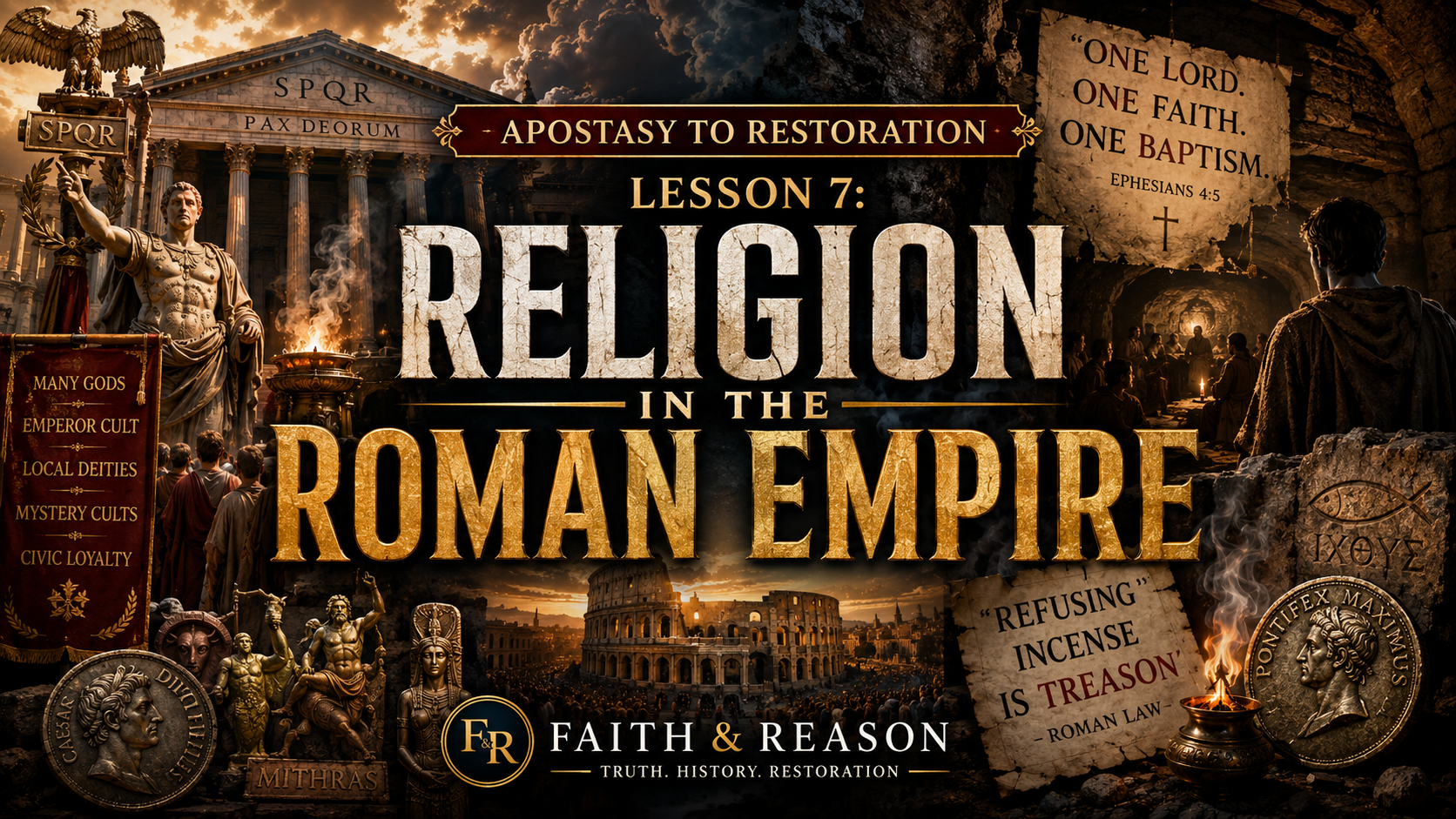
Rome could make room for another god. The crisis came when Christians refused to worship the gods already there. To their neighbors, that refusal could appear to threaten a household, a city, or the protection of the empire itself. To Christians, participation could mean betraying Jesus Christ. The collision was never simply a contest between religious people and an irreligious government: it was a struggle over worship, belonging, authority, and the limits of obedience.
Imagine being asked to demonstrate your loyalty through a religious act you believed violated your covenant with God. Your refusal might cost you friendships, income, legal protection, or your life. Yet understanding that danger requires more than repeating stories of Christians hiding underground for three uninterrupted centuries. We must ask who accused them, what officials actually required, when imperial policy changed, and how Christians themselves described their suffering.
This lesson brings ancient witnesses into conversation with Latter-day Saint scholarship, modern historical research, and biblical commentary. Its purpose is to strengthen an informed Restoration perspective by distinguishing what the evidence establishes from what remains debated. A defensible account of apostasy does not require exaggerating persecution, blaming an entire people, or denying the sincere faith of Christians who endured it.
Reader’s note: This is a substantial revision of the supplied Lesson 8, “Reasons Why the Christians [Were] Persecuted.” It retains the lesson’s five principal categories of accusation while correcting outdated generalizations and incorporating later scholarship. Ancient testimony, historical reconstruction, and Latter-day Saint theological interpretation are identified as distinct kinds of evidence.
When T. Edgar Lyon first penned Lesson 7 of Apostasy to Restoration in 1960, he invited Latter-day Saints to step into a world where religion was not just a private conviction but a fundamental component of the machinery of empire. This bold assertion set the stage for a deeper exploration of the intricate interplay between faith, culture, and politics. Sixty years later, the landscape of scholarship has transformed dramatically, yet Lyon’s central insight remains strikingly relevant: to truly understand the need for a Restoration, we must first immerse ourselves in the complex milieu that shaped the early Christian Church.
This updated lesson builds upon Lyon’s foundational work, integrating modern archaeological discoveries, peer-reviewed historical research, and contemporary Latter-day Saint scholarship to form a more nuanced understanding of the context in which early Christianity emerged. What emerges from this scholarly synthesis is a clearer, richer, and more compelling picture of the Roman religious world—a world that was teeming with a pantheon of gods, replete with elaborate rituals, and governed by a political theology that made the act of Christian discipleship both radical and perilous.
In a society where loyalty to the state was intricately tied to acts of sacrifice and devotion, where citizens adeptly navigated multiple cults without a hint of contradiction, and where the pursuit of salvation was often sought through clandestine mystery rites and the favor of emperors, the Christian proclamation of “one Lord, one faith, one baptism” represented a profound challenge to the status quo—it was nothing less than a revolutionary stance. This declaration was, in essence, a radical reformation of the religious landscape, directly opposing the established norms that dictated the relationship between the individual, the divine, and the state.
Understanding that world is essential for grasping why the early Church fractured amidst various pressures and why a Restoration was not merely desirable but indeed inevitable. The tensions between emerging Christian beliefs and the entrenched systems of power were not just obstacles to be overcome; they underscored the urgent need for a return to core principles that could unify and reinvigorate the faith community. Lyon’s insights encourage us to reflect on our own circumstances in today’s religious environment, prompting critical questions about the nature of faith, the role of community, and the ongoing quest for spiritual authenticity in an increasingly complex world. As we navigate the remnants of an ancient tapestry interwoven with faith and politics, we find ourselves inspired to reconsider the implications of our shared history and the enduring quest for a true Restoration.
Every surviving document from the earliest Christians points to one unmistakable reality: the Church of Jesus Christ was never meant to drift, improvise, or evolve by popular opinion. It was governed—actively, visibly, and globally—by living apostles who traveled, taught, corrected, and unified the Saints across thousands of miles. The idea of a fragmented, locally‑run Christianity would have been unrecognizable to the men and women who lived under apostolic direction.
Archaeologists mapping Roman travel networks now show how apostles could realistically maintain jurisdiction across vast distances. Historians studying Acts 15 identify the Jerusalem Council as the first Christian governing council—binding on every congregation. And New Testament scholars across traditions agree that Peter’s leadership was real, but never monarchical. The earliest Church functioned through a council of apostles, not a solitary bishop and not independent local leaders.
This emerging academic consensus paints a picture that looks far more like the Latter‑day Saint model of apostolic governance than the later structures of Catholicism, Orthodoxy, or Protestantism.
When Latter‑day Saints speak of a living quorum of apostles with worldwide jurisdiction, we are not inventing a new ecclesiology—we are recovering the original one. The historical record, the New Testament, and the best modern scholarship converge on the same point: the Church Christ established was led by a unified body of apostles who held authority for the entire household of faith.
This is the pattern that disappeared after their deaths. This is the pattern the Restoration restores.
What to Look for in this Lesson:
Most of the religions of the first century of the Christian era stressed the acquisition of salvation through mystical initiatory rites or elaborate ceremonies. Christianity ignored these aspects of religion and stressed a high standard of moral conduct.
Christianity was a rapidly expanding movement in the first century. Arrangements were made for supervision so that it would not become disunited.
Enrichment material. In Apostasy from the Divine Church, pp. 39-77 can be found some unique quotations and comments concerning the doctrines and worship of the early Christian church.
How This Lesson Functions in LDS Apologetics
Apostolic jurisdiction is not an abstract ecclesiological idea—it is the structural backbone of the New Testament Church. Showing that the earliest Christians were governed by a mobile, authoritative quorum of apostles accomplishes three apologetic goals:
It demonstrates that the original Church was hierarchical, organized, and led by living apostles, not by Scripture alone or by independent congregations.
It shows that later Christian structures—papal monarchy, conciliar episcopacy, or Protestant congregationalism—do not match the first‑century pattern.
It clarifies that the Restoration restores a model that actually existed, rather than inventing a new one.
This lesson therefore becomes a bridge between historical reconstruction and Restoration theology.
Is the foundation of the Restoration built on a logical contradiction? Critics are claiming they’ve found the 'smoking gun' that proves Joseph Smith was a false prophet. They call it the 'Mormon Dilemma.' But is this a genuine theological collapse, or just a fundamental misunderstanding of how God reveals truth to mankind?
Here at Faith & Reason | Grace & Sobriety, we don’t run from the hard questions. Our mission is to approach these historical and theological challenges with a clear mind and a steady heart. We aren't here for the 'gotcha' moments; we're here for the truth that stands up to scrutiny. If you're looking for a sober, faithful, and intellectually honest look at the restoration of the Godhead, you're in the right place.
In a recent viral presentation by Armor and Ash, a bold claim was made: Joseph Smith’s theology didn’t just grow—it self-destructed. The argument is simple but heavy:
They point to the Book of Mormon, specifically passages like 2 Nephi 31:21 and Ether 3:14, arguing these teach a Trinitarian or even 'Modalist' view where the Father and Son are one personage.
Then, they contrast this with later revelations like Doctrine and Covenants 130:22, which describes a Godhead of distinct, corporeal personages with bodies of flesh and bone.
The 'dilemma' they’ve constructed is this: If the Book of Mormon is true, Joseph’s later teachings are false. If his later teachings are true, the Book of Mormon is false. By invoking the test of a prophet in Deuteronomy 18, they conclude that this doctrinal shift is proof of a failed prophet, paralleling the famous 'Islamic Dilemma' used against the Qur'an.
It’s a powerful logic trap—if you accept their premises. But here at Faith & Reason | Grace & Sobriety, we believe the truth is far more nuanced. Does doctrinal development automatically equal a self-refuting contradiction? Or are we seeing the natural expansion of progressive revelation?
Today, we’re going beyond the surface-level proof-texting. We’re going to look at why the Book of Mormon wasn't a 'Nicene accident,' but a targeted correction to the creeds of the 19th century—and why Joseph’s later clarity on the physical nature of God is the logical fulfillment of the Restoration, not its undoing. Let’s look at the facts with a sober mind and a steady heart.
Was the "Great Apostasy" just a loss of truth, or was it a loss of power? In our latest installment of the Apostasy to Restoration: Reformation or Restoration - That is the Question series, I examine the structural and spiritual disintegration of the First Century Church and the divine pattern required to restore it.
Watch the Premiere Join me for the full lesson at 7:30 PM PST as I connect the dots between the ancient Church and the modern Restoration.
The Divine Pattern of Authority Before the Church could conquer the world, it had to be organized. In Acts 1, Peter uses three specific words to define the vacancy left by Judas:
Diakonia: The duty to serve.
Episkopē: The position of oversight (acting as a proxy for God’s visitation).
Apostolē: The commission to go out as an ambassador.
However, structure alone wasn't enough. The Apostles were commanded to wait for "power from on high."
Pentecost and the Kirtland Temple One of the key insights from this lesson is the parallel between the Day of Pentecost (Acts 2) and the dedication of the Kirtland Temple (1836). By using the lens of the Restoration, we can see that Pentecost was not just a revival; it was a Temple Endowment.
The Upper Room: Functioned as a "Holy of Holies."
Cloven Tongues of Fire: Signified the investiture of the High Priesthood upon every believer.
The Kirtland Parallel: Early Saints recorded identical manifestations—rushing winds and tongues of fire—confirming that Joseph Smith didn't just invent a new church; he restored the ancient experience.
Peter’s Sermon as a Temple Text We also discuss the work of scholars who argue that Peter’s sermon follows a liturgical "Temple Text" pattern: Gathering, Instruction on the Atonement, and Covenant Making (Baptism). Peter wasn't just preaching on a street corner; he was officiating as a High Priest.
Join our Mindful Latter-day Saint Christian Living & Apologetics community today for $10.00 per month or $120 per year. Arm yourself with knowledge, build your testimony, and engage with faith-focused insights that uplift and inspire. Subscribe now for full access!
In an era where social media amplifies criticism and contention, members of The Church of Jesus Christ of Latter-day Saints face an increasing wave of digital opposition. From historical distortions to modern ideological pressures, faith is often put on trial in the court of public opinion. Critics—both external and internal—use social media to challenge, mock, and undermine core beliefs, creating confusion and division among faithful members. This exclusive deep dive into the phenomenon of Latter-day Saint-baiting sheds light on the history, tactics, and evolving digital landscape of these attacks—and, most importantly, how members can fortify their faith in the face of opposition.
Understanding the History of Religious Criticism
Religious opposition is not new, but the rise of Mormon-baiting—a targeted strategy to provoke and discredit faithful members—has evolved significantly. From 19th-century anti-Mormon literature to 20th-century evangelical counter-cult movements, critics have long sought to redefine the Church’s message through misinformation. Now, in the 21st century, viral posts, algorithm-driven engagement, and ex-Mormon influencers continue this trend, adapting old criticisms for a digital audience.
Modern-Day Faith Challenges: The Social Media Battleground
Today’s critics weaponize online platforms, often distorting Church teachings, spreading half-truths, and using emotional manipulation to foster doubt. This investigation examines:
The rise of ex-Mormon influencers who frame their departures as moral awakenings, encouraging others to follow.
Evangelical apologists who use selective doctrine to paint Latter-day Saints as non-Christian.
Internal critics who challenge Church leadership and doctrine, pushing for alignment with societal trends.
Through these tactics, critics aim to erode faith by presenting their narratives as the “real truth.” Their influence extends beyond theology, affecting discussions on gender, race, politics, and historical controversies.
How to Strengthen Your Testimony Amidst Criticism
In a world where faith is publicly scrutinized, it’s critical to strengthen testimony, recognize manipulative tactics, and engage with wisdom and love. This exclusive content provides practical strategies for navigating online debates, maintaining spiritual resilience, and ensuring that personal faith remains unshaken. Topics include:
Discerning misinformation and emotional manipulation in social media debates.
Responding with clarity, confidence, and Christlike love when facing antagonism.
Building resilience through scripture study, prayer, and prophetic guidance.
Leveraging social media positively to amplify faith-based messages.
Exclusive Access: Equip Yourself with Truth
This deep-dive article is part of a premium collection designed to empower Latter-day Saints to navigate modern faith challenges with confidence. As a subscriber, you gain access to exclusive faith-based content, in-depth apologetics, and strategies for strengthening personal discipleship in an increasingly polarized world.
Engaging in a thoughtful and respectful discussion with critics of the Latter-day Saint faith is often challenging, particularly when the conversation lacks nuance or context. Glen E. Chatfield's recent blog post, "Speaking Against Polygamy Brings Damnation," is an example of this difficulty. While criticism is expected in matters of faith, the lack of historical understanding and the tone of his arguments make constructive dialogue nearly impossible.
Previously, I provided a commentary on Life After Ministry’s post about polygamy, offering a contextual analysis rather than a defense or refutation. My goal was to frame the practice of polygamy within the historical and cultural realities of Joseph Smith’s time—focusing on the persecution faced by early Church members and the evolving legal framework surrounding polygamy. This analysis sought balance and fairness, acknowledging the complexities of history rather than reducing them to simplistic judgments.
Unfortunately, many critics, including Mr. Chatfield, seem to approach these topics with rigid confirmation biases. Rather than fostering open discussions or exploring historical nuance, they rely on short, dismissive posts filled with inflammatory language and ad hominem attacks. Such tactics are not conducive to genuine conversation; they are, quite frankly, designed to silence opposing views rather than engage with them.
Attempts at Dialogue
A few years ago, I’ve extended invitations to Mr. Chatfield to engage in a respectful and thoughtful discussion. These offers have been declined or ignored. This refusal to engage in dialogue speaks to a broader issue among some critics of the Latter-day Saint faith: a reluctance to have their assumptions challenged. Instead of inviting scrutiny, they often position themselves as authoritarian voices, presenting their perspectives as the sole "truth" without opening the door to meaningful analysis or debate.
Mr. Chatfield’s approach—echoing unexamined claims and rejecting contextual discussion—raises questions about his commitment to honest discourse. His comment sections, for example, appear to be filled with one-sided conversations, often under pseudonyms, that lack context, substance, or relevance. Whether these “conversations” are genuine or orchestrated, they do little to foster understanding or credibility.
Addressing Common Misconceptions
A recurring critique is that any reference to historical context is an attempt to "soften evil" or defend indefensible actions. This accusation misunderstands the purpose of context. Historical context does not excuse or justify actions; it provides the framework to understand why certain decisions were made and how they were influenced by cultural, social, and legal factors of the time. Without this understanding, history becomes little more than a caricature—stripped of depth and complexity.
For example, the quotes often cited by critics, such as those from Heber C. Kimball or the Journal of Discourses, must be read within the framework of their time. It’s important to recognize the theological and societal pressures shaping these statements rather than cherry-picking quotes to support preconceived narratives. Dismissing context entirely is intellectually dishonest and undermines any claim to objective analysis.
Critics like Mr. Chatfield also frequently misrepresent the historical development of polygamy within the Church. Joseph Smith’s revelations on plural marriage, while controversial, were rooted in a theological framework that many early Saints believed to be divinely inspired. Similarly, the later renunciation of polygamy under Wilford Woodruff was not a convenient abandonment but a response to significant legal and political pressures. These events are complex and multifaceted, and reducing them to accusations of “serial adultery” ignores the broader historical and doctrinal landscape.
Faith, Nuance, and Dialogue
The claim that the Bible unequivocally supports a single form of marriage also overlooks the complexities of scriptural history. While monogamy is a clear ideal in many biblical narratives, instances of polygamy, such as those involving Abraham, Jacob, David, and Solomon, complicate the conversation. These examples do not invalidate God’s commandments but illustrate the human struggle to align with divine principles. Critiquing polygamy in the Latter-day Saint context while ignoring these biblical precedents reveals a selective approach to scripture that lacks consistency.
Ultimately, productive discussions require an openness to learning, a willingness to engage in good faith, and a recognition of nuance. Critics like Mr. Chatfield, who dismiss context and rely on inflammatory rhetoric, miss an opportunity to contribute meaningfully to the broader dialogue about faith, history, and theology. Instead of fostering understanding, they perpetuate division and misunderstanding.
As members of the Latter-day Saint community, we should strive to engage with critics respectfully, providing thoughtful and well-reasoned responses. At the same time, it’s essential to recognize when dialogue is unproductive and move forward in our efforts to build bridges with those willing to engage in sincere and honest conversations.
Life has moments when everything feels uncertain, and as humans, we often wrestle with mistakes and doubt. Doctrine and Covenants 3–5 reminds us that God's purposes remain steady, even when our own choices falter. These sections, given during pivotal moments in Joseph Smith's history, teach us about trusting in the Lord, the power of repentance, and how divine plans always unfold, no matter the setbacks. From the loss of the 116 pages to lessons of service and sure witness, this revelation offers timeless wisdom: God's work can't be stopped, and His mercy invites us to return to Him time and again. Let's explore what this means for our own faith today.
The Historical Context of Doctrine and Covenants 3–5
Doctrine and Covenants 3–5 captures a time of intense personal struggle, faith, and divine guidance for Joseph Smith. These revelations show how God’s purposes unfold, even as His servants grapple with human weaknesses. Let’s take a look at key events that provide the backdrop for these chapters, offering lessons that resonate with our own faith journeys.
Joseph Smith’s Divine Calling: Restoring the Gospel and the Golden Plates
Joseph Smith was chosen by God to restore the fullness of the gospel during a time of spiritual confusion. Through him, the Book of Mormon—a sacred text that clarifies and complements the Bible—was brought forth. The golden plates, the ancient record from which the Book of Mormon was translated, were entrusted to Joseph by the angel Moroni. They symbolized God’s trust and the divine mission Joseph was tasked to fulfill.
Imagine being 22 years old, holding the responsibility of translating scripture that would impact generations. Joseph relied on divine tools like the Urim and Thummim and a seer stone to aid in this miraculous process. Emma Smith and Martin Harris served as scribes, recording the words he dictated. His role as a translator wasn’t just about producing a book—it was part of a larger restoration meant to bring God’s truths back to the world.
This calling wasn’t without challenges. Joseph faced relentless opposition, including skepticism from peers and financial constraints. Yet, Doctrine and Covenants 3 reminds us that God’s work goes forward, even when obstacles arise.
The Loss of the 116 Pages: A Test of Obedience
One of the most memorable events tied to these chapters is the loss of the 116 pages of the Book of Mormon manuscript. Martin Harris, a key scribe and early supporter, begged Joseph to let him take the manuscript home to show his skeptical wife and family. Despite receiving divine warnings, Joseph reluctantly agreed after repeated pleadings. Unfortunately, the manuscript was lost, likely taken or destroyed—a devastating outcome for both Joseph and Martin.
This wasn’t just the loss of paper; it represented months of painstaking work and a breach of trust with God. The event humbled Joseph, who was rebuked by the Lord in Doctrine and Covenants 3. He temporarily lost the ability to translate, a consequence that underlined the importance of obedience in sacred matters.
For Martin Harris, the experience was also transformative. It prompted deep reflection on his personal motives and spiritual commitment. The loss wasn’t just about human error—it became a crucible through which both men were taught essential lessons about accountability, faith, and reliance on God.
God’s Response to Human Error: Unchanging Purpose and Grace
Doctrine and Covenants 3:1–3 provides one of the most reassuring messages in all of scripture: “The works, and the designs, and the purposes of God cannot be frustrated.” What does this mean for us? Despite Joseph Smith’s mistakes and the loss of the manuscript, God had already prepared a solution—a backup record, known as the small plates of Nephi, was ready to replace what was lost.
This principle speaks volumes. While human choices might create detours, they can’t derail God’s ultimate plan. Just like Joseph, we sometimes misstep, but God’s mercy gives us the chance to course-correct. It’s as if God’s plans are a sturdy ship—while we might cause the occasional storm or wave, the ship keeps moving toward its divine destination.
Seeing how God accounted for human imperfection in this instance brings incredible hope. It shows that our flaws don’t disqualify us from His work. Instead, God invites us to learn and continue to serve. These verses remind us that repentance and trust in God’s grace are how we move forward, no matter the setbacks.
Fearing God More Than Man
The tension between choosing to please God or succumbing to human pressures is a challenge we all face. Doctrine and Covenants 3 highlights this battle vividly through Joseph Smith and Martin Harris, revealing why fearing God above all is a mark of firm discipleship. Let's unpack how their experiences offer valuable lessons for our own spiritual journey today.
The Struggle Between Divine Will and Human Desires
Joseph Smith's role as God's chosen prophet was not free from personal trials. One of the most striking moments of his life was the loss of the 116 manuscript pages of the Book of Mormon. Martin Harris, a wealthy early supporter of the work, had pushed Joseph to seek the Lord’s approval in allowing him to show those sacred pages to his skeptical family. Despite multiple denials from the Lord, Joseph eventually yielded to Martin's persistence.
This wasn’t just a simple "yes" to a friend; it was a moment of conflict between divine will and human desires. Why is this significant? Because Joseph knew better. Doctrine and Covenants 3:7 records the Lord's response: “You should not have feared man more than God.” In agreeing to Martin’s request, Joseph allowed human expectations to overrule divine commandments, leading to one of the most painful moments in his life.
We’ve all been there, haven’t we? Maybe it’s not about losing scripture, but we know the pull to meet others’ expectations, even when it conflicts with what God has asked us to do. For Joseph and Martin, this experience was a turning point. It taught them—and us—that prioritizing God's will brings peace, even when it's hard to explain to others.
Standing Firm in Faith Amid Criticism
The story of the lost manuscript wasn’t without fallout. Both Joseph and Martin faced intense criticism. Martin's wife doubted him. Others mocked Joseph's prophetic calling. The temptation to seek validation from people instead of God was real. But here’s the lesson: fearing God more than man provides the courage to stay steadfast, even when the world feels against us.
Criticism can feel like a storm battering at our faith, but fearing God anchors us. In every storm, it’s helpful to remember the words from Doctrine and Covenants 3:8: “Keep my commandments, and it must needs be that in due time you shall prevail.” The Lord promises His support when we choose Him over popular opinion.
Joseph eventually learned this lesson deeply. His ability to endure relentless persecution—whether from legal accusations or community backlash—came from a firm conviction that God’s work was greater than man's approval. Think of it this way: trying to please everyone around us is like chasing shadows, but fearing God allows us to walk confidently in the light.
We might not face public ridicule like Joseph did, but the principle applies in everyday moments. Whether it's choosing to honor the Sabbath when friends invite us out or standing up for honesty at work, fearing God gives us strength to do what's right, even when it's not popular. Martin Harris, too, had to recommit himself, learning that true faith requires more than public validation—it demands private integrity.
By studying these examples, we’re reminded that the opinions of others may shake us, but God's approval remains constant. When we align our choices with His will, we experience lasting peace and strength, no matter the storm.
The Gift of Repentance and God’s Mercy
Repentance is one of the greatest gifts God gives us, offering us a way to realign ourselves with His eternal purposes. Through it, we experience His tender mercy, even when we face the consequences of our actions. Doctrine and Covenants 3–5 captures this beautifully, particularly through Joseph Smith’s own journey of repentance and renewal.
Joseph Smith’s Experience of Forgiveness
The loss of the 116 pages is a story not just of human error, but of divine love and second chances. When Joseph allowed Martin Harris to take the sacred manuscript despite God's warnings, he faced devastating consequences. The loss was not merely a blow to his prophetic mission but also a deeply personal failure. Yet, this moment of humility became a turning point.
God’s response to Joseph’s transgression shows His tenderness. In Doctrine and Covenants 3:10, the Lord invites Joseph to repent and assures him that he is “still chosen.” This declaration of mercy is a powerful reminder that God’s purposes are eternal, and our role in them is not easily dismissed. Mistakes may divert us temporarily, but they do not disqualify us permanently if we turn back to Him.
What can we learn from Joseph here? First, that true repentance requires honesty. He had to acknowledge his mistake and take responsibility before moving forward. Second, it demonstrates how repentance isn’t the end of our calling but a refining process. Just as impurities are burned away in gold to make it purer, Joseph’s repentance deepened his understanding and prepared him for greater responsibilities.
Think about it: if God could forgive Joseph for such a significant mistake, why would He not forgive us for ours? His mercy isn’t limited or conditional; it’s always there as long as we are willing to turn to Him with a sincere heart.
Renewing Our Commitment to God
Repentance is not a one-time event; it’s a commitment we renew continually. Just as Joseph had to learn from his mistakes, we, too, are called to evaluate our own lives. Where have we fallen short? What attitudes or actions might we need to set aside to realign ourselves with God’s will?
God’s mercy, emphasized repeatedly in scripture, gives us strength to make these changes. Repentance, as hard as it might feel, is not about shame but about healing and growth. It’s like taking off tight, uncomfortable shoes that we have walked in for too long. The relief we feel when we let go of sin and accept God’s mercy is liberating.
Here are a few ways we can approach repentance in our daily lives:
Reflect on your life regularly. Are there areas where pride, anger, or fear might be blocking you from feeling God’s love fully? Identify them and bring them to the Lord in prayer.
Turn to scripture and counsel. Just as Joseph received divine revelation to guide him back, we can turn to God’s word and inspired leaders for direction.
Trust in the Atonement of Jesus Christ. Repentance is only possible because of Christ’s sacrifice. His grace carries us when we’re ready to change but unsure how.
Doctrine and Covenants 3:10 reminds us that God is ever willing to forgive. While He will not shield us from the natural consequences of our choices—such as Joseph temporarily losing the ability to translate—He stands ready to restore us to His trust. Each act of repentance strengthens our bond with Him, drawing us closer to His eternal purposes.
When I consider Joseph’s experience and God’s hand in his redemption, I’m reminded that our mistakes don’t need to define us. Instead, they can refine us. God’s mercy is limitless, and His forgiveness is a testament to His unwavering love. Repentance doesn’t just change our behavior; it changes our hearts. And when our hearts align with God, we find peace, purpose, and incredible strength to press forward.
The Eternal Nature of God’s Work
Life's uncertainties can make us question our purpose, but understanding God's eternal work provides clarity and peace. Doctrine and Covenants emphasizes that God's plans are constant, even when circumstances feel chaotic. Let’s examine how His unchanging nature and ability to turn setbacks into stepping stones teach us about patience and trust.
Trusting in God’s Unchanging Nature
God's work is described as "one eternal round" in Doctrine and Covenants 3:2, reminding us that His purposes are unchanging. This eternal constancy offers peace, especially during times of uncertainty. When we feel lost, knowing that God's perspective extends beyond the moment can help us anchor our faith.
For example, imagine the loss of the 116 pages of the Book of Mormon—a moment that seemed catastrophic. Yet, God calmly reassured Joseph Smith that His purposes could not be frustrated. Like Joseph, we might find ourselves in moments where our mistakes or external events seem insurmountable. But understanding God’s nature allows us to step back and trust that He sees the bigger picture.
In our own lives, this principle applies when we navigate personal failures or unexpected hardships:
When we lose a job, God might be opening a door to better opportunities.
In times of illness, we can trust that He strengthens us with lessons we might not yet perceive.
If relationships falter, His eternal plan can provide healing or new connections that align with His purposes.
When everything around us feels rocky, it helps to remember a simple truth from the scriptures: God's plan is like a river—steady in its flow and purposeful in its direction. While we may encounter rapids or still waters, the river’s destination is always certain.
Lessons in Patience and Faith
God's ability to redirect setbacks into opportunities demonstrates that He is in control, even when things seem out of control. The loss of the 116 pages is a perfect illustration of this. It wasn't just about replacing written words—it was about teaching Joseph Smith and Martin Harris (and all of us) the crucial lessons of patience, obedience, and trust in God over men.
It’s easy to feel frustrated when setbacks strike. Think about how we often react—doubting our decisions, blaming others, or even questioning God. But setbacks, in God’s hands, can become building blocks. Here’s how this principle applies to us:
Setbacks refine our character. Like gold being purified by fire, trials strip away pride and build humility. For Joseph Smith, the experience taught him the value of obedience and stewardship over sacred things.
God prepares solutions before we even fail. Just as the small plates of Nephi were in place to replace the lost manuscript, God often has contingencies ready for our missteps.
Faith grows in the waiting. The period of uncertainty after the loss wasn’t wasted time. It strengthened Joseph’s reliance on God and his commitment to the restoration.
When we see God redirecting setbacks, it’s as if He’s weaving a tapestry. From the underside, the threads may look tangled and messy, but from His perspective, the design is flawless and purposeful. This perspective changes how we approach challenges—knowing they’re part of a bigger, masterful picture.
Perhaps the best part of trusting in the eternal nature of God’s work is recognizing that no mistake, failure, or trial can derail His plan. Our setbacks, when placed in His hands, become stepping stones toward eternal progression. God’s work is eternal, and because of that, so is His faith in us.
The Role of the Book of Mormon in God’s Plan
The Book of Mormon is more than a historical record—it's a divine tool central to God’s plan for His children. By offering clarity on deep gospel truths and directing all people to Jesus Christ, it underscores God’s purpose to gather Israel, spread the gospel, and prepare us for eternal life. In the following sections, let's explore the role this sacred book plays in fulfilling God's plan and how it can shape our daily faith.
A Witness to All Nations
The Book of Mormon stands as a direct testimony of Jesus Christ to the entire world. On its very title page, Moroni declared its purpose: to convince all people “that Jesus is the Christ, the Eternal God.” For those seeking deeper understanding, it doesn’t replace the Bible—it complements it, strengthening the testimony of Christ’s divine mission.
This sacred book fulfills its role in God's plan in several ways:
Testifying of Christ’s Atonement: From Nephi to Moroni, each prophet in the Book of Mormon directs readers to Christ’s role as the Savior. Their teachings mirror the pattern of ancient prophets and provide timeless counsel on how to embrace His grace.
Clarifying Eternal Truths: The Book of Mormon sheds light on doctrines like the purpose of mortality, the Atonement’s reach, and the relationship between justice and mercy. For example, Lehi’s teachings on agency (2 Nephi 2) explain how crucial free will is in returning to God.
Uniting God’s Children: Doctrine and Covenants 3:16–20 highlights that the Book of Mormon's role is intertwined with gathering Israel. It serves as an invitation for all people to embrace the gospel, regardless of their background.
Have you ever thought of the Book of Mormon as a friend who introduces you to Christ? Just like a trusted companion, it invites the world to step closer to the Lord and understand His love. It’s what makes this book a cornerstone in missionary efforts, as it resonates with both the skeptical seeker and the faithful disciple.
Personal Application of the Book of Mormon’s Teachings
While the global mission of the Book of Mormon is inspiring, its personal impact can be even more transformative. Engaging with its pages daily brings God’s plan into focus, helping us navigate life with clarity and purpose.
Here’s why studying it matters:
It offers personal revelation. The Book of Mormon speaks to specific challenges we face. Have you ever opened its pages and felt a verse speak directly to your situation? That’s how the Spirit uses scripture to guide us.
It strengthens faith in small ways every day. Consistency matters. Reading even a short passage invites the Spirit into our lives and builds trust in God’s plan.
It gives us answers for life’s big questions. Why are we here? What happens after this life? The Book of Mormon provides Christ-centered answers to these deep questions, making it relevant no matter where we are on our faith journey.
Not only should we read it, but sharing its truths is part of fulfilling God’s plan. Do you know someone who’s struggling to feel God’s love or find direction? Sharing a favorite scripture or your testimony might be exactly what they need.
The teachings of the Book of Mormon aren’t abstract—they’re profoundly practical. They inspire us to love more, live with purpose, and trust that the Lord has a plan for all of us. By embracing these teachings in our daily lives, we align ourselves with God’s eternal purposes and feel His guiding hand more clearly.
The Importance of Witnesses in Establishing Truth
In matters of faith, the concept of witnesses carries deep significance, especially within the teachings of the Doctrine and Covenants. Witnesses confirm, validate, and bring personal insight to divine truths, serving as inspiring examples of trust in God's purposes. In Doctrine and Covenants 3–5, we see how witnesses play a pivotal role in establishing the truth of the Restoration and the Book of Mormon. These insights shine a light on trusting God’s greater plan, even when physical evidence is scarce.
Faith Without Physical Evidence
Believing without seeing requires stepping into the unknown while trusting in God’s promises. This is a principle deeply rooted in scripture, emphasized throughout the Doctrine and Covenants. Revelation comes not through tangible proof but through a quiet, powerful witness of the Spirit. Martin Harris’s request for a physical witness of the gold plates, recorded in Doctrine and Covenants 5, teaches a profound lesson: faith isn't built on miracles alone.
Faith is often tested in the absence of physical evidence. Think about how Abraham, without seeing the fulfillment of God’s promises, moved forward in trust. Doctrine and Covenants 5 reminds us that Martin Harris would need to demonstrate faith before receiving a tangible confirmation from the Lord. Spiritual growth happens when we exercise faith in unseen truths, not when every doubt is resolved by sight.
Faith without visible proof is like planting a seed. You might not see immediate growth, but with light and nourishment, roots take hold deep beneath the soil, and eventually, the fruit appears. Many of us may never see angels or ancient artifacts like gold plates, but we are promised our own personal spiritual confirmations through the Holy Ghost. That’s the beauty of God’s relationship with us—our individual journey to truth is just as sacred as the experiences of those early witnesses.
So, how do we build the faith to believe in what we can’t see? By trusting God’s word, embracing the small confirmations He sends, and allowing those quiet moments to strengthen our testimony daily. Faith grows when we take action, even without all the answers laid out before us.
The Role of the Three Witnesses
The calling of the Three Witnesses—Martin Harris, Oliver Cowdery, and David Whitmer—stands as one of the most remarkable moments in the Restoration of the gospel. These men were promised the opportunity to bear witness of the gold plates’ divine origin and testify publicly about their experience, as detailed in Doctrine and Covenants 5. But their role went beyond mere observation.
Their testimony served to establish the Book of Mormon's truthfulness to the world. The Lord declared in section 5 that only through repentance, faith, and humility could Martin Harris participate in this sacred experience. This highlights a key point: being a witness required not only a willing heart but also spiritual preparation. Witnessing divine things wouldn’t be a casual event—it was holy, deliberate, and deeply personal.
Together, the Three Witnesses testified that they saw an angel who showed them the golden plates and heard God’s voice declare the truth of the work. Their testimony was recorded and published in every copy of the Book of Mormon to validate Joseph Smith’s work. This public declaration wasn’t without its challenges. Each of the witnesses, at one point or another, faced intense scrutiny and personal struggles. Yet, none of them ever denied their experience, even when under pressure or separated from the Church.
What does this teach us about the importance of witnesses? Their steadfastness reminds us that truth stands firm even when others doubt or criticize it. The law of witnesses—established in both the Bible and the Doctrine and Covenants—ensures that multiple voices confirm truth. Just as two or three witnesses were required in ancient times to establish the truth of a matter (Deuteronomy 19:15), the testimony of these men reinforces the divinity of the Book of Mormon.
For Martin Harris, this was a defining moment. Despite requiring incredible faith and humility to receive his witness, his testimony became an undeniable part of Church history, paving the way for others to trust the Restoration. The three men’s accounts have inspired countless believers to seek the Spirit’s confirmation of the Book of Mormon for themselves.
Their example reminds us of the power of testimony—not just in extraordinary experiences, but in how we share what we know with others. You don’t need to see gold plates or hear heavenly voices to testify of truth. When we speak about what the Spirit has taught us, we strengthen our own faith and invite others to discover their own witness.
In the end, the Three Witnesses demonstrate that God doesn’t ask us to believe in isolation; He provides others to strengthen our faith. Their unwavering testimony stands as an example of faith, sacrifice, and the power of standing for truth, no matter the opposition.
Applying Lessons from Doctrine and Covenants 3–5 into Daily Life
The scriptures in Doctrine and Covenants 3–5 provide profound lessons that can shape our daily living. Joseph Smith's early challenges as the Lord chastised him after the loss of the 116 manuscript pages remind us of God's patience and mercy. These chapters underline the importance of humility, repentance, trust in God's plan, and learning from setbacks. As we examine these lessons, let's consider how they apply to our lives today.
Developing Christlike Attributes
Doctrine and Covenants 4:6–7 highlights several Christlike qualities, such as humility, patience, faith, and love with an “eye single to the glory of God.” These traits were critical for Joseph Smith during times of trial, and they remain essential for us today. But how do we develop them in our modern lives?
Humility: Joseph’s experience teaches that human pride can lead to spiritual setbacks. A humble heart allows us to accept correction and prioritize God's will over our own. We can show humility by acknowledging our dependence on God in prayer and seeking His guidance before making big decisions.
Patience: Patience grows when we trust in God's timing rather than rushing to meet our own expectations. Just as Joseph had to pause and refocus after losing the manuscript, we can use moments of waiting to grow closer to God through reflection and scripture study.
Trust: This may be the hardest trait of all. Trusting God's plan when things don't go as expected requires faith that His perspective is eternal. Doctrine and Covenants 3:1 reminds us that His purposes cannot be frustrated. Trust might mean continuing to live gospel principles, even when blessings we've prayed for seem delayed.
When life feels overwhelming, I find it helpful to reflect on Christ's example. His humility, patience, and trust in the Father guided Him through every trial. While we may not face the exact struggles Joseph or Christ faced, we can strive to follow their examples in our daily actions.
Learning from Setbacks and Moving Forward with Faith
The loss of the 116 pages was devastating for Joseph Smith, both spiritually and personally. Yet Doctrine and Covenants 3 teaches us a fundamental truth: “God’s purposes cannot be frustrated.” What does that mean for us? It means that even our greatest mistakes don’t derail God’s plan—they become part of our learning and growth.
Mistakes as Opportunities for Growth:
Rather than seeing failures as the end, we can view them as stepping stones. Mistakes often highlight areas we can improve. For example, maybe losing our temper in a stressful situation shows us we need to develop more patience or spiritual grounding. Recognizing these moments as part of our refinement process is key.
Here’s how we can turn setbacks into growth:
Acknowledge mistakes honestly. Joseph’s willingness to admit his error after losing the manuscript was pivotal. When we own up to our mistakes instead of justifying them, we open the door to learning.
Seek repentance and renewal. Turning to God after missteps builds our relationship with Him. Repentance isn’t about being perfect right away; it's about realigning our hearts and actions with His teachings.
Refocus on faith. After losing the pages, Joseph didn’t give up on his divine mission. In our lives, faith helps us move forward and keep trying—even when the path feels uncertain.
Renewal Through God’s Grace:
Doctrine and Covenants 3:10 is a verse that resonates deeply: “But if you will turn to me, and hearken unto my voice… thou art still chosen.” What an incredible reminder! God’s grace means that setbacks are temporary, not permanent. Whether it's a struggle in school, a fractured friendship, or a moment of doubt, He offers a way back.
Think of it like hiking a mountain. Sometimes we slip on loose rocks or take a wrong turn—yet with the right path and steady determination, we can reach the summit. Similarly, God’s plan includes those wrong turns, offering ways to reset our footing.
Even when life feels like it’s veered completely off course, the lessons from Doctrine and Covenants assure me that God is always there to guide us back. His work is eternal, and we are all part of that work. As long as we turn to Him, there's always a path forward.
Conclusion
Doctrine and Covenants 3–5 reminds us that God’s purposes remain steady, even through human imperfection. The Lord’s chastening of Joseph Smith for the loss of the 116 pages wasn’t just about correction—it was an invitation to trust His work and mercy. These revelations teach that setbacks aren’t the end but opportunities for growth under God’s guidance.
When we prioritize God’s will over human pressures, we align ourselves with His eternal plan. Faith, repentance, and humility are the tools He gives us to turn mistakes into stepping stones. Let’s embrace these principles in our lives, trusting that His grace is enough to guide us forward.
How have you seen God’s hand steady your own life, even during mistakes or uncertainty? Let’s keep building faith, one choice at a time.
Just imagine listening to this all those years ago. Do you just accept it or do you compare it with the Bible?
We’re praying the people of Mormonism today do the latter.
First of all, Brigham Young couldn’t know what’s in man’s heart or the thoughts of anyone.
This would make God a liar and God never lies! (Numbers 23:19)
To address this, we need to look at his statement in its proper historical and doctrinal context. Stick around as I unpack the issue, highlight the flaws in Grim’s argument, and provide a faith-affirming response rooted in scripture and logic. Understanding the truth strengthens our ability to defend the gospel with confidence.
Understanding Brigham Young’s Statement in Journal of Discourses 10:40
Brigham Young’s teachings often carry layers of meaning shaped by the challenges and faith of the early Saints. His statement in Journal of Discourses 10:40, regarding knowing the "very thoughts of their hearts," has sparked conversations and critiques from outside the Church.
I say to the enemies of truth that I can tell them the words that are spoken in their private counsels. The very thoughts of their hearts are made known to me. They lay their plans to accomplish such and such a work in so long a time, and then plan a movement to destroy the “Mormons.” That is what they talk about and what is in their hearts, but they will be disappointed in it all. Every time they make a movement against this kingdom they will sink still lower in the scale of national power, while the kingdom of God will rise more and more in influence and importance in the eyes of all people.
By looking at the historical, scriptural, and doctrinal context, we can gain a better understanding of what he meant and why it matters.
Historical and Cultural Context
Brigham Young led the Church during one of its most turbulent periods. The Saints were no strangers to hardship—driven from Missouri, expelled from Nauvoo, and forced westward into the wilderness. These weren’t just minor inconveniences. They faced mob violence, loss of homes, and even death. Survival required unity and unparalleled trust in their leaders.
At that time, Church leaders needed to speak with boldness. Imagine being in Brigham’s shoes—guiding thousands of people under constant threat. His words weren’t just sermons; they were lifelines. Statements like the one in Journal of Discourses 10:40 were meant to inspire confidence in divine direction amidst the chaos. Critics tend to forget the backdrop of persecution, treating his remarks as if they came from someone with no pressures or responsibilities. That’s the wrong lens to use.
The Purpose of Prophetic Teachings
Prophets don’t just deliver soft reassurances; they challenge, inspire, and unify. Brigham’s bold rhetoric wasn’t about self-promotion or mysticism—it was about leading a people who relied entirely on divine direction. Leaders like Brigham couldn’t afford to speak in vague terms or leave room for doubt. They had to build faith and reinforce the collective confidence of the Saints.
When Brigham spoke of knowing the thoughts of others, it wasn’t boasting. It was a reminder of the prophetic gift—a gift many recognized from scripture. His words emphasized how deeply God was involved in guiding His people. A prophet’s role includes making the unseen felt, pushing the Saints to trust divine power over mortal limitations. Without bold statements from prophets, unity might falter, and the Spirit’s influence could be overshadowed by fear.
Prophetic Insight in Scriptural Context
Brigham’s statement aligns with biblical examples of God revealing knowledge to His prophets. Look at Elisha in 2 Kings 6:12. The king of Syria was baffled by Israel’s ability to anticipate his military moves, only to learn that Elisha, through divine insight, was revealing his plans. Elisha didn’t have to be physically present to know what was happening; God was his source of information.
This concept—prophetic insight through revelation—runs throughout scripture. Joseph, Daniel, and even Christ Himself spoke of things they couldn’t have known without divine revelation. When Brigham spoke of knowing thoughts, he echoed these scriptural moments. God’s prophets have always had access to higher truth when it was necessary to fulfill His work.
Analyzing the Specific Phrase: 'The Very Thoughts of Their Hearts'
Breaking down Brigham’s statement helps clarify its meaning. He wasn’t claiming to read minds like a magician or psychic. Instead, he was emphasizing the role of revelation. The phrase “the very thoughts of their hearts” highlights how the Spirit reveals what’s hidden, whether in motives, intentions, or actions.
Think about the broader principle of revelation. How often have you felt inspired to say something that turned out to be exactly what someone needed to hear? Prophets operate on a higher level of that same principle. Brigham’s statement reflects the divine insight he was entitled to as the Lord’s mouthpiece.
Critics fixating on this phrase miss the point. This wasn’t about earthly power or intellect—it was about aligning with God’s will. Through Brigham, the Saints learned that nothing could stay hidden from a God who sees all. It wasn’t a spectacle; it was a reminder of divine trustworthiness.
By understanding this statement in its historical and doctrinal context, we can see it for what it was: an expression of faith, revelation, and the prophetic role in the Restoration.
Identifying Logical Fallacies in Michelle Grim's Argument
Critiquing religious leaders often leads to misunderstandings, especially when their words are removed from their historical and spiritual context. In Michelle Grim’s post at Life After Ministry, her analysis of Brigham Young’s claim about reading thoughts falls victim to several logical fallacies. Let me break these down so we can better understand where her argument goes astray.
Grim begins by portraying Brigham Young’s statement as a claim to omniscience, suggesting that he positioned himself as an all-knowing entity. But is that really what he said? Absolutely not. Brigham’s comment wasn’t about personal, limitless power—it was about receiving specific divine inspiration.
By framing his words this way, she creates a strawman argument. She knocks down an exaggerated version of Brigham’s intent rather than tackling the actual meaning behind his statement. Think of it like this: claiming Brigham’s prophetic insight equals omniscience is like saying a weather forecaster who predicts a storm thinks they control the weather. It’s simply not a fair correlation.
Brigham’s words align with countless scriptural examples where God grants prophets insight—not as a permanent resource but as needed to fulfill His work. By misrepresenting his intent, Grim forces a misunderstanding that misleads her readers and disregards historical and doctrinal context.
Grim pushes a false choice in her analysis: either Brigham’s statement was a false claim, or the Bible isn’t trustworthy. This oversimplifies the issue and dismisses the possibility of a nuanced, scripturally consistent explanation. Why exclude a middle ground that aligns both Brigham’s words and biblical teachings?
The Bible offers numerous examples of prophetic insight. Consider when Christ, in John 2:25, knew "what was in man," or when Peter, in Acts 5, discerned Ananias' deceit without being told. These events show that God has always equipped His servants with knowledge beyond human comprehension.
But Grim’s argument refuses to account for those possibilities. Instead, she frames it as an all-or-nothing conclusion that forces readers to choose between faith in the Bible or doubt in Brigham. This ignores the continuity between scriptural precedent and prophetic revelation, as if one must cancel out the other.
Eisegesis: Misapplication of Scripture
One of the more glaring issues in Grim’s argument is her selective use of scripture. She draws on Matthew 16:18 and 1 Corinthians 2:11 to discredit Brigham’s statement, but her approach lacks context and theological depth.
Take Matthew 16:18, for instance. This verse speaks about Peter’s role in building the Church, highlighting divine authority granted to man. Grim uses it as if it undermines prophetic authority, which is ironic because it does the exact opposite. Similarly, 1 Corinthians 2:11 describes the Spirit revealing divine truths. Instead of supporting her claim, this verse directly affirms the principle of revelation.
Grim isolates these passages from their broader context—a classic example of eisegesis. Rather than interpreting scripture in line with its intended meaning, she reads her own conclusions into it. This approach creates a flawed scriptural argument that cherry-picks verses while ignoring their deeper connections to prophetic gifts throughout history.
By examining these logical fallacies, it’s clear her critique of Brigham Young’s statement doesn’t hold up. Misrepresenting his intent, presenting false choices, and misusing scripture only distort the real conversation about prophetic revelation and divine insight. Recognizing these errors allows us to stay grounded in truth and defend our faith with confidence.
Contextual Analysis of Scriptures Quoted in Grim’s Post
When responding to critiques like Michelle Grim’s, it’s essential to examine the scriptures she cites in proper context. Misreading these verses leads to flawed conclusions about prophetic revelation and the doctrines of the Restored Gospel.
Matthew 16:18: The Rock of Revelation
In Matthew 16:18, Christ declares to Peter, “Thou art Peter, and upon this rock I will build my church.” Critics often interpret “rock” as Peter himself or use this passage to challenge modern prophetic authority. But what does the “rock” really mean? Revelation. It’s not about Peter as a person but the divine process by which God leads His Church.
Let me ask this: How does one build anything enduring without a strong foundation? Christ’s Church must be rooted in continuing communication with heaven. Revelation turns mortal leaders into instruments for divine will. The “rock” here isn’t a man—it’s God’s ability to reveal truth to humanity. That’s the foundation of eternal stability.
This doctrine aligns perfectly with Latter-day Saint beliefs. Prophets today, as in biblical times, guide the Church through revelation. Critics like Grim miss this point entirely. Instead of weakening Brigham Young’s statement, Matthew 16:18 reinforces it. Brigham’s ability to discern “the thoughts of their hearts” wasn’t a claim of personal power but evidence of God working through him. Without such spiritual gifts, how could God’s Church withstand opposition, trial, or human error over centuries?
By focusing solely on Peter, Grim ignores the broader truth this verse teaches: revelation is the heartbeat of the Church. It’s the same gift Christ promised Peter, the same power Brigham used to lead the early Saints, and the same principle guiding the Church today.
1 Corinthians 2:11: Knowing Through the Spirit of God
In 1 Corinthians 2:11, Paul asks, “For what man knoweth the things of a man, save the spirit of man which is in him? Even so the things of God knoweth no man, but the Spirit of God.” This verse doesn’t diminish human understanding—it elevates it by recognizing the transformative power of divine revelation.
Have you ever had a moment when you just knew something, even if you couldn’t explain how? That’s a glimpse of what Paul is describing. The human mind, no matter how sharp, can’t grasp the depth and scope of God’s purposes without the Spirit. Prophets, through their calling, experience this on a much grander scale. God reveals truths to them that are vital for His Church.
Grim’s appeal to this scripture misses an important point: revelation bridges the gap between the finite and the infinite. Brigham Young’s insight into the “thoughts of their hearts” wasn’t a party trick or a wild claim. It was an example of this very principle. The Spirit gave him understanding that served the greater purpose of guiding the Saints.
Paul’s message actually supports the idea of spiritual gifts being granted to those God calls. Grim’s attempt to dismiss Brigham’s statement by referencing this passage is ironic. Instead of disproving prophetic insight, it validates the role of the Spirit in revealing hidden truths. Without such divine guidance, Paul himself couldn’t have taught the Corinthians with the power and understanding he possessed.
So what can we take away from all this? These scriptures highlight that prophets don’t rely on their own wisdom. Whether it’s Peter’s role in Matthew or Paul’s teaching to the Corinthians, both prove the necessity of revelation. Brigham’s prophetic role fits seamlessly into this scriptural framework, showing us that God continues to work through His chosen servants to accomplish His purposes. Grim’s argument loses its footing when the texts are read with their full meaning in mind.
The Role of Divine Inspiration in Prophetic Leadership
Understanding the role of prophetic leadership means understanding how divine inspiration empowers God’s chosen servants. Throughout history, prophets have received knowledge far beyond human reasoning, serving as instruments to lead, protect, and teach God’s people. From ancient scripture to modern times, the pattern remains strikingly clear: God grants prophets the insight they need to accomplish His purposes.
Let’s take a closer look at how this pattern unfolds in both the Bible and the life of Brigham Young.
Old Testament Examples of Prophetic Awareness
The Old Testament is filled with examples of prophets receiving divine insight to fulfill their missions. One striking instance is found in 2 Kings 6:12, during the ministry of Elisha.
In this chapter, the King of Aram is enraged because the Israelites seem to anticipate his every move. He accuses his servants of being spies, but one of them responds, “Elisha, the prophet who is in Israel, tells the king of Israel the words that you speak in your bedroom.” Imagine the king’s frustration—there was no natural explanation for Israel’s knowledge of his plans.
This wasn’t a case of clever strategy or espionage. Elisha didn’t have informants lurking in Aram’s courts. Instead, God revealed the king’s intentions to Elisha, empowering him to protect Israel. This divine insight saved lives and demonstrated that nothing is hidden from God.
What made Elisha’s ability unique wasn’t his personal skill or power. It was his role as a prophet. Through revelation, Elisha received knowledge far beyond what was humanly possible. His example proves one essential truth: prophets are God’s instruments, equipped with divine wisdom to guide His people.
New Testament Examples of Inspired Knowledge
The New Testament continues this pattern, showing how Christ and His apostles operated with divine understanding. Two examples stand out: Christ discerning thoughts in Luke 5:22 and Peter confronting deceit in Acts 5:1-11.
In Luke 5:22, Jesus perceives the thoughts of the scribes who silently criticize Him for forgiving sins. Without hearing their words, He addresses their doubts directly, asking, “Why do you question in your hearts?” This wasn’t a parlor trick—it was evidence of His divine authority. Christ’s ability to perceive hearts wasn’t rooted in assumption or deduction but in His connection to the Father.
Similarly, in Acts 5, Peter experiences inspired knowledge when Ananias and Sapphira lie about their donation. Without being told, Peter knows the truth and calls them out for their deceit. He says, “You have not lied to men but to God.” This revelation wasn’t for Peter’s personal benefit—it served to protect the integrity of the early church and demonstrate the seriousness of dishonesty before God.
In both instances, these moments of insight weren’t rooted in ordinary reasoning. They were manifestations of divine inspiration, granted in specific situations to fulfill God’s purposes.
Brigham Young’s Role in Continuing the Biblical Pattern
Brigham Young’s claim of knowing “the very thoughts of their hearts” aligns perfectly with the biblical examples discussed above. His statement wasn’t an arrogant claim to omniscience—it was recognition of prophetic insight granted as needed to lead the Saints.
Consider the era in which Brigham led the Church. The Saints faced unimaginable trials: violent persecution, grueling migration, and the monumental task of establishing Zion in the wilderness. In such circumstances, they needed a leader who could draw on divine wisdom. Brigham’s role wasn’t just logistical; it was deeply spiritual.
Like Elisha guiding Israel or Peter safeguarding the early church, Brigham Young demonstrated God’s power to reveal what was necessary for His work. His ability to discern thoughts wasn’t about mind-reading in a sensational sense. Instead, it was about being in tune with the Spirit to protect and guide the Saints.
For example, Brigham’s inspired leadership often helped him identify challenges within the community before they escalated. Much like Peter calling out Ananias, he could sense when someone’s actions or intentions threatened the unity of the Saints. This wasn’t about personal judgment; it was about maintaining the sanctity and safety of the Church.
Brigham’s prophetic gift fits seamlessly into the scriptural pattern. Prophets throughout time have been granted divine insight to fulfill specific purposes, whether it’s protecting a nation, preserving the church, or offering guidance during tumultuous times. His leadership serves as a modern continuation of the same principles we see in the Bible.
Let’s not overlook the consistency here. Prophetic insight, whether in ancient Palestine or 19th-century Utah, shows us that God actively prepares His servants to lead. This principle hasn’t changed. The same God who revealed the King of Aram’s plans to Elisha also worked through Brigham Young to lead the Saints.
Understanding this connection strengthens our confidence in the role of prophets. It shows that divine inspiration isn’t reserved for ancient times—it continues today, ensuring that God’s people are always led by His hand.
Lessons for Addressing Criticism of Latter-day Saint Teachings
When tackling criticisms like the ones found in Michelle Grim’s post, it’s important to approach these arguments thoughtfully and systematically. Whether it’s a misunderstanding of prophetic statements or a misrepresentation of doctrine, careful evaluation helps us respond with clarity and confidence. Let’s focus on three strategies that can strengthen your understanding and defense of Latter-day Saint teachings.
Seek Historical and Doctrinal Context
Before jumping to conclusions about controversial statements, we need to understand why they were made and the setting in which they were shared. Many criticisms, like Grim’s, strip prophetic teachings of their historical and doctrinal backdrop, making them easier to dismiss—but this approach distorts their true meaning.
Take Brigham Young’s leadership as an example. His era wasn’t a calm, predictable environment. The Saints faced enormous external pressures, from physical danger to spiritual challenges. Leaders like Brigham spoke boldly because their words carried enormous weight during times of crisis. Imagine criticizing someone’s map without understanding the terrain they were navigating. That’s what happens when context is ignored.
It’s also essential to weigh prophetic teachings against core doctrines. Were Brigham’s statements consistent with Gospel principles? Absolutely. His bold rhetoric often pointed Saints toward unity, repentance, and the reliance on divine revelation. By keeping both the historical context and doctrinal foundation in mind, we can better grasp the purpose and meaning of prophetic counsel.
When evaluating criticisms:
Research the historical period: Why was the statement given, and what challenges were the Saints facing?
Focus on the audience: Was the teaching aimed at inspiring faith, addressing rebellion, or reinforcing doctrine?
Look for doctrinal consistency: Does it align with scriptural teachings or other prophetic statements?
These steps help you see the full picture rather than relying on selective or surface-level interpretations.
Focus on Scriptural Consistency
A solid way to evaluate prophetic statements is to compare them with biblical principles. When prophets speak, their words don’t exist in a vacuum—they build upon established patterns found in scripture. Grim’s approach often ignores this, dismissing links between the Bible and modern revelation.
For instance, Brigham Young’s statement about “knowing the very thoughts of their hearts” mirrors numerous scriptural examples. Elisha received revelations that foiled enemy plans. Peter discerned dishonesty in the early Church. Even Christ knew the intentions of His critics before they spoke. These aren’t random coincidences—they reflect how God consistently works through His servants.
How can we align teachings with scripture?
Identify scriptural precedents: Does the Bible describe similar events or principles? Look for harmony, not conflict.
Understand prophetic roles: Prophets don’t act alone. They’re instruments in God’s hands, accomplishing His purposes.
Seek the Spirit’s confirmation: Study prayerfully to better see the connections that critics often overlook.
By focusing on scriptural consistency, you cut through distortions and uncover deeper truths. Brigham’s statement wasn’t extraordinary when you recognize it as part of a long-standing scriptural pattern.
Avoid Logical Pitfalls in Discussions
Critics often rely on flawed arguments to make their points appear stronger than they are. Recognizing these logical fallacies is crucial when defending your faith. Let me share specific ways to spot and counter these pitfalls.
One common fallacy is the strawman argument, where critics misrepresent teachings to make them easier to attack. For example, Grim portrays Brigham as claiming supernatural omniscience, which isn’t what he meant at all. Instead of addressing his actual intent—a moment of divine insight—she exaggerates his words into something they aren’t.
Another tactic is the false dichotomy, where readers are forced to choose between two extreme options. Grim’s analysis suggests you must either dismiss Brigham’s words as false or question the reliability of the Bible. She ignores the nuanced truth: Latter-day Saint teachings build on, not contradict, biblical scripture.
Finally, watch for eisegesis, where critics project their interpretations onto scriptures without considering context. Grim takes Bible verses that affirm revelation and twists them to argue against prophetic insight. This approach works only if readers aren’t familiar with the full scriptural narrative.
When you spot these fallacies, try these strategies:
Ask clarifying questions: What’s the evidence for her claim? Does it align with scripture or historical records?
Point out the fallacy: Politely explain why the argument misrepresents Church teachings.
Redirect toward the truth: Share examples or context that refute her distorted conclusions.
Once you’re aware of these tactics, they lose their power. Instead of feeling defensive, you can calmly highlight the flaws and steer the discussion toward truth.
By taking the time to understand historical settings, align teachings with scripture, and avoid common logical traps, we lay a strong foundation for responding to criticism with faith and knowledge. Each principle works together, helping us clearly articulate the truth while strengthening our own understanding.
Conclusion
Brigham Young’s words reflect a consistent scriptural pattern of prophetic insight and divine inspiration. Critics like Michelle Grim fail to consider context, both historical and doctrinal, leading to misinterpretations of his teachings. Prophets, whether in ancient scripture or the Restoration, have always received revelation to guide God’s people.
Understanding this principle reinforces the truth of continuing revelation and the role of modern prophets. I encourage readers to study these topics prayerfully, seeking to deepen their faith and knowledge. By embracing the scriptures and prophetic teachings fully, we align ourselves more closely with divine truth.