Tom Knoff’s article highlights a pressing issue: how the early Church councils inform our ability to face today’s theological challenges. Drawing from the councils at Nicaea and Constantinople, he argues that their reliance on scripture and precise doctrine was central to confronting heresies like Arianism.
The Church has long faced challenges in clarifying and defending the person and nature of Jesus Christ. These challenges primarily concern His deity, humanity, and the union of His two natures in one hypostasis. While contemporary apologetics benefits from modern tools, the lessons of the Councils of Nicaea (325) and Constantinople (381) remain indispensable.
This article examines how these councils addressed key Christological controversies, demonstrating that an effective defense of orthodox Christology requires reliance on the apostolic record, theological precision, and ongoing vigilance.
For Latter-day Saints, this raises compelling questions about how apostolic authority shaped these councils and their outcomes. Are the same foundations—scripture and vigilance—enough to address modern concerns? Exploring these ideas through a Latter-day Saint lens offers a unique perspective on the ongoing dialogue around orthodoxy and scriptural sufficiency.
Historical Context of Early Church Councils
The early Church found itself at a crossroads. Faced with theological disputes and cultural challenges, it became clear that unity was key to survival. Early councils were not just gatherings of bishops—they marked pivotal moments in defining Christian doctrine. These assemblies reflected the tension between divine faith and human politics, and their decisions laid the foundation for Christian beliefs still held today.
The Need for Doctrinal Unity in Early Christianity
Imagine Christianity as a newly budding tree, its branches spreading in different directions. By the 4th century, this young faith was fragmented, with various interpretations sprouting across the Roman Empire. The core challenge? Heresies threatening to distort Christianity's message. Arianism, for example, questioned the divinity of Christ, suggesting He was created rather than eternal. This wasn’t just a theological nuance—it cut to the heart of Christian worship and the nature of God.
To confront these challenges, church leaders realized something extraordinary: they needed each other. Regional synods alone couldn’t solve these widespread issues. Only a universal gathering—a council—could unify the Church under shared doctrine. The First Council of Nicaea (325 AD), convened by Emperor Constantine, was the first major attempt. Its outcome? The Nicene Creed, a declaration affirming Christ's divinity as being "of the same substance" with the Father.
These councils were about more than debate. They sought clarity, ensuring that followers worshipped the same Christ and proclaimed the same gospel. Without these efforts, Christianity might have splintered into irreconcilable factions. The idea that scripture alone was sufficient to resolve disputes was not universally accepted; the councils relied heavily on apostolic authority to interpret scripture and correct theological errors.
Think about it: What kept these differing views from locking Christianity into chaos? The councils bridged differences by aligning interpretations of scripture with apostolic teachings, creating a shared foundation.
Political and Cultural Influences on Early Councils
Now, let’s address the elephant in the room: politics. The story of early councils cannot be told without acknowledging the influence of Roman emperors. Constantine’s role in Nicaea, for instance, was not just as a passive host. Uniting Christianity was a political move—one that he hoped would stabilize the empire. But is this such a bad thing? Think of it as pruning that same growing tree, ensuring it bore the right fruit.
The Roman Empire provided resources and legitimacy to these gatherings, but this came at a cost. Decisions made at councils often reflected cultural and political realities. For instance, Greek-speaking leaders in the East debated theological terms that didn’t neatly translate to Latin. Such linguistic and cultural divides sometimes led to tension, as seen in later councils like Chalcedon (451 AD), where differing interpretations on Christ’s nature created lasting divides.
It’s also worth noting that imperial influence wasn’t always heavy-handed. While emperors like Theodosius played key roles in calling councils (such as the First Council of Constantinople in 381 AD), the theological debates were led by bishops, trained theologians, and scholars. Still, the backdrop of imperial endorsement made these decrees enforceable across the vast empire. Without imperial backing, would these councils have had the same unifying power?
The councils were shaped by an intricate interplay of faith and power. While their goal was theological, they were not immune to the political landscape. Even the question of icons at the Second Council of Nicaea (787 AD) felt the tug-of-war between cultural traditions and theological convictions. These decisions reflect how early Christianity was as much about negotiating worldly realities as it was about heavenly truths.
In thinking about these councils, the mix of scripture, apostolic authority, and political influence becomes apparent. They weren’t merely academic exercises; they were high-stakes efforts to preserve the soul of Christianity amidst a world of competing ideas and external pressures.
Scriptural Reliance in Early Church Councils
The early Church councils are often portrayed as monumental gatherings where scripture served as the ultimate guide. But is that the full picture? While scripture was undeniably central, these councils also relied on other tools and resources to address complex theological matters. Let's explore the nuanced role scripture played and how external influences shaped early Christian thought.
The Role of Scripture in the Councils
During the debates and decisions of early Church councils, scripture was often the backbone of discussions. Leaders like Athanasius at Nicaea and the Cappadocian Fathers leaned heavily on biblical texts to challenge heretical teachings like Arianism. Passages affirming Christ’s divinity, such as John 1:1 and Colossians 2:9, were quoted to affirm the eternal nature of the Son. The scriptures were the common ground, a shared authority among bishops of diverse regions and traditions.
Yet, relying on scripture alone presented limitations. The councils occurred in a context where direct revelation appeared scarce, leaving room for interpretation. Scripture didn’t always address the specific heresies or theological nuances being debated. For example, terms like "homoousios" (of the same substance) aren't biblical but were introduced to explain Christ’s relation to the Father. Without a living apostolic voice, leaders interpreted and expounded scripture through a collective lens rather than relying solely on the text itself.
Think of it like trying to assemble furniture with only a partial instruction manual. Scripture provided the foundational guidelines, but without interpretive tools like apostolic tradition and reason, the assembly would be incomplete. The councils supplemented scripture with creeds, drawing on shared theological insights to fill the gaps. This reliance on both scripture and communal reasoning highlights the necessity of context and clarity in doctrinal development.
Philosophical and Hellenistic Influences
While scripture was central, it didn’t exist in a vacuum. The Church didn’t hesitate to borrow from the intellectual framework of its time. Greek philosophical terms and ideas permeated theological discussions during the councils. Concepts like "substance," "nature," and "person" were adapted to clarify Christian doctrine. For instance, debates over the nature of the Trinity and Christ were influenced by philosophical approaches to ontology and metaphysics.
One obvious example is the term "logos," used in John 1:1 to describe Jesus. While rooted in scripture, the concept was also a cornerstone of Greek philosophy, particularly in the works of Heraclitus and the Stoics. Early theologians like Justin Martyr and Origen built bridges between these philosophical ideas and Christian doctrine, setting the stage for later councils.
Now, some may wonder if this integration diluted the purity of Christian teaching. Far from it. These philosophical tools acted like glasses, helping early Christians see scripture’s message with sharper clarity. Leaders like Augustine and Gregory of Nyssa didn’t adopt philosophy wholesale; they filtered it through the lens of biblical truth.
However, this integration wasn’t without tension. Greek and Latin-speaking leaders sometimes struggled to translate these concepts across linguistic and cultural boundaries. Terms like "ousia" and "hypostasis" carried different shades of meaning, leading to confusion and even schisms within the Church. These challenges underscore how external influences, while helpful, had to be carefully navigated to maintain theological integrity.
In sum, scripture remained primary but was complemented by other resources. The councils illustrate a thoughtful balance: scripture as the bedrock, philosophy as a tool, and tradition as the guide. This multifaceted approach allowed the Church to confront heresies with precision, unifying faith amidst diversity.
Apostolic Authority and Succession
Apostolic authority played a central role in the early Church's efforts to safeguard Christian faith from theological error. However, as time passed and the original apostles were no longer present, the Christian community faced a significant question: who would continue to lead and uphold doctrinal purity? For Latter-day Saints, this concept of apostolic succession raises important theological implications, especially when viewed through the lens of apostasy and restoration.
The Loss of Apostolic Leadership
The early Church councils took place in a historical moment void of the original apostles. This absence profoundly shaped the councils' approaches to defining and defending doctrine. After the martyrdom of apostles like Peter, Paul, and James, the leadership mantle shifted to bishops and other local church leaders. While these individuals held authority within their own regions, their role lacked the unifying apostolic keys originally bestowed by Christ Himself.
Without apostles guiding these councils, debates often led to divisions, requiring resolution through majority consensus. The Council of Nicaea, for instance, convened by Emperor Constantine in 325 AD, became a political and theological battleground. The bishops who participated sought to clarify the nature of Christ and His relationship to God the Father—a conversation once led by apostles who had direct revelation. The absence of apostolic oversight left these bishops relying heavily on scripture and reason, but these tools were not always sufficient to prevent disagreements or schism.
Some argue that early councils reflected more of the cultural and political forces of the Roman Empire than the purity of divine revelation. Constantine's role at Nicaea is a prime example; while not a theologian, he directed the proceedings to serve his goal of political unity. Without apostolic authority to anchor the Church, decisions were guided by imperfect human interpretations of sacred texts, which sometimes created as much contention as clarity.
If apostles were still present, would Christianity have splintered into so many denominations? This question underscores the unique authority the apostles held—not just as leaders, but as divinely appointed stewards of Christ’s church. Their absence from the councils reveals a significant gap that bishops and theologians couldn’t entirely fill.
The Great Apostasy and Restoration Perspective
For Latter-day Saints, the loss of apostolic authority is central to the concept of the Great Apostasy. They believe that after the apostles’ deaths, the Church entered a period of spiritual and organizational decline. This wasn’t merely about lost leadership but about the loss of priesthood keys—divine authority given to apostles to act in God's name. Without these keys, the councils lacked the full power to define doctrine or administer the Church as Christ originally established.
Latter-day Saint beliefs contrast sharply with Catholic and Orthodox views, which hold that apostolic succession continued unbroken through the ordination of bishops. Latter-day Saints argue that true apostolic authority isn't transferred simply by office or lineage. It requires revelation, priesthood power, and divine commission, all of which they believe were lost after the first century and later restored through Joseph Smith in the 19th century.
The restoration of apostolic authority, from a Latter-day Saint perspective, fills the void left by the Great Apostasy. They view Joseph Smith’s ordination as a restoral of the original priesthood keys, enabling the Church of Jesus Christ of Latter-day Saints to reestablish Christ’s true church on earth. This restoration included the Quorum of the Twelve Apostles, modeled directly after Christ’s original organization. Unlike the councils, which relied on human consensus, modern apostles are believed to receive revelation directly from God, ensuring unity and doctrinal clarity.
In this framework, early Church councils can be seen as well-intentioned attempts to preserve Christianity but ultimately limited by the absence of apostolic authority. These councils were like a ship without its captain: capable of navigating but prone to drift. For Latter-day Saints, the restoration of apostolic leadership provides a course correction, reasserting the divine authority needed to guide the Church in truth.
By contrasting the early councils with the doctrine of restoration, Latter-day Saints offer a unique perspective on the sufficiency of scripture and the necessity of living apostolic revelation. This lens brings both appreciation for the councils’ efforts and a recognition of their limitations, highlighting the need for direct divine guidance in matters of faith and worship.
The Trinity: A Creedal Innovation
The doctrine of the Trinity is foundational to much of traditional Christianity's theology today, but its formulation was not immediate or uniform in the early Church.
The Arian controversy, which prompted the Council of Nicaea, questioned Christ’s full divinity. Arius argued that Christ was a created being, not coeternal with the Father, thus reducing Him to a demigod. In response, the Nicene Council grounded its defense in Scripture, particularly in texts like Colossians 2:9-10, which declare: “In Him all the fullness of Deity dwells in bodily form” (NASB). The resulting Nicene Creed affirmed Christ as “of one substance with the Father” (Bettenson and Maunder, Documents of the Christian Church, 27).
Skeptics like Bart Ehrman argue that orthodox Christology was a later innovation (Ehrman, Jesus, Interrupted, 215). However, scholars such as Andreas Köstenberger emphasize that early Church leaders were stewards of apostolic teachings, not innovators (Köstenberger, Bock, and Chatraw, Truth in a Culture of Doubt, 122). By relying on Scripture, the Nicene Council exemplified the Church’s consistent appeal to biblical authority in resolving doctrinal disputes. This reliance on Scripture underscores its foundational role in articulating and defending Christological doctrine. Modern apologists can draw confidence from this precedent, trusting Scripture as the ultimate source of theological truth.
For Latter-day Saint Christians, the development of this doctrine represents a significant shift from biblical teachings to a creedal framework shaped by later councils and external philosophical constructs. Let’s explore biblical evidence and the Hellenistic context that influenced the evolution of Trinitarian thought.
Biblical Evidence of the Godhead
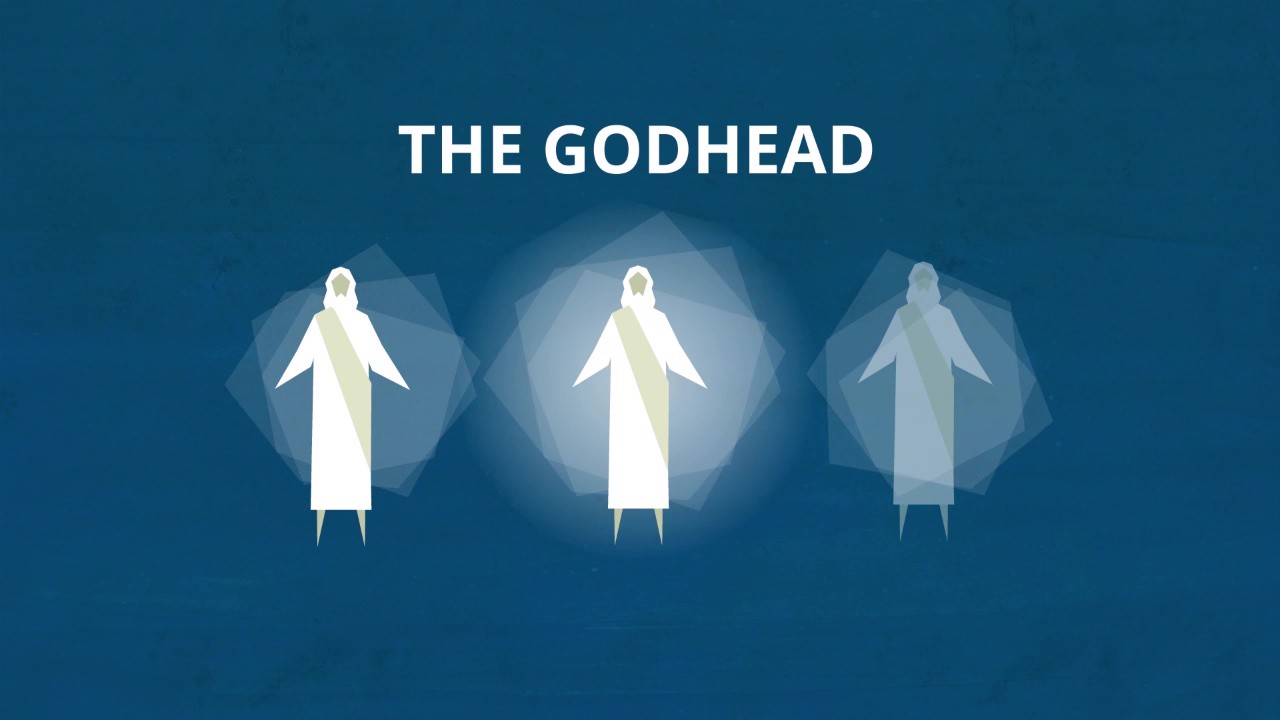
The New Testament paints a picture of the Godhead that aligns with the Latter-day Saint understanding: three distinct beings united in purpose and will. This contrasts sharply with the post-Nicene Trinitarian teaching of one God in three co-equal, consubstantial persons.
Consider scriptures like John 17:20-23, where Jesus prays for His disciples to be one "as we are one." The passage emphasizes unity of purpose rather than identity of substance. Similarly, at Christ's baptism (Matthew 3:16-17), the Father speaks from heaven, the Son is baptized, and the Holy Ghost descends like a dove—clearly distinct actions by distinct persons.
Passages such as Acts 7:55-56 further highlight this distinction. Stephen, filled with the Holy Ghost, sees "the Son of Man standing on the right hand of God," reinforcing the view of the Father and Son as separate beings. Even John 20:17, where Jesus tells Mary Magdalene, "I ascend unto my Father, and your Father; and to my God, and your God," displays a relationship of two distinct entities rather than conjoined aspects of a single substance.
For Latter-day Saints, the concept of the Godhead is both simpler and deeply personal. The Father is a glorified, perfected being with a body of flesh and bones, as is Jesus Christ. The Holy Ghost, devoid of a physical body, works as a testifier and guide. The unity in the Godhead stems from their shared purpose, love, and mission—not from an abstract, philosophical substance.
When compared to the Nicene Creed’s assertion of “one substance,” the biblical Godhead as understood by the Latter-day Saint faith feels more consistent with scriptural narratives. It isn’t a mystery shrouded in incomprehensible logic but rather a family of divine beings with distinct roles.
Hellenistic Frameworks in Trinitarian Doctrine
The Trinitarian doctrine, as formulated in early councils, didn’t emerge purely from scripture. Greek philosophical thinking played a pivotal role in shaping key terms and ideas—which is where tension arises for those seeking doctrinal purity rooted in the Bible.
One example is the word “homoousios”, meaning “of the same substance.” It doesn’t appear in scripture but became central to the Nicene Creed’s explanation of Christ’s relationship with the Father. This term derived directly from Hellenistic philosophy, particularly Platonic and Stoic categories of being and essence. The infusion of metaphysics, while aiming for clarity, introduced speculative complexities foreign to biblical accounts of the Godhead.
Early Christian thinkers like Origen and Justin Martyr blended biblical Christianity with Greek concepts like the Logos, a term both scriptural (John 1:1) and philosophical in origin. While John uses "logos" to describe Christ as divine and preexistent, Greek philosophy treated it as a principle of reason or order. This mingling blurred the lines between scriptural simplicity and philosophical abstraction.
Hellenistic influence also framed discussions on “person” and “nature,” key in Trinitarian debates. The distinction between “hypostasis” (individual reality) and “ousia” (substance) reflects a toolset foreign to early Jewish-Christian thought. The Council of Constantinople (381 AD) further codified this language, emphasizing God as three persons in one essence. Yet, this semantic framework often alienates modern readers who seek scriptural validation for such abstractions.
For Latter-day Saints, the reliance on Greek constructs marks a departure from biblical clarity. To them, the Nicene framework feels like building a house on borrowed land. The emphasis on co-equality and consubstantiality seems disconnected from the very scriptures councils sought to defend.
In simple terms, think of scripture as a map for understanding God’s nature. Greek philosophical categories, while attempting to illuminate, are like foreign labels slapped onto a familiar landscape—they can obscure more than they clarify. This divergence reminds us of the value of returning to Christ’s plain and precious teachings directly.
The Restoration's Blueprint for Modern Challenges
The Restoration of the Gospel of Jesus Christ offers a unique framework for addressing the dilemmas of our time. While early Church councils tackled the fragmentation of doctrinal unity, the restored Gospel presents answers through living revelation and the divine authority of modern prophets. In an age increasingly marked by skepticism and confusion, these principles create a steadfast blueprint for navigating today's challenges.
Living Prophets and Continuing Revelation
Living prophets are the heartbeat of the restored Church. They offer real-time guidance tailored to the realities of the present, demonstrating that God’s revelations didn’t cease with ancient scripture. The principle of continuing revelation is central to Latter-day Saint belief, illustrating a God intimately involved in the affairs of His children.
Picture it this way: imagine navigating a landscape with an outdated map. While historical maps might provide a general idea, they fall short in helping you avoid the pitfalls and obstacles that emerge over time. Living prophets are like having a GPS—up-to-date, clear, and reliable. They help us traverse the complexities of modern life with confidence, ensuring that we don’t stray off the path.
In practice, this ongoing guidance manifests in decisions that shape Church doctrine and individual lives. For instance, revelations on topics like the extension of priesthood blessings to all worthy males in 1978 or changes to the temple ordinances emphasize that God’s direction is dynamic, not static. These aren’t trivial updates; they’re milestones that reflect divine answers to contemporary needs.
But the brilliance of living prophets isn’t just in institutional leadership—it’s the invitation they extend to every member to seek personal revelation. The Restoration teaches that every person can receive divine insight to guide their own decisions. When life feels uncertain, this principle empowers individuals to act with faith and clarity, knowing they can connect with heaven as their own source of truth. This dynamic, combined with collective faith in prophetic leadership, provides a robust and evolving structure capable of weathering any era.
Defending Truth in an Age of Doubt
In our current world, Christianity often finds itself on trial. Faith is questioned, scripture is scrutinized, and moral standards face relentless opposition. The restored Gospel, however, provides a sturdy foundation to meet these challenges head-on—both intellectually and spiritually.
Doubt, in many forms, has become a dominant narrative of this age. People question the reliability of scripture, the existence of God, and even the coherence of moral truths. Facing these swirling uncertainties can feel like standing in the middle of a storm without an anchor. This is where restored truth becomes vital. The restored Gospel stands as a lighthouse in the fog of modern skepticism. It offers answers to pressing questions not only through scripture but through the witness of living apostles and prophets.
How does this work in action? First, the doctrine of continuous revelation means that our understanding of truth isn’t frozen in time. Instead, it is clarified and reaffirmed as society changes. For example, modern teachings on the family, the sanctity of life, and the centrality of Christ show how prophetic counsel remains relevant and unshakable amidst cultural shifts.
Second, the emphasis on the divine authority of priesthood keys brings order to doctrinal interpretation. Unlike the theological chaos that consumed the debate during early councils, the restored Gospel offers a singular, clarified voice. This is not dogmatic rigidity—it’s a rootedness in divine confirmation that allows members to stand firm in their convictions.
Finally, personal revelation becomes a line of defense against doubt. When believers pray, study, and act in faith, their testimonies become deeply personal. This one-on-one relationship with God serves as a shield against the encroachment of disbelief. It’s one thing to read about Christ’s reality and another thing entirely to feel His presence guiding your life.
In an age where relativism tries to erode the concept of absolute truth, the Restoration provides the tools to defend faith with conviction. Through revelation, both personal and collective, the restored Gospel not only survives modern skepticism but thrives in it—offering understanding in a world desperate for answers.
Applying Early Christian Lessons Today
Early Christian lessons offer a wealth of principles that can guide us in today’s challenges. Whether it’s about defending key doctrines, fostering unity, or navigating societal pressures, these lessons remain remarkably relevant. By looking at the actions of early Church leaders and councils, we find a commitment to both truth and revelation that can shape how we approach modern theological and cultural dynamics.
Vigilance Against Theological Distortions
The early Church faced constant threats from heresies—distortions of the gospel message that challenged foundational truths. These were not minor disagreements; they struck at the heart of who Christ is and His relationship with humanity. Early Christians responded by clarifying doctrine, relying heavily on scripture while drawing upon collective spiritual insight. For instance, the Nicene Council’s rejection of Arianism was more than theological housekeeping—it was a bold affirmation of Christ's eternal divinity.
Today, the same vigilance is essential. Spiritual confusion and doctrinal drift are not confined to the past. False teachings and diluted gospel messages often masquerade as truth. How can we respond? By anchoring ourselves in the Gospel of Jesus Christ and its restored doctrines. For Latter-day Saints, this includes the principles revealed through the Restoration, like understanding the distinct roles of the Godhead and the eternal nature of Jesus Christ.
Think of theology like a lighthouse—its purpose is to guide us to safety amidst swirling waters of doubt and misinformation. Early Christians stood firm against theological distortions by trimming their beacon to reflect scripture's true light. We, too, must stand with confidence, ensuring that Christ's teachings shine brightly amidst the noise of competing interpretations.
Unity Through Revelation, Not Creeds
The councils worked to unify the Church, but the method of that unity often leaned on creeds—formal statements of belief crafted from philosophical language. These creeds were attempts to resolve disputes, but they sometimes replaced the dynamic spiritual unity described in the New Testament with rigid doctrinal formulas. For example, the Nicene Creed used terms like "homoousios" (same substance), which, while precise, lacked direct biblical roots.
True unity doesn’t arise from a shared creed alone; it emerges from shared testimony and the binding power of revelation. In early Christianity, the apostles preached unity based on revealed truths—their experiences with Christ and the living guidance of the Holy Spirit. This is where modern Latter-day Saint belief finds strength. We strive for unity not through man-made declarations but through shared revelation that comes from living prophets and personal confirmation by the Spirit.
Unity born of revelation is more like a family than a consensus panel. Members don’t just agree for the sake of it—they share a common understanding born of divine trust. This unity allows for diversity without fragmentation because it’s grounded in eternal principles, not temporary philosophical constructs. For Latter-day Saints, this principle translates into a Church that’s global yet remarkably united in faith and purpose.
As we apply this lesson, we’re reminded that true unity in Christ doesn’t mean eliminating differences entirely. It means aligning our hearts and minds with His will, as revealed through His messengers. This is the unity that sustains, uplifts, and extends across time and culture.
Conclusion
Tom Knoff’s assertion of scriptural reliance in early Church councils sheds light on the importance of anchoring theological discussions in divine revelation. However, from a Latter-day Saint perspective, these councils reveal the limitations of scripture alone when apostolic authority is no longer present. The Restoration underscores the necessity of living prophets and ongoing revelation to address not just ancient heresies, but modern spiritual crises.
In today’s fractured religious landscape, the lessons of early Christians are undeniable. But their reliance on consensus and philosophical constructs often underscores the absence of unified, divine guidance. With restored apostolic authority and priesthood keys, we’re better equipped to confront theological distortions, maintain doctrinal clarity, and guide our faith unitedly.
What these councils started; the Restoration fulfills. The Gospel’s restoration bridges gaps left by the councils, providing modern believers with the tools to defend faith against pressing challenges through divine clarity rather than human compromise.