Sunday, July 26, 2026

“I Am Doing a Great Work”: Stay on the Wall and Finish What God Called You to Do

“I Am Doing a Great Work”: Stay on the Wall and Finish What God Called You to Do

“I Am Doing a Great Work”

Stay on the Wall and Finish What God Called You to Do
Come, Follow Me—July 27–August 2 | Ezra 1; 3–7; Nehemiah 2; 4–6; 8


There are some distractions that do not look dangerous because they look quite reasonable. 

They arrive as invitations, conversations, controversies, urgent notifications, unexpected opportunities, and demands for our immediate attention. They ask us to take a moment and step away from what God may have placed before us - not necessarily forever, just long enough for us to lose our concentration and focus. 

This was the very strategy used against Nehemiah. 

Nehemiah’s enemies did not begin by openly commanding him to abandon the rebuilding of Jerusalem. Instead, they repeatedly invited him to leave the work and meet them in the plain of Ono. Such a proposal sounded quite diplomatic; however, Nehemiah recognized the deception beneath. He was able to discern and understood that not every invitation deserved an answer. Nor every controversy deserved his attention and presence. 

His response has become one of the most significant and clearest declarations of spiritual focus in scripture: “I am doing a great work, so that I cannot come down” (Nehemiah 6:3). Nehemiah was not boasting about his personal importance. What he did is declare the significance of the assignment - or calling - God had entrusted to him. More to the point, Nehemiah took seriously the stewardship of what God called him to accomplish. 

The wall was more than stone and timber. Jerusalem’s restoration represented covenant renewal, spiritual protection, communal identity, temple worship, and the fulfillment of God’s promises. 

This week’s Come Follow Me Study for the Old Testament is about more than rebuilding a temple or repairing a city wall. It is regarding how we are open and willing to recognize the work God has placed before each of us, resisting whatever pulls us away from it, and trusting that the Lord will strengthen our hands as we remain faithful and obedient to His will, purpose, and plans. 

Tuesday, July 21, 2026

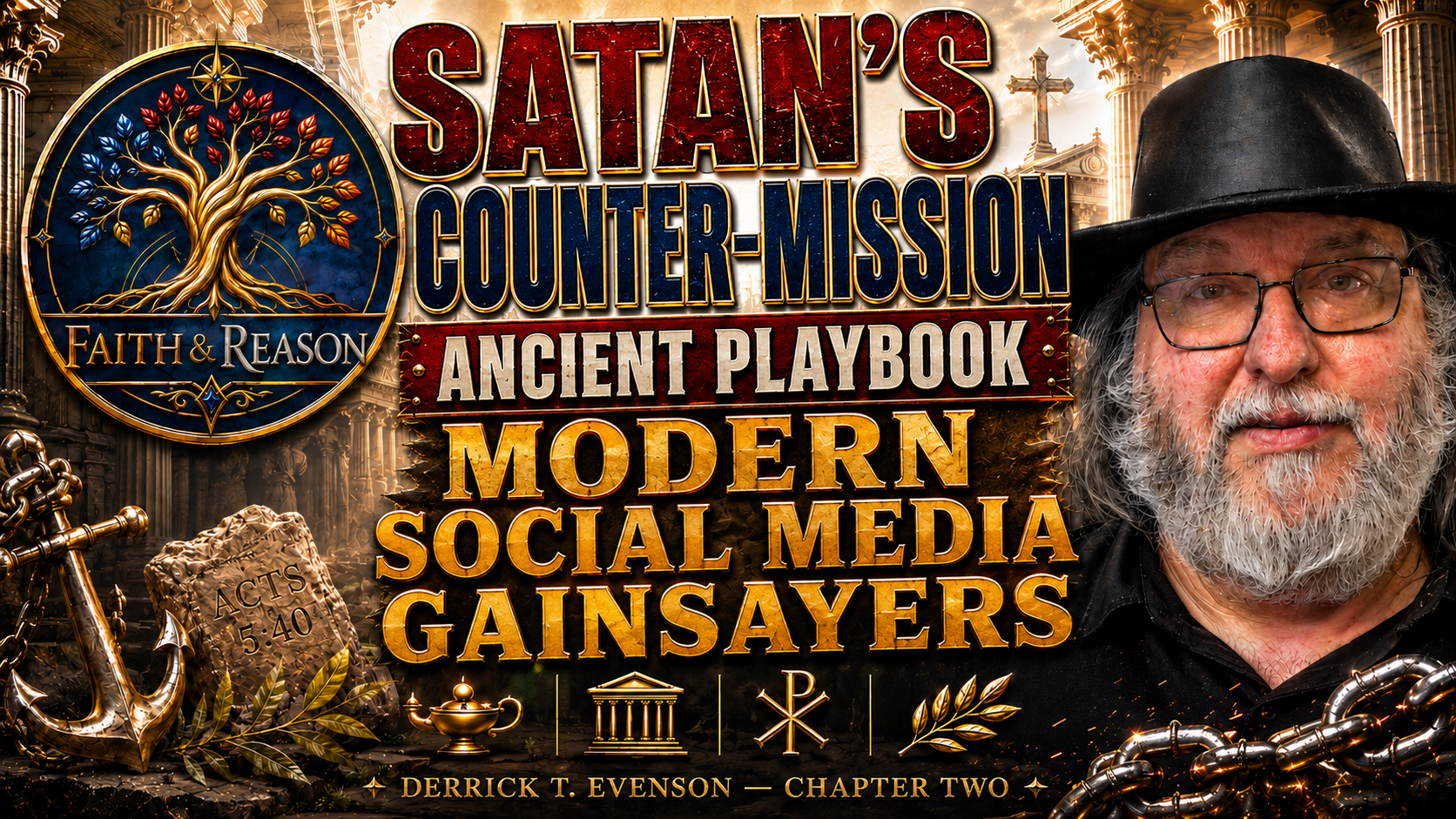
Satan's Counter-Mission: The Ancient Playbook Behind Modern Social Media Gainsayers

Satan's Counter-Mission: The Ancient Playbook Behind Modern Social Media Gainsayers

How First-Century Religious Polemics Reappear in the Digital Age

Did you know that long before YouTube exposés, TikTok reaction videos, livestream debates, and thumbnails announcing that someone's faith tradition had been "destroyed" or they "got cooked," religious opponents were already employing a variety of tactics? These tactics included not only labels and ridicule but also the strategic use of selective evidence, harsh accusations of deception, and appeals to the prevailing orthodoxy of the time.

Throughout history, individuals and groups have engaged in polemical discourse, employing familiar patterns that transcend modern technology and social media platforms. While social media may amplify these exchanges and offer new avenues for expression, the fundamental dynamics of polemics—debate and dispute—are anything but new. They are deeply rooted in the fabric of human communication and interaction.

Understanding these historical parallels can offer valuable insights. However, it is crucial to recognize that for Latter-day Saints, acknowledging these patterns should not devolve into a license to demonize every critic. Instead, it calls upon us to foster a more nuanced approach to dialogue and engagement. This means we must strive for discernment without slipping into paranoia. We can hold firm convictions without succumbing to contempt for others.

In our conversations and debates, we want to aim to express truth in a manner that reflects the charity of Jesus Christ. This challenges us to engage thoughtfully and respectfully, even when faced with opposition. We are invited to navigate the complexities of faith, belief, and skepticism with a spirit of love and understanding, creating space for constructive dialogue rather than animosity. Ultimately, our response to criticism can be a powerful testament to the principles we uphold, embodying a spirit that upholds truth while also extending grace to those with whom we may disagree.

Sunday, July 19, 2026

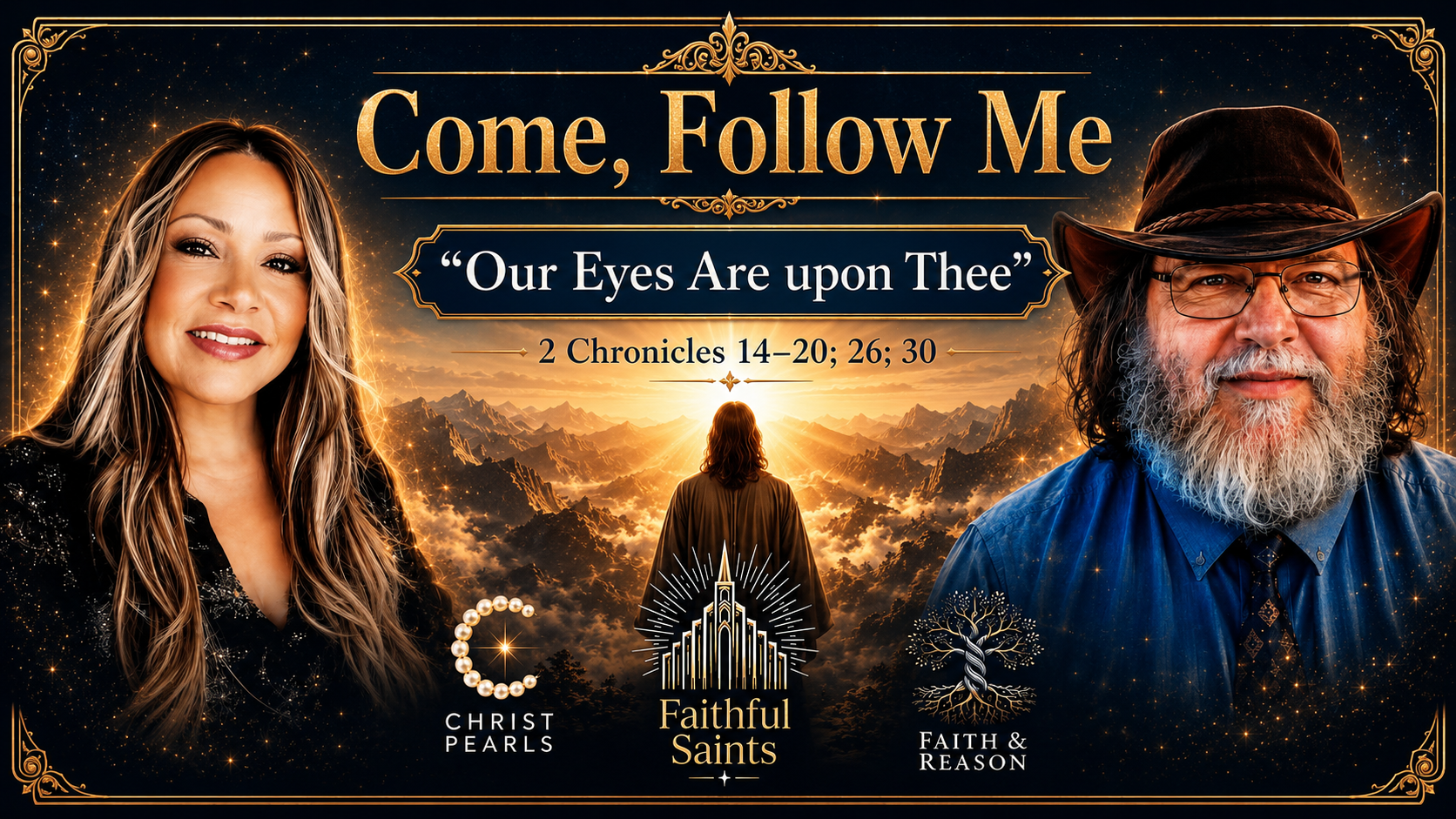
When You Don’t Know What to Do, Keep Your Eyes on God | 2 Chronicles 14–20; 26; 30

When You Don’t Know What to Do, Keep Your Eyes on God | 2 Chronicles 14–20; 26; 30

Come, Follow Me — July 20–26, 2026: “Our Eyes Are Upon Thee”

What do you do when the opposition is greater than your strength, the pressure is greater than your wisdom, and you honestly do not know what to do next?

This week’s Come, Follow Me study takes us into the lives of kings, prophets, reformers, worshippers, and ordinary families who faced that very question. Their stories reveal that peace does not come from pretending the battle is small. It comes from knowing where to turn when the battle is bigger than you.

Through the accounts of Asa, Micaiah, Jehoshaphat, Uzziah, and Hezekiah, 2 Chronicles invites us to examine where we place our trust, how we respond to correction, and whether our eyes remain fixed upon the Lord when fear, success, pride, or division threaten to pull them away. Each of these figures faced formidable challenges—be it external armies, internal strife, or the temptations of power—and their responses provide valuable lessons for our own lives.

Asa, for instance, shows how reliance on God in times of trouble can lead to unexpected victories, while Micaiah reminds us of the importance of courage in standing for truth, even in the face of overwhelming opposition. Jehoshaphat’s alliance-building and pursuit of divine guidance highlight the significance of seeking God's will in decision-making, especially when circumstances seem dire. Uzziah's rise to power illustrates the fine line between humility in success and the dangers of pride, reminding us that acknowledgment of our dependence on God is crucial. Lastly, Hezekiah's prayer in times of crisis demonstrates that sincere reliance on divine help can yield miraculous outcomes.

This week's study encourages us to reflect deeply on our own lives. When confronted with overwhelming pressure, do we allow our fears to overshadow our faith? Are we quick to seek advice from sources that may not align with our beliefs? Or do we, like these biblical figures, turn our attention steadfastly to God, trusting that He will guide us through our fiercest battles? Through these narratives, we learn that true peace comes from steadfast faith and a commitment to seek God's wisdom relentlessly, no matter how insurmountable the obstacles may appear.

Tuesday, July 14, 2026

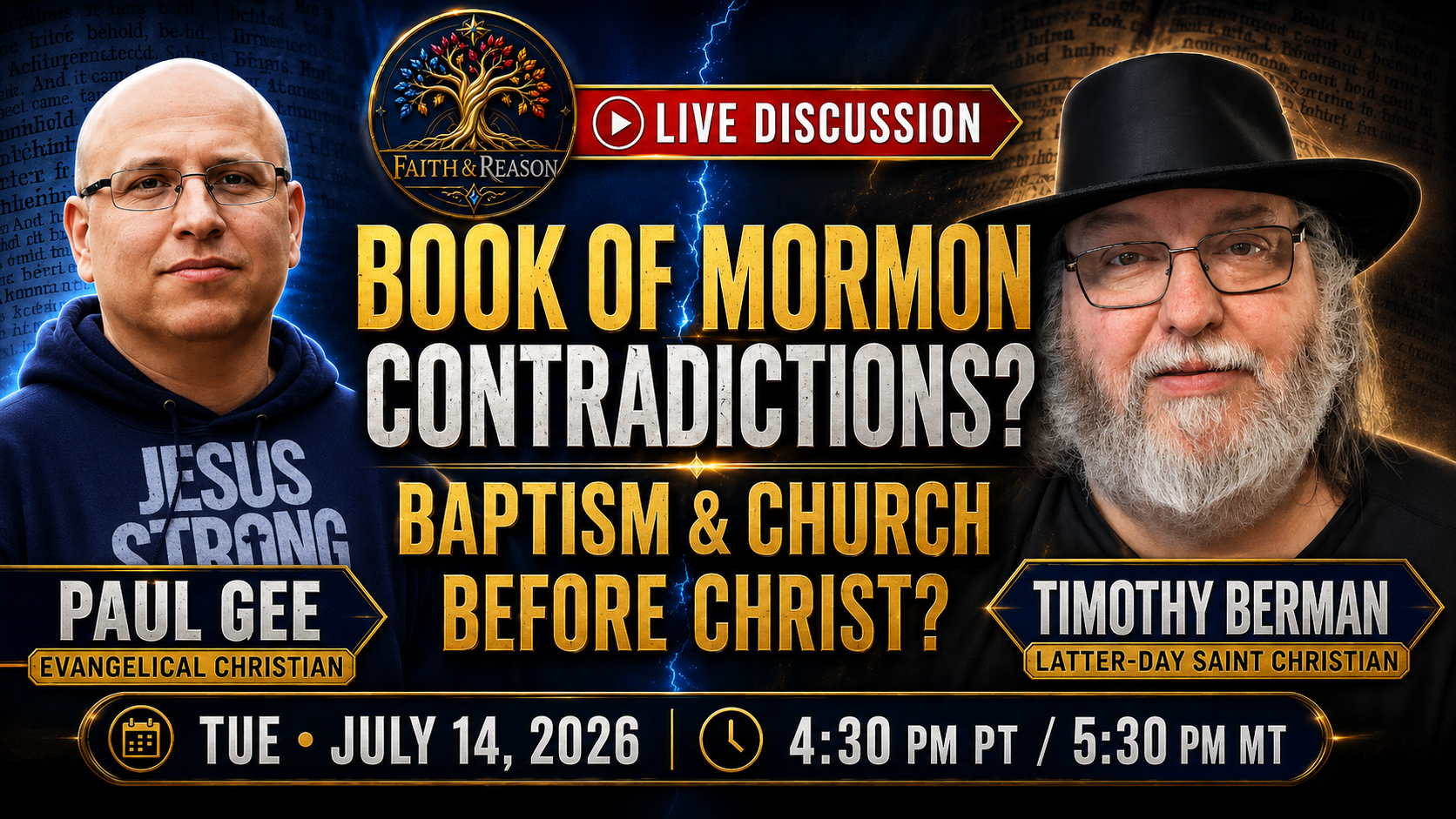
Book of Mormon Contradictions? Paul Gee and Timothy Berman Discuss Mosiah 18

Book of Mormon Contradictions? Paul Gee and Timothy Berman Discuss Mosiah 18

Tonight, Faith & Reason hosts a focused livestream discussion between Paul Gee and Timothy R. Berman examining one of the central arguments raised against the Book of Mormon: the claim that Mosiah 18 contains biblical and historical contradictions.

The discussion will stream live directly on this page.

Watch the Livestream

Date: July 14, 2026
Time: 4:30 PM Pacific / 5:30 PM Mountain
Participants: Paul Gee and Timothy R. Berman
Topic: Baptism and the Church in Mosiah 18

The livestream video is embedded below. The broadcast will begin automatically when the event goes live.