Showing posts with label Christian encouragement. Show all posts

Sunday, June 7, 2026

Set the Sail for Recovery & Sobriety — The Urge to Share

Set the Sail for Recovery & Sobriety — The Urge to Share

In my own life, I’ve learned that the most powerful ministry moments are never scripted—they are Spirit‑led. They happen when we are sensitive to the still small voice, when our hearts are open, and when we allow God to interrupt our day for the sake of someone else’s pain.

Years ago, I was at a local church, carrying more than I could handle. A phone call from my father had shaken me, and a careless comment from someone nearby only deepened the wound. I stepped outside, sat on the front steps, and honestly—I wasn’t praying. I was stewing. Hurting. Lost in the swirl of emotion.

Then a young man walked up, sat beside me, and wrapped his arm around my shoulder. “I was driving by,” he said quietly, “and the Holy Spirit told me to turn around. Anything I can pray for?” He didn’t preach. He didn’t correct. He didn’t offer advice. He simply sat with me and prayed.

That moment has stayed with me for years because it revealed something essential about the heart of Christ: To share the light of Jesus is to sit with people in their mess without judgment. This is not merely an act of companionship but a profound demonstration of love and solidarity. It challenges us to look beyond our own struggles and step into the vulnerability of another, reflecting the grace we have received in our own times of need.

This is the heart of today’s message. In an age where everyone seems to be vying for attention, it can be exceedingly rare to find someone who is willing to pause, listen, and simply be present. Yet, it is in these unassuming moments that we often see the clearest reflection of Christ's love. When we allow ourselves to connect with another’s sorrow, we become vessels of hope.

Anchor verse: Romans 10:10 — “For with the heart man believeth unto righteousness; and with the mouth confession is made unto salvation.” This verse serves as a reminder that our faith is rooted in a heart-to-heart connection with God, which in turn shapes how we connect with others. The Lord looks upon the heart of a person (1 Samuel 16:7) because it is within the heart where we struggle with identity and purpose, grappling with understanding how God loves those who are so broken and distraught. To have the heart of the Father (Psalm 103:13) means we have a deep and compassionate concern for those suffering.

Our ministry efforts, our outreach, and our words should mirror this heart of compassion. How we minister—how we share—and the urge and desire to comfort those in distress are accomplished through the ministering of the Holy Spirit. It is through the Holy Spirit that we find the strength to empathize, listen, and provide solace. This is how we build up the Kingdom of God, by fulfilling the call to truly mourn with those who mourn and walk alongside them, carrying their burden as Christ carried our burdens (Galatians 6:2).

Today, we are going to look at the Urge to share the message of hope and how we minister as the light of Christ and the Glory of the Father. We are set upon the hill, shining as a beacon for all who are struggling in their own despair. More than just an act of faith, sharing our hope involves actively engaging with those around us, bringing the light of Christ to their darkness. We must be vigilant and willing to heed the call when the Holy Spirit nudges us, reminding us that even the smallest actions can lead to significant transformations in the lives of others. Let us embrace our roles as conduits of God’s love, ensuring that the light we shine is a reflection of His unconditional love and grace.

Thursday, June 4, 2026

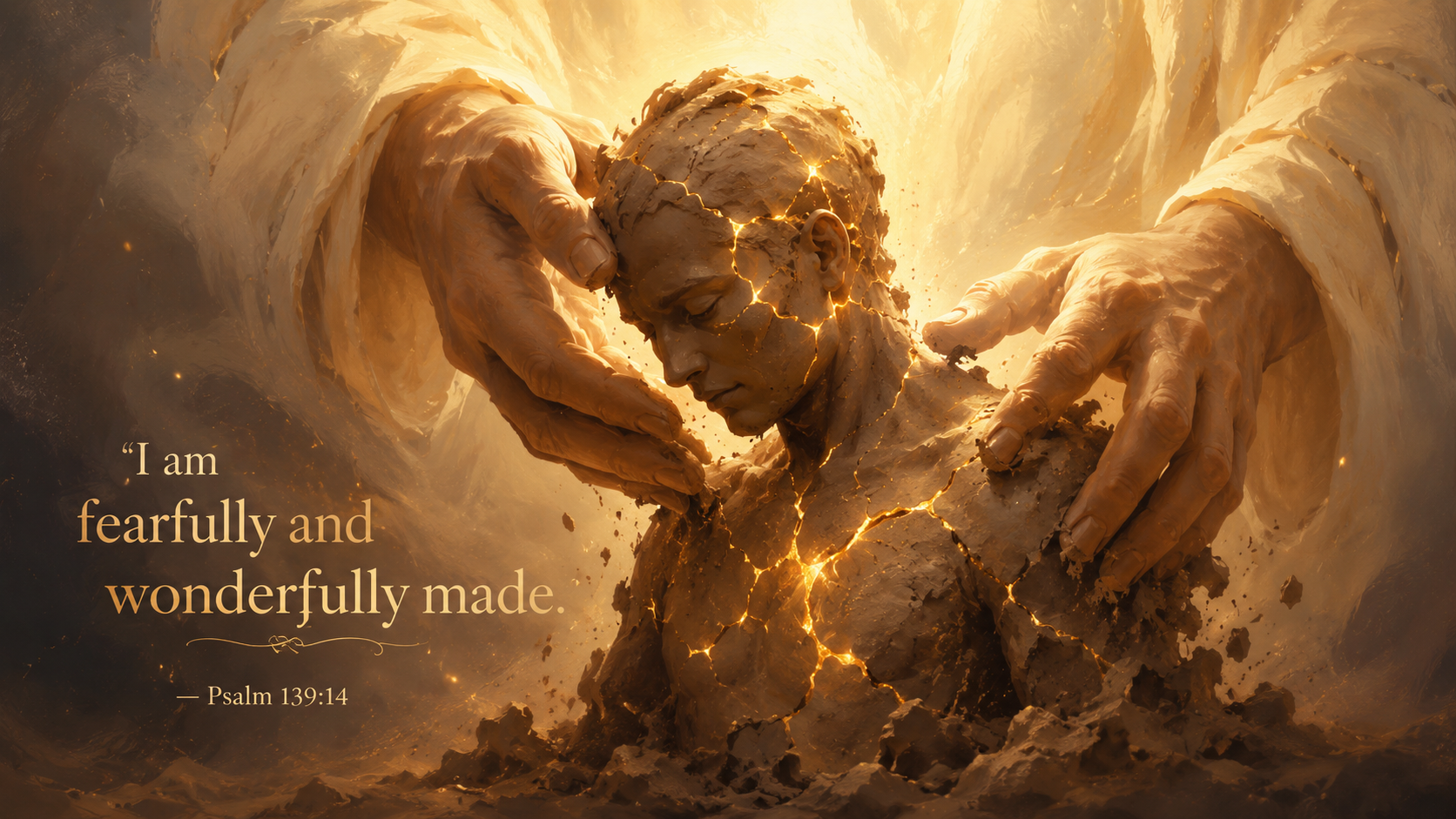
Molded by God: Identity, Healing, and the Beauty of Being Fearfully and Wonderfully Made (Psalm 139:14)

Molded by God: Identity, Healing, and the Beauty of Being Fearfully and Wonderfully Made (Psalm 139:14)

I always had this inclination that something was wrong. And whenever that feeling rose up, I was convinced it was because of someone else. Someone failing me. Someone not stepping up. Someone not doing the honorable thing. I lived with this constant sense that other people were the reason I suffered. And underneath all of that? A deep ache that no one truly cared, no one appreciated me, no one saw the effort I poured out trying to prove myself.

I chased validation like oxygen. I wanted approval so badly that I shaped myself around what I thought others wanted. I tried to be the “better person” in the eyes of everyone else, all while never actually seeing who I was. I was blind to my own entitlement, blind to my victimhood, blind to the way I was both the victim and the villain in someone else’s story. Hypervigilant. Defensive. Exhausted. And yes—hurt by real betrayals, real lies, real wounds that left me carrying depression, resentment, bitterness, and anxiety like a backpack full of bricks.

And then came the moment that broke me open.

My father had just been released from the hospital after months in intensive care from a brutal auto accident. I had given up everything to be there. And yet, I found myself standing on a cold Seattle curb in January of 2005 with nothing but a backpack, work boots, and three cartons of cigarettes. No home. No money. No plan. No one.

I walked the streets of Seattle wondering if this was the end of me.

But God had other plans.

A transitional housing program took me in. I rested. I worked. I rebuilt. And slowly—slowly—I found my way back to faith. But even then, I still couldn’t see myself clearly. I still felt unworthy. I still lived for validation. I still believed I had to earn dignity, earn love, earn respect.

It wasn’t until years later that the Holy Spirit began breaking the spiritual blindness I had carried for so long. And the revelation was simple, but it shook me to my core:

I didn’t know who I was. And I didn’t know how my Heavenly Father saw me.

Anchor Verse — Psalm 139:14 (NASB2020): “I will give thanks to You, for I am fearfully and wonderfully made; Wonderful are Your works, And my soul knows it very well.”

Two words rise like mountains in this verse: fearfully and wonderfully. Fearfully — yārē’ — to stand in awe, reverence, astonishment. Wonderfully — pālā’ — marvelous, extraordinary, beyond human ability.

This is not casual language. This is identity language. God is not saying, “You’re barely acceptable.” He is saying, “You are My intentional, awe-inspiring work.” We are His workmanship, created in Christ Jesus for good works that He prepared beforehand (Ephesians 2:10). Even when we feel like a mistake, God calls us purposeful, crafted, and known (Psalm 139:1–4).

So today, let’s walk slowly through what it means to be fearfully and wonderfully made—especially when we don’t feel like it. Especially when addiction, shame, trauma, or codependency have distorted the mirror we look into. Especially when our past tells us one story, but God is trying to tell us another.

Wednesday, June 3, 2026

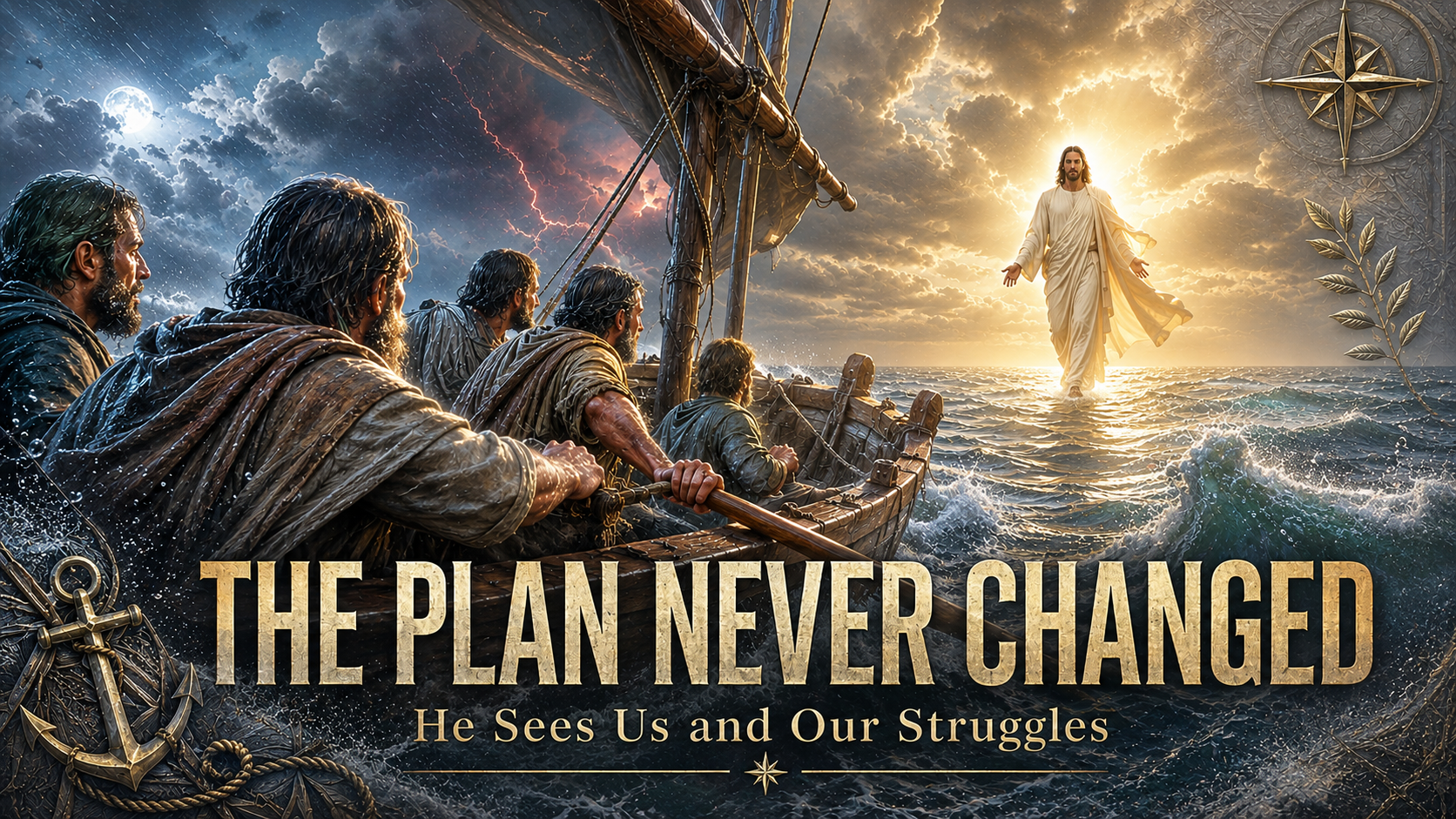
The Plan Never Changed - He Sees Us and Our Struggles

The Plan Never Changed - He Sees Us and Our Struggles

There was a moment in my youth where I learned a lesson I didn’t understand until much later. It happened during a Boy Scout outing one summer. We were out on the bay near my hometown, and it was the first time I ever learned how to paddle a canoe.

Okay, so what — you got to go out on the water, learn to paddle, in a canoe. What’s the big deal?

Here’s the lesson.

On the way back to shore, the tide was going out. We were paddling against it. Not upstream on a river — against the tide of the bay. And the harder we paddled, the slower we moved. Every inch forward took every ounce of strength we had.

Life feels like that sometimes. Recovery feels like that often. You’re straining at the oars, wondering if you’re even moving, wondering when you’ll reach the destination, wondering when the struggle will ease.

I didn’t think about that moment again until I came across a reel of a guy with a sideways cap, tattoos, and piercings teaching on Mark 6 — the same chapter where Jesus feeds the 5,000, right after He receives word of John the Baptist’s death, and right after He commissions the Twelve to preach the Gospel.

Anchor Verse — Mark 6:47–48 (NRSVUE): “When evening came, the boat was out on the sea, and he was alone on the land. When he saw that they were straining at the oars against an adverse wind, he came toward them early in the morning, walking on the sea. He intended to pass them by.”

And that’s where everything shifted. Pastor Kelly K said something that stopped me cold: “If Jesus saw them, He sees you too.” The disciples were in serious trouble — rowing hard, struggling against the wind and waves. And Jesus saw them long before He ever stepped onto the water. Just like He sees you. Then came the line that most of us have never paid attention to: “He intended to go past them.” Why would Jesus walk toward them… but not stop?

This Crucified Life: What I No Longer Miss

This Crucified Life: What I No Longer Miss

What is the purpose of this message today? Why focus on what I no longer miss? Because today's message is about what dies and what rises within each one of us. Luke 9 is the clearest, the sharpest, and the most recovery aligned call Jesus ever gives. It is a call to deny self. A call for us to take up our cross daily. A call to follow after Him. And it is one where we are asked to count the cost because it requires that we lose our life in order to save it. It is where we come to the end of ourselves, attempting to gain the appeasement of those around us, to gain what the world may offer us, yet lose our very soul in the process. It speaks directly to the "things I no longer miss" in my own addiction, codependency, chasing the girlies, and pretending to be someone I never was.

Welcome back, fellow travelers. If you haven’t watched the recent devotional in our Set of the Sail series— “The Lord Giveth Knowledge: The Spiritual Awakening of Christian Recovery”—I encourage you to do that. In that message, we talked about walking the crucified life… not coping, not managing, not surviving… but dying to self so that Christ may live fully in us. Having a real genuine spiritual awakening to the things of God.

Today, we’re going deeper. Because if we’re honest, many of us have spent years trying to “manage” life on life’s terms. But Sacred Sobriety is not about management. It’s about transformation. It’s about stepping boldly into the victory Christ already secured.

You and I have twenty‑four hours today. And I want to take a few of those minutes to speak directly to the wounds, addictions, anxieties, fears, and faith crises that have shaped us.

Because there are things I no longer miss. And I want to show you why.

Anchor Verse — Luke 9:23–26: “If any want to become my followers, let them deny themselves and take up their cross daily and follow me. For those who want to save their life will lose it, and those who lose their life for my sake will save it.”

This is the heartbeat of recovery. This is the heartbeat of discipleship. This is the heartbeat of Sacred Sobriety.

Jesus is not calling us to cope. He is calling us to die— to ego, to self‑will, to the old patterns, to the old wounds, to the old survival strategies. And in that death… He calls us to live. To live a blessed and abundant life. To live with peace of mind and joy in our hearts. Yet to do this - he invites us in because we are heavy laden, weary travelers and are in much need of rest (Matthew 11:28-29).

Monday, June 1, 2026

From Surviving to Thriving: The Spiritual Awakening Every Christian in Recovery Needs

From Surviving to Thriving: The Spiritual Awakening Every Christian in Recovery Needs

If you’re not familiar with the early story of Alcoholics Anonymous, it’s often said that the ideas behind the Twelve Steps were shaped by the Oxford Group—a gathering of Christian men committed to honesty, confession, restitution, and surrender. Bill Wilson, one of AA’s founders, was deeply influenced by them. But today’s devotional isn’t about the origins of AA. It’s about a man named Rowland Hazard, whose struggle with alcoholism led him to seek help from the famed psychiatrist Carl Jung in the early 1930s.

After extensive treatment, Jung told Hazard something that sounds harsh but is deeply honest: his condition was hopeless from a medical standpoint. His only hope, Jung said, was a spiritual experience—a profound awakening that would transform him from the inside out. That realization eventually shaped the foundation of AA itself. Hazard’s spiritual awakening, experienced through the Oxford Group, was shared with Bill Wilson, and from that encounter the Twelve Steps were born.

Let’s sit with that for a moment. Because in my own journey—through recovery, sobriety, homelessness, fear, doubt, and a faith crisis—I had to face the same truth: everything was utterly hopeless until I had a spiritual awakening. Some call it “hitting bottom.” But I’ve come to see it as the moment the Holy Spirit reveals Christ to us in a way the intellect alone could never reach.

Today, many try to think their way into faith. They know about God but never come to know God Himself. And that brings us to the heart of today’s message: What does it mean to truly know God—and Jesus Christ whom He has sent? (John 17:3)

Our anchor verse is Isaiah 1:18–20, where God invites us to “come and reason together.”

Come now, let us argue it out, says the Lord: if your sins are like scarlet, will they become like snow? If they are red like crimson, will they become like wool? If you are willing and obedient, you shall eat the good of the land, but if you refuse and rebel, you shall be devoured by the sword, for the mouth of the Lord has spoken.

This is not an intellectual debate—it is an invitation to examine our hearts, our wounds, our failures, and our inability to save ourselves. It is a call to return, to be still, and to know that He is God.

Today, we explore what it means to know Christ, to know the Father, and to know who we truly are through a genuine spiritual awakening.

Wednesday, May 27, 2026

Learning to Love Myself Through God's Eyes

Learning to Love Myself Through God's Eyes

Learning to love myself was the first mountain I ever had to climb in recovery. Jesus said the greatest commandment is to love God with all our heart, soul, mind, and strength—and the second is like it: to love our neighbor as ourselves. I thought I loved God. I thought I loved others. But I had never learned how to love me. And when I finally faced that truth, I realized I didn’t just “not love myself”—I despised myself.

When I was drunk and alone, I’d curse myself. I’d repeat the harsh words spoken over me by others—especially family. Emotional abuse, degradation, bullying, name‑calling… all of it became the internal script I lived by. I believed I was worthless, stupid, manipulative, selfish, unlovable. And because I believed it, I lived it.

So I kept God at arm’s length. I kept people at arm’s length. I feared abandonment, rejection, and judgment. I feared giving God my whole heart because I assumed He would eventually reject me too. Shame became the lens through which I saw myself, others, and God.

But recovery forced me to confront the lies. It forced me to ask: Who does God say I am? And in that painful, holy unraveling, I began to learn to love God with what little I had. I began to see myself through His eyes. And only then could I begin to love others with sincerity, depth, and courage.

Anchor verse - Hebrews 1:3 - “He is the reflection of God’s glory and the exact imprint of God’s very being, and he sustains all things by his powerful word. When he had made purification for sins, he sat down at the right hand of the Majesty on high.”

Christ is the exact imprint of God’s being—and through Him, we learn who God is, who we are, and how deeply we are loved.

Tuesday, May 26, 2026

Set the Sail of Recovery and Sobriety: "If Any Would Follow..."

Set the Sail of Recovery and Sobriety: "If Any Would Follow..."

I do not recall the specific moment in my own recovery journey when Jesus placed a crossroad before. For one, I have had multiple crossroads placed before. And I am sure many of you have had those same crossroads placed in your own life and path. These crossroads were not placed with thunder, not spectacle, because they were often placed with a quiet, piercing invitation. At times, and for me, came by way of conviction that brought me to the knees of humility because of an entitled selfish attitude. Other times came in moments of comfort and spiritual direction when someone took the time to obey without delay the promptings of the Holy Spirit. And still other moments where it is the quiet witness of confirmation, and then further confirmed by another's message and teaching.

That tiny word if holds the weight of your destiny as well as my own destiny. it is the hinge between us surviving and thriving, between bondage and freedom, between the life we've known and the life Christ longs to give us - you know, that abundant life where there are peace and joy in Him? An abundant life where we come to rest in Him.

Today, we are stepping right into this profound, simple, and quiet invitation with courage, clarity, and a sound mindset that is honest. Stepping into understanding how the cross becomes transformative in our path, in our lives, and in our relationships.

Anchor Verse — Matthew 16:23–26 (cf. Luke 9:23–26, NRSVUE): "Then Jesus told his disciples, “If any wish to come after me, let them deny themselves and take up their cross and follow me. For those who want to save their life will lose it, and those who lose their life for my sake will find it. For what will it profit them if they gain the whole world but forfeit their life? Or what will they give in return for their life?"

Welcome back, fellow travelers, to Sacred Sobriety: A Path for the Soul. We are continuing our series Set the Sail for Recovery and Sobriety. Today we’re walking with Jesus into one of the most demanding—and liberating—teachings He ever gave. Matthew 16:23–26 and Luke 9:23–26 confront us with the truth that discipleship is not an accessory to life; it is the surrender of life. And yet, in that surrender, we discover the abundant life we’ve been aching for. As Tozer writes in Salvation Walks the Earth, “Every man holds his future in his hand… destiny waits on the nod of his head.” Today, we nod toward Christ.

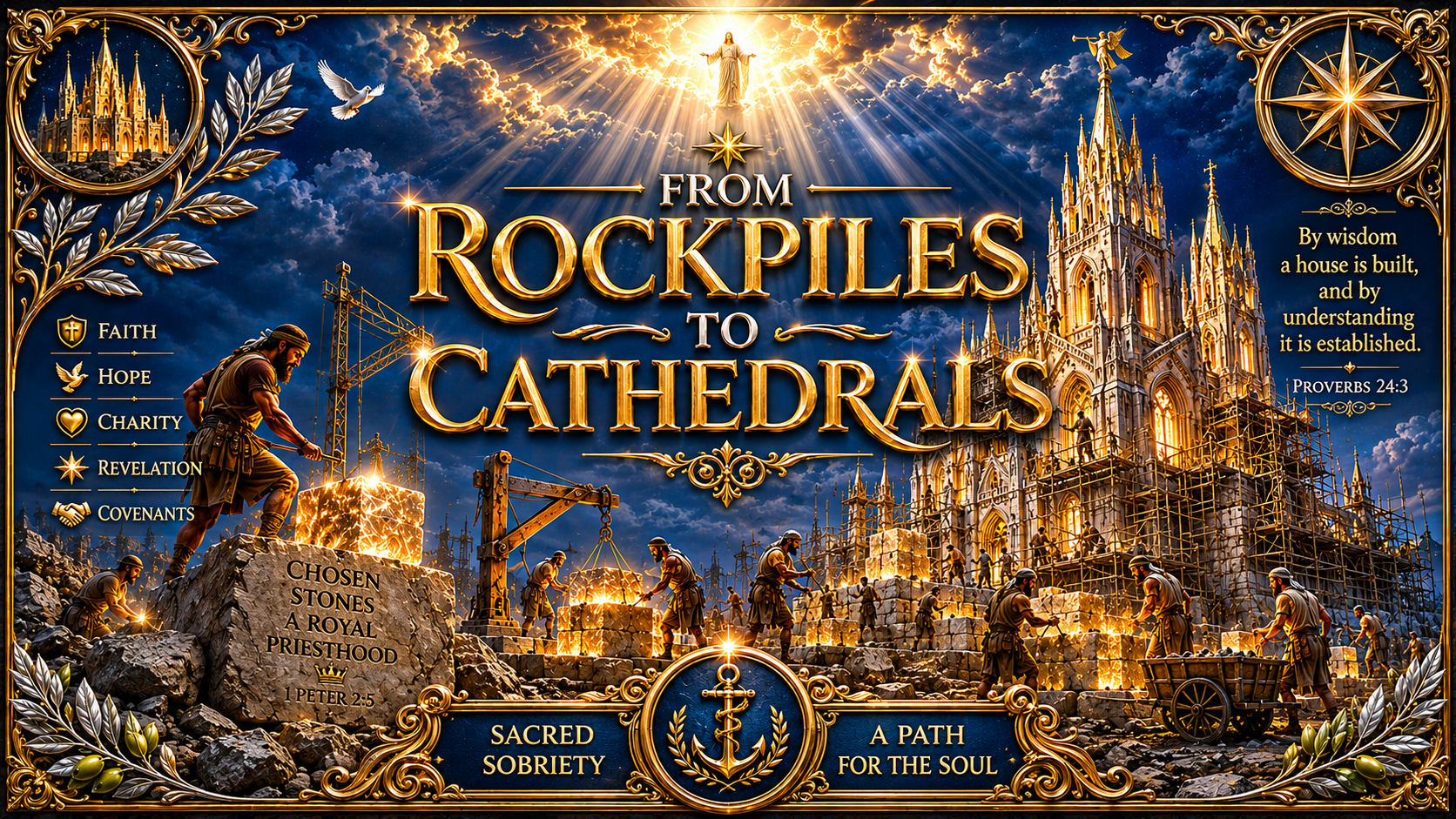
From Rockpiles to Cathedrals

From Rockpiles to Cathedrals

I never realized how many various rock-piles I've carried with me. And I also realized I was not alone because every one of us carries rock-piles - a place in our lives that feels heavy, unfinished, unlovely, or overwhelming. In the throes of our addiction, codependency, fear, shame - a relationship may feel stuck. A past feels immovable. A future feels uncertain.

However, scripture insists that God sees more in us than the rubble we carry. He sees the cathedral hidden inside the stones.

Anchor verse - Isaiah 61:3: "...to give them a garland instead of ashes, the oil of gladness instead of mourning, the mantle of praise instead of faint spirit. They will be called oaks of righteousness, the planting of the Lord, to display his glory."

God does not merely remove the ashes - He transforms them. He does not simply clear the rubble - He builds something enduring, beautiful, and strong.

Welcome back fellow travelers. As we continue our journey through sacred sobriety, we pause today to consider the quiet miracle of imagination - holy imagination. The ability to see what God sees. The courage to believe that the rubble of our lives is not the end of our story.

Friday, May 22, 2026

WEEKLY RECAP: WALKING IN TRUTH — A Sacred Sobriety Reflection

WEEKLY RECAP: WALKING IN TRUTH — A Sacred Sobriety Reflection

Our daily walk in recovery and thriving in sobriety provides a story. I love what the apostle Paul writes, "You yourselves are our letter, written on our hearts, known and read by all, and you show that you are a letter of Christ, prepared by us, written not with ink but with the Spirit of the living God, not on tablets of stone but on tablets that are human hearts." (2 Corinthians 3:2-3, NRSVUE). Our testimonies are living epistles. This is the reason I love what is said in the Celebrate Recovery rooms, 'He took my mess and turned it into a message and took my test and turned it into a testimony."

These stories are of struggle, of quiet faithfulness - and yet always a story of God's sovereign and divine grace in our moments of weakness (2 Corinthians 12:9). This past week, the devotional messages formed a single thread woven through four powerful themes.

  • Spiritual Discernment
  • Spiritual Direction
  • Mindful Prayer
  • Distinctiveness of a life transformed by Christ

Each one of these messages point us back to one central truth: Thriving in recovery and sobriety requires spiritual clarity, honest self-examination, and a heart anchored in Christ. And through the acrostics - we explored:

  • T.R.U.T.H
  • D.I.R.E.C.T.I.O.N
  • P.R.A.Y.E.R
  • H.O.L.Y

Hopefully you discovered a pathway that strengthens your heart, mind, and spirit; steadies the steps of anyone seeking lasting freedom.

Wednesday, May 20, 2026

Pressing Into the Profit of Prayer

Pressing Into the Profit of Prayer

Have you ever had someone challenge you regarding prayer? Maybe mock you for praying? Perchance you've had someone tell you that they no longer have faith in God because their prayers never were answered, and they questioned the existence of God.

The ancient skeptic in Job sneered, “What is the Almighty, that we should serve him? And what profit should we have if we pray to him?” (Job 21:15). Tozer notes that the tone was dripping with contempt, tossed aside “like Pilate, without waiting for a reply.” Yet Scripture and the lived testimony of the saints thunder back: there is profit in prayer—much every way.

Tozer writes, “An invitation to prayer is an invitation to omnipotence, for prayer engages the Omnipotent God and brings Him into our human affairs.” This statement is staggering and profound. It launches us into the reality that prayer transcends mere verbal expression; it allows us to interact with the divine authority of God Himself. Prayer is not a religious hobby; rather, it is the God-ordained means by which heaven bends low into human history. When we pray, we are not simply whispering into the void—we are summoning the God who parts seas, raises the dead, and renews the weary.

Perhaps the most compelling aspect of prayer is that it is not bound by the limitations of human understanding or experience. The act of prayer invites the supernatural into our mundane realities, connecting us with the Creator who desires to be intimately involved in our lives. How often do we overlook the opportunity to engage the infinite just because we cannot see immediate results? Tozer emphasizes this beautifully. “An invitation to prayer is an invitation to omnipotence, for prayer engages the Omnipotent God and brings Him into our human affairs.”

As Scripture reminds us, the anchor verse - Hebrews 11:6 — “Without faith it is impossible to please God, for whoever would approach him must believe that he exists and that he rewards those who seek him.” In times of doubt and uncertainty, this verse serves as a crucial reminder of the foundational belief that our faith ignites our relationship with God—the very essence that fuels our prayers and hopes.

In a world that still echoes Job’s question, we stand firm on the testimony of the ages. Tozer reminds us that “God Himself has supplied the answer, and the universal consensus of the ages has added an Amen.” The saints testify across time: prayer works because God works. Prayer profits because God is present. Prayer transforms because God responds.

Wednesday, April 29, 2026

The Truth’s Most Powerful Ally: A Life That Speaks Louder Than Words

The Truth’s Most Powerful Ally: A Life That Speaks Louder Than Words

We live in a world overflowing with opinions, arguments, podcasts, and social media posts—yet we often find ourselves starving for authenticity. People tend to trust what they see far more than what they hear. You can win an argument but still lose a connection. You can defend the truth yet fail to embody it. Amid this tension, many of us who are in recovery, healing, or rebuilding our lives ask ourselves a deeper question: Does my life truly reflect the truth I claim to believe?

A.W. Tozer cuts through the noise with such piercing clarity when he says, “The most effective argument for Christianity is still the good lives of those who profess it.” It's not about eloquence or theology or debate. It's about a life transformed by Christ.

Scripture backs this up with sobering clarity: James 2:17 (NRSVUE) reminds us that “So faith by itself, if it has no works, is dead.”

For those navigating recovery, untangling from toxic relationships, or breaking free from codependency, this truth hits home. Transformation isn't some abstract idea—it’s something you can see. It shows in the way you set boundaries, the way you walk away from chaos, and the way you choose peace over control. These decisions become living sermons that nobody can overlook.

A transformed life isn’t just an addition to your faith; it’s tangible evidence of it. In recovery, this looks like opting for boundaries instead of people-pleasing, choosing truth over denial, and embracing surrender over control.

1 Peter 2:12 (NRSVUE) takes this even further: “Conduct yourselves honorably among the gentiles, so that… they may see your honorable deeds and glorify God…”

People might never pick up a Bible, but they will read your life. They draw conclusions about God based on what they observe in you.

Every small act of kindness, every moment of self-discipline, and every decision based in love turns into a testimony. It’s in these everyday choices that the authenticity of your faith shines the brightest. When someone sees genuine transformation, it offers hope that real change is indeed possible. They’re not just hearing the Gospel; they’re witnessing it in action through your life.

Anchor verse - Matthew 5:16: “In the same way, let your light shine before others, so that they may see your good works and give glory to your Father in heaven.” (NRSVUE)

So if you’ve battled with guilt, shame, or a crisis of faith, hear this loud and clear: God isn’t asking you to be perfect. He’s inviting you into a real transformation.

2 Corinthians 3:18 (NRSVUE) tells us: “And all of us… seeing the glory of the Lord as though reflected in a mirror, are being transformed into the same image from one degree of glory to another…”

This is a process—a journey of becoming. It’s a gradual reshaping of your life that others can't help but notice.

And even on days when your voice feels quiet, your life—anchored in Christ—becomes a testimony that resonates with undeniable clarity.

Engaging with others in their struggles, rather than offering empty platitudes, creates deep connections. The beautiful truth is that God doesn’t call you to perform truth; He calls you to be transformed by it. This transformation, evident in your actions and choices, becomes a beacon of hope to those around you who are seeking meaning and reassurance.

By choosing to embody love, grace, and perseverance—qualities that Christ offers—you not only nurture your own growth but also inspire others to embark on their own journeys toward healing and authenticity. Your life can stand as a powerful testament, gently guiding others out of darkness into a place where they can truly see and experience real change for themselves.

Monday, April 27, 2026

Power of Silence in the Christian Life

Power of Silence in the Christian Life

The world disciples you in noise—but God forms you in stillness.

From the first waking moment, your soul is pulled outward—demands, responsibilities, distractions, internal unrest. Even your prayers can become hurried transactions, filled with words yet empty of encounter. But Scripture reveals a different way—a hidden life cultivated not in striving, but in stillness before God.

Most believers have learned how to speak to God. Few have learned how to be with Him. This distinction is crucial for those seeking a more profound relationship. Speaking often feels like filling an obligation, while being allows for an intimate exchange that transcends mere words. In this fast-paced world, the stillness can feel foreign, almost uncomfortable, yet it is within this quiet space that the heart finds its rest and revelation.

Yet the invitation remains: not to louder devotion, but to deeper communion. Not to more words—but to greater awareness of His presence. As we step back from the clamor of life, we begin to attune our hearts to His whispers, learning that sometimes silence is the most powerful form of communication. The question is not whether God is speaking… but whether you have become quiet enough to hear.

In stillness, you discover a sacred rhythm where your spirit can align with His. You can find strength for your day, peace that surpasses understanding, and clarity in the midst of confusion. It is in these still moments that the burdens of the world begin to lift, surrendering your concerns into His capable hands. Embrace the call to stillness; allow it to transform your relationship with the Divine, leading you not only into a deeper understanding but a more vibrant experience of faith.

Anchor Verse: “Stop striving and know that I am God; I will be exalted among the nations, I will be exalted in the earth.” — Psalm 46:10 (NASB 2020)

Stillness, then, is not a passive retreat from life—it is a deliberate return to the One who holds your life. It is the quiet reorientation of the soul, the sacred pause where you stop letting the world set your pace and allow God to set your posture. In stillness, you are not withdrawing from responsibility; you are withdrawing from the illusion that you must carry it all alone.

This is why Scripture does not merely suggest stillness—it commands it. Because without stillness, you cannot hear. Without stillness, you cannot discern. Without stillness, you cannot remember who God is or who you are in Him. Stillness becomes the doorway through which trust is formed, faith is strengthened, and clarity is restored.

This command is more than an invitation to quiet your mind; it is a call to reorient your entire inner life around the reality of who God is. Stillness becomes the place where striving finally loosens its grip and trust begins to take root. But what does it actually look like to live this out in the chaos of real life? How do we move from noise to knowing, from hurry to holy stillness?

That’s where the deeper work begins.

Thursday, April 23, 2026

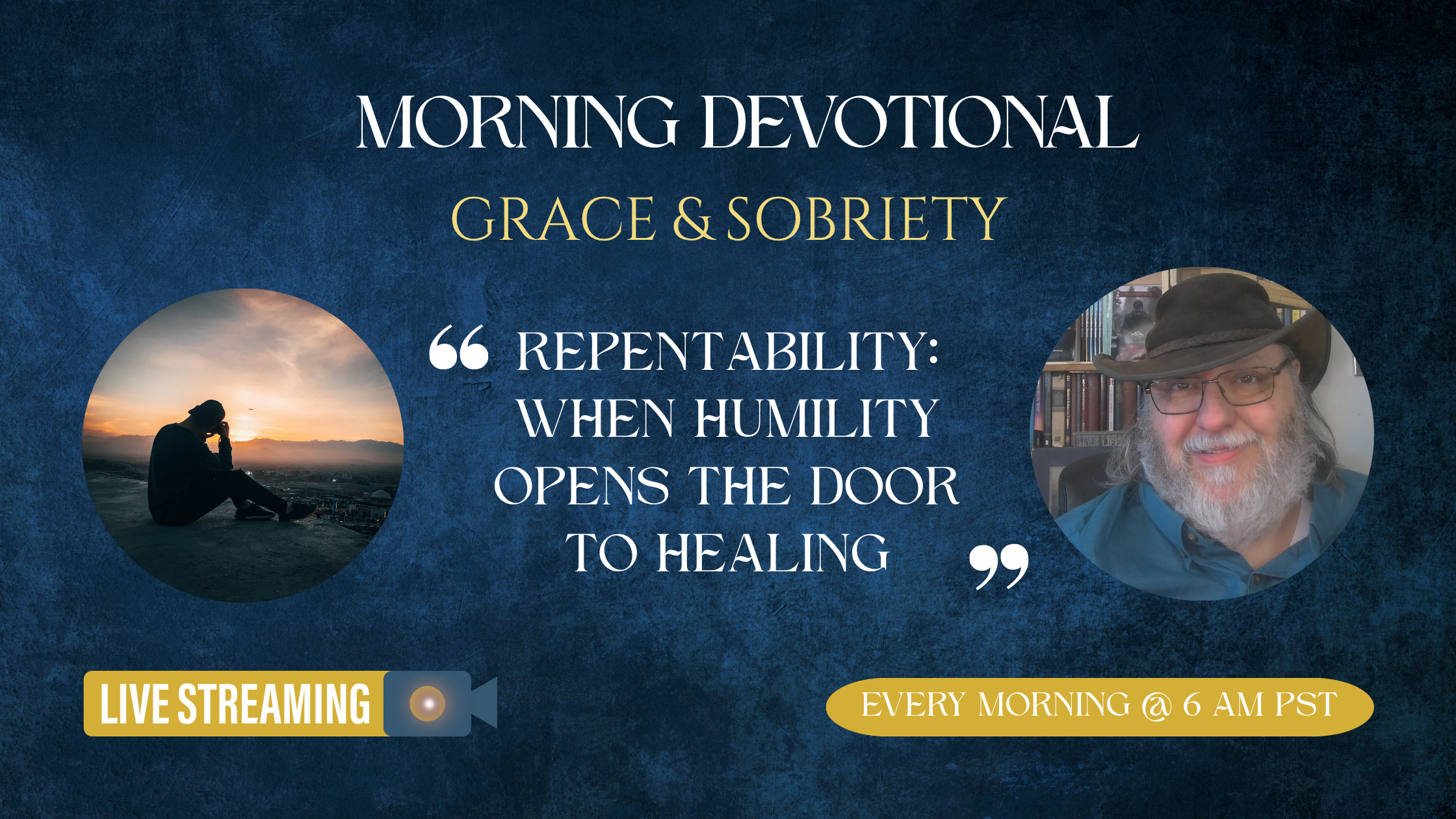
Repentability: The Courage to Admit, the Grace to Change

Repentability: The Courage to Admit, the Grace to Change

There’s a line from John Everett that hits like a freight train: “No man ever enters heaven until he is first convinced that he deserves hell.” This profound statement opens a window into a deeper understanding of our human condition. It’s not simply about despair; it’s about arriving at clarity, the kind that pierces through the fog of self-deception and allows us to see ourselves in our truest form.

For those who have journeyed along the path of recovery, this truth resonates deeply: Breakthrough doesn’t begin with strength. It begins with surrender. This surrender is an act of will, a choice to lay down our pretense and pride in favor of an honest reckoning with our flaws and failures.

When we engage with Scripture, a steady theme of humility emerges, woven through every page like a rich tapestry. Jesus begins the Beatitudes with a powerful assertion: “Blessed are the poor in spirit, for theirs is the kingdom of heaven.” (Matthew 5:3) This verb "blessed" signifies a state of being that arises from recognizing our spiritual poverty—a necessary acknowledgment that opens us to the grace that God offers.

The apostle Peter echoes this sentiment, reinforcing the idea that humility is essential when he states: “God opposes the proud but gives grace to the humble.” (1 Peter 5:5–6) These words remind us that humility isn’t merely a suggestion—it’s foundational to our spiritual lives. It’s the nutrient-rich soil in which the seeds of repentance can take root and grow.

Nowhere is this more vividly illustrated than in 2 Samuel 12:1–13, during Nathan’s confrontation with King David. Here we find the narrative of God’s chosen king, who fell from grace through grievous sins: adultery and murder. When Nathan shared the parable of the stolen lamb, David's fury ignited, until the piercing truth struck him: “You are the man.”

The gravity of this moment cannot be overstated. David, instead of employing the common defense mechanisms we often resort to—defensiveness, denial, or blame—did something remarkable. He broke within himself. He uttered the words, “I have sinned against the LORD.” (2 Samuel 12:13) This is what we might call true repentability. It's humility in motion, a posture that God can work with, one that opens the door for restoration and healing.

Wednesday, April 22, 2026

Solidarity in Our Suffering

Solidarity in Our Suffering

Every one of us knows what it feels like to wake up inside a prison we never saw ourselves enter. Not a prison of steel bars, but the kind built from fear, shame, distorted thinking, and the quiet suffering we carry alone. These are the prisons that don’t show up on a background check—but they shape our lives all the same.

And here’s the part we rarely admit to ourselves: most of the time, we don’t even realize we’re locked inside. We just feel the weight. The cycle. The hopelessness. Recovery calls this “your side of the street.” MRT calls it “recognizing your prison.” Scripture calls it remembering—remembering those in chains as though you were chained with them (Hebrews 13:3). Because the moment you recognize your own captivity is the moment you become capable of standing with someone else in theirs. Not with pity. Not with judgment. But with solidarity born from shared humanity and redeemed suffering.

I’ve lived in those invisible cells. I’ve counseled people trapped in them. And I’ve watched God use both literal and internal prisons to refine character, restore dignity, and reveal His mercy in ways comfort never could. So when I talk about suffering in solidarity, I’m not speaking as an observer—I’m speaking as someone who has been behind those walls and found Christ already waiting there. This devotional isn’t about theory. It’s about truth. It’s about recovery. It’s about the Gospel. And it’s about learning to see our own captivity clearly enough that we can walk beside others without superiority, without fear, and without pretending we’ve never been imprisoned ourselves.

What is the prison of your own suffering? For me, it was those moments where my life seemed to come undone - the rug pulled right out from underneath me. Locked in my own irrational thought process, false beliefs, and not understanding the reason I seemed to constantly be in this never-ending cycle of always finding myself in a place of brokenness, suffering, and hopelessness. There are moments in many individuals lives where they are in some form of a prison. And this prison may be a literal prison, or it may be a product of one’s circumstances. Whether this is a place of financial debt, broken relationship, physical limitations, disability, or injury, or any other constraining circumstance. 

Yet, the single most travesty within our Christian faith communities and fellowship is when fellow saints perceive those who are in some form of prison and are suffering - see them with a biased assumption that God has not favored them. That, they have committed some form of sin, or are spiritual rebellion. To some extent, there are those who have this idea that Christians suffering in their own prisons are lacking faith in God. 

However, let’s consider the Apostle Paul: he probably experienced similar judgments and perceptions. Specifically, when we read his epistles that were written while he was in prison and suffering for the cause of the Gospel. Early saints of the way may have seen his trouble as a sign of God’s own disfavor and wondered how someone with so much potential had fallen to such lowly depths. 

Now, consider the reality of what I am wanting to share with you today. Prisons today different from person to person - and are full of God’s beloved sons and daughters. Despite this reality, He uses these prison moments in profound and mighty ways. We see how he used Paul’s suffering and prison moments, Joseph of Egypt, John the Baptist, John the beloved disciple, and numerous other men within scripture. Most of these men were used by God in powerful ways and they have experienced imprisonment, captivity, or depth of loneliness and despair - and our Heavenly Father, in His tender mercies, used those moments. 

Monday, April 20, 2026

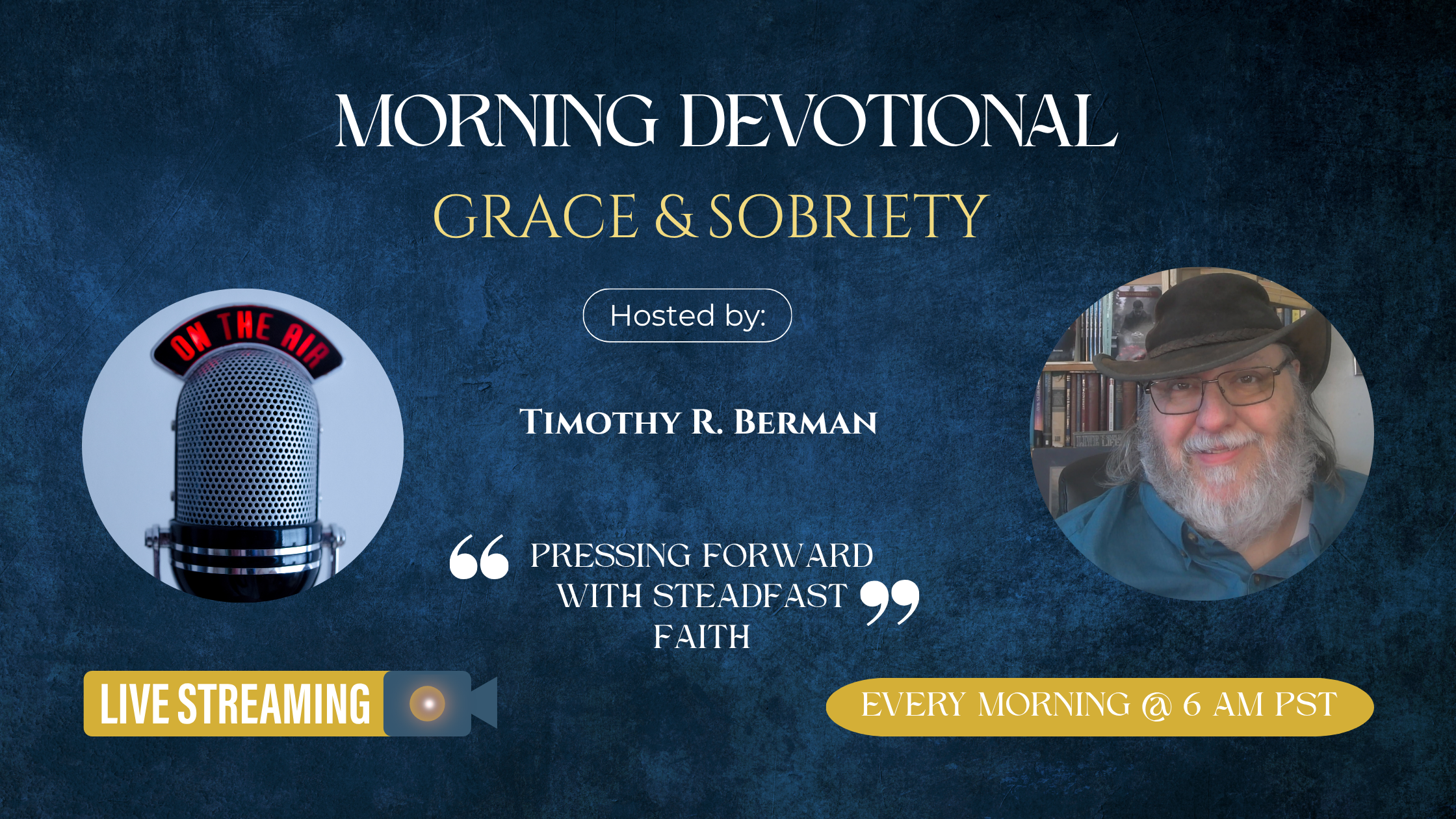
Pressing Forward with Steadfast Faith

Pressing Forward with Steadfast Faith

There comes a moment in every believer’s life—and in every person walking out recovery—when God says something that feels almost unreasonable: “Go forward.” This divine command often arrives not when the sea has parted, not when the fear has settled, and certainly not when you feel your strongest. Instead, it comes at a time when we might feel the most vulnerable, beckoning us to take that leap of faith—forward… right now. This call exposes our innermost beliefs. It reveals whether we trust the God who speaks or if we allow the circumstances around us to intimidate and paralyze us.

Charles Spurgeon once articulated that vigorous faith often laughs at impossibility—and this idea is rooted in the assurance that the matter has been settled in prayer. When we commit our burdens to God, there’s a shift. Our faith rises; it stands up, wipes its eyes, and begins to walk toward what has previously seemed terrifying. Scripture reinforces this call to action with compelling encouragement: press toward the mark (Philippians 3:14), run with patience (Hebrews 12:1), be not weary in well doing (Galatians 6:9), resist steadfast in the faith (1 Peter 5:9), continue instant in prayer (Romans 12:12), and press forward with a steadfastness in Christ (2 Nephi 31:20). The pattern here is unmistakable—moving forward is the posture of those who genuinely trust God.

“Brethren, a vigorous faith will often shut its eyes to difficulties. When faith looks upon a difficulty as being exceedingly great, then she turns to prayer; but, on the other hand, after having sought God’s help, and having received it, she frequently laughs at the impossibility, and cries, “It shall be done;” and then, instead of betaking herself any longer to her knees, she boldly marches on, believing that the difficulty will vanish before her, that the crooked will be made straight, and the rough places plain. We are not to be always praying over a difficulty; when we have fairly committed it to God, we are to act upon the assurance that he has heard us; nor will such an action be the fruit of rashness, for it is a solid and substantial fact, that prayer does avail with God. Beloved, it strikes me that the advice which the Lord gave to Moses, was such as he has given to the preacher to-night; and that the message which Moses delivered to the children of Israel, is a very fit one for me to deliver to you. Short, prompt, soldier-like, here is the whole of it: “Forward! forward!” If you have been sitting down or tempted to go back— “Forward!” We have long been praying, let us to-night “Go forward.” The one subject we shall take up and try to deliver to different classes of character, is, “Thus saith the Lord, ye children of Israel, Forward!” (Charles H. Spurgeon, October 18, 1863;  “Forward! Forward! Forward!” Metropolitan Tabernacle Pulpit Volume 10)

Reflecting on the Israelites at the Red Sea, it’s clear that their moment of decision wasn’t about their strength—their circumstances appeared utterly impossible. It was about recognizing God’s unwavering faithfulness. The command to move forward was not only a call to action but an affirmation that God was already working in their favor. When God says “Forward,” He is not pushing you into peril; rather, He is leading you into deliverance and growth. This same God who parted the waters for Moses, who fortified Paul during his trials, who steadied Peter in the storms, and who sustained the early saints through persecution is the same God who walks with you right now. You can trust Him. You can move beyond your fears and doubts. You can take that step forward, knowing that He is leading you into a brighter and more fulfilling future. Your journey may be filled with uncertainty, but remember, every step taken in faith is a step walked in the light of His promises. You can go forward.

Tuesday, February 10, 2026

CFM Feb 9-15: Genesis 6-11; Moses 8 - “Noah Found Grace in the Eyes of the Lord”

CFM Feb 9-15: Genesis 6-11; Moses 8 - “Noah Found Grace in the Eyes of the Lord”

Every generation eventually reaches a moment when it looks around and whispers, “Something is wrong with the world.” In these times, violence feels all too normal, permeating the fabric of society and influencing our daily lives. The mockery of faith becomes a fashionable trend, with belief systems ridiculed and disregarded as obsolete or irrelevant. Covenant identity, once held as sacred and unbreakable, is now treated as merely optional, leading many to question their values and commitments.

Amidst this unsettling atmosphere, the quiet, steady voice of God seems drowned out by the cacophony of a culture sprinting toward self-destruction. The distractions and temptations of the modern world are many, each vying for our attention and allegiance, leaving little room for genuine reflection on our spiritual existence.

Genesis 6–11 is not ancient history. It’s a mirror reflecting our current realities. Within these verses, we can find resonating truths about the human condition and the inherent struggles we face in a world rife with chaos. The narratives captured in these chapters hold profound relevance today, illustrating the timeless nature of our challenges and the critical need for divine intervention amidst suffering and despair.

Moses 8 is not merely a prelude to the Flood; it functions as a prophetic commentary on what true discipleship can look like when the world is collapsing around you. This text invites readers to consider their own paths and the steadfastness required to remain faithful in the face of overwhelming adversity. The examples set forth serve as reminders that unwavering dedication to one’s beliefs can be both a source of strength and a beacon of hope in dark times.

Noah’s story is not merely a story about a simple boat; it is an embodiment of a God who passionately refuses to give up on His children. The narrative illustrates the depths of divine love and commitment, showing that even when humanity falters, God’s covenant remains steadfast. It’s about a covenant that refuses to die despite the floods of life that threaten to engulf us. It’s about grace that finds us, even when the world is drowning in despair, offering a lifeline steeped in hope, redemption, and the promise of a new beginning. This grace reminds us that no matter how far we stray, we are never beyond the reach of divine mercy and love.

Sunday, January 18, 2026

Genesis 7:1-5 - "The Discipline of Deliverance: Why God uses Floods to Lift You, not Drown You"

Genesis 7:1-5 - "The Discipline of Deliverance: Why God uses Floods to Lift You, not Drown You"

There comes a moment in every recovery journey when God calls us out of the storm—not because the storm has ended, but because He has prepared a place of refuge within it. Deliverance rarely begins with calm skies. It begins with obedience in the middle of chaos. When everything around us shakes, God invites us into a covenant that cannot be shaken. This is where trust is forged, where faith becomes more than belief, and where sobriety becomes more than survival—it becomes sacred. (Psalm 46:1–2; Isaiah 26:3–4)

Welcome, fellow travelers, to Sacred Sobriety: A Path for the Soul. Today we step deeper into our Daily Exodus—this discipline of deliverance where God leads us out of bondage and into His covenantal protection. When we come into relationship with who God truly is, He establishes a covenant of protection and provision as we navigate the storms of life. He does not merely calm the waters; He often destroys the very structures of our past that once held us captive. (Psalm 91:1–4; Isaiah 43:2)

Our anchor verse today is Genesis 7:1–5 (NASB2020), where God calls Noah into the ark before the floodwaters rise, sealing him into divine safety while judgment falls on everything that once defined the world he knew.

Friday, January 16, 2026

Episode 10: Building an Ark in a Toxic World — Grace, Boundaries, and the Obedience of Faith (Genesis 6:8-9, 22)

Episode 10: Building an Ark in a Toxic World — Grace, Boundaries, and the Obedience of Faith (Genesis 6:8-9, 22)

When the world around you feels like it’s rotting from the inside out… when family systems are chaotic, culture is loud, and temptation is relentless… God still raises up people who walk differently. Noah didn’t survive the flood because he was strong—he survived because he responded to grace. Today, we’re learning how to build an ark in a toxic world: with grace, with boundaries, and with the obedience of faith.

Introduction

Hello and welcome, fellow Travelers, to Sacred Sobriety: A Path for the Soul. Today, we step into one of the most misunderstood chapters in Scripture—not as historians, but as people in recovery who know what it feels like to live in a world drowning in compromise. Genesis 6 isn’t just about judgment; it’s about survival. It’s about the God who gives grace before He gives instructions, who forms character before He forms assignments, and who teaches us to build safety in a world that refuses to repent.

Our anchor verses—Genesis 6:8–9 and 6:22—give us a three‑part pattern for recovery: Grace, Boundaries, and Obedience. This is how we build our ark.

Anchor Verses (NASB 2020)

Genesis 6:8–9, 22 “But Noah found favor in the eyes of the Lord… Noah was a righteous man, blameless in his generation; Noah walked with God… Thus Noah did; according to all that God had commanded him, so he did.”

Prayer

Heavenly Father, thank You that recovery begins with Your grace, not our goodness. Teach us to walk with You in a world that pulls us in every direction. Strengthen our boundaries, steady our steps, and empower our obedience. Help us build what will carry us through the storms ahead. In Jesus’ name, amen.

Thursday, January 15, 2026

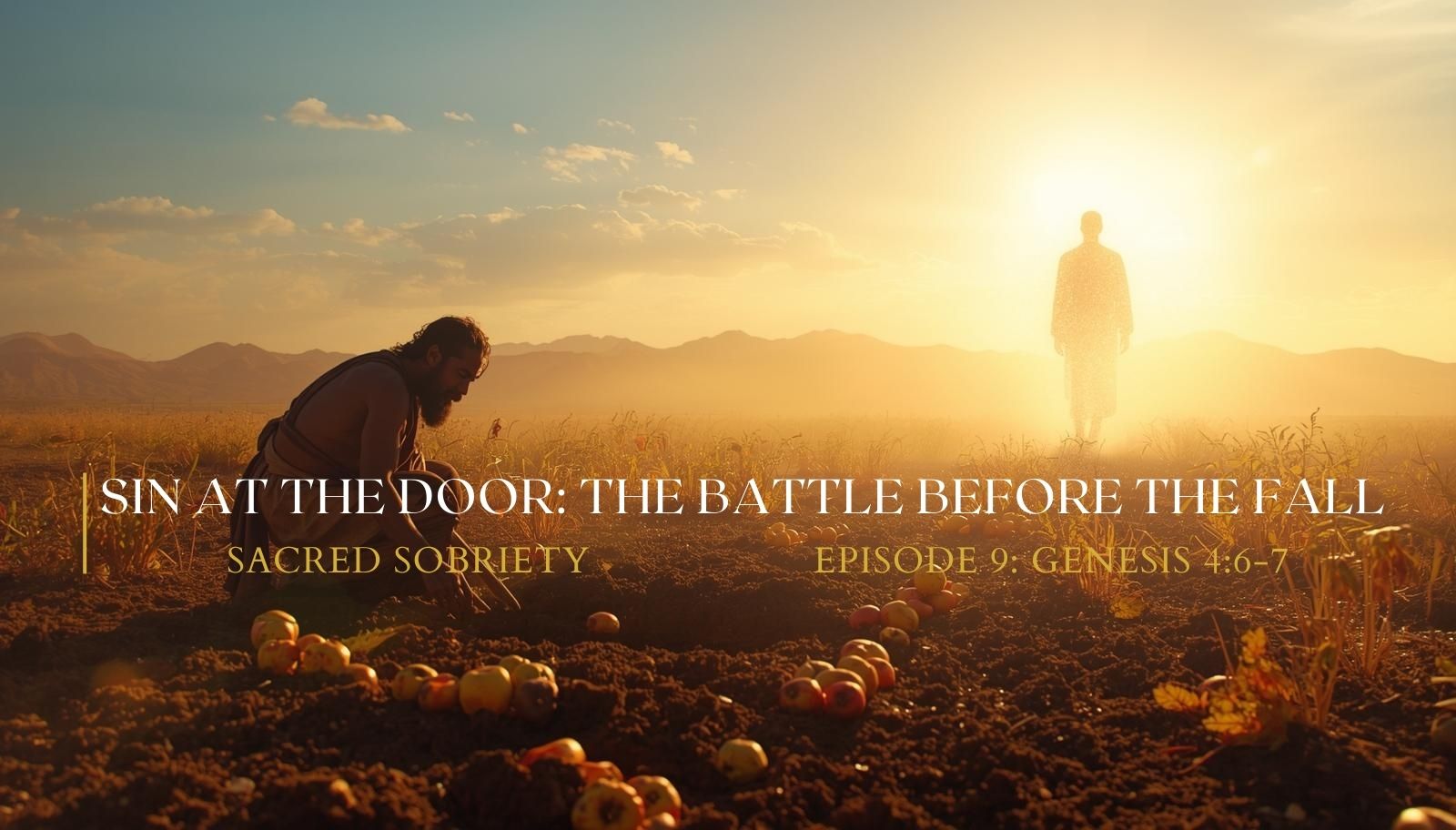
EPISODE 9: Genesis 4:6-7 — “Sin at the Door: The Battle Before the Fall”

EPISODE 9: Genesis 4:6-7 — “Sin at the Door: The Battle Before the Fall”

Every relapse begins long before the drink, the click, the lie, or the outburst. It begins at the door of the heart — where sin waits, patient and persuasive. Genesis 4 doesn’t just tell Cain’s story; it exposes ours. The battle is not “out there.” It is the quiet moment before the choice, the whisper before the fall, the emotion before the action. God does not shame Cain. He questions him. He invites him. He warns him. He offers a way out. The same God speaks to us with the same clarity, compassion, and authority.

Hello and welcome, fellow travelers, to Sacred Sobriety: A Path for the Soul. Today, we step into one of Scripture’s most honest scenes — a moment where God reveals the anatomy of temptation and the mercy of early intervention. Genesis 4:6–7 is not a story of failure; it is a story of warning, wisdom, and the possibility of victory. For anyone in recovery, this passage is a mirror and a map.

Genesis 4:6–7 (NASB 2020) “Then the Lord said to Cain, ‘Why are you angry? And why is your face gloomy? If you do well, will your face not be cheerful? And if you do not do well, sin is lurking at the door; and its desire is for you, but you must master it.’”

Monday, January 12, 2026

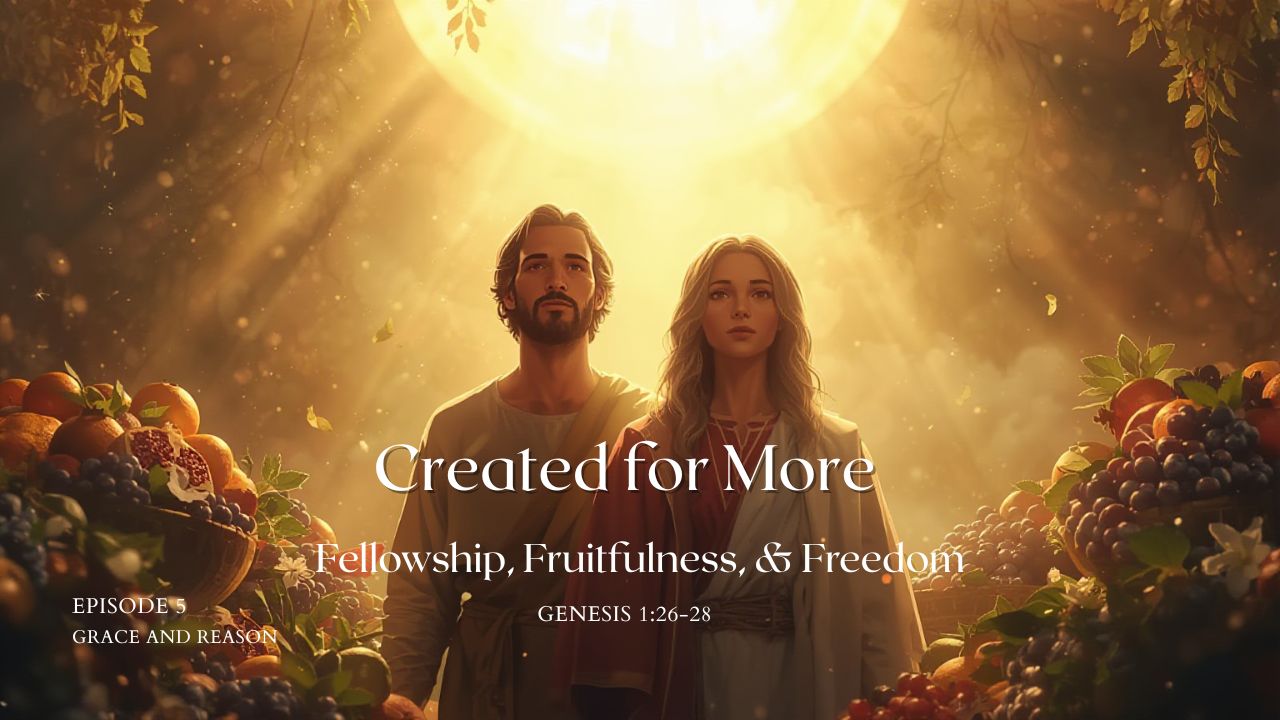
Genesis 1:26–28: Created for Fellowship, Fruitfulness, and Freedom

Genesis 1:26–28: Created for Fellowship, Fruitfulness, and Freedom

When God created humanity, He didn’t begin with rules, shame, or expectations. He began with blessing, purpose, and relationship. Before we ever failed, He called us very good. And for those of us walking the long road of recovery — from addiction, fear, codependency, or spiritual exhaustion — Genesis 1 reminds us of something we often forget: God’s original intention for us has not changed. He still loves us, still calls us, and still longs to bless us as we surrender to Him.

Hello and welcome, fellow Travelers.

Today, I want to walk with you as we continue our journey through Genesis, exploring what it means to walk in Sacred Sobriety — a path where God restores what was lost, heals what was broken, and reclaims what fear and shame tried to steal. Our anchor verse is Genesis 1:26–28, a passage that reveals God’s heart for us from the very beginning.

ANCHOR VERSE — Genesis 1:26–28 (NASB)

Then God said, “Let Us make mankind in Our image, according to Our likeness; and let them rule…” God created mankind in His own image… male and female He created them. God blessed them; and God said to them, “Be fruitful and multiply, and fill the earth…”

PRAYER

Heavenly Father, we come to You as people in need of Your restoring touch. Thank you for opening our hearts to Your original intention for us — fellowship, fruitfulness, and blessing. Thank you for healing the places where fear, pride, and shame have distorted our view of You. Teach us to surrender, not out of fear, but out of trust. In Jesus’ name, amen.