There are moments when the distance between faithfulness and failure feels almost impossibly small.
A glance lingers. A private desire is entertained. A warning is dismissed. One compromise makes the next compromise easier, and before long, a person who once walked closely with God finds himself standing in the wreckage of choices he never imagined he would make.
That is part of the tragedy of David’s story.
Yet this week’s Come Follow Me 2026 Old Testament study does not leave us standing on the rooftop with David, trapped in the moment when temptation first entered his heart. It carries us into Nathan’s courageous confrontation, through David’s anguish and the painful consequences of sin, and onward into Solomon’s prayer for wisdom and his dedication of the house of the Lord.
At the center of these chapters is a plea filled with covenant hope:
“If they shall bethink themselves in the land whither they were carried captives, and repent, and make supplication unto thee … saying, We have sinned, and have done perversely, we have committed wickedness; And so return unto thee with all their heart, and with all their soul … then hear thou their prayer and their supplication in heaven thy dwelling place, and maintain their cause.” —1 Kings 8:47–49, KJV
This is not a lesson about flawless kings or effortless discipleship. David fell. Solomon began with wisdom and ended with a divided heart. Both stories warn us that yesterday’s spiritual strength cannot substitute for today’s surrender.
But these chapters also testify that God has provided a covenant path of return. He hears the prayer of the humble. He grants wisdom to those who sincerely seek it. He establishes His name in His holy house. Through Jesus Christ, He invites wounded, wandering, and repentant people to come home.
The question is not merely whether David or Solomon remained faithful. The question is whether our hearts are fully turned toward the Lord today.
There was a moment in my youth where I learned a lesson I didn’t understand until much later. It happened during a Boy Scout outing one summer. We were out on the bay near my hometown, and it was the first time I ever learned how to paddle a canoe.
Okay, so what — you got to go out on the water, learn to paddle, in a canoe. What’s the big deal?
Here’s the lesson.
On the way back to shore, the tide was going out. We were paddling against it. Not upstream on a river — against the tide of the bay. And the harder we paddled, the slower we moved. Every inch forward took every ounce of strength we had.
Life feels like that sometimes. Recovery feels like that often. You’re straining at the oars, wondering if you’re even moving, wondering when you’ll reach the destination, wondering when the struggle will ease.
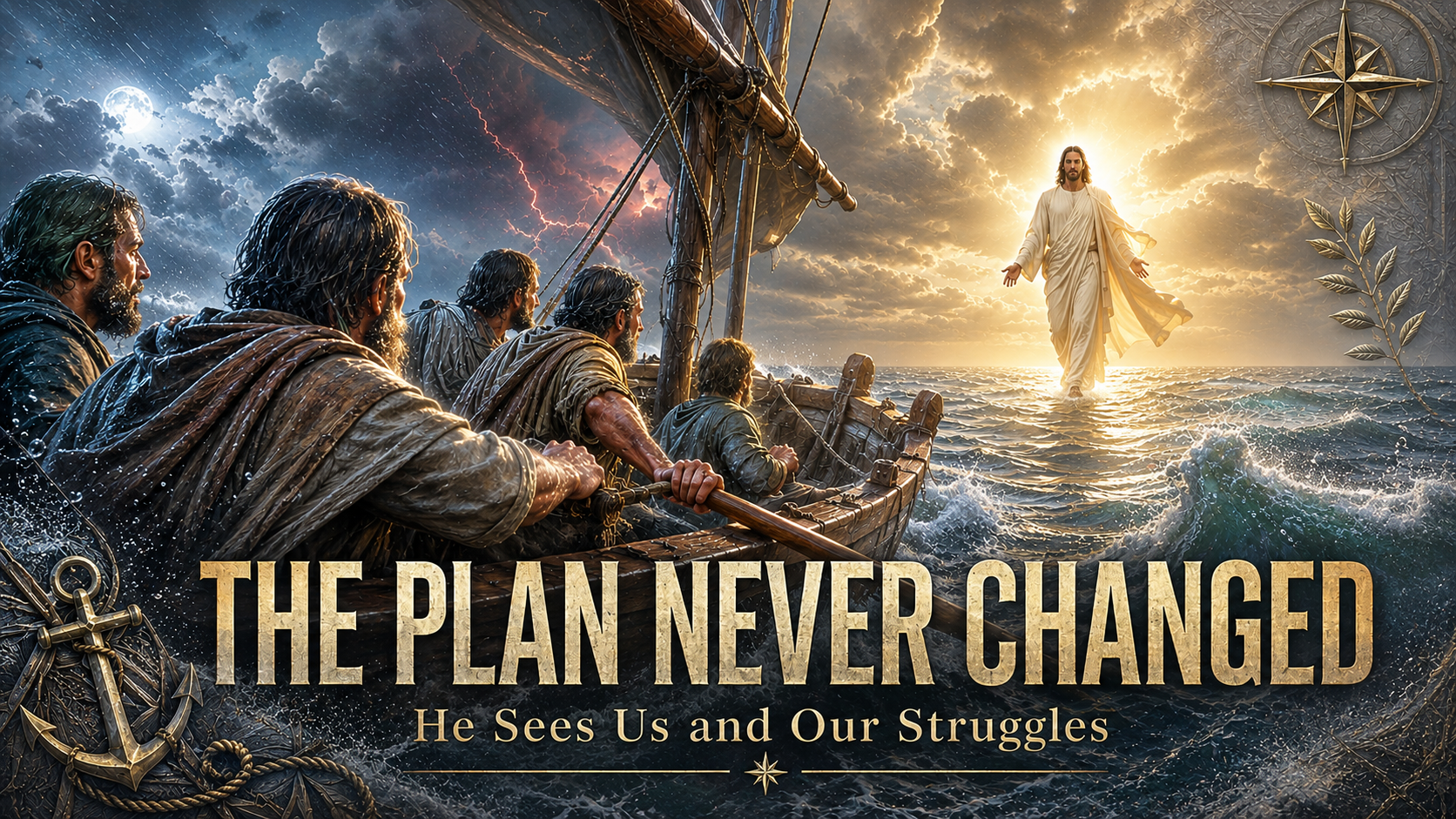
I didn’t think about that moment again until I came across a reel of a guy with a sideways cap, tattoos, and piercings teaching on Mark 6 — the same chapter where Jesus feeds the 5,000, right after He receives word of John the Baptist’s death, and right after He commissions the Twelve to preach the Gospel.
Anchor Verse — Mark 6:47–48 (NRSVUE): “When evening came, the boat was out on the sea, and he was alone on the land. When he saw that they were straining at the oars against an adverse wind, he came toward them early in the morning, walking on the sea. He intended to pass them by.”
And that’s where everything shifted. Pastor Kelly K said something that stopped me cold: “If Jesus saw them, He sees you too.” The disciples were in serious trouble — rowing hard, struggling against the wind and waves. And Jesus saw them long before He ever stepped onto the water. Just like He sees you. Then came the line that most of us have never paid attention to: “He intended to go past them.” Why would Jesus walk toward them… but not stop?
What is the purpose of this message today? Why focus on what I no longer miss? Because today's message is about what dies and what rises within each one of us. Luke 9 is the clearest, the sharpest, and the most recovery aligned call Jesus ever gives. It is a call to deny self. A call for us to take up our cross daily. A call to follow after Him. And it is one where we are asked to count the cost because it requires that we lose our life in order to save it. It is where we come to the end of ourselves, attempting to gain the appeasement of those around us, to gain what the world may offer us, yet lose our very soul in the process. It speaks directly to the "things I no longer miss" in my own addiction, codependency, chasing the girlies, and pretending to be someone I never was.
Welcome back, fellow travelers. If you haven’t watched the recent devotional in our Set of the Sail series— “The Lord Giveth Knowledge: The Spiritual Awakening of Christian Recovery”—I encourage you to do that. In that message, we talked about walking the crucified life… not coping, not managing, not surviving… but dying to self so that Christ may live fully in us. Having a real genuine spiritual awakening to the things of God.
Today, we’re going deeper. Because if we’re honest, many of us have spent years trying to “manage” life on life’s terms. But Sacred Sobriety is not about management. It’s about transformation. It’s about stepping boldly into the victory Christ already secured.
You and I have twenty‑four hours today. And I want to take a few of those minutes to speak directly to the wounds, addictions, anxieties, fears, and faith crises that have shaped us.
Because there are things I no longer miss. And I want to show you why.
Anchor Verse — Luke 9:23–26: “If any want to become my followers, let them deny themselves and take up their cross daily and follow me. For those who want to save their life will lose it, and those who lose their life for my sake will save it.”
This is the heartbeat of recovery. This is the heartbeat of discipleship. This is the heartbeat of Sacred Sobriety.
Jesus is not calling us to cope. He is calling us to die— to ego, to self‑will, to the old patterns, to the old wounds, to the old survival strategies. And in that death… He calls us to live. To live a blessed and abundant life. To live with peace of mind and joy in our hearts. Yet to do this - he invites us in because we are heavy laden, weary travelers and are in much need of rest (Matthew 11:28-29).
If you’re not familiar with the early story of Alcoholics Anonymous, it’s often said that the ideas behind the Twelve Steps were shaped by the Oxford Group—a gathering of Christian men committed to honesty, confession, restitution, and surrender. Bill Wilson, one of AA’s founders, was deeply influenced by them. But today’s devotional isn’t about the origins of AA. It’s about a man named Rowland Hazard, whose struggle with alcoholism led him to seek help from the famed psychiatrist Carl Jung in the early 1930s.
After extensive treatment, Jung told Hazard something that sounds harsh but is deeply honest: his condition was hopeless from a medical standpoint. His only hope, Jung said, was a spiritual experience—a profound awakening that would transform him from the inside out. That realization eventually shaped the foundation of AA itself. Hazard’s spiritual awakening, experienced through the Oxford Group, was shared with Bill Wilson, and from that encounter the Twelve Steps were born.
Let’s sit with that for a moment. Because in my own journey—through recovery, sobriety, homelessness, fear, doubt, and a faith crisis—I had to face the same truth: everything was utterly hopeless until I had a spiritual awakening. Some call it “hitting bottom.” But I’ve come to see it as the moment the Holy Spirit reveals Christ to us in a way the intellect alone could never reach.
Today, many try to think their way into faith. They know about God but never come to know God Himself. And that brings us to the heart of today’s message: What does it mean to truly know God—and Jesus Christ whom He has sent? (John 17:3)
Our anchor verse is Isaiah 1:18–20, where God invites us to “come and reason together.”
Come now, let us argue it out, says the Lord: if your sins are like scarlet, will they become like snow? If they are red like crimson, will they become like wool? If you are willing and obedient, you shall eat the good of the land, but if you refuse and rebel, you shall be devoured by the sword, for the mouth of the Lord has spoken.
This is not an intellectual debate—it is an invitation to examine our hearts, our wounds, our failures, and our inability to save ourselves. It is a call to return, to be still, and to know that He is God.
Today, we explore what it means to know Christ, to know the Father, and to know who we truly are through a genuine spiritual awakening.
Learning to love myself was the first mountain I ever had to climb in recovery. Jesus said the greatest commandment is to love God with all our heart, soul, mind, and strength—and the second is like it: to love our neighbor as ourselves. I thought I loved God. I thought I loved others. But I had never learned how to love me. And when I finally faced that truth, I realized I didn’t just “not love myself”—I despised myself.
When I was drunk and alone, I’d curse myself. I’d repeat the harsh words spoken over me by others—especially family. Emotional abuse, degradation, bullying, name‑calling… all of it became the internal script I lived by. I believed I was worthless, stupid, manipulative, selfish, unlovable. And because I believed it, I lived it.
So I kept God at arm’s length. I kept people at arm’s length. I feared abandonment, rejection, and judgment. I feared giving God my whole heart because I assumed He would eventually reject me too. Shame became the lens through which I saw myself, others, and God.
But recovery forced me to confront the lies. It forced me to ask: Who does God say I am? And in that painful, holy unraveling, I began to learn to love God with what little I had. I began to see myself through His eyes. And only then could I begin to love others with sincerity, depth, and courage.
Anchor verse - Hebrews 1:3 - “He is the reflection of God’s glory and the exact imprint of God’s very being, and he sustains all things by his powerful word. When he had made purification for sins, he sat down at the right hand of the Majesty on high.”
Christ is the exact imprint of God’s being—and through Him, we learn who God is, who we are, and how deeply we are loved.
I do not recall the specific moment in my own recovery journey when Jesus placed a crossroad before. For one, I have had multiple crossroads placed before. And I am sure many of you have had those same crossroads placed in your own life and path. These crossroads were not placed with thunder, not spectacle, because they were often placed with a quiet, piercing invitation. At times, and for me, came by way of conviction that brought me to the knees of humility because of an entitled selfish attitude. Other times came in moments of comfort and spiritual direction when someone took the time to obey without delay the promptings of the Holy Spirit. And still other moments where it is the quiet witness of confirmation, and then further confirmed by another's message and teaching.
That tiny word if holds the weight of your destiny as well as my own destiny. it is the hinge between us surviving and thriving, between bondage and freedom, between the life we've known and the life Christ longs to give us - you know, that abundant life where there are peace and joy in Him? An abundant life where we come to rest in Him.
Today, we are stepping right into this profound, simple, and quiet invitation with courage, clarity, and a sound mindset that is honest. Stepping into understanding how the cross becomes transformative in our path, in our lives, and in our relationships.
Anchor Verse — Matthew 16:23–26 (cf. Luke 9:23–26, NRSVUE): "Then Jesus told his disciples, “If any wish to come after me, let them deny themselves and take up their cross and follow me. For those who want to save their life will lose it, and those who lose their life for my sake will find it. For what will it profit them if they gain the whole world but forfeit their life? Or what will they give in return for their life?"
Welcome back, fellow travelers, to Sacred Sobriety: A Path for the Soul. We are continuing our series Set the Sail for Recovery and Sobriety. Today we’re walking with Jesus into one of the most demanding—and liberating—teachings He ever gave. Matthew 16:23–26 and Luke 9:23–26 confront us with the truth that discipleship is not an accessory to life; it is the surrender of life. And yet, in that surrender, we discover the abundant life we’ve been aching for. As Tozer writes in Salvation Walks the Earth, “Every man holds his future in his hand… destiny waits on the nod of his head.” Today, we nod toward Christ.
I never realized how many various rock-piles I've carried with me. And I also realized I was not alone because every one of us carries rock-piles - a place in our lives that feels heavy, unfinished, unlovely, or overwhelming. In the throes of our addiction, codependency, fear, shame - a relationship may feel stuck. A past feels immovable. A future feels uncertain.
However, scripture insists that God sees more in us than the rubble we carry. He sees the cathedral hidden inside the stones.
Anchor verse - Isaiah 61:3: "...to give them a garland instead of ashes, the oil of gladness instead of mourning, the mantle of praise instead of faint spirit. They will be called oaks of righteousness, the planting of the Lord, to display his glory."
God does not merely remove the ashes - He transforms them. He does not simply clear the rubble - He builds something enduring, beautiful, and strong.
Welcome back fellow travelers. As we continue our journey through sacred sobriety, we pause today to consider the quiet miracle of imagination - holy imagination. The ability to see what God sees. The courage to believe that the rubble of our lives is not the end of our story.
Have you ever had someone challenge you regarding prayer? Maybe mock you for praying? Perchance you've had someone tell you that they no longer have faith in God because their prayers never were answered, and they questioned the existence of God.
The ancient skeptic in Job sneered, “What is the Almighty, that we should serve him? And what profit should we have if we pray to him?” (Job 21:15). Tozer notes that the tone was dripping with contempt, tossed aside “like Pilate, without waiting for a reply.” Yet Scripture and the lived testimony of the saints thunder back: there is profit in prayer—much every way.
Tozer writes, “An invitation to prayer is an invitation to omnipotence, for prayer engages the Omnipotent God and brings Him into our human affairs.” This statement is staggering and profound. It launches us into the reality that prayer transcends mere verbal expression; it allows us to interact with the divine authority of God Himself. Prayer is not a religious hobby; rather, it is the God-ordained means by which heaven bends low into human history. When we pray, we are not simply whispering into the void—we are summoning the God who parts seas, raises the dead, and renews the weary.
Perhaps the most compelling aspect of prayer is that it is not bound by the limitations of human understanding or experience. The act of prayer invites the supernatural into our mundane realities, connecting us with the Creator who desires to be intimately involved in our lives. How often do we overlook the opportunity to engage the infinite just because we cannot see immediate results? Tozer emphasizes this beautifully. “An invitation to prayer is an invitation to omnipotence, for prayer engages the Omnipotent God and brings Him into our human affairs.”
As Scripture reminds us, the anchor verse - Hebrews 11:6 — “Without faith it is impossible to please God, for whoever would approach him must believe that he exists and that he rewards those who seek him.” In times of doubt and uncertainty, this verse serves as a crucial reminder of the foundational belief that our faith ignites our relationship with God—the very essence that fuels our prayers and hopes.
In a world that still echoes Job’s question, we stand firm on the testimony of the ages. Tozer reminds us that “God Himself has supplied the answer, and the universal consensus of the ages has added an Amen.” The saints testify across time: prayer works because God works. Prayer profits because God is present. Prayer transforms because God responds.
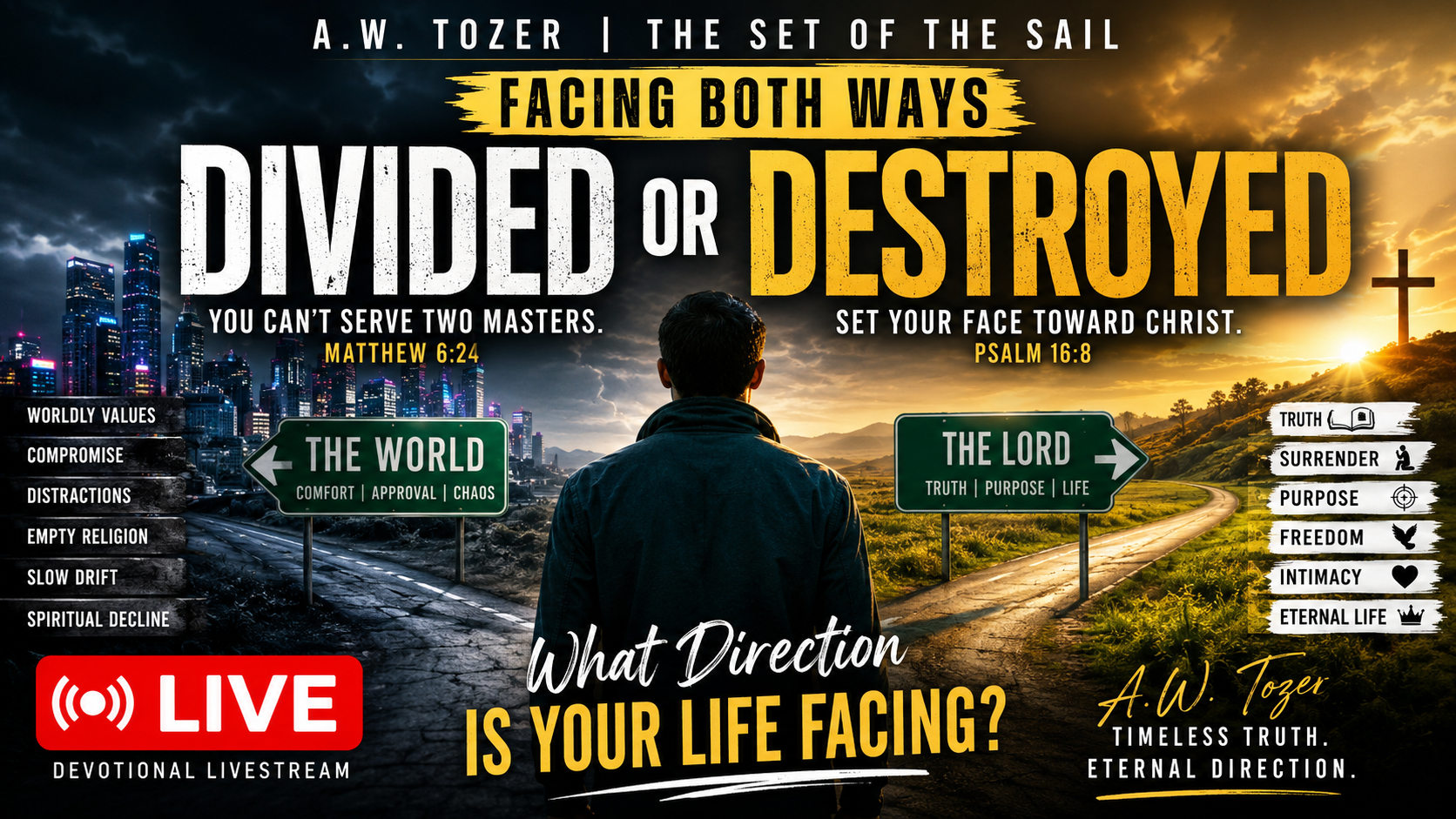
I have found moments in my own recovery journey, faith, and life when I realized I have been living divided. One part of my heart longs for God, healing, peace, and truth. Yet, another part wanted to reach back toward toxic patterns, unhealthy attachments, worldly validation, and spiritual compromise. And I found that I am not alone - many people today are exhausted, not because they do not love Christ, because they are attempting to face two different directions at once. This is the spiritual condition A.W. Tozer exposed quite powerfully within Chapter Seven of his work The Set of the Sail. The chapter is titled, Facing Both Ways. Tozer observed a Christianity that spoke Christian lingo while slowly adopting worldly values. He warned of a divided orientation - a soul that attempted to follow God while remaining emotionally attached to the systems that once kept the person in bondage.
For many of us fellow travelers, walking through recovery from addiction, codependency, family dysfunction, spiritual abuse, or faith crisis, this tension feels painfully familiar. Each of us desires freedom, yet sometimes we mourn the chains left behind. We seek Christ, yet fear surrendering our life and will over to His care. We pray for healing yet continue to entertain voices that have wounded us.
However, the Gospel never calls us to a divided direction. Christ invites us into His rest with a wholehearted orientation.
Anchor Verse - Psalm 16:8 (NRSVUE): "I have set the Lord before me; because he is at my right hand, I shall not be moved."
A divided heart creates instability. Scripture teaches that "the double-minded are unstable in every way" (James 1:8, NRSVUE). Recovery becomes quite fragile when our own direction is unclear. Faith becomes shallow when we attempt to seek both the approval of God and the acceptance of unhealthy systems that tend to distract and lead us away from Him.
Today, let's take a moment to reflect on how Tozer diagnosed modern Christianity with what he called dual orientation. Theology that faces God, yet desires continue facing the world. The result is spiritual confusion, emotional exhaustion, compromised conviction, and diluted discipleship.
Let's face it: many Christians on a path of recovery understand this quite deeply and personally. Addiction itself is often rooted in divided affection - wanting peace while feeding into the chaos. Desiring intimacy while hiding in the darkness of dysfunction. Wanting God yet remaining emotionally tethered to destructive patterns.
Christ does not merely improve our attitude and behavior - He reorients the entire person. Are you ready for a spiritual reorientation of the heart, mind, and spirit today?
Ever have one of those moments where clarity doesn’t arrive with fireworks, but with a quiet, unmistakable shift inside your chest—a soft Aha, a gentle epiphany that feels less like a thought and more like a whisper settling into your spirit? That happened to me as I was preparing for today's devotional message. I was sitting with A. W. Tozer’s The Set of the Sail, revisiting the opening chapter, when something in those pages caught me off guard. And then it hit me—clean, sharp, and humbling. How have I missed what the Third Step may truly be inviting us into?
For anyone unfamiliar, the Third Step in recovery says that we “made a decision to turn our will and our lives over to the care of God as we understood Him.” On the surface, it sounds simple enough—surrender your will, your autonomy, your desires. Let God take the helm. But beneath that simplicity lies the raw truth that brought many of us to recovery in the first place: we finally saw how far we had drifted, how powerless we had become, how our lives had unraveled into chaos, disorder, and ruin. And in that unraveling, we recognized our need for a power greater than ourselves to intervene.
But here’s the part we rarely talk about. That moment of surrender doesn’t usually feel holy. It doesn’t feel triumphant. It feels like waking up from a long, heavy fog—numb, disoriented, spiritually exhausted. Faith feels distant. Purpose feels fractured. And somewhere in the stillness of that inner ache, a question rises: Am I drifting? And the honest answer is yes. We have drifted. And that truth cuts through the noise of our anxious, chaotic thoughts with a clarity we can’t ignore. Because in that moment, we’re no longer moved by emotion—we’re moved by a deliberate, trembling desire to choose something different.
Tozer writes that the direction of a life is not determined by the strength of the wind, but by the set of the will. He echoes Ella Wheeler Wilcox’s line: “It is the set of the sails and not the gales which tells us the way to go.” That line stopped me. Because if we’re honest—with ourselves and with our Heavenly Father—when we’re standing in the middle of doubt, fear, anxiety, or spiritual fatigue, this truth matters more than we realize.
It matters because the confrontation of the Third Step is not merely about surrender. It is about resetting the sails of our recovery, our faith, and our lives. It is about choosing—sometimes with trembling hands—to turn the bow of our soul back toward the One who has been waiting to guide us all along.
Anchor Verse: "Now if you are unwilling to serve the Lord, choose this day whom you will serve, whether the gods your ancestors served in the region beyond the River or the gods of the Amorites in whose land you are living, but as for me and my household, we will serve the Lord." - Joshua 24:15, NRSVUE
I know—at first glance, this verse can feel like a cliché. It’s the kind of Scripture that ends up on wall art, coffee mugs, and Christian décor aisles. And for those who know the context, it might even raise a question: Why use Joshua 24:15 here? Why bring in a verse where Joshua is telling Israel to choose between the Lord and the gods of their ancestors or the gods of the Amorites?
But that’s exactly why I love this verse. Because Joshua isn’t simply telling Israel to “choose God.” He’s confronting them with a deeper truth: if you do not choose to serve the Lord, you will still serve something. You will serve the gods of your past, or the gods of the culture around you—but you will serve something.
And suddenly, the connection to the Third Step becomes painfully clear.
How often have we walked into our Sunday meetings looking for a sanctuary from the world that seems to be troubled, in a state of confusion, and quite volatile and toxic? And yet, we step into a place where one may frequently find something much more challenging: a room full of people who have a wide range of differences. It may be quite tempting to see these differences as hinderances or even obstacles to our own spiritual growth. However, what if such annoyances of our specific wards are actually the very tools God uses to encourage, edify, and strengthen us? And sometimes, these people seemed to rub us the wrong way - you know - sandpaper people.1
Wait...what? Sandpaper people? Yep, exactly - sandpaper people are those who may rub us the wrong way. You know, the ones that seemingly get under our skin sometimes? The ones we may want to avoid, even at church. And yet, you may be wondering - what is a sandpaper person? And furthermore, what purpose do they serve?
Sandpaper is designed to smooth out and refine surfaces. A sheet, or strip, of paper that is quite abrasive, depending on the grade, where it smooths out rough spots, removes rust or old paint. It is also used to prepare surfaces for painting, staining, and polishing. In essence, sandpaper's sole intention and purpose is to refine and smooth out the rough edges. And that is exactly what sandpaper do - they smooth out the rough edges and refine us in ways that help shape and transform us into whom our Heavenly Father has called us to become.
Isaiah 48:10 says, "See, I have refined you but not like silver; I have tested you in the furnace of adversity." And you may be wondering, what does Isaiah 48:10 and sandpaper people have to do with attending Church?
Here is the simple truth: God does not refine us in isolation, nor does He shape us only through peaceful, agreeable circumstances. Instead, our Heavenly Father refines us in the furnace of adversity - and sometimes, that furnace of adversity looks surprisingly ordinary. You know, the person singing loudly behind you during Sacrament meeting. The kids with an apparent case of ants in their pants and parents doing their best to help them practice reverence. Or the person who shows up in jeans and a shirt with no tie. People that somehow do not fit our mold or expectations. Let's face it - our wards consist of people full of personalities, preferences, quirks, and rough edges that collide with our own.
And this is an uncomfortable and beautiful reality.
Sandpaper people are part of God's refining fire where we are to come together in unity of faith, common consent, and edifying and strengthening one another in the faith. Not because they are problematic. Not because they may appear less spiritual. And certainly, not because they are annoying obstacles to our worship. Because Our Heavenly Father, in his infinite wisdom, places us in communities where our rough edges meet theirs - and in that friction, something holy happens. Something we may not ever choose, yet something we desperately need.
Elder Patrick Kearon opened up the Saturday Morning Session of General Conference with a message titled About His Business" regarding how our service is a choice, an offering to God and a blessing. He appears to reframe the local ward, not as a social club for the like-minded individuals. Instead, he provided insight on how this may be a divine place of fellowship. A place where the friction of serving people who are "very different to us" creates the heat necessary to forge Christlike virtues - charity, meekness, and forgiveness - that simply may not be developed in isolation. If you've ever struggled to find your place in a diverse congregation, you are not failing the test; you are finally in the right place.
I want to take a moment and walk with you as we bridge the gap between modern apostolic counsel and ancient scripture. To understand how The Body of Christ requires every different member to function - and the reason our growth depends on the person sitting three pews away.
“I do not boast in my own strength, nor in my own wisdom; but behold, my joy is full, yea, my heart is brim with joy, and I will rejoice in my God. Yeah, I know that I am nothing: as to my strength I am weak; therefore I will not boast of myself, but I will boast of my God, for in his strength I can do all things” (Alma 26:11-12)
Addiction surrenders later freedom to choose. Through chemical means, one can literally become disconnected from his or her own will.” (Elder Russell M. Nelson, in Conference Report, October 1988, 7; or Ensign, Nov. 1988, 7).
There comes a moment in our own personal journey when the illusion of self-sufficiency collapses. We discover that the strength we trusted has betrayed us, and the wisdom we followed has led us into bondage. Yet this moment - this breaking - is not the end. It is the doorway to the only strength that can save us.
Welcome, fellow travelers. Today we walk together into the holy paradox of recovery: the place where admitting our nothingness becomes the birthplace of divine strength. The scriptures do not shame our weakness - they reveal it as the very place where Christ meets us. This journey towards wholeness involves a profound acknowledgment of our vulnerability and the limitations of our mortal existence. As we explore these spiritual truths, we uncover the transformative power inherent in our weaknesses, enabling us to forge a deeper relationship with our Creator.
Heavenly Father, we come as we are - empty, weary, and aware of our need. Thank you for your grace that teaches us the freedom of surrender. Thank you for teaching us the joy of boasting only in Your grace that strengthens us in our own weakness. Thank you for your grace that fills our nothingness with Thy strength, that we may rise in the light of Thy truth - in Jesus' name, Amen.
There is a sacred honesty that God requires before He can remake a soul. It is not the honesty of mere confession, nor the honesty of admitting mistakes. It is the honesty of reaching the end of our own resources and discovering that our strength has never been enough. Alma’s declaration— “I know that I am nothing”—is not the groan of despair but the first breath of spiritual clarity. It is the moment when the soul stops pretending, shedding the facade of self-reliance to embrace the empowering truth of dependence on God. This is where healing begins—a transformative process that beckons us to lay down our burdens.
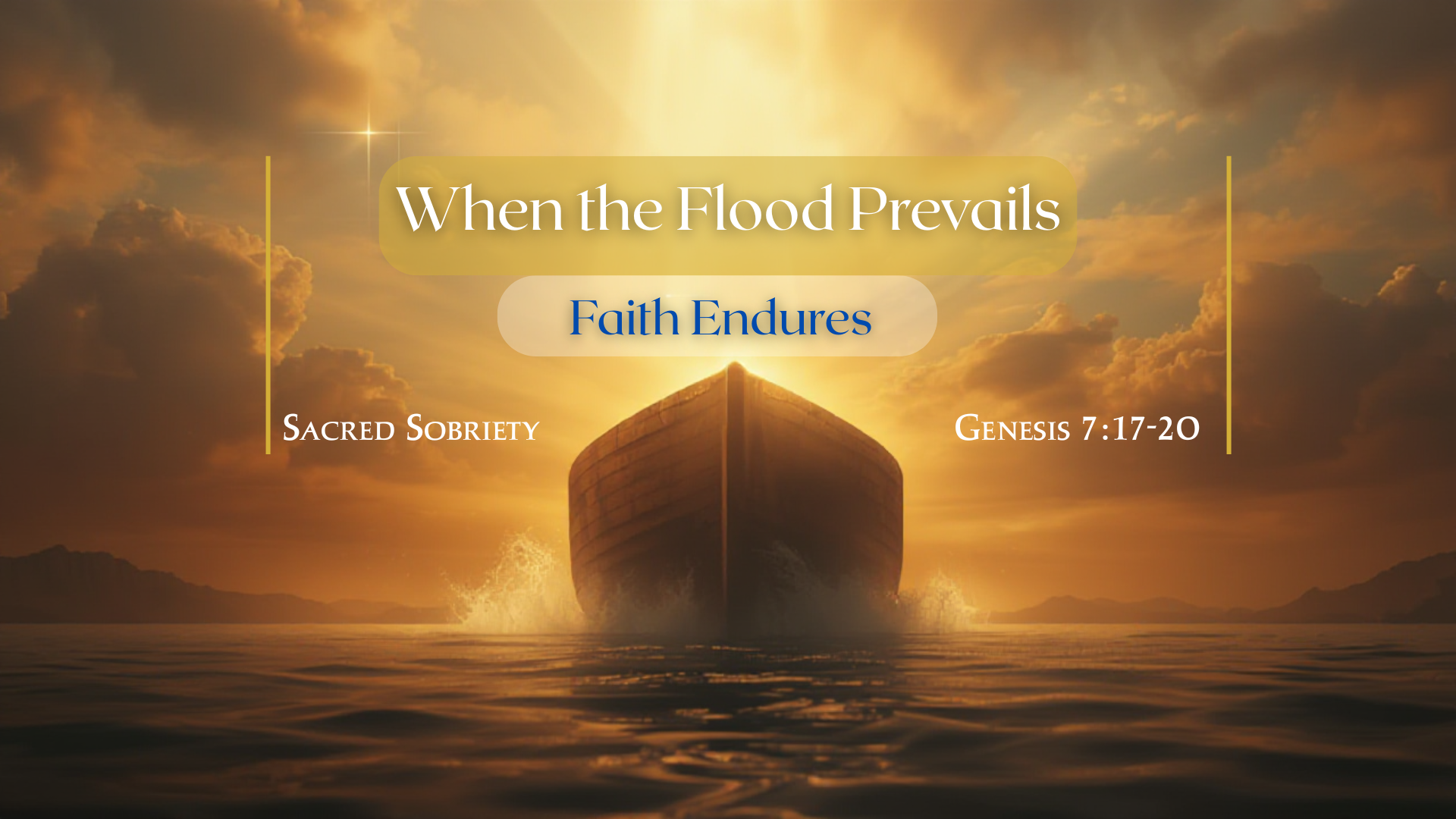
Every one of us knows what it feels like when the waters rise—when circumstances swell beyond our strength, when emotions surge without warning, when old patterns threaten to drown the progress we’ve made. Yet Scripture reveals a deeper truth: when the flood prevails, God prevails even more. The waters that overwhelm us never overwhelm Him.
Introduction
Welcome, fellow travelers. As we continue our journey through the Daily Exodus, we step into a moment where the floodwaters rise, the ark lifts, and God’s covenant faithfulness becomes the only stable ground in a world filled with uncertainty. In this tumultuous landscape, we find solace in the assurance that we are never alone. Today’s anchor verse reminds us that God does not merely rescue us from the flood—He carries us through it, guiding us with His unwavering love and strength. The same God who lifted Noah above the waters lifts us above addiction, shame, fear, and the remnants of our old life, empowering us to cultivate resilience and hope amidst adversity.
Anchor Verse — Genesis 7:17–20 (NASB2020)
“Then the flood came upon the earth for forty days, and the water increased and lifted up the ark, so that it rose above the earth. And the water prevailed and increased greatly upon the earth, and the ark floated on the surface of the water. And the water prevailed more and more upon the earth, so that all the high mountains everywhere under the heavens were covered. The water prevailed fifteen cubits higher, and the mountains were covered.”
As we traverse this challenging terrain together, let us hold fast to the promise that, just as the ark provided refuge during the storm, our faith acts as our shield, protecting us on this rugged path toward redemption and renewal. In the face of adversity, it is this unwavering belief that offers us solace and strength, enabling us to navigate the darkest valleys and climb the steepest mountains. Each step we take is guided by the light of our convictions, illuminating the way forward. Together, we can draw upon the deep well of inspiration that our shared journey nurtures, fostering resilience and hope as we strive for the brighter horizons that await us beyond the clouds of doubt and despair.
When the world around you feels like it’s rotting from the inside out… when family systems are chaotic, culture is loud, and temptation is relentless… God still raises up people who walk differently. Noah didn’t survive the flood because he was strong—he survived because he responded to grace. Today, we’re learning how to build an ark in a toxic world: with grace, with boundaries, and with the obedience of faith.
Introduction
Hello and welcome, fellow Travelers, to Sacred Sobriety: A Path for the Soul. Today, we step into one of the most misunderstood chapters in Scripture—not as historians, but as people in recovery who know what it feels like to live in a world drowning in compromise. Genesis 6 isn’t just about judgment; it’s about survival. It’s about the God who gives grace before He gives instructions, who forms character before He forms assignments, and who teaches us to build safety in a world that refuses to repent.
Our anchor verses—Genesis 6:8–9 and 6:22—give us a three‑part pattern for recovery: Grace, Boundaries, and Obedience. This is how we build our ark.
Anchor Verses (NASB 2020)
Genesis 6:8–9, 22“But Noah found favor in the eyes of the Lord… Noah was a righteous man, blameless in his generation; Noah walked with God… Thus Noah did; according to all that God had commanded him, so he did.”
Prayer
Heavenly Father, thank You that recovery begins with Your grace, not our goodness. Teach us to walk with You in a world that pulls us in every direction. Strengthen our boundaries, steady our steps, and empower our obedience. Help us build what will carry us through the storms ahead. In Jesus’ name, amen.
There comes a moment in every person's journey—especially in recovery—when the sound of God’s presence stirs something deep within us. We feel the pull to step out from hiding, yet the weight of shame, fear, and regret urges us to remain in the shadows. But the God who seeks us is not hunting us down to condemn us; He is calling us back to life. This devotional invites you to walk out of the trees and into His restoring light.
Introduction
“Hello and welcome, fellow travelers, to Sacred Sobriety: A Path for the Soul.” Today we continue our journey through the Discipline of Deliverance by returning to one of Scripture’s most haunting and hopeful moments—when God walked into the garden calling for His children. In recovery, we know this moment well: the tension between hiding and healing, between fear and freedom. Let us listen again to the God who still calls our name.
Prayer
Heavenly Father, we come before You with open hands and trembling hearts. Teach us to hear Your voice without running from it. Strip away the fear that keeps us hidden and clothe us with Your mercy, Your truth, and Your restoring love. Breathe courage into our souls as we step into Your presence. Amen.
Anchor Verse — Genesis 3:8–10 (NASB 2020)
“They heard the sound of the Lord God walking in the garden in the cool of the day, and the man and his wife hid themselves from the presence of the Lord God among the trees of the garden. Then the Lord God called to the man, and said to him, ‘Where are you?’ He said, ‘I heard the sound of You in the garden, and I was afraid because I was naked; so I hid myself.’”
Breath is the first miracle: a single divine inhalation that turns dust into a living soul. The truth is that our recovery is not primarily a program it is about our Heavenly Father who breathes life where addiction has hollowed us out. When God breathes, we awaken to our need and to a new capacity for obedience, hope, and steady change. This episode shows how the same breath that formed Adam animates our daily exodus from bondage, shaping small habits into lasting freedom. You are not asked to manufacture life by willpower alone. Trust the One who breathes; practice the disciplines that position you to receive His breath each day and let community and prayer carry the air you cannot hold alone.
Hello and welcome Fellow Travelers to Sacred Sobriety. We continue our series Daily Exodus — Discipline of Deliverance. Daily exodus names the steady, faithful leaving of what enslaves us and the deliberate walking toward what frees us. Deliverance becomes a discipline when we choose, day by day, to depend on God, to practice obedience, and to seek His guidance as the path out of darkness and chaos.
Anchor Verse:
Then the LORD God formed the man of dust from the ground, and breathed into his nostrils the breath of life; and the man became a living person. ~ Genesis 2:7, NASB20
Prayer
Lord God, breathe into us. Where we are dry and brittle, send Your wind; where we are bound, send Your hand to loosen the cords. Teach us to rise each morning as those who have been formed by Your breath, and to walk in the freedom You give. Amen.
Theme: Confrontation, Sonship, & The Hierarchy of Value
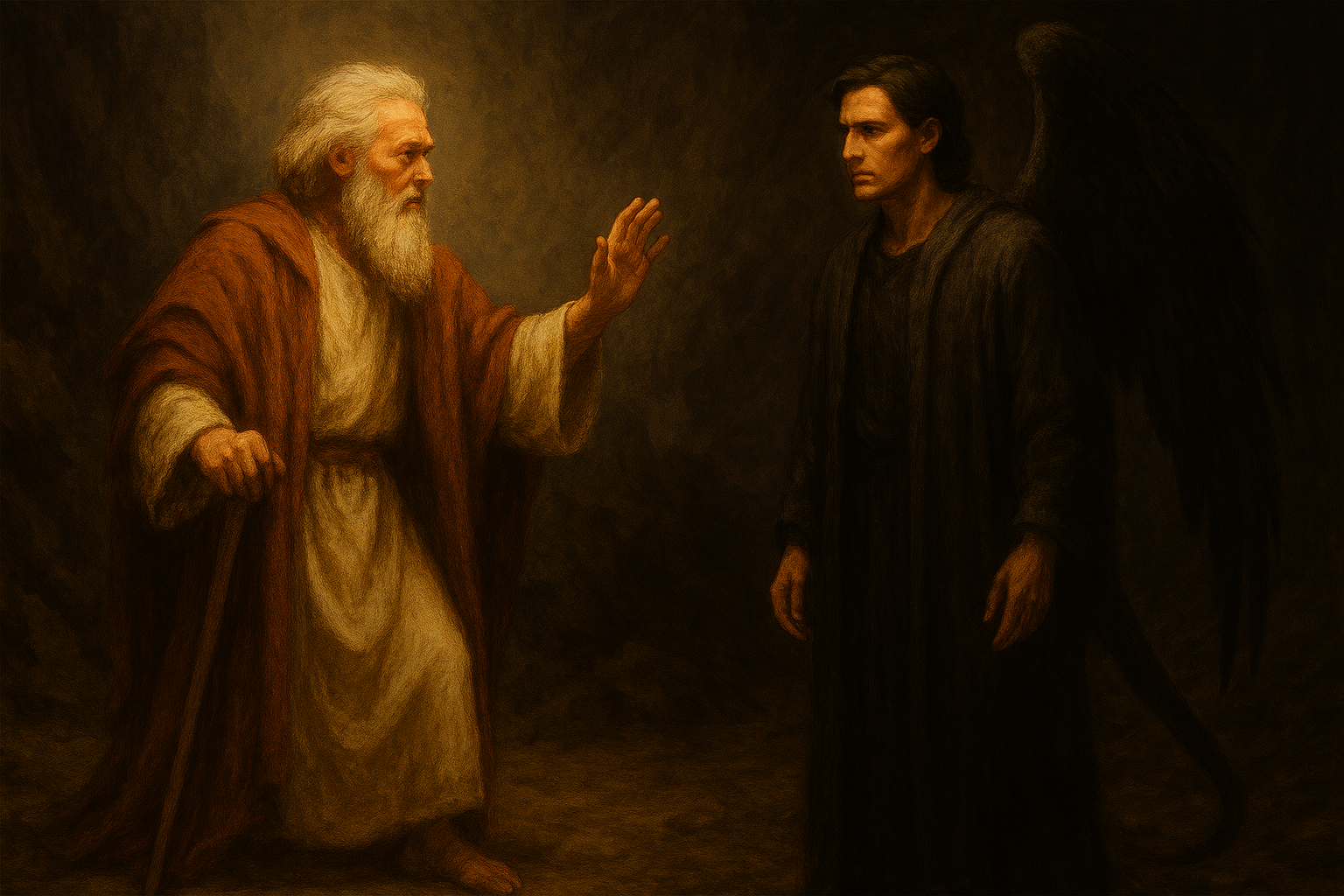
And it came to pass that when Moses had said these words, behold, Satan came tempting him, saying: Moses, son of man, worship me. And it came to pass that Moses looked upon Satan and said: Who art thou? For behold, I am a son of God, in the similitude of his Only Begotten; and where is thy glory, that I should worship thee? For behold, I could not look upon God, except his glory should come upon me, and I were transfigured before him. But I can look upon thee in the natural man. Is it not so, surely? Blessed be the name of my God, for his Spirit hath not altogether withdrawn from me, or else where is thy glory, for it is darkness unto me? And I can judge between thee and God; for God said unto me: Worship God, for him only shalt thou serve. Get thee hence, Satan; deceive me not; for God said unto me: Thou art after the similitude of mine Only Begotten. ~ Moses 1:12-16 ~
There are moments in the life of every believer when heaven has spoken, the soul has bowed, and the world has fallen silent. Moses had just come from such a moment. He had tasted the “mercy of nothingness”—the holy undoing that comes when a man stands before God and discovers that all self‑importance is dust. But Scripture shows us a pattern: whenever God empties a man, the enemy rushes to fill the vacuum.
The adversary does not wait for weakness; he waits for surrender. He appears not when Moses is proud, but when Moses is humbled. Not when Moses is full of himself, but when he is emptied of Egypt. This is the rhythm of spiritual warfare: revelation is followed by confrontation.
Satan’s first words are calculated: “Moses, son of man, worship me.” He does not tempt Moses with pleasure, but with identity. He attempts to rename him. The enemy always begins by lowering the value of the soul. If he can convince you that you are merely a creature of dust, he can command your worship. If he can strip you of sonship, he can strip you of authority.
Welcome to Sacred Sobriety: A Path for the Soul! In this 60-minute devotional, I dive into Day 4 of my upcoming digital devotional, Keystones of Faith: Daily Meditations for Courage and Wisdom for Christians, titled Trusting God, Not Control (Proverbs 3:5-6). Join me as we explore how to release the burden of control, embrace God’s wisdom, and find peace in faith and recovery—especially for those with Adult Children of Alcoholics (ACA) traits or dysfunctional family backgrounds.
What You’ll Discover in This Video:
Biblical insights from Proverbs 3:5-6, Psalm 37:5, Isaiah 55:8-9, and more.
Empowering takeaways for letting go of control and trusting God’s plan.
Practical applications to strengthen your faith and recovery journey.
Reflective questions to spark personal growth and community connection.
A guided prayer to surrender your worries and rest in God’s peace.
Key Scripture: “Trust in the Lord with all your heart and do not lean on your own understanding. In all your ways acknowledge Him, and He will make your paths straight” (Proverbs 3:5-6).
Reflective Questions (Share in the Comments!):
Where are you struggling to let go of control? What’s one step you can take to trust God?
How has trying to control outcomes affected your peace or relationships?
When have you experienced God’s guidance after surrendering a situation to Him?
Why Watch? This devotional is perfect for anyone seeking Christian recovery, spiritual growth, or freedom from the need to control. Whether you’re navigating ACA recovery, overcoming dysfunctional family dynamics, or simply growing in faith, this message offers hope, wisdom, and practical steps to trust God fully.
Note: This video is part of my mission to provide relevant, faith-based content to strengthen recovery and spiritual resilience. Thank you for being part of our community!
Introduction
"Welcome to Sacred Sobriety: A Path for the Soul, a space where faith and recovery meet to inspire courage, wisdom, and healing. I’m [Your Name], and today we’re diving into Day 4 of our upcoming digital devotional, Keystones of Faith: Daily Meditations for Courage and Wisdom for Christians. If you’re seeking hope, strength, or a deeper connection with God in your recovery journey, you’re in the right place.
Today’s devotional is titled Trusting God, Not Control, based on Proverbs 3:5-6. We’ll explore what it means to release the need for control—especially for those of us shaped by Adult Children of Alcoholics (ACA) traits or dysfunctional family dynamics. Stick with me for the next hour as we unpack scripture, share empowering insights, reflect on personal applications, and pray together.
If this resonates with you, hit that Like button, Subscribe, and ring the bell so you don’t miss any of our weekly messages of hope. Let’s get started!"
Reading & Context
"Let’s begin with today’s anchor scripture, Proverbs 3:5-6:
‘Trust in the Lord with all your heart and do not lean on your own understanding. In all your ways acknowledge Him, and He will make your paths straight.’
This passage is a cornerstone for anyone striving to live a life of faith, but it’s especially powerful for those in recovery. For many of us, particularly those with ACA traits, growing up in chaotic or unpredictable environments wired us to control everything—our emotions, relationships, even outcomes—as a way to feel safe. But control is a heavy burden. It fuels anxiety, isolates us, and pulls us away from God’s peace.
Proverbs 3:5-6 invites us to a different way: to trust God fully, to let go of our need to understand every detail, and to believe that He will guide our paths. This isn’t just a suggestion—it’s a transformative step toward healing and freedom in both faith and recovery."
Biblical Insights & Supporting Scriptures
"Let’s unpack the wisdom in Proverbs 3:5-6 and connect it to other scriptures that deepen its meaning.
‘Trust in the Lord with all your heart’ Trusting God isn’t a half-hearted act. It’s an all-in commitment. Psalm 37:5 says, ‘Commit your way to the Lord; trust in Him, and He will act.’ This reminds us that trust is active—it’s a choice to surrender our plans and place them in God’s hands. For those of us who’ve relied on control as a survival mechanism, this can feel risky. But God is trustworthy. His love never fails, as Lamentations 3:22-23 tells us: ‘The steadfast love of the Lord never ceases; His mercies never come to an end.’
‘Do not lean on your own understanding’ Our understanding is limited. We see only a piece of the puzzle, but God sees the whole picture. Isaiah 55:8-9 says, ‘For My thoughts are not your thoughts, neither are your ways My ways, declares the Lord. For as the heavens are higher than the earth, so are My ways higher than your ways.’ Letting go of control means admitting we don’t have all the answers—and that’s okay. It’s a humbling but liberating truth.
‘In all your ways acknowledge Him’ Acknowledging God means inviting Him into every part of our lives—our decisions, struggles, and recovery journey. James 4:7 encourages, ‘Submit yourselves therefore to God. Resist the devil, and he will flee from you.’ When we submit to God, we’re not giving up; we’re gaining His strength and guidance.
‘He will make your paths straight’ This promise doesn’t mean life will be perfect or easy, but it assures us that God will lead us toward His purpose. Psalm 23:3 says, ‘He leads me in paths of righteousness for His name’s sake.’ Even when the path feels uncertain, God is with us, guiding us step by step.
These scriptures weave together a powerful truth: trusting God over control is an act of faith that opens the door to peace, courage, and healing."
Personal & Spiritual Takeaways
"Now, let’s get personal. Why is trusting God, not control, so critical for our faith and recovery? Here are three key takeaways:
Control is an illusion; God’s plan is real. For those with ACA traits, control often feels like a shield against pain or chaos. But the truth is, we can’t control everything. Trying to do so leaves us exhausted and anxious. Proverbs 3:5-6 reminds us that God’s wisdom far surpasses our own. When we surrender control, we’re not abandoning responsibility—we’re partnering with a God who loves us and has a plan for our good, as Jeremiah 29:11 promises: ‘For I know the plans I have for you, declares the Lord, plans for welfare and not for evil, to give you a future and a hope.’
Surrender is strength, not weakness. Letting go of control can feel terrifying, especially if self-reliance has been your default. But surrender to God is an act of courage. It’s saying, ‘I trust You more than I trust myself.’ This shift brings freedom from the exhausting cycle of over-managing life. As Jesus says in Matthew 11:28-30, ‘Come to Me, all who labor and are heavy laden, and I will give you rest.’ Surrender invites God’s rest into our souls.
Trusting God heals the soul. Clinging to control often stems from fear—fear of failure, rejection, or the unknown. But God’s perfect love casts out fear (1 John 4:18). When we trust Him, we’re reminded that our worth isn’t tied to our ability to control outcomes. We are loved simply because we belong to Him. This truth is a healing balm, especially for those recovering from the wounds of a dysfunctional past.
These takeaways challenge us to reframe control as a burden we were never meant to carry. Instead, God invites us to trust Him, to rest in His wisdom, and to walk in the freedom of His guidance."
Practical Applications
"So, how do we live out Trusting God, Not Control in our daily lives? Here are three practical applications:
Start small with surrender. Identify one area where you’re gripping tightly—maybe it’s a relationship, a work situation, or a fear about the future. Pray specifically about it, using Proverbs 3:5-6 as your guide. For example: ‘God, I’m struggling to trust You with [this situation]. Help me release it to You and trust Your plan.’ Start with one small step of surrender each day.
Practice pausing before reacting. Control often shows up in our need to fix things immediately. The next time you feel anxious or tempted to control an outcome, pause. Take a deep breath, pray, and ask God for wisdom. James 1:5 says, ‘If any of you lacks wisdom, let him ask God, who gives generously.’ This pause creates space for God’s guidance.
Reflect and journal daily. Spend 5-10 minutes each day reflecting on where you’re trusting God and where you’re still leaning on your own understanding. Write down one thing you can surrender to Him. Over time, this practice builds a habit of trust and strengthens your faith.
These steps aren’t about perfection—they’re about progress. Each time you choose trust over control, you’re taking a step toward healing and freedom."
Reflective Questions & Viewer Engagement
"Now, I want to invite you to reflect with me. Grab a journal or pause to think about these questions, and please share your thoughts in the comments below. Your story could encourage someone else in their faith and recovery journey.
Where in your life are you struggling to let go of control? What’s one step you can take to trust God in that area?
How has trying to control outcomes affected your peace or relationships?
When have you experienced God’s guidance after surrendering a situation to Him? How did it strengthen your faith?
Your responses mean so much to this community. Let’s inspire and uplift one another by sharing in the comments. And if you’re watching, hit that Like button to let us know this message resonated with you!"
Guided Prayer
"Let’s close this time with a guided prayer, inspired by today’s devotional. Feel free to pray along or listen as we bring our hearts to God.
God, I confess that letting go of control is hard for me. I’ve relied on it for so long, but I see now how it pulls me away from You. Thank You for teaching me, through Your Holy Spirit, to trust You fully, to rest in Your wisdom instead of my own. Give me the courage to release my worries, one by one, and the faith to believe in Your perfect plan. Thank You for loving me as I am and guiding me every step of the way. In Jesus’ name, Amen.
Take a moment to sit in God’s presence. He is with you, ready to carry your burdens and lead you on a straight path."
Call to Action & Closing
"Thank you for joining me for this hour of Sacred Sobriety: A Path for the Soul. I pray today’s message about trusting God, not control, has encouraged you in your faith and recovery. If it has, here’s how you can stay connected and support this ministry:
Like this video to help spread this message of hope.
Subscribe and hit the bell so you never miss our weekly devotionals and reflections.
Comment below with your thoughts or answers to the reflective questions—your story matters!
Share this video with someone who needs encouragement in their faith or recovery journey.
Consider partnering with us to keep this channel growing. Check out the links in the description to pre-order Keystones of Faith: Daily Meditations for Courage and Wisdom or to support our efforts to provide free, relevant messages of hope.
Before we go, let’s hold onto Proverbs 3:5-6 as our anchor: ‘Trust in the Lord with all your heart.’ Let’s keep choosing trust over control, one step at a time. I’ll see you next week for another devotional from Sacred Sobriety. Until then, walk in faith, rest in God’s peace, and know you are never alone. God bless you!"
Are you ready to break free from the chains of sin and addiction? Join us on a transformative journey in "Sacred Sobriety: A Path for the Soul" as we explore the powerful devotional "Moral Decision About Sin" from Oswald Chambers' My Utmost for His Highest.
In this episode, I focus on what it means to make a radical moral decision to kill sin—not just manage it—drawing from the foundational truth of Romans 6:6. Through rich Bible insights from passages like Romans 6:1-2, Galatians 2:20, 1 Samuel 15-16, and Luke 10:25-42, along with personal stories and spiritual reflections, we offer hope and practical steps for your recovery journey.
Whether you're navigating addiction recovery, wrestling with co-dependency, healing from trauma, or seeking to strengthen your Christian faith, this video delivers key takeaways and reflective questions to inspire spiritual growth and help you overcome adversity.
What you'll discover in this episode:
The significance of making a moral decision about sin
Insights from Romans 6:6 and other transformative Bible passages
Personal stories of recovery and resilient faith
Key takeaways for your spiritual journey
Reflective questions to apply these truths to your life
Hit play and let God speak to your heart. If you're on a path of sacred sobriety or seeking to deepen your faith, this is for you! Don’t forget to like, comment, and subscribe for more content on spiritual growth, addiction recovery, and faith in action. Share your reflections below—we’d love to hear from you!
Join us on the path to sacred sobriety—where faith meets recovery.
"Welcome to Sacred Sobriety: A Path for the Soul. If you’re on a recovery journey—whether it’s battling addiction, healing from trauma, or overcoming co-dependency—this episode is for you. Today, we’re diving into a life-changing devotional from My Utmost for His Highest called 'Moral Decision About Sin,' based on Romans 6:6. We’ll explore what it means to kill sin in our lives, not just manage it, and how that decision can transform your faith and recovery. Stick around for Bible insights, personal stories, and reflective questions to help you grow closer to God."
"That’s the heart of today’s message: freedom from slavery to sin through a decisive, soul-deep choice. Let’s get started."
Introduction
"Hey everyone! If you’ve ever felt trapped by addiction, shame, or a faith crisis, you’re not alone. Recovery is tough, but it’s also sacred. Today’s devotional from Oswald Chambers challenges us to make a moral decision about sin—a choice that can break the chains of our past and lead us into a new life with Christ. This isn’t about quick fixes or temporary sobriety; it’s about letting God crucify the old self so we can truly live. Whether you’re struggling with alcohol, co-dependency, or unresolved trauma, this message offers hope and a path forward."
"We’ll unpack Romans 6:6, add more Bible references, and share insights from recovery and faith. Plus, I’ve got some questions for you to reflect on—because this journey is personal. So, grab a notebook, hit that like button, and let’s dive into Sacred Sobriety."
Devotional Reading and Explanation
"Here’s what Oswald Chambers writes: 'Have I decided that sin will be killed in me? It takes a long time to come to a moral decision about sin, but when I do, it is the great moment of my life. In this moment, I decide that just as Jesus Christ died for the sins of the world, so sin will be put to death in me. Sin won’t simply be curbed or suppressed or counteracted in me; it will be outright crucified.'"
"Wow. That hits hard, doesn’t it? Chambers isn’t talking about a casual New Year’s resolution. He’s saying that killing sin—like addiction or bitterness—is a radical, deliberate act. It’s not enough to suppress it or hide it under good behavior. In recovery terms, this is like the moment you decide, 'I’m done with this. I’m not just cutting back—I’m letting it die.'"
"For me, this reminds me of my own struggle with [insert brief personal example, e.g., 'anxiety that fueled unhealthy habits']. I tried to manage it—praying it away, distracting myself—but it wasn’t until I surrendered it fully to God that I felt free. Chambers ties this to Romans 6:1-2: 'Shall we go on sinning so that grace may increase? By no means! We are those who have died to sin; how can we live in it any longer?' This isn’t a future hope—it’s a present reality we step into."
"In recovery, we know this moment. It’s when you hit rock bottom and decide, 'No more.' But it’s not just about willpower—it’s about agreeing with God that sin has no place in you anymore."
Additional Bible References
"Let’s dig deeper with some Bible passages that connect to this idea. First, Galatians 2:20: 'I have been crucified with Christ and I no longer live, but Christ lives in me.' This is huge for recovery. When we make that moral decision, we’re not just stopping a behavior—we’re letting Christ take over. It’s like handing Him the keys to your life and saying, 'You drive.'"
"Next, let’s look at 1 Samuel 15-16. Here, King Saul disobeys God by sparing the Amalekite king and some livestock instead of fully destroying them as God commanded. The result? God rejects Saul as king. This is a warning for us. Partial obedience—like cutting back on sin but not killing it—doesn’t work. In recovery, it’s like saying, 'I’ll quit drinking, but I’ll keep the bottle in the house.' It’s a setup for failure."
"Finally, Luke 10:25-42 gives us the Good Samaritan and Mary and Martha. These stories aren’t directly about sin, but they show what happens after we kill it. The Samaritan loves sacrificially, and Mary chooses devotion over distraction. Once sin is crucified, our lives can reflect love and focus on God. It’s the fruit of that decision."
"These verses—Romans, Galatians, 1 Samuel, and Luke—paint a full picture: decide to kill sin, avoid half-measures, and live out the freedom that follows."
Commentaries and Theological Insights
"What do Christian thinkers say about this? Oswald Chambers himself wrote, 'We shall find that the spheres God brings us into are not meant to teach us something but to make us something.' That’s from his piece The Love of God—The Ministry of the Unnoticed. In recovery, every struggle—every relapse, every tear—is shaping us into who God wants us to be."
"C.S. Lewis adds, 'No man knows how bad he is till he has tried very hard to be good.' If you’ve ever fought addiction, you get this. The battle reveals our weakness—but also God’s strength. And Timothy Keller talks about sin as an 'idol of the heart.' For many of us, addiction or co-dependency becomes that idol. Killing sin means dethroning it and letting God reign."
"Edward Welch, in Addictions: A Banquet in the Grave, says, 'The opposite of addiction isn’t sobriety—it’s worship.' I love that. Recovery isn’t just about stopping; it’s about redirecting our hearts to God. These insights tie back to Romans 6:6—crucifying sin sets us free to worship."
Personal and Spiritual Insights
"Let me get personal for a minute. I once knew someone—let’s call her Sarah—who battled prescription pill addiction. She’d quit for a while but always slipped back. One night, after losing a job, she broke down and prayed, 'God, I can’t do this anymore. Take it.' That was her moral decision. It wasn’t just about the pills—it was about surrendering her whole self. Today, she’s sober and helping others in recovery."
"That’s what this is about. In my own life, I’ve seen how trauma can fuel co-dependency. I used to think, 'If I just help everyone else, I’ll feel okay.' But God showed me that was a sin I needed to kill—not just manage. The Spirit searches us, like Chambers says, revealing what’s warring against Him. And when we agree with His verdict, freedom comes."
"Think of it like this: recovery isn’t 'white knuckling' through temptation. It’s letting God do the heavy lifting. For anyone facing a faith crisis, this decision can feel risky—but it’s where resilience is born."
Key Takeaways and Reflective Questions
"Here are your key takeaways:
The moral decision to kill sin is personal and pivotal. It’s your 'great moment.'
Half-measures fail. Like Saul, we can’t compromise with sin or addiction.
God’s Spirit reveals and empowers. He shows us our sin and gives us strength to overcome.
Crucifixion leads to new life. When sin dies, Christ lives in us."
"Now, some questions for you to chew on. Pause the video, journal your answers, or drop them in the comments:
Have you made a moment where you decided to kill sin in your life? What got you there?
How do you feel the tug-of-war between your old self and new life in Christ?
How does recovery from addiction mirror the spiritual act of dying to sin?
What does Saul’s story in 1 Samuel 15-16 teach you about partial obedience?
How can love and service, like in Luke 10, show a life free from sin?"
"As we close, here’s my encouragement: making a moral decision about sin isn’t a one-and-done deal. It’s a daily surrender. If you haven’t yet, take time alone with God. Pray, 'Lord, identify me with your death until sin is dead in me.' He’ll meet you there."
"Recovery is a sacred path, and God walks it with you. If this episode spoke to you, share it with someone who needs hope. Subscribe for more Sacred Sobriety, and let me know in the comments: what’s your next step in killing sin? Until next time, keep the faith—and keep walking."