Showing posts with label Addiction Recovery. Show all posts

Wednesday, September 23, 2026

Rise Above Weaknesses: When Other People Fail, Choose Faithfulness


Some of the hardest threats to our recovery are not always cravings, substances, compulsive behaviors, or obvious temptations. Sometimes the greater danger is resentment. Someone disappoints us. Someone in the Church acts hypocritically. A trusted friend betrays us. A family member wounds us. A fellow traveler relapses. A leader fails to live up to what we expected. Perhaps the person who disappoints us most is the one staring back at us from the mirror. In moments like these, weakness becomes more than an abstract theological idea. It becomes personal, painful, and difficult to ignore.

What do we do when weakness becomes impossible to overlook? Do we allow another person’s behavior to determine the direction of our faith? Do we surrender our recovery because somebody else failed us? Do we condemn an entire community because one person behaved badly? And when the weakness belongs to us, do we conclude that our mistakes have permanently disqualified us from grace? President Gordon B. Hinckley’s counsel for September 23 in Stand a Little Taller offers a simple but demanding response: remain faithful and remain true.

Anchor Verse: “And blessed is he that is found faithful unto my name at the last day, for he shall be lifted up to dwell in the kingdom prepared for him from the foundation of the world.” — Ether 4:19

There is something important in the wording of this verse. It does not say blessed is the person who never struggled, never experienced betrayal, never encountered hypocrisy, or never felt the weight of weakness. It does not describe a life without temptation, disappointment, addiction, fear, pain, or failure. The emphasis is on being found faithful. For those of us walking a recovery path, that distinction matters deeply because faithfulness is not the absence of weakness. Faithfulness is what we choose to do when weakness reveals itself.

Sunday, June 14, 2026

The Battle Is the Lord’s: Facing Your Goliath with Faith in Jesus Christ

The Battle Is the Lord’s: Facing Your Goliath with Faith in Jesus Christ

Come Follow Me | June 15-21 | “The battle is the Lord’s.” —1 Samuel 17:47

There are seasons in life when the challenge standing before us seems larger than our faith, stronger than our resolve, and better equipped than anything we possess. We may know the language of faith, remember the promises of scripture, and sincerely believe that God is with us, yet the giant still appears to dominate the valley. It calls attention to our weakness, rehearses our failures, magnifies our fears, and confidently predicts our defeat.

For one person, that giant may be addiction or the relentless temptation to return to an old way of living. For another, it may be grief, rejection, loneliness, financial uncertainty, family conflict, shame, resentment, or the lingering consequences of decisions that cannot be undone. Some giants appear suddenly, while others have occupied the valley for years, issuing the same challenge every morning and evening until fear begins to feel like the natural condition of life.

The Come, Follow Me lesson for June 15–21, covering 1 Samuel 17–18; 24–26 and 2 Samuel 5–7, invites us to look again at David’s story and hear his declaration that “the battle is the Lord’s.” That declaration does not mean our participation is unnecessary, nor does it promise that discipleship will protect us from every difficulty. David still walked into the valley, selected the stones, prepared his sling, and confronted the enemy. What he refused to do was accept the assumption that the outcome depended entirely upon his own size, strength, resources, or experience.

David understood that he was participating in a battle whose final authority belonged to God.

That same truth can transform the way we approach our spiritual battles today. We do not have to pretend that our giants are small. We do not have to deny the pain, complexity, or danger of what stands before us. Faith does not require us to minimize reality; it teaches us to see reality within the greater reality of God’s power, covenant faithfulness, and redemptive purposes.

Friday, May 22, 2026

WEEKLY RECAP: WALKING IN TRUTH — A Sacred Sobriety Reflection

WEEKLY RECAP: WALKING IN TRUTH — A Sacred Sobriety Reflection

Our daily walk in recovery and thriving in sobriety provides a story. I love what the apostle Paul writes, "You yourselves are our letter, written on our hearts, known and read by all, and you show that you are a letter of Christ, prepared by us, written not with ink but with the Spirit of the living God, not on tablets of stone but on tablets that are human hearts." (2 Corinthians 3:2-3, NRSVUE). Our testimonies are living epistles. This is the reason I love what is said in the Celebrate Recovery rooms, 'He took my mess and turned it into a message and took my test and turned it into a testimony."

These stories are of struggle, of quiet faithfulness - and yet always a story of God's sovereign and divine grace in our moments of weakness (2 Corinthians 12:9). This past week, the devotional messages formed a single thread woven through four powerful themes.

  • Spiritual Discernment
  • Spiritual Direction
  • Mindful Prayer
  • Distinctiveness of a life transformed by Christ

Each one of these messages point us back to one central truth: Thriving in recovery and sobriety requires spiritual clarity, honest self-examination, and a heart anchored in Christ. And through the acrostics - we explored:

  • T.R.U.T.H
  • D.I.R.E.C.T.I.O.N
  • P.R.A.Y.E.R
  • H.O.L.Y

Hopefully you discovered a pathway that strengthens your heart, mind, and spirit; steadies the steps of anyone seeking lasting freedom.

Monday, May 18, 2026

We Must Test the Spirits of Recovery and Sobriety

We Must Test the Spirits of Recovery and Sobriety

When recovery meets revelation, discernment becomes a moment of thriving in sobriety. We test substances for purity — why not spirits? The same vigilance that guards sobriety must guard faith. The relapse of the soul begins when we stop testing what we trust.

We find ourselves in a time when the mantra of “to thine own self be true” echoes throughout recovery circles, highlighting a growing trend that prioritizes subjective authenticity over absolute truths. This modern movement in recovery and sobriety often veers away from the profound spiritual truths embedded in Scripture and the Christian faith, diluting the very essence of what it means to be truly free.

In this era of counterfeit light, our culture is awash with spiritual noise—false prophets promising quick fixes, hollow promises of peace, and fleeting joys that inevitably fade. Many are turning to a version of recovery that embraces personal desire and subjective experience over divine guidance and genuine transformation.

Yet, Christ calls us to something deeper. He invites us not into cynicism or despair but into a clear and sober understanding of our identity in Him. True sobriety is not merely the absence of substances; it is the presence of a spirit anchored in truth. It is about discerning the lies that this world offers and embracing the flawless truth of God’s Word.

As we embark on this journey of genuine recovery, let us challenge the shallow waters of modern self-discovery and dive into the depths of spiritual sobriety. Surrendering to Christ means shedding the noise of empty promises and embracing the clarity that comes from knowing Him. True recovery is about reclaiming our lives from distraction, grounding ourselves in faith, and walking in the light of His truth.

In a world saturated with uncertainty, let us hold fast to the enduring hope found in Christ, where true transformation begins and lasting sobriety thrives. Are you ready to embrace a recovery journey that leads to true freedom?

Anchor Verse: "Beloved, do not believe every spirit, but test the spirits to see whether they are from God; for many false prophets have gone out into the world." - 1 John 4:1, NRSVUE

Tuesday, March 17, 2026

The Architecture of Anger: Navigating Threats, Expectations, and Addiction in the Refiner’s Fire of Recovery

The Architecture of Anger: Navigating Threats, Expectations, and Addiction in the Refiner’s Fire of Recovery

Anger is not a random eruption. It is a structure—a system of triggers, distortions, and emotional wounds that form a predictable pattern. This understanding of anger as a structured response is crucial because it helps us identify the root causes of our emotions rather than viewing them as mere spontaneous reactions. In recovery, gaining insights into this architecture becomes essential for healing and personal growth. Consider this, “Anger is a progressive challenge in recovery and a symptom of deeper pain.”

This notion emphasizes that anger often masks underlying issues, such as unresolved trauma, anxiety, or fear. By acknowledging these connections, we can address the true sources of our anger instead of simply reacting to it. When we learn to map its components—recognizing our triggers, understanding the distortions in our thought patterns, and confronting our emotional wounds—we stop being acted upon by these feelings.

In doing so, we transition from a passive experience of anger to one where we can act with spiritual clarity and agency. This active engagement allows us to express our emotions constructively, facilitating healthier interactions and fostering deeper connections with ourselves and others. Embracing the complexity of anger paves the way for genuine healing and allows for the development of coping strategies that contribute to a balanced emotional life. Ultimately, this journey empowers us to reclaim our well-being and operate from a place of understanding and compassion.

Monday, February 23, 2026

Day 1 - The First Step - Honesty

Day 1 - The First Step - Honesty

“I do not boast in my own strength, nor in my own wisdom; but behold, my joy is full, yea, my heart is brim with joy, and I will rejoice in my God. Yeah, I know that I am nothing: as to my strength I am weak; therefore I will not boast of myself, but I will boast of my God, for in his strength I can do all things” (Alma 26:11-12)

Addiction surrenders later freedom to choose. Through chemical means, one can literally become disconnected from his or her own will.” (Elder Russell M. Nelson, in Conference Report, October 1988, 7; or Ensign, Nov. 1988, 7). 

There comes a moment in our own personal journey when the illusion of self-sufficiency collapses. We discover that the strength we trusted has betrayed us, and the wisdom we followed has led us into bondage. Yet this moment - this breaking - is not the end. It is the doorway to the only strength that can save us.

Welcome, fellow travelers. Today we walk together into the holy paradox of recovery: the place where admitting our nothingness becomes the birthplace of divine strength. The scriptures do not shame our weakness - they reveal it as the very place where Christ meets us. This journey towards wholeness involves a profound acknowledgment of our vulnerability and the limitations of our mortal existence. As we explore these spiritual truths, we uncover the transformative power inherent in our weaknesses, enabling us to forge a deeper relationship with our Creator.

Heavenly Father, we come as we are - empty, weary, and aware of our need. Thank you for your grace that teaches us the freedom of surrender. Thank you for teaching us the joy of boasting only in Your grace that strengthens us in our own weakness. Thank you for your grace that fills our nothingness with Thy strength, that we may rise in the light of Thy truth - in Jesus' name, Amen.

There is a sacred honesty that God requires before He can remake a soul. It is not the honesty of mere confession, nor the honesty of admitting mistakes. It is the honesty of reaching the end of our own resources and discovering that our strength has never been enough. Alma’s declaration— “I know that I am nothing”—is not the groan of despair but the first breath of spiritual clarity. It is the moment when the soul stops pretending, shedding the facade of self-reliance to embrace the empowering truth of dependence on God. This is where healing begins—a transformative process that beckons us to lay down our burdens.

Tuesday, January 27, 2026

Sacred Sobriety: Genesis 12:1-3 "The Call that Blesses the Broken

Sacred Sobriety: Genesis 12:1-3 "The Call that Blesses the Broken

There comes a moment in every recovery journey when God whispers a direction that feels both terrifying and holy. It is the moment when He calls us out of what is familiar—not to punish us, but to bless us. The call of Abram is the call of every soul longing for sobriety, healing, and covenant belonging. God does not wait for us to be strong before He speaks; He speaks so that we may become strong.

Welcome, fellow travelers, to today’s step along the Sacred Sobriety path. Whether you are wrestling with addiction, codependency, fear, shame, or the ache of past wounds, you are not walking alone. The God who called Abram out of Ur is the same God who calls you into a life shaped by promise, presence, and purpose. This journey may seem daunting, but remember that each step you take is infused with divine guidance and love.

As you navigate this sacred path, lean into your challenges as opportunities for growth. Each struggle can serve as a catalyst for transformation, an invitation to discover the depths of your resilience. Embrace the uncertain moments; they often bring the most profound revelations. The divine whispers may not always be clear, but they beckon you toward a future filled with hope and authenticity.

Surround yourself with a supportive community of fellow seekers who understand this journey. Share your fears, your victories, and your dreams. Together, you can uplift one another and embody the strength that flows from shared experience. Allow the stories of others to inspire you as you forge ahead on your personal quest for healing and wholeness.

In this sacred work of sobriety, remember that you are being shaped and molded by an unyielding grace that wants nothing more than for you to thrive. The story of Abram is also your story—a narrative of risk, faith, and eventual restoration. Trust the process, believe in the possibility of renewal, and know that God is walking with you every step of the way.

Friday, January 16, 2026

Episode 10: Building an Ark in a Toxic World — Grace, Boundaries, and the Obedience of Faith (Genesis 6:8-9, 22)

Episode 10: Building an Ark in a Toxic World — Grace, Boundaries, and the Obedience of Faith (Genesis 6:8-9, 22)

When the world around you feels like it’s rotting from the inside out… when family systems are chaotic, culture is loud, and temptation is relentless… God still raises up people who walk differently. Noah didn’t survive the flood because he was strong—he survived because he responded to grace. Today, we’re learning how to build an ark in a toxic world: with grace, with boundaries, and with the obedience of faith.

Introduction

Hello and welcome, fellow Travelers, to Sacred Sobriety: A Path for the Soul. Today, we step into one of the most misunderstood chapters in Scripture—not as historians, but as people in recovery who know what it feels like to live in a world drowning in compromise. Genesis 6 isn’t just about judgment; it’s about survival. It’s about the God who gives grace before He gives instructions, who forms character before He forms assignments, and who teaches us to build safety in a world that refuses to repent.

Our anchor verses—Genesis 6:8–9 and 6:22—give us a three‑part pattern for recovery: Grace, Boundaries, and Obedience. This is how we build our ark.

Anchor Verses (NASB 2020)

Genesis 6:8–9, 22 “But Noah found favor in the eyes of the Lord… Noah was a righteous man, blameless in his generation; Noah walked with God… Thus Noah did; according to all that God had commanded him, so he did.”

Prayer

Heavenly Father, thank You that recovery begins with Your grace, not our goodness. Teach us to walk with You in a world that pulls us in every direction. Strengthen our boundaries, steady our steps, and empower our obedience. Help us build what will carry us through the storms ahead. In Jesus’ name, amen.

Thursday, January 15, 2026

EPISODE 9: Genesis 4:6-7 — “Sin at the Door: The Battle Before the Fall”

EPISODE 9: Genesis 4:6-7 — “Sin at the Door: The Battle Before the Fall”

Every relapse begins long before the drink, the click, the lie, or the outburst. It begins at the door of the heart — where sin waits, patient and persuasive. Genesis 4 doesn’t just tell Cain’s story; it exposes ours. The battle is not “out there.” It is the quiet moment before the choice, the whisper before the fall, the emotion before the action. God does not shame Cain. He questions him. He invites him. He warns him. He offers a way out. The same God speaks to us with the same clarity, compassion, and authority.

Hello and welcome, fellow travelers, to Sacred Sobriety: A Path for the Soul. Today, we step into one of Scripture’s most honest scenes — a moment where God reveals the anatomy of temptation and the mercy of early intervention. Genesis 4:6–7 is not a story of failure; it is a story of warning, wisdom, and the possibility of victory. For anyone in recovery, this passage is a mirror and a map.

Genesis 4:6–7 (NASB 2020) “Then the Lord said to Cain, ‘Why are you angry? And why is your face gloomy? If you do well, will your face not be cheerful? And if you do not do well, sin is lurking at the door; and its desire is for you, but you must master it.’”

Tuesday, January 13, 2026

Episode 7: Genesis 2:7 | Breath of Life: Daily Steps to Spiritual Recovery

Episode 7: Genesis 2:7 | Breath of Life: Daily Steps to Spiritual Recovery

Breath is the first miracle: a single divine inhalation that turns dust into a living soul. The truth is that our recovery is not primarily a program it is about our Heavenly Father who breathes life where addiction has hollowed us out. When God breathes, we awaken to our need and to a new capacity for obedience, hope, and steady change. This episode shows how the same breath that formed Adam animates our daily exodus from bondage, shaping small habits into lasting freedom. You are not asked to manufacture life by willpower alone. Trust the One who breathes; practice the disciplines that position you to receive His breath each day and let community and prayer carry the air you cannot hold alone.

Introduction

Hello and welcome Fellow Travelers to Sacred Sobriety. We continue our series Daily Exodus — Discipline of Deliverance. Daily exodus names the steady, faithful leaving of what enslaves us and the deliberate walking toward what frees us. Deliverance becomes a discipline when we choose, day by day, to depend on God, to practice obedience, and to seek His guidance as the path out of darkness and chaos.

Anchor Verse:

Then the LORD God formed the man of dust from the ground, and breathed into his nostrils the breath of life; and the man became a living person. ~ Genesis 2:7, NASB20

Prayer

Lord God, breathe into us. Where we are dry and brittle, send Your wind; where we are bound, send Your hand to loosen the cords. Teach us to rise each morning as those who have been formed by Your breath, and to walk in the freedom You give. Amen.

Thursday, January 8, 2026

Episode 4: The Proving Ground

Episode 4: The Proving Ground

Welcome fellow travelers. This is Grace and Sobriety for Latter-day Saints on a path of recovery and living a sober life through Jesus Christ and His Gospel.

Does it ever feel like the moment you decide to get sober or fix your life, everything suddenly gets harder? That resistance isn't failure—it's actually proof that you're on the right path

In this episode, we’re looking at Abraham 3 to discover why God calls this life a 'proving ground.' We’re going to learn how to turn that intense pressure into the power you need to break your chains.

I want to share with you today how we’re going to prove that you are one of the 'noble and great ones.' Let's get into it and like, share, and subscribe - following this content and all other content.

Anchor Verse:

"And we will prove them herewith, to see if they will do all things whatsoever the Lord their God shall command them." — Abraham 3:25

In our previous episodes, we established our nothingness without God (Moses 1), claimed our identity as His children (Moses 1), and found the courage to seek a better way (Abraham 1).

Episode 3: The Courage to Seek

Episode 3: The Courage to Seek

Welcome fellow travelers. This is Grace and Sobriety for Latter-day Saints on a path of recovery and living a sober life through Jesus Christ and His Gospel.

We often think our battle is just against a behavior, a bottle, or a doubt. But what if the real war is actually over your name? The adversary wants you to believe you are just your past mistakes.

But in this week’s study of Moses 1 and Abraham 3, God takes us back before the beginning to settle the score once and for all. He reminds Moses—and He’s reminding you—that before you were anything else, you were His.

Today, we are going to learn how to use your divine identity to silence the darkness. Welcome to the devotional message.

Anchor Verse:

"And, finding there was greater happiness and peace and rest for me, I sought for the blessings of the fathers... desiring also to be one who possessed great knowledge, and to be a greater follower of righteousness, and to possess a greater knowledge, and to be a father of many nations, a prince of peace." — Abraham 1:2

In our previous devotionals, we explored Moses 1: first, the humility of realizing our own "nothingness" without God (Day 1), and second, the power of claiming our divine identity when the adversary tries to define us by our past (Day 2).

Additional Scriptures:

  • Moses 1:20: "And it came to pass that Moses began to fear exceedingly; and as he began to fear, he saw the bitterness of hell. Nevertheless, calling upon God, he received strength." (The pivot from fear to action).
  • Abraham 1:5: "My fathers, having turned from their righteousness... refused to hearken to my voice." (The reality that we often have to recover despite our environment).

Today, we transition to Abraham 1, which serves as the perfect companion to Moses’s stand. While Moses illustrates standing your ground against darkness, Abraham illustrates walking away from it. Abraham lived in a toxic environment—Ur of the Chaldees—surrounded by the idolatry of his fathers and a culture of spiritual death. Yet, instead of succumbing to the environment or merely coping with it, Abraham sought something better. He didn't just want to escape the bad; he hungered for "greater happiness and peace."

The Greater and Lesser Lights - Learning to Live by God's Order, Not Our Moods

The Greater and Lesser Lights - Learning to Live by God's Order, Not Our Moods

Welcome, fellow travelers. This is Sacred Sobriety: A Path for the Soul, and I am your host, Timothy Berman.

We are continuing our journey through Genesis—not as distant theology, but as a living pattern for recovery, faith renewal, and disciplined deliverance.

Today, we come to a turning point in creation: God sets lights in the heavens—not merely to shine, but to govern time, seasons, and direction.

If you’ve ever lived by your emotions, your cravings, or your fears—this episode is for you.

Introduction

After God establishes dry ground and fruitfulness, He does something unexpected. He does not immediately create life. Instead, He creates orientation first. The sun and moon are not merely sources of light—they serve as governing lights. Their purpose transcends simple illumination; they are central to regulating time, defining seasons, establishing rhythms, and creating boundaries. These celestial bodies impart a sense of order and structure within the cosmos.

Before embarking on the task of filling the earth with living creatures, God ensures that creation will not be left to the whims of chaos or unchecked impulse. Instead, He designates time and cycles that everything within creation can adhere to, thus fostering an environment where life can thrive beautifully and sustainably. The concept of ordered cycles lays a foundation for harmony within creation, ensuring that each aspect of life has its place and function.

This idea of establishing order before life can be seen as a profound principle, one that resonates deeply within the journey of recovery as well. Recovery requires the same wisdom; it’s not simply about putting back the pieces of what was lost but about creating a structure and a framework that supports the rebuilding process. Just as God regulated the world through the sun and moon, individuals seeking recovery must find that guiding light which helps them navigate through challenges, allowing for growth within a controlled and stabilized environment. By prioritizing order over chaos, recovery becomes not merely a reaction to circumstances but a proactive journey toward wholeness and fulfillment.

Monday, January 5, 2026

When Fiction Stops Being Fiction: Why “Don’t Kiss Me Goodbye” Belongs in This Moment

When Fiction Stops Being Fiction: Why “Don’t Kiss Me Goodbye” Belongs in This Moment

When the News Starts Reading Like Noir

Seattle just halted arrests for open‑air drug use. Critics call it “suicidal empathy,” arguing that such a policy encourages rather than alleviates the ongoing crisis. Supporters champion it as a form of compassion that acknowledges the complex struggles faced by those battling addiction. But anyone walking the streets knows something deeper is happening—something darker, older, and harder to name. As vulnerable individuals grapple with their realities in plain sight, it becomes increasingly evident that the city is caught in a web of systemic failures, where emergency interventions feel inadequate and societal stigma looms large. When the headlines start sounding like a detective novel, filled with tragedy and unanswered questions, you have to ask: What kind of story are we living in? Are we witnessing a desperate plea for help slipping between the cracks of policy and public indifference?

From the Lynnwood Times Facebook Feed

Friday, January 2, 2026

Day 2 - The Weapon of Identity

Day 2 - The Weapon of Identity

Moses 1:12–16; Romans 8:16-17; 2 Timothy 1:7

Theme: Confrontation, Sonship, & The Hierarchy of Value

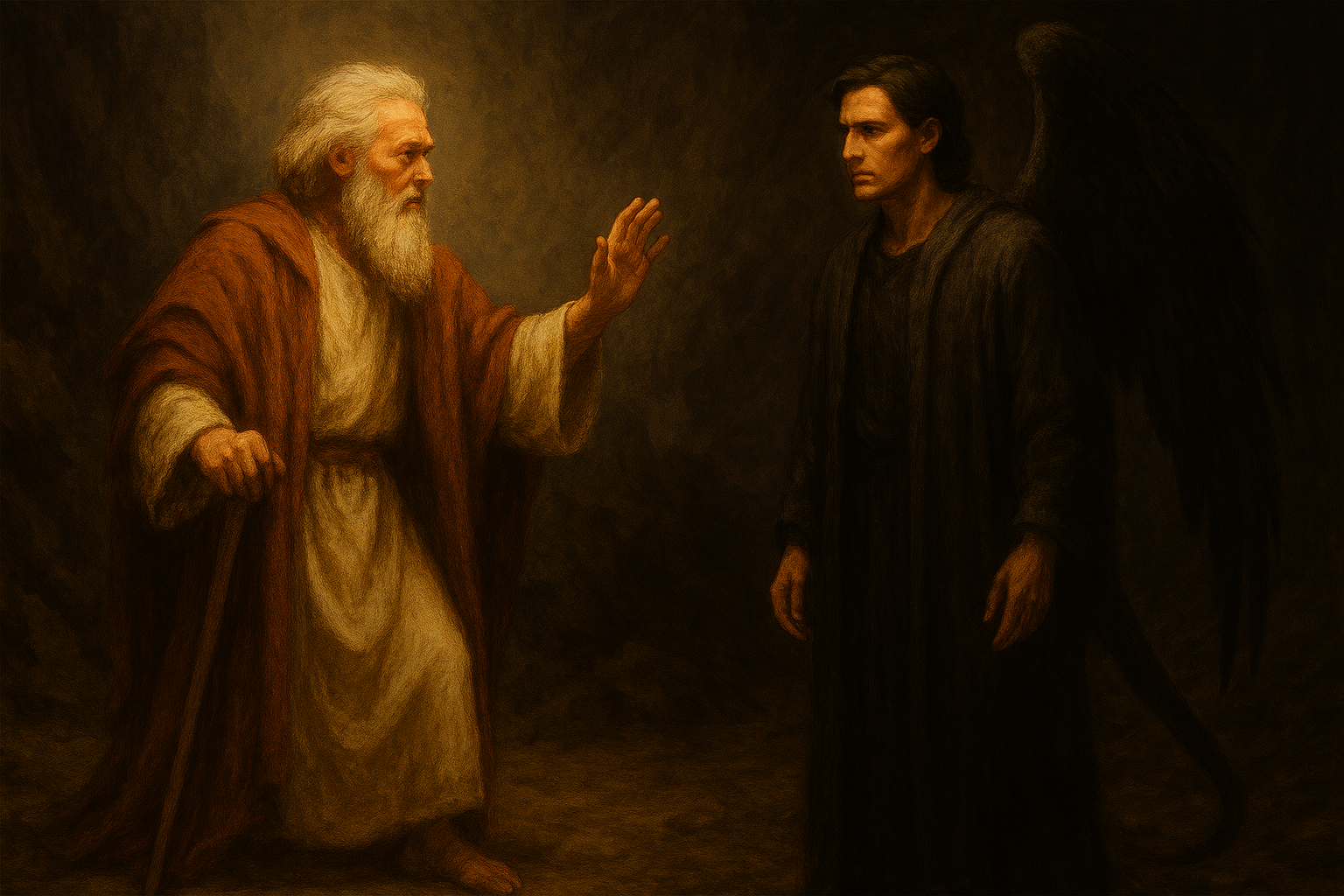
And it came to pass that when Moses had said these words, behold, Satan came tempting him, saying: Moses, son of man, worship me. And it came to pass that Moses looked upon Satan and said: Who art thou? For behold, I am a son of God, in the similitude of his Only Begotten; and where is thy glory, that I should worship thee? For behold, I could not look upon God, except his glory should come upon me, and I were transfigured before him. But I can look upon thee in the natural man. Is it not so, surely? Blessed be the name of my God, for his Spirit hath not altogether withdrawn from me, or else where is thy glory, for it is darkness unto me? And I can judge between thee and God; for God said unto me: Worship God, for him only shalt thou serve. Get thee hence, Satan; deceive me not; for God said unto me: Thou art after the similitude of mine Only Begotten.
~ Moses 1:12-16 ~

There are moments in the life of every believer when heaven has spoken, the soul has bowed, and the world has fallen silent. Moses had just come from such a moment. He had tasted the “mercy of nothingness”—the holy undoing that comes when a man stands before God and discovers that all self‑importance is dust. But Scripture shows us a pattern: whenever God empties a man, the enemy rushes to fill the vacuum.

The adversary does not wait for weakness; he waits for surrender. He appears not when Moses is proud, but when Moses is humbled. Not when Moses is full of himself, but when he is emptied of Egypt. This is the rhythm of spiritual warfare: revelation is followed by confrontation.

Satan’s first words are calculated: “Moses, son of man, worship me.” He does not tempt Moses with pleasure, but with identity. He attempts to rename him. The enemy always begins by lowering the value of the soul. If he can convince you that you are merely a creature of dust, he can command your worship. If he can strip you of sonship, he can strip you of authority.

Thursday, January 1, 2026

Day 1: The Mercy of Nothingness

Day 1: The Mercy of Nothingness

And it came to pass...that Moses fell unto the earth. And as he was left unto himself, he fell unto the earth. And he said unto himself: Now, for this cause I know that man is nothing which thing I never had supposed.
~ Moses 1:9-10 ~

What if your rock bottom was Holy and Sacred Grounds? We are taught to fear the moment we lose control - when our strength fails and we are left with nothing. However, when we look to Moses, he is not defeated; he is positioned for power. In Moses 1, a prophet comes face-to-face with God and realizes a terrifying truth: Man is nothing. For those of us in recovery, this is not an insult. It is the first breath of freedom.

Today marks the beginning of our devotional series: Daily Exodus - Discipline of Deliverance as we study through the Old Testament for Come Follow Me. This new devotional series is for Latter-day Saint Christians, and Evangelical Christians seeking the discipline of deliverance from addiction, codependent relationships, and overcoming faith crisis, fear, doubt, and even anxiety or depression. Grounded in scriptural truth, grace of God, and revealing Jesus Christ along the sacred journey and path.

For much of our lives, we pour time and energy into proving we’re enough. We construct walls of reputation, career success, and even religious performance to keep out the unsettling fear that we might fall short. For those wrestling with addiction, codependency, perfectionism, or a crisis of faith, this often comes with waves of doubt, fear, anxiety, and even depression. Our very enslavement to these compulsive natures oftentimes collapses when these levies eventually break. We are left staring at the wreckage of our own will, forced to admit a devastating truth: without God, we are utterly and spiritually bankrupt.

Saturday, August 9, 2025

Living the Book of Mormon | Finding Strength to Overcome - 1 Nephi 3:7


It is in the quiet dawn of our spiritual journey where we enter the covenantal path of righteousness. Through the scriptures, we anchor our hearts and minds upon the things of God. In today's episode, and ongoing series - Living the Book of Mormon - let us anchor our thoughts on 1 Nephi 3:7. This verse is imprinted on the hearts and minds of those who are weary travelers, burdened with shame, burdened with guilt, filled with bitterness, unforgiveness, and resentment. 

Dealing with - coping with - past regrets, hurts, and struggling to overcome any form of addiction. It is an imprint of faith, speaking not as a distant echo but as a living promise for many of us struggling along the covenantal path - navigating the turbulent wilderness of recovery. This passage reminds us that obedience is not a burden but a pathway to wisdom, revelation, and strength. Illuminated by the light, love, and tender mercies of Christ. Preparing us to come to our own land of promise where we thrive with an abundance of peace, joy, and light of who Christ is. Especially for many of us who are traversing the valley of the shadow of our past and addiction - faith crisis sometimes looming large. 

Reflection

Nephi's unyielding resolve amid familial discord and perilous odds calls our attention to understanding the difference between coping and thriving. His resolve was not in how he planned to cope with walking in faithful obedience to God's commandments - he thrived in walking in faithful obedience, trusting that God's way will unfold. 

In our own lives, as we wrestle with the remnants of shame and guilt from choices that once ensnared us, Nephi's example invites us to see our recovery journey, not as a solitary struggle but as an expedition of growth in character and integrity through obedience when we give our hearts, mind, and will over to the care of God. 

The Lord, who prepared a way for Nephi through Laban's drunkenness and guiding sword, prepares a way for each of us through the infinite atonement that Jesus Christ offers. Turning our weaknesses into strengths: "And if men come unto me, I will show unto them their weakness. I give unto men weakness that they may be humble; and my grace is sufficient for all men that humble themselves before me; for if they humble themselves before me, and have faith in me, then will I make weak things become strong unto them." (Ether 12:27). This mirrors what Paul wrote in 2 Corinthians 12:9: "My grace is sufficient for you, for my power is made perfect in weakness." (ESV). 

Nephi's faith was not blind because it was built upon through prior revelations, much like our own personal testimonies forged in the fire of trials. Paul mirrors this when he further writes in 2 Corinthians 12:9, "For the sake of Christ, then, I am content with weaknesses, insults, hardships, persecutions, and calamities. For when I am weak, I am strong." Being content in weakness, content when we are insulted, content when we go through hardships - experiencing difficult days and yet having Joy in our hearts and minds (James 1:1-4). Content when we are facing persecutions and even calamities - the trial of our faith. 

Have you paused to discern the prepared way in your own story? Perhaps it's a supportive friend, a timely conference talk that causes you to meditate and imprints spiritual truths and insight upon your heart and mind, or the quiet assurance of the Holy Spirit amid the raging tempests and storms. 

We learn that Nephi's willingness to walk in faithful obedience without delay was step-by-step mirroring our own path of recovery. Whether it is overcoming fears of relapse, chains of shame, guilt, and regret, or moving past unforgiveness, anger, resentment and bitterness. The covenantal path of righteousness moves us toward a resilient and thriving faith that is vibrant and sustainable. 

This is reflective of Mosaih 4:9 where it says, "Believe in God; believe that he is, and that he created all things, both in heaven and in earth; believe that he has all wisdom, and all power, both in heaven and in earth; believe that man doth not comprehend all the things which the Lord can comprehend." Here, it is an emphasis is on the importance of faith in God and His omnipotence, and to the point of how the context teaches ways we are to retain a remission of sins and understanding God's nature. 

Recovery Focus

Overcoming past issues demands more than grit and personal willpower; it requires surrendering to the prepared path. For those in the throes of a faith crisis where doubt seems to occupy the mind and heart, questioning the very foundations of spiritual truths and testimony.

Nephi's declaration harmonizes with the counsel found in Alma 32:27: "But if ye awake and arouse your faculties, even to an experiment upon my words, and exercise a particle of faith, yea, even if ye can no more than desire to believe, let this desire work in you, even until ye believe in a manner that ye can give place for a portion of my words." The context of Alma 32 is regarding the planting of the seed of faith and how it is cultivated and grows into something beautiful and magnificent. And the fundamental reason most struggle with faith crisis, having bouts of doubts, and feel discouraged and disheartened is because of what the scripture relates: 

Now, if ye give place, that a seed may be planted in your heart, behold if it be a true seed, or a good seed, if ye do not cast it out by your unbelief, that ye will resist the Spirit of the Lord, behold, it will begin to swell within your breasts; and when you feel these swelling motions, ye will begin to say within yourselves - it must needs be that this is a good seed, or that the word is good, for it beginneth to enlarge my soul; yea, it beginneth to enlighten my understanding, yea, it beginneth to be delicious to me. (Alma 32:28). 

To experiment upon the word, planting seeds of faith even amidst doubt and fears that seemed to move us from the numbness of coping mechanisms and idea of just deal with it attitude toward a vibrant and thriving faith, becomes a step forward when we resolve to echo Nephi's words, "I will go and do." 

Experimenting upon the word, planting the seed of faith, also helps one overcome the toxic chains of resentment, unforgiveness, and bitterness - insidious weeds choking and stifling forgiveness, restoration of healthy relationships, mercy, and even grace. It is in the pericope of eternal truths - the Law of Christ - we see how Nephi forgave his brother's rebellion, choosing unity over division. For Latter-day Saint Christians, and any Christian who claims to follow Christ, who are overcoming addiction means we are to confront bitterness toward self and others. This is accomplished through an honest moral inventory that is reflective and fearless - without judgment and condemnation. Through this process, we are able to come to a place and make healthy amends, guided by recovery principles aligning with Gospel truths (See, Doctrine and Covenants 64:10). 

Thriving emerges when we have the attitude, courage, and confidence to walk out in faith and "go and do" without delay, hesitation, and questioning when it comes to work of healing, restoration, and moving toward a thriving sober life that is crucified unto Christ - becoming genuine and true disciples of faith. 

This focus embraces the idea we are to move from coping to thriving, where a healthy and sober life reflects Christ's image. Shame and guilt, once tyrants, become teachers under the grace of the Atonement. Alma 36:21 reminds us of this: "Yea, I say unto you, my son, that there could be nothing so exquisite and so bitter as were my pains. Yea, and again I say unto you, my son, that on the other hand, there can be nothing so exquisite and sweet as was my joy." Depicting Alma's joyous deliverance from sin's pains, promising that our own exquisite anguish may yield to exquisite joy as we go and do the Lord's commandments when it comes to the covenantal path of righteousness, personal recovery journey, and spiritual growth. 

Our recovery and spiritual growth in overcoming the things of the flesh is promised when we maintain fidelity to our covenants and commit our hearts, minds, and will over to God's care - presenting ourselves as living sacrifices - becoming pillars of fire in the Temple of the Lord (Revelation 3:12). And as Paul reveals - it becomes our true and proper worship holy and pleasing to God (Romans 12:1). 

Wisdom

Wisdom gleans in the reality that resentment and bitterness are chains we have forged ourselves. However, the Lord's preparation includes keys to unlock them. Consider how Nephi's brother's murmured, yet he pressed on without harboring a grudge. This mirrors the Savior's teaching in Matthew 11:28-30: "Come unto me, all ye that labour and are heavy laden, and I will give you reset." The process, and personal path, of recovery is where we find wisdom. 

It teaches us to release our burdens at the feet of Christ. Placing them before the throne of Grace and taking upon ourselves His yoke to guide us toward a sober life that is reflective of His peace and joy - of which surpasses all understanding (John 14:27, Philippians 4:7). 

And when shame and guilt whispers that we are unworthy, remember how the Lord has commanded that we walk in repentance and forgiveness where we are restored to a resilient and bold faith. He prepares a way for us to participate and maintain our covenants. This is reflective in the counsel given in 2 Nephi 31:20 where we are to press forward with steadfast faith in who Christ is as we feast upon His words - a feast that nourishes and satisfies our souls - where it transforms shame and guilt into confident attitudes of gratitude and assurance. 

This wisdom whispers that true sobriety is not merely based on abstinence alone. It is based on a willing heart desiring to align with Christ's light. As we navigate faith crisis, Nephi's verse complements Philippians 4:13: "I can do all things through Christ which strengthens me." This harmony of scripture reveals that overcoming is not about our willpower, strength, or grit - where we bear it and grin through it. We overcome because Christ has already overcome and therefore are being prepared to turn coping to conquering as we build a sturdy foundation on consistent spiritual disciplines of prayer, scripture study, and service in our own personal daily lives. 

Therefore, wisdom culminates in understanding how bitterness dissolves, resentment is removed from our heart, and we renew our covenants through the emblems of the Sacrament. Nephi's path, fraught with opposition, teaches us that endurance is without enmity. For Latter-day Saints who are in recovery, or any Christian who is in a path of recovery and struggling, this wisdom integrates what Doctrine and Covenants 127:7-8 reveals: Assuring us that our trials, if endured well, leads us toward exaltation. 

Are you ready to embrace this profound eternal truth? Knowing your past no longer defines you? Realizing you no longer have to rely on ways to cope with those things we are called to face and overcome in our lives? The covenantal path of righteousness, and recovery, prepares us for a life that is thriving and vibrant - giving us a testimony of Christ's love. 

Prayer

Our Heavenly Father, thank you for your mercy and grace, in the name of thy Son - Jesus Christ - I stand as a child in recovery. Thank you for the example of Nephi and his faith to "go and do" thy will, knowing you have prepared a way for him to accomplish the things he needed to accomplish. Thank you for the strength today, and the preparation of heart and mind for each of us to walk through our shame, our guilt, resentment, bitterness, and anger. Healing us from the brokenness of our past. Restoring us to a place of dignity where we are becoming testimonies of Christ's love and Your Grace. Thank you for strengthening us when we are weak, healing us where we are brokenhearted, and guiding us through the mist of darkness of fear and doubt - guiding us from coping to thriving in Your light and Glory, Amen. 

Word of Wisdom

Doctrine and Covenants 89:18-21 provides us with some word of wisdom: For those of us who walk in obedience to the principle truths of what God commands, "shall receive health in their navel and marrow to their bones; and shall find wisdom and great treasures of knowledge ... and shall run and not be wary, and shall walk and not faint." 

Let this motivate you toward a hopeful and vibrant sober life where you are thriving. Where Nephi's promise becomes your personal truth and reality - overcoming through Christ by walking the prepared path before you. 

Monday, April 14, 2025

Inspired Invincibility

Introduction

Welcome to "Sacred Sobriety: A Path for the Soul!" Today, we’re diving deep into a message of hope, healing, and spiritual growth, perfect for anyone on the journey of sobriety, addiction recovery, or wrestling with faith crises and past trauma. We’re drawing inspiration from Oswald Chambers’ classic devotional, My Utmost for His Highest, specifically his powerful concept of "Inspired Invincibility," rooted in Matthew 11:29, where Jesus says: "Take my yoke upon you and learn from me, for I am gentle and humble in heart, and you will find rest for your souls."

What does it mean to take Jesus’ yoke? How can this lead to an invincible spirit, especially when you’re battling shame, guilt, or bitterness? That’s what we’re here to unpack. Whether you’re seeking sobriety, healing from unforgiveness, or simply longing for peace in your soul, this video is for you. We’ll explore scripture, share stories, and offer practical takeaways to help you grow in spirit and truth.

And we’re keeping it real and conversational—like a chat with friends. So, grab a coffee, get comfortable, and let’s start this journey together!

Let’s dive in.

Part 1: Understanding Discipline and Communion

Oswald Chambers writes, "The Lord disciplines the one he loves," quoting Hebrews 12:6. Now, discipline might sound harsh—like punishment—but biblically, it’s about training, not tearing down. God uses discipline to draw us closer to Him, into communion. Chambers says our complaining about it is petty. Instead of whining, “Why can’t I have an easier life?” Jesus invites us to be unlike anyone but Him.

For someone in addiction recovery, this hits home. Sobriety often requires discipline—think routines, support groups, or tough moments of accountability. But it’s not to punish; it’s to heal.

I love that perspective. It reminds me of Romans 5:3-4: "Suffering produces perseverance; perseverance, character; and character, hope." God’s discipline through our struggles shapes us.

Exactly! Let me share a story. I knew a guy named John—years deep in alcoholism, lost everything: family, job, hope. Rock bottom. But through a faith-based recovery program, he started seeing his hardships as divine discipline, a path to reconnect with God. It wasn’t instant, but that shift turned his life around.

That’s powerful. It’s like 1 Samuel 25-26, where David spares Saul’s life twice despite having the chance to end him. That discipline—listening to God over his impulses—kept him in communion with God’s will.

Great connection! So, takeaway one: God’s discipline isn’t rejection—it’s love, guiding us to Him. When life feels heavy, see it as training for spiritual growth, not a curse.

Next up, how do we carry those burdens? Let’s talk about Jesus’ yoke.

Part 2: Taking Up Jesus’ Yoke

Matthew 11:29-30 says, "Take my yoke upon you and learn from me… for my yoke is easy and my burden is light." A yoke in Jesus’ day was a wooden beam linking two oxen to work together. Jesus is saying, “Team up with me. Don’t carry your load alone.”

For addiction or trauma, this is huge. Those struggles isolate you—shame whispers you’re unworthy. But Jesus offers partnership.

And He’s gentle, not a drill sergeant. His yoke being “easy” doesn’t mean no effort—it means He’s carrying the heavier side. Matthew 11:28 adds, "Come to me, all you who are weary and burdened, and I will give you rest." That’s peace for a restless soul.

Right. Imagine sobriety as a solo climb up a mountain, exhausting and lonely. Now picture Jesus roped in with you, steadying every step. Chambers says when we identify with Him, complaining turns to praise.

I’ve seen that. A friend in recovery once said, “I stopped asking ‘Why me?’ and started thanking God for walking with me.” That’s the yoke at work—rest amid the storm.

Takeaway two: Partner with Jesus. Bring your addiction, guilt, or resentment to Him. He’s not here to judge but to share the load and teach you peace.

Speaking of strength, let’s explore how weakness fits in.

Part 3: Finding Strength in Weakness

Isaiah 40:29 says, "He gives strength to the weary and increases the power of the weak." Chambers ties this to Jesus’ yoke—knowing it reveals God’s strength. Paul echoes this in 2 Corinthians 12:9: "My grace is sufficient for you, for my power is made perfect in weakness."

In recovery, admitting “I’m powerless” is step one. That vulnerability opens the door to God’s power.

It’s so countercultural—hide your flaws, right? But God flips that. Think of Gideon in Judges 6-7—God shrank his army to 300 to show the victory was divine, not human. Our weakness showcases His strength.

Love that. Here’s a story: Sarah, hooked on opioids after surgery, relapsed over and over. She was ashamed, felt like a failure. But when she surrendered—“God, I can’t do this”—she found strength she didn’t know she had. She says, “My lowest point was where I met God’s power.”

That’s it! Luke 12:32-59 has Jesus saying, “Don’t worry—your Father knows what you need.” Trusting Him in weakness builds resilience.

Takeaway three: Don’t hide your struggles. Admit them and let God’s strength shine through. It’s your path to healing and sobriety.

And strength leads to joy—let’s go there next.

Part 4: The Joy of the Lord

Nehemiah 8:10 says, "The joy of the Lord is your strength." Chambers notes that peace and joy don’t mean no burdens—they prove God’s presence in them.

How do joy and pain coexist?

It’s about God, not circumstances. Philippians 4:4—“Rejoice in the Lord always”—came from Paul in prison. Joy is knowing God’s with you, yoke and all.

For someone battling addiction or unforgiveness, joy feels distant. But it’s not fake smiles—it’s resting in God’s love. Chambers says saintly people aren’t burden-free; their joy shows God’s strength holding them up.

I’ve met folks in recovery who radiate this. One guy, sober five years, said, “I still have hard days, but knowing God’s got me keeps me going.” That’s joy as strength.

Takeaway four: Seek God’s joy, even in pain. It’s your anchor for sobriety and healing from trauma—proof He’s carrying you.

Now, let’s tie it all together with invincibility.

Part 5: Cultivating Inner Invincibility (10 Minutes)

Chambers says, "No power on earth or in hell can defeat the Spirit of God inside a human spirit." That’s inner invincibility—born again through Christ. Romans 8:37 calls us "more than conquerors through him who loved us."

For sobriety or overcoming shame, this is everything. You’re not defined by your past—you’re invincible in Him.

It’s not about never falling—it’s about rising. Galatians 2:20 says, "I have been crucified with Christ and I no longer live, but Christ lives in me." That crucified life—dying to the old, living in Him—fuels invincibility.

Exactly. Someone carrying guilt might think, “I’m my mistakes.” No—you’re a new creation (2 Corinthians 5:17). I knew a woman who beat addiction by clinging to this: “Christ in me is stronger than my past.”

And Chambers adds, “Kick out the whine.” Bitterness fades when we walk in God’s light—key for letting go of resentment or unforgiveness.

Takeaway five: Claim your invincibility. The Spirit in you conquers all. Live mindfully, crucified with Christ, and watch healing unfold.

Let’s wrap this up with some final thoughts.

Conclusion and Takeaways

Wow, what a journey! Here are your key takeaways for Sacred Sobriety:

  1. Embrace Discipline: God’s training is love, pulling you into communion—perfect for spiritual growth.
  2. Take Jesus’ Yoke: Partner with Him for rest and strength in addiction recovery or trauma.
  3. Strength in Weakness: Let your lows lift God’s power—your sobriety lifeline.
  4. Find Joy: God’s joy fuels resilience, even in pain—your healing anchor.
  5. Claim Invincibility: You’re more than a conqueror in Christ. Live crucified, free from shame or bitterness.

If you’re on this path—sobriety, healing faith crises, or releasing unforgiveness—Jesus says, “Come to me.” He’s gentle, ready to restore. Live mindfully, letting Christ in you guide every step.

Thanks for joining us! If this spoke to you, like, subscribe, and share. Leave a comment—how has Jesus’ yoke helped your soul?

Let’s close with a prayer: “Lord, thank You for Your yoke, Your strength, Your joy. Lift those watching into sacred sobriety and peace. Amen.”

See you next time—God bless!

Thursday, April 10, 2025

Moral Decision about Sin

Are you ready to break free from the chains of sin and addiction? ‍ Join us on a transformative journey in "Sacred Sobriety: A Path for the Soul" as we explore the powerful devotional "Moral Decision About Sin" from Oswald Chambers' My Utmost for His Highest.

In this episode, I focus on what it means to make a radical moral decision to kill sin—not just manage it—drawing from the foundational truth of Romans 6:6. Through rich Bible insights from passages like Romans 6:1-2, Galatians 2:20, 1 Samuel 15-16, and Luke 10:25-42, along with personal stories and spiritual reflections, we offer hope and practical steps for your recovery journey.

Whether you're navigating addiction recovery, wrestling with co-dependency, healing from trauma, or seeking to strengthen your Christian faith, this video delivers key takeaways and reflective questions to inspire spiritual growth and help you overcome adversity.

What you'll discover in this episode:

  • The significance of making a moral decision about sin
  • Insights from Romans 6:6 and other transformative Bible passages
  • Personal stories of recovery and resilient faith
  • Key takeaways for your spiritual journey
  • Reflective questions to apply these truths to your life

Hit play and let God speak to your heart. If you're on a path of sacred sobriety or seeking to deepen your faith, this is for you! Don’t forget to like, comment, and subscribe for more content on spiritual growth, addiction recovery, and faith in action. Share your reflections below—we’d love to hear from you!

Join us on the path to sacred sobriety—where faith meets recovery.

"Welcome to Sacred Sobriety: A Path for the Soul. If you’re on a recovery journey—whether it’s battling addiction, healing from trauma, or overcoming co-dependency—this episode is for you. Today, we’re diving into a life-changing devotional from My Utmost for His Highest called 'Moral Decision About Sin,' based on Romans 6:6. We’ll explore what it means to kill sin in our lives, not just manage it, and how that decision can transform your faith and recovery. Stick around for Bible insights, personal stories, and reflective questions to help you grow closer to God."

"That’s the heart of today’s message: freedom from slavery to sin through a decisive, soul-deep choice. Let’s get started."

Introduction

"Hey everyone! If you’ve ever felt trapped by addiction, shame, or a faith crisis, you’re not alone. Recovery is tough, but it’s also sacred. Today’s devotional from Oswald Chambers challenges us to make a moral decision about sin—a choice that can break the chains of our past and lead us into a new life with Christ. This isn’t about quick fixes or temporary sobriety; it’s about letting God crucify the old self so we can truly live. Whether you’re struggling with alcohol, co-dependency, or unresolved trauma, this message offers hope and a path forward."

"We’ll unpack Romans 6:6, add more Bible references, and share insights from recovery and faith. Plus, I’ve got some questions for you to reflect on—because this journey is personal. So, grab a notebook, hit that like button, and let’s dive into Sacred Sobriety."

Devotional Reading and Explanation

"Here’s what Oswald Chambers writes: 'Have I decided that sin will be killed in me? It takes a long time to come to a moral decision about sin, but when I do, it is the great moment of my life. In this moment, I decide that just as Jesus Christ died for the sins of the world, so sin will be put to death in me. Sin won’t simply be curbed or suppressed or counteracted in me; it will be outright crucified.'"

"Wow. That hits hard, doesn’t it? Chambers isn’t talking about a casual New Year’s resolution. He’s saying that killing sin—like addiction or bitterness—is a radical, deliberate act. It’s not enough to suppress it or hide it under good behavior. In recovery terms, this is like the moment you decide, 'I’m done with this. I’m not just cutting back—I’m letting it die.'"

"For me, this reminds me of my own struggle with [insert brief personal example, e.g., 'anxiety that fueled unhealthy habits']. I tried to manage it—praying it away, distracting myself—but it wasn’t until I surrendered it fully to God that I felt free. Chambers ties this to Romans 6:1-2: 'Shall we go on sinning so that grace may increase? By no means! We are those who have died to sin; how can we live in it any longer?' This isn’t a future hope—it’s a present reality we step into."

"In recovery, we know this moment. It’s when you hit rock bottom and decide, 'No more.' But it’s not just about willpower—it’s about agreeing with God that sin has no place in you anymore."

Additional Bible References

"Let’s dig deeper with some Bible passages that connect to this idea. First, Galatians 2:20: 'I have been crucified with Christ and I no longer live, but Christ lives in me.' This is huge for recovery. When we make that moral decision, we’re not just stopping a behavior—we’re letting Christ take over. It’s like handing Him the keys to your life and saying, 'You drive.'"

"Next, let’s look at 1 Samuel 15-16. Here, King Saul disobeys God by sparing the Amalekite king and some livestock instead of fully destroying them as God commanded. The result? God rejects Saul as king. This is a warning for us. Partial obedience—like cutting back on sin but not killing it—doesn’t work. In recovery, it’s like saying, 'I’ll quit drinking, but I’ll keep the bottle in the house.' It’s a setup for failure."

"Finally, Luke 10:25-42 gives us the Good Samaritan and Mary and Martha. These stories aren’t directly about sin, but they show what happens after we kill it. The Samaritan loves sacrificially, and Mary chooses devotion over distraction. Once sin is crucified, our lives can reflect love and focus on God. It’s the fruit of that decision."

"These verses—Romans, Galatians, 1 Samuel, and Luke—paint a full picture: decide to kill sin, avoid half-measures, and live out the freedom that follows."

Commentaries and Theological Insights

"What do Christian thinkers say about this? Oswald Chambers himself wrote, 'We shall find that the spheres God brings us into are not meant to teach us something but to make us something.' That’s from his piece The Love of God—The Ministry of the Unnoticed. In recovery, every struggle—every relapse, every tear—is shaping us into who God wants us to be."

"C.S. Lewis adds, 'No man knows how bad he is till he has tried very hard to be good.' If you’ve ever fought addiction, you get this. The battle reveals our weakness—but also God’s strength. And Timothy Keller talks about sin as an 'idol of the heart.' For many of us, addiction or co-dependency becomes that idol. Killing sin means dethroning it and letting God reign."


"Edward Welch, in Addictions: A Banquet in the Grave, says, 'The opposite of addiction isn’t sobriety—it’s worship.' I love that. Recovery isn’t just about stopping; it’s about redirecting our hearts to God. These insights tie back to Romans 6:6—crucifying sin sets us free to worship."

Personal and Spiritual Insights

"Let me get personal for a minute. I once knew someone—let’s call her Sarah—who battled prescription pill addiction. She’d quit for a while but always slipped back. One night, after losing a job, she broke down and prayed, 'God, I can’t do this anymore. Take it.' That was her moral decision. It wasn’t just about the pills—it was about surrendering her whole self. Today, she’s sober and helping others in recovery."

"That’s what this is about. In my own life, I’ve seen how trauma can fuel co-dependency. I used to think, 'If I just help everyone else, I’ll feel okay.' But God showed me that was a sin I needed to kill—not just manage. The Spirit searches us, like Chambers says, revealing what’s warring against Him. And when we agree with His verdict, freedom comes."

"Think of it like this: recovery isn’t 'white knuckling' through temptation. It’s letting God do the heavy lifting. For anyone facing a faith crisis, this decision can feel risky—but it’s where resilience is born."

Key Takeaways and Reflective Questions

"Here are your key takeaways:

  1. The moral decision to kill sin is personal and pivotal. It’s your 'great moment.'
  2. Half-measures fail. Like Saul, we can’t compromise with sin or addiction.
  3. God’s Spirit reveals and empowers. He shows us our sin and gives us strength to overcome.
  4. Crucifixion leads to new life. When sin dies, Christ lives in us."

"Now, some questions for you to chew on. Pause the video, journal your answers, or drop them in the comments:

  1. Have you made a moment where you decided to kill sin in your life? What got you there?
  2. How do you feel the tug-of-war between your old self and new life in Christ?
  3. How does recovery from addiction mirror the spiritual act of dying to sin?
  4. What does Saul’s story in 1 Samuel 15-16 teach you about partial obedience?
  5. How can love and service, like in Luke 10, show a life free from sin?"

"As we close, here’s my encouragement: making a moral decision about sin isn’t a one-and-done deal. It’s a daily surrender. If you haven’t yet, take time alone with God. Pray, 'Lord, identify me with your death until sin is dead in me.' He’ll meet you there."

"Recovery is a sacred path, and God walks it with you. If this episode spoke to you, share it with someone who needs hope. Subscribe for more Sacred Sobriety, and let me know in the comments: what’s your next step in killing sin? Until next time, keep the faith—and keep walking."