Saturday, May 30, 2026

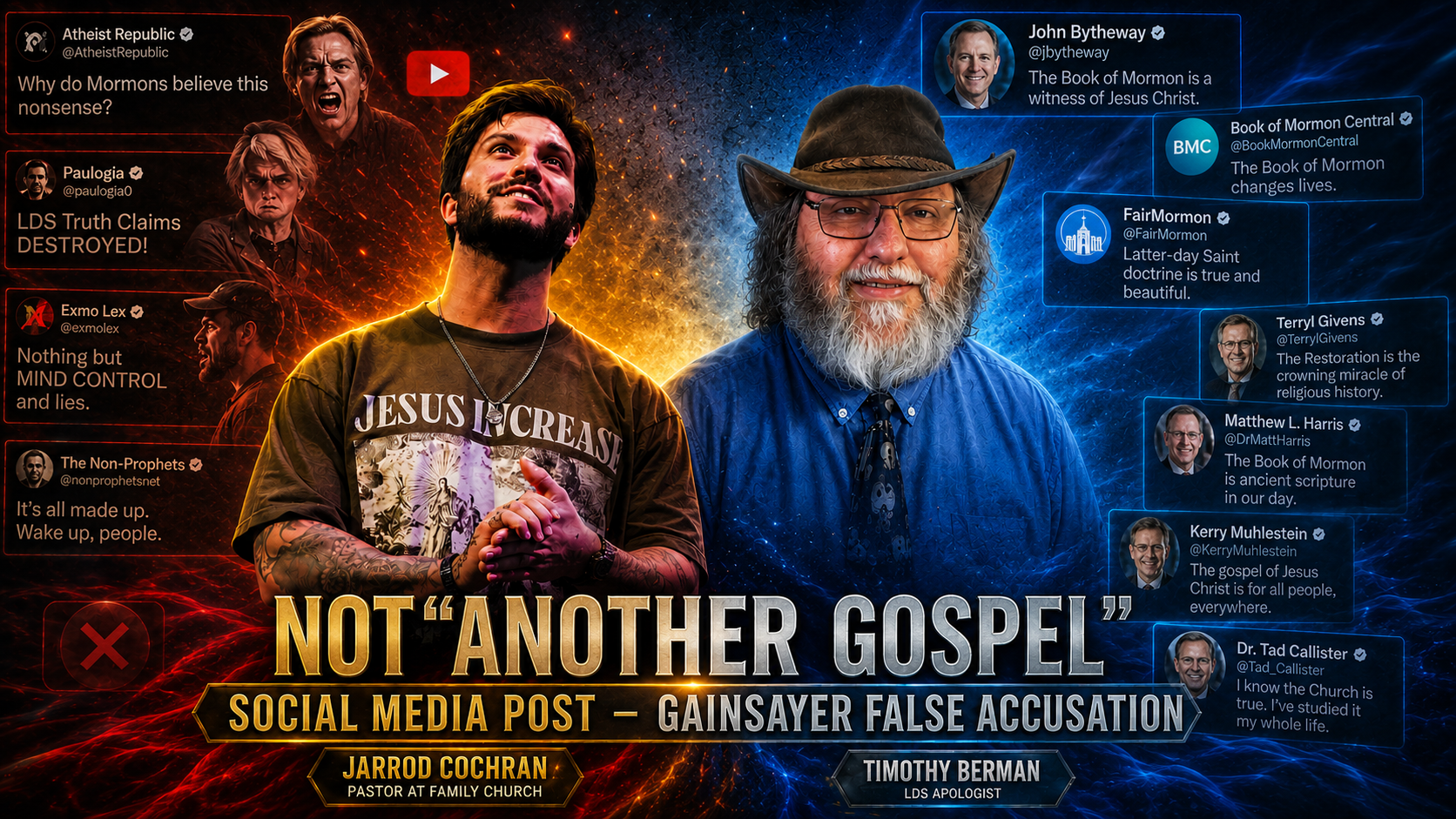
Not “Another Gospel”: A False Accusation Against Christ

Not “Another Gospel”: A False Accusation Against Christ

It really never fails that someone who has issues, without tissues, against the Church of Jesus Christ of Latter-day Saints recycle the same accusation and anti-LDS tropes. And typically, the go to Evangelical eisegesis "gotcha" verse is Galatians 1:8. A weaponized verse used to bludgeon Joseph Smith into the status of being accursed, preaching a different gospel and the case is closed. It sounds bold and confident. However, it is mere haughty arrogance posturing from a place of one being completely illiterate of properly interpreting the scriptures. Evidence of another gainsayer who is ever learning and never understanding:

You must understand this, that in the last days distressing times will come. For people will be lovers of themselves, lovers of money, boasters, arrogant, abusive, disobedient to their parents, ungrateful, unholy, unfeeling, implacable, slanderers, profligates, brutes, haters of good, treacherous, reckless, swollen with conceit, lovers of pleasure rather than lovers of God, holding to the outward form of godliness but denying its power. Avoid them! For among them are those who make their way into households and captivate immature women, overwhelmed by their sins and swayed by all kinds of desires, who are always studying yet never able to recognize truth. As Jannes and Jambres opposed Moses, so these people, of corrupt mind and counterfeit faith, also oppose the truth. But they will not make much progress because, as in the case of those two men, their folly will become plain to everyone. ... Indeed, all who want to live a godly life in Christ Jesus will be persecuted. But wicked people and impostors will go from bad to worse, deceiving others and being deceived. But as for you, continue in what you have learned and firmly believed, knowing from whom you learned it and how from childhood you have known sacred writings that are able to instruct you for salvation through faith in Christ Jesus. All scripture is inspired by God and is useful for teaching, for reproof, for correction, and for training in righteousness, so that the person of God may be proficient, equipped for every good work. (2 Timothy 3:1- 9, 12-17).

Yet, such arguments consistently collapse the moment we examine the text, the history, and the logic.

The claim is simple: Because Paul warned about another gospel and because Joseph Smith reported an angelic visitation, therefore the Restoration must be a demonic deception. An arrogant and boastful claim. One that appears to sound quite powerful - until you take the time to read Paul, understand his context, and compare it to what Latter-day Saints actually teach. Yet, these internet gainsayers are mere lazy learners who do not want to test their claims against truth. They want to sound loud and proud screaming into the Social Media landscape to deceive people. And they don't want their claims challenged.

Therefore, I am not here to dodge the passage. In fact, the only person that appears to dodge a real discussion is the gainsayer refusing to have a livestream discussion on whether or not the Book of Mormon is demonic. As such is the individual's claim. Neither am I here to soften Paul. I am here to take the claim seriously, steelman it, and then show how it fails on every textual, historical, and theological level.

Today, let's examine Jarrod Cochran's claims regarding Joseph Smith, the Book of Mormon, and an unfolding dialogue regarding whether or not this gentleman is speaking truth - or perpetuating ongoing lies and deceptions.

Friday, May 29, 2026

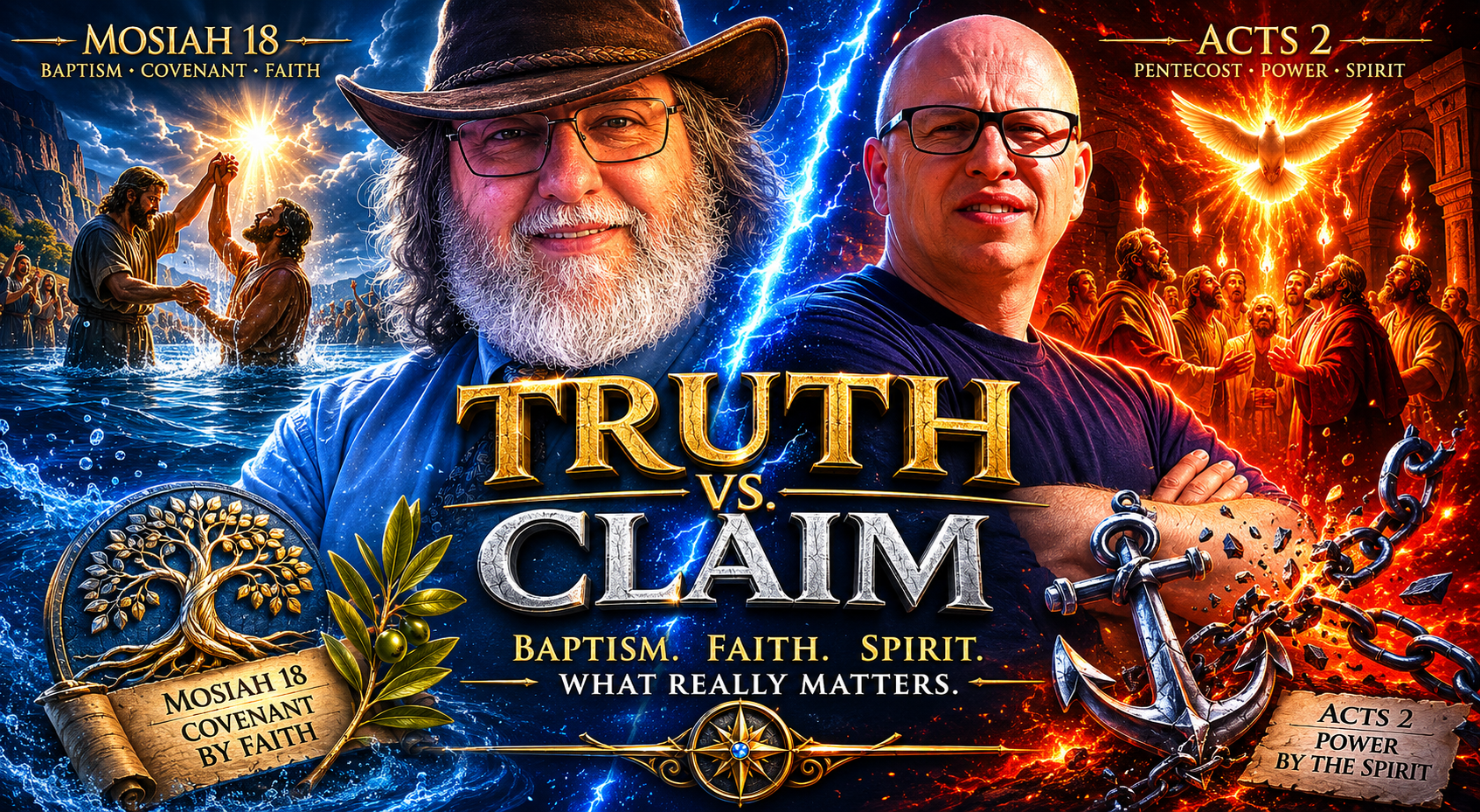
Book of Mormon Contradictions? A Latter-day Saint Responds to Paul Gee on "Baptism" and "Church" in Mosiah 18

Book of Mormon Contradictions? A Latter-day Saint Responds to Paul Gee on "Baptism" and "Church" in Mosiah 18

We are going to look at a very specific claim: that the Book of Mormon story of baptism in Mosiah is just Joseph Smith copying Acts 2 - and that baptism for the remission of sins could not have existed before Jesus Christ, therefore the Book of Mormon contradicts the Bible. If this is true, Latter-day Saint scripture definitely collapses. If it is not, then this criticism is built on a very sandy foundation. Let's actually examine to see if such a claim has any credibility and validity to truth or if it is a false claim.

Now, I am not asking you to take my own word for it. I am asking that we open up the scriptures, open up our hearts and minds because we are going to walk through Paul Gee's argument, steelman it, and then test it against scripture, history, and essential logic. By doing this, we can critically assess the merits of his claims and their implications for the understanding of both the Book of Mormon and biblical texts.

This is not an attack on Paul. In fact, he reached out and asked me to read it as it will supposedly prove that the Book of Mormon is false. And I will quote him fairly, present his argument in its strongest form, and will show how I believe it fails - scripturally, historically, and logically. By carefully dissecting the specifics of his argument, we can delve deeper into the theological and historical context of baptism and its significance within both texts.

Understanding that baptism as a practice existed in various forms before Christ and that the concept of a remission of sins is not exclusively tied to any one scripture, we must analyze whether the Old Testament precedents and the teachings of Christ later broaden our comprehension of baptism. This exploration will hopefully shed new light on claims made against the Book of Mormon, fostering a more nuanced and comprehensive understanding of the narrative within its pages.

As we navigate through this intricate discussion, I invite all readers to remain open-minded and reflect critically on the scriptures, drawing personal insights even as we engage with challenging interpretations. A sincere examination can lead us to a deeper faith and understanding of these profound spiritual texts.

Thursday, May 28, 2026

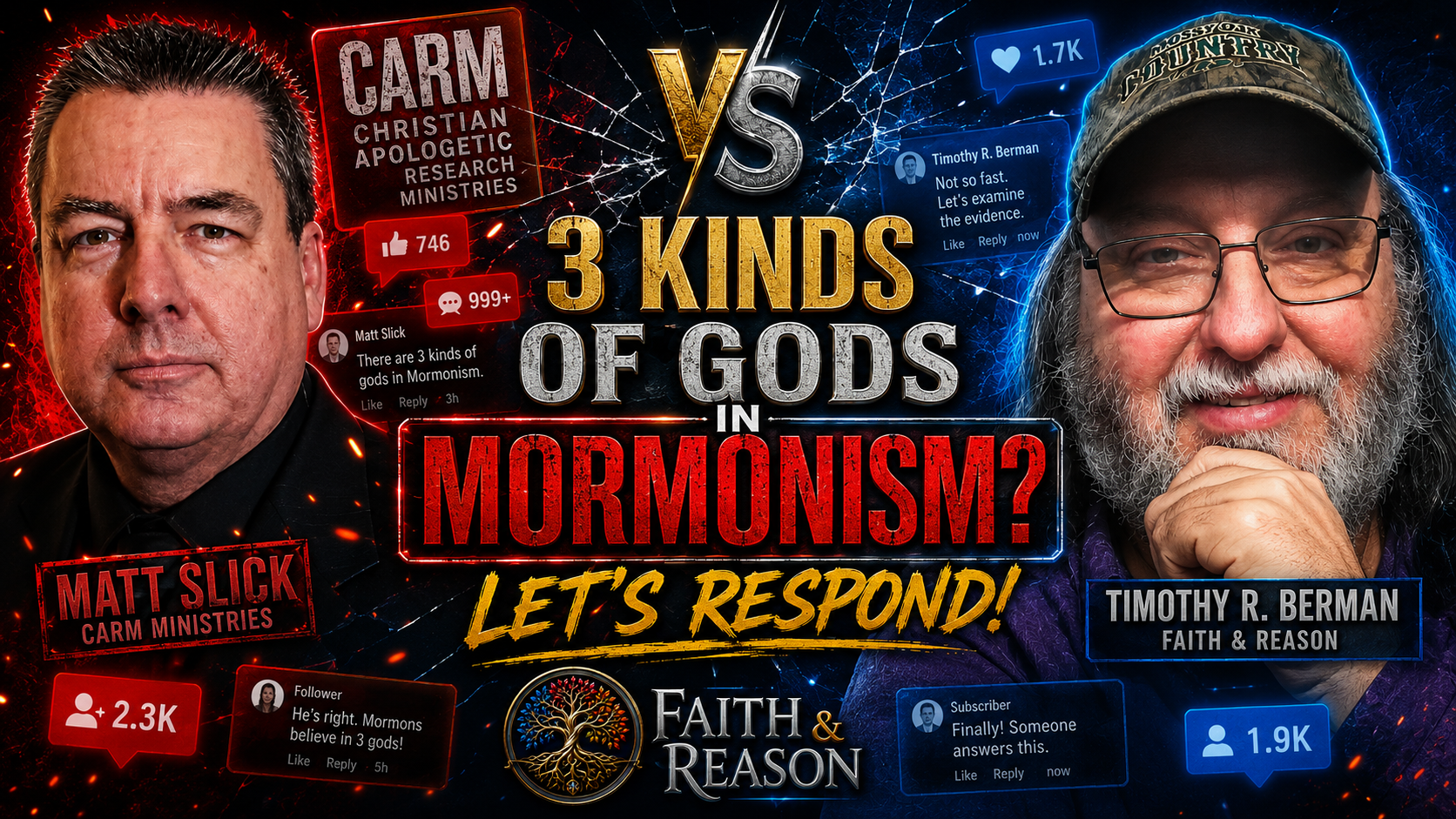
Does the LDS Faith Have 3 Kinds of God?

Does the LDS Faith Have 3 Kinds of God?

Are there three Gods within the LDS Faith, or is Matt Slick of the Christian Apologetics Research Ministry making three specific category errors? He appears to contend that Latter-day Saint theology contains three types of gods. Yet, his conclusion seems to depend entirely on misunderstandings, inaccuracies in reading LDS sources, and the imposition of post-Nicene metaphysics onto texts that do not utilize them.

When we scrutinize Slick's assertions, it becomes apparent that they stem from misrepresentations of key doctrinal points. The Latter-day Saint understanding of God emphasizes a singular divine nature, with a clear distinction between God the Father, Jesus Christ, and the Holy Ghost, who are unified in purpose but distinct in being. This understanding challenges Slick’s insistence on a concept of multiple gods existing in separate categories, which does not align with LDS beliefs as how we interpret our scriptures and teachings.

By examining the categories he uses and applying a proper lens through which to analyze LDS doctrine, one may ultimately see that Slick's arguments significantly falter. His framework seems to force the doctrine into a misunderstanding of the term 'God,' failing to account for the context and nuances within Latter-day Saint theology.

His claims not only misrepresent what Latter-day Saints uphold but also create contradictions within his argumentation regarding what he purports they teach. This is not merely a disagreement over religious interpretation; it represents a profound mischaracterization that undermines genuine discourse.

Today, I wish to respond to this critique with clarity, doctrinal precision, and integrity, standing firm in the belief that the truth of Latter-day Saint doctrine deserves to be presented honestly. It is vital that we engage with those who misunderstand or misrepresent our beliefs with a spirit of boldness and respect—exhorting and convincing the gainsayer (Titus 1:9) through proper correction and thoughtful rebuke (2 Timothy 3:16). By addressing these misunderstandings directly, we can foster a more accurate understanding of Latter-day Saint teachings and encourage meaningful dialogue that respects differences while seeking common ground.

Wednesday, May 27, 2026

Learning to Love Myself Through God's Eyes

Learning to Love Myself Through God's Eyes

Learning to love myself was the first mountain I ever had to climb in recovery. Jesus said the greatest commandment is to love God with all our heart, soul, mind, and strength—and the second is like it: to love our neighbor as ourselves. I thought I loved God. I thought I loved others. But I had never learned how to love me. And when I finally faced that truth, I realized I didn’t just “not love myself”—I despised myself.

When I was drunk and alone, I’d curse myself. I’d repeat the harsh words spoken over me by others—especially family. Emotional abuse, degradation, bullying, name‑calling… all of it became the internal script I lived by. I believed I was worthless, stupid, manipulative, selfish, unlovable. And because I believed it, I lived it.

So I kept God at arm’s length. I kept people at arm’s length. I feared abandonment, rejection, and judgment. I feared giving God my whole heart because I assumed He would eventually reject me too. Shame became the lens through which I saw myself, others, and God.

But recovery forced me to confront the lies. It forced me to ask: Who does God say I am? And in that painful, holy unraveling, I began to learn to love God with what little I had. I began to see myself through His eyes. And only then could I begin to love others with sincerity, depth, and courage.

Anchor verse - Hebrews 1:3 - “He is the reflection of God’s glory and the exact imprint of God’s very being, and he sustains all things by his powerful word. When he had made purification for sins, he sat down at the right hand of the Majesty on high.”

Christ is the exact imprint of God’s being—and through Him, we learn who God is, who we are, and how deeply we are loved.