Daniel Cooper, a prominent Christian evangelist, has recently raised concerns about the Fourth Article of Faith in Latter-day Saint theology. His critique focuses on the principles of faith, repentance, baptism, and sacred ordinances as outlined in the article. While Cooper questions the scriptural basis and theological soundness of these teachings, his argument often misrepresents their intended meaning within the restored gospel of Jesus Christ. Understanding his perspective is key but so is clarifying the principles at stake. This post offers a thoughtful response, grounded in doctrine and aimed at fostering meaningful dialogue for those seeking to defend their faith.
Understanding the Fourth Article of Faith
The Fourth Article of Faith clearly outlines the foundational principles of the restored gospel: faith, repentance, baptism, and the gift of the Holy Ghost. These steps guide believers toward a life centered on Jesus Christ and spiritual growth. Daniel Cooper's critique misrepresents the depth of these doctrines, so let's unpack them to clarify their meaning and importance.
Faith in Jesus Christ
Faith in Jesus Christ stands at the heart of the Fourth Article of Faith, forming the cornerstone of Latter-day Saint belief. Without this faith, the remaining principles lose their foundation. What does faith in Christ mean? It's not just believing He exists. It's trusting His power to guide, redeem, and transform us. Faith is action—making daily choices to follow Him, even when it's hard.
The scriptures teach that faith is much more than intellectual belief. Hebrews 11:1 describes faith as "the substance of things hoped for, the evidence of things not seen." For Latter-day Saints, this means relying on Jesus Christ for guidance during uncertainty. Cooper's suggestion that this kind of faith lacks scriptural basis misses the mark. Faith, as taught in the New Testament, isn’t passive; it’s the fuel for repentance, action, and transformation.
Repentance and Transformation
Repentance is more than saying sorry; it's about change—deep, lasting, personal change. Think of repentance like course correction in a journey. Imagine driving down a road and realizing you're headed the wrong way. True repentance helps you make a U-turn and get back on the right path.
The scriptures link repentance with spiritual rebirth, emphasizing that through Christ's atonement, we can overcome sin. Acts 3:19 says, "Repent ye therefore, and be converted, that your sins may be blotted out." The process requires humility, accountability, and a sincere desire to leave old habits behind. Critics like Cooper often reduce repentance to a system of guilt and punishment. However, for Latter-day Saints, repentance is an empowering step toward truly becoming more like Jesus Christ.
Baptism as a Covenant Ordinance
Baptism is a sacred covenant, not just a symbolic ritual. By being baptized, believers promise to take upon themselves the name of Christ, always remember Him, and keep His commandments. Cooper often questions the necessity of baptism as part of salvation, suggesting it overcomplicates the gospel. Yet, the Bible provides ample evidence of its essential role. Jesus Himself declared in John 3:5, "Except a man be born of water and of the Spirit, he cannot enter into the kingdom of God."
For Latter-day Saints, baptism by immersion symbolizes the death and resurrection of Jesus Christ. It also represents the washing away of sins, leading to a fresh start. Covenant-making in baptism is fundamental to the restored gospel because it ties us to Jesus Christ. It's more than a public statement; it's a binding promise to follow Him.
The Laying on of Hands for the Gift of the Holy Ghost
The gift of the Holy Ghost is a lifeline for believers. After baptism, members receive this gift through the laying on of hands by those holding priesthood authority. While Cooper dismisses this as unnecessary or unbiblical, the scriptures again tell a different story. Acts 8:17 reveals the apostles' laying hands on new converts to help them receive the Holy Ghost: "Then laid they their hands on them, and they received the Holy Ghost."
This ordinance isn't merely symbolic; it provides constant spiritual guidance, comfort, and direction. The Holy Ghost acts as a personal companion, helping believers discern truth from error. It's like having a spiritual navigation system, steering us back to Christ when we stray. To dismiss such an essential gift is to overlook the power it has in shaping a faithful, Christ-centered life.
In addressing Daniel Cooper's critiques, it’s crucial to focus on the centrality of faith, growth through repentance, the sacred covenant of baptism, and the guiding gift of the Holy Ghost. These principles are immovable pillars of the restored gospel, giving every believer a path to spiritual transformation and growth through Jesus Christ.
Daniel Cooper's Criticism of the Fourth Article of Faith
Daniel Cooper’s critique of the Fourth Article of Faith often draws heavily from Ephesians 2:8-9. He seems intent on proving that salvation is entirely by grace, without any necessity for ordinances or good works. But does his interpretation hold up under closer scrutiny? Let’s unpack the key issues.
Ephesians 2:8-9 and the Doctrine of Grace Alone
Cooper frequently references Ephesians 2:8-9 to question the works-oriented aspects of Latter-day Saint practices. The passage reads: “For by grace are ye saved through faith; and that not of yourselves: it is the gift of God: not of works, lest any man should boast.” He uses this scripture to argue that salvation comes solely through grace and that any addition—like baptism or repentance—is unnecessary, even detrimental, because it shifts focus from Christ’s atonement.
While appealing, this interpretation oversimplifies a rich and multifaceted doctrine. Yes, salvation is a gift, freely given through God’s grace. But does that mean human action plays no role? Cooper’s approach assumes grace negates all effort, a view that strips away the balanced teachings of the Bible as a whole. If salvation by grace excludes any form of works, how do we reconcile the call to “faith” as an active principle?
Scripture shows faith is more than passive belief—it’s a verb. James 2:26 reminds us, "Faith without works is dead." But Cooper seems to ignore the broader biblical context, reducing grace to a transactional process where human effort has no place. This misreading not only affects his critique of Latter-day Saint doctrine but also misses the harmony between grace and works emphasized throughout the New Testament.
Neglecting Ephesians 2:10 and the Role of Good Works
The imbalance in Cooper’s argument becomes clearer when reading one verse further—Ephesians 2:10. This pivotal passage states: “For we are his workmanship, created in Christ Jesus unto good works, which God hath before ordained that we should walk in them.” Here, Paul explicitly connects salvation with good works, not as a means of earning grace but as an outcome of it.
Cooper’s critique falls apart here because he selectively isolates verses to fit a narrative. He points to grace as the sole operative force yet avoids discussing the “good works” we are divinely called to undertake. This omission is significant. Good works are not dismissed in Paul’s teachings; rather, they finish the story. They demonstrate faith’s vitality and allow believers to grow closer to Christ.
To borrow an analogy, grace is the foundation of a house, but good works build the structure above. Who would build a foundation and stop there? By leaving out Ephesians 2:10, Cooper essentially denies the house needs walls, a roof, or anything that makes it livable.
Latter-day Saint teachings on baptism, repentance, and sacred ordinances align beautifully with this principle. These are not acts that “earn” salvation, but expressions of a life transformed by Christ’s grace. They are how we “walk” in the good works Paul describes—a way to actively live the gospel and show our commitment to Jesus.
Cooper’s arguments reflect a common misunderstanding of the interplay between grace and works in Christian doctrine. By focusing narrowly on one set of verses, he misses the beauty and balance found in other passages that tie grace to effort, faith to action, and salvation to discipleship.
Dispelling Misconceptions About Salvation and Works
One of the most common misunderstandings about Latter-day Saint theology concerns the relationship between faith, works, and salvation. Critics, like Daniel Cooper, often paint the LDS belief system as overly reliant on works, implying it diminishes the grace of Christ. But a closer look reveals something different—a harmonious view where faith and works coexist as expressions of discipleship and devotion.
Faith and Works: A Balanced Perspective
Faith and works are not competing ideas; they are two sides of the same coin. In Latter-day Saint teachings, faith in Jesus Christ is the starting point—it motivates and empowers us to act. But what is faith without action? Imagine saying you trust a chair to hold your weight but never sitting down in it. Faith without works is just like that—an unfulfilled promise.
The Fourth Article of Faith underscores faith as the first principle of the gospel. Yet, faith naturally calls for action: repentance, baptism, and obedience to Christ’s teachings. Dismissing works as unnecessary denies the relationship between trust and transformation. LDS theology teaches that works come as evidence of true faith. It's not about "earning" salvation but about showing our commitment to walk in Jesus Christ’s footsteps.
Without faith, works become meaningless rituals. Without works, faith is lifeless. Together, faith and works balance each other. They allow us to grow spiritually and align our lives with the Savior.
Biblical Evidence Supporting the Role of Works
The Bible repeatedly affirms the relationship between faith and works. James 2:17-18 underscores this point: "Even so faith, if it hath not works, is dead, being alone. Yea, a man may say, Thou hast faith, and I have works: show me thy faith without thy works, and I will show thee my faith by my works." The scripture leaves no room for debate—faith is incomplete without action.
Additional verses support this principle. For example, Matthew 7:21 records Jesus saying, "Not every one that saith unto me, Lord, Lord, shall enter into the kingdom of heaven; but he that doeth the will of my Father which is in heaven." It’s clear that accepting Christ requires more than verbal affirmation—it requires living His teachings.
Latter-day Saints often point to these passages to clarify misconceptions about their beliefs. Obedience to God's commandments and participating in sacred ordinances exemplify faith in action. LDS doctrine aligns seamlessly with the Bible, showing that God expects us to follow His path wholeheartedly, not passively.
Criticism of 'Cheap Grace' in Christian Theology
The term "cheap grace," popularized by theologian Dietrich Bonhoeffer, describes the idea that grace requires nothing in return—a free pass to live without transformation. Latter-day Saint theology firmly rejects this notion. Grace, while unearned, invites us to become better, reflecting our gratitude for Christ’s atonement.
Simply believing in Christ without striving to live like Him misses the point of His message. LDS teachings emphasize what some philosophers call “costly grace.” This grace demands faithfulness, sacrifice, and effort. It embraces the idea that discipleship is transformative. Eternal life is not handed out as a passive reward; it’s granted through a life actively centered on Christ.
The concept is not about proving worthiness to God but about letting Christ’s grace reshape our lives. LDS theology views every act of obedience, every effort to follow Christ, as evidence that His grace is at work in us. Transformation isn't instant; it's a process. This belief makes Latter-day Saint teachings a powerful rebuke to the common misconception that faith alone is enough.
This nuanced approach to faith and works helps illuminate why these principles are so vital. Far from undermining grace, they show it in action. How else could faith breathe life into our journey with Christ?
The Sacred Ordinance of Baptism
Baptism is one of the foundational principles of the gospel of Jesus Christ. For Latter-day Saints, it represents a sacred covenant, not just a symbolic gesture. This ordinance ties directly to the teachings of Christ and His apostles, showcasing its necessity in the path of salvation. Let’s explore how Jesus Christ and His chosen apostles emphasized the importance of baptism as an essential step in following Him.
Jesus Christ’s Example of Baptism
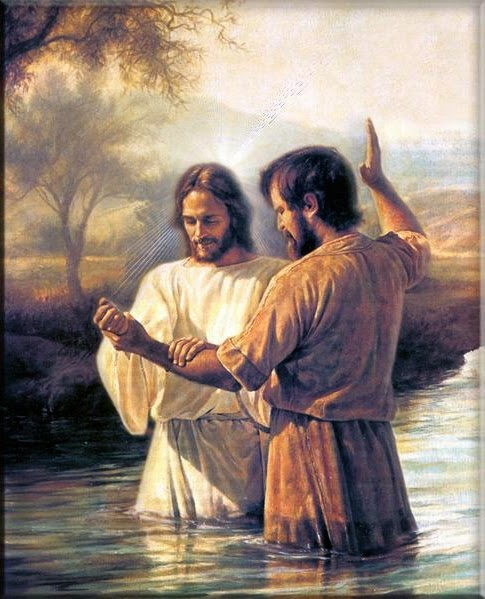
When Jesus Christ approached John the Baptist to be baptized in the Jordan River, even John hesitated, saying, "I need to be baptized by You, and do You come to me?" (Matthew 3:14). Christ's response was simple yet profound: "Suffer it to be so now, for thus it becomes us to fulfill all righteousness" (Matthew 3:15). Through His own baptism, Jesus demonstrated obedience and humility, setting a perfect example for all believers.
Why did the Savior, who was sinless, need to be baptized? His baptism wasn’t about cleansing from sin—it was about showing us the way. Much like a trailblazer marking a path through uncharted wilderness, Jesus’ baptism serves as a guide for our own spiritual journey. By being baptized, He identified with humanity, pointing all to the necessity of this sacred act to fulfill righteousness. It was an act of obedience, aligning His mortal mission with His Father’s divine plan.
Moreover, through baptism, Jesus revealed the interconnected roles of the Godhead. During His baptism, the heavens opened, the Spirit descended as a dove, and the voice of the Father proclaimed, "This is my beloved Son, in whom I am well pleased" (Matthew 3:17). This harmonious witness underscores the sacred power of baptism when done with proper authority. It was not just a ritual; it was a covenant event, uniting heaven and earth in a divine testimony.
For Latter-day Saints, following Christ’s example is not optional; it’s essential. His baptism shows that this ordinance is more than a formality—it’s an act of obedience to God’s eternal plan.
Apostolic Teachings on Baptism’s Necessity
The apostles built upon the foundation Christ laid, consistently reinforcing that baptism is essential to the Christian faith. In Acts 2:38, Peter preached powerfully to the crowd, declaring, "Repent, and be baptized every one of you in the name of Jesus Christ for the remission of sins, and ye shall receive the gift of the Holy Ghost." Peter didn’t mince words—baptism wasn’t presented as optional or merely symbolic. It was an essential step, tied directly to the remission of sins and receiving the Holy Ghost.
Some may question this connection, but Peter’s statement is both clear and authoritative. Baptism isn’t about earning salvation. It’s about aligning ourselves with the Savior’s covenant and claiming the blessings of His atonement. His message in Acts underscores that repentance, baptism, and the gift of the Holy Ghost are inseparable elements of spiritual rebirth.
Paul also provides profound insight into the meaning of baptism. In Romans 6:3-4, he writes, "Know ye not, that so many of us as were baptized into Jesus Christ were baptized into his death? Therefore we are buried with Him by baptism into death: that like as Christ was raised up from the dead by the glory of the Father, even so we also should walk in newness of life." These words reinforce the beautiful symbolism of baptism as a burial of the old, sinful self and a resurrection to a renewed, Christ-centered life.
Paul’s analogy likens baptism to a spiritual burial and resurrection. Immersion in water signifies going down into the grave, and coming out represents rising in newness of life. Like a seed buried in the soil, baptism allows believers to shed their old, sinful nature and grow into discipleship through Christ. There’s no partial commitment here; baptism is a total immersion, symbolizing full dedication to the Savior.
Both apostles teach in harmony with the Savior’s example, showing that baptism is not merely a tradition—it’s a commandment tied to repentance, covenant-making, and spiritual renewal. It’s a declaration of faith and an essential part of the journey back to God. Critics like Daniel Cooper often overlook this unified biblical teaching when dismissing baptism’s necessity.
Baptism is more than a ritual act mentioned briefly in scripture. It’s central to the teachings of Christ and His apostles, an essential step toward salvation, and a commitment to following Jesus Christ in faith, repentance, and obedience.
Historical and Early Christian Support for Ordinances
The roots of ordinances such as baptism and the laying on of hands extend deep into early Christian history. These practices were not mere traditions, but essential expressions of faith and spiritual transformation, as passed down by Christ and His apostles. Let’s explore how early Christian leaders viewed these sacred acts and how they remain central to the restored gospel today.
Early Christian Views on Baptism
From the early centuries of Christianity, baptism was viewed as far more than a symbolic act. It was seen as essential for salvation and spiritual rebirth. Tertullian, an early Christian thinker from the second century, emphasized the sacred nature of baptism as a step towards cleansing from sin and entering the kingdom of God. He described baptism as a "seal of faith" and urged believers to approach it with sincerity and preparation through repentance. For Tertullian, this wasn’t just a ritual—it was a transformation. He even suggested delaying the baptism of young children until they could genuinely repent and understand its significance.
Cyril of Jerusalem, another prominent early Christian teacher from the fourth century, taught extensively about baptism in his lectures to new converts. He called baptism "the key to the heavenly kingdom" and likened it to being buried with Christ and rising anew. Cyril’s focus was not only on the act itself but also on the preparation leading up to it. Fasting, prayer, and repentance were necessary steps to ensure that one approached baptism with the right heart and faith. Cyril taught that through baptism, the soul was washed and renewed, opening the door to join the community of Christ.
It’s clear that leaders like Tertullian and Cyril viewed baptism as an ordinance tied to covenant-making, an act of obedience to Christ’s teachings, and a necessary step along the path of discipleship. Early Christians understood John 3:5—where Jesus declared that being “born of water and of the Spirit” was essential for entering the kingdom of God—as a command, not a suggestion. This aligns perfectly with the Latter-day Saint view of baptism as a covenant ordinance, essential in fulfilling the Fourth Article of Faith.
Laying on of Hands in Early Christianity
The practice of laying on of hands, often dismissed by critics like Daniel Cooper as unnecessary, is deeply rooted in early Christian traditions. In Acts 8:17, we see the apostles Peter and John laying hands on new believers in Samaria, enabling them to receive the Holy Ghost. This wasn’t a mundane act; it was a visible and spiritual connection to divine authority. The apostles used this ordinance to bestow spiritual gifts and affirm the faith of new converts.
Early Christian communities viewed the laying on of hands as a sacred action tied to the proper priesthood authority. Without this authority, the gesture had no meaning. For example, when Simon the sorcerer offered to buy the power to bestow the Holy Ghost, Peter rebuked him, emphasizing that the gift of God couldn’t be purchased—it required divine authority. This underscores how serious early Christians were about maintaining the sacredness of this ordinance.
Beyond the New Testament, Christian writers like Hippolytus of Rome discussed how the laying on of hands was part of ordaining priests and bishops, as well as confirming members of the faith. The act symbolized the transmission of authority and blessings, mirroring the roles it still holds in Latter-day Saint practices today. Even Paul, in 2 Timothy 1:6, reminded Timothy to "stir up the gift of God, which is in thee by the putting on of my hands," highlighting its role in spiritual empowerment and fortification.
Far from being a relic of history, the laying on of hands was a key element of the early Church. It signified the continuation of Christ’s work through His chosen servants and became an outward manifestation of divine blessings. Within the Latter-day Saint faith, its use in conferring the gift of the Holy Ghost reflects the unbroken connection to apostolic authority and scriptural roots.
Early Christian leaders and believers upheld baptism and the laying on of hands as vital expressions of faith and obedience. These ordinances were—and remain—profound, covenant-making moments that reflect God’s plan for His children. Far from being extraneous practices, they are integral steps toward salvation and a life committed to Christ.
Addressing Evangelical Critiques of LDS Theology
Critiques from Evangelical Christians about Latter-day Saint (LDS) theology often stem from different interpretations of scripture and theological terms. Many of these differences are based on misunderstandings about core LDS doctrines, including the nature of God, the roles of sacred ordinances, and the principles of grace and human agency. Let’s address some of these critiques and clarify the LDS perspective.
Misunderstanding Covenant Theology
One of the most significant misunderstandings comes from how Evangelicals interpret LDS covenant theology. Critics often argue that Latter-day Saint beliefs about covenants and ordinances overcomplicate salvation. They may perceive these teachings as inconsistent with the Bible’s message of salvation by grace. But this overlooks how covenant theology, as taught by Latter-day Saints, aligns with broader biblical narratives.
In the Bible, God repeatedly establishes covenants with His people. From Adam to Abraham, Moses, and ultimately through Jesus Christ, covenants have been the framework for humanity’s relationship with God. In LDS theology, covenants aren’t about earning God’s love; they’re about deepening discipleship. Take baptism as an example: it mirrors the covenant Noah made when saving his family through water or the covenant of circumcision required of Abraham’s descendants. It’s a binding, sacred promise to follow God’s will.
Isaiah 55:3 invites followers to "incline your ear, and come unto me: hear, and your soul shall live; and I will make an everlasting covenant with you." This reflects the eternal nature of God's promises, which Latter-day Saints embrace. Covenants are not an addition to Biblical Christianity; they are its foundation. For LDS members, ordinances like baptism and temple participation are the physical expressions of these sacred commitments.
By framing covenants as an alignment with God’s plans, rather than obstacles to grace, we can see they’re deeply rooted in the scriptural tradition. They’re not works-based salvation but a practical way believers live their faith.
The Function of Ordinances in Salvation
Evangelical critics like Daniel Cooper often dismiss LDS ordinances, such as baptism or the laying on of hands, as non-essential to one’s salvation. This critique misunderstands the role these ordinances play in the Latter-day Saint faith. They aren’t seen as a checklist of requirements; instead, they’re considered sacred expressions of faith and a deep commitment to Christ.
The Bible is clear about the role ordinances have in salvation. In John 3:5, Jesus taught, "Except a man be born of water and of the Spirit, he cannot enter into the kingdom of God." This verse highlights the necessity of baptism—a belief central to LDS doctrine. Latter-day Saints also reference Acts 8:17, where the apostles laid their hands on new converts to give them the Holy Ghost. These practices are not human additions but divine commands.
Ordinances work hand-in-hand with grace, much like a wedding ceremony. Think about it: does the wedding day create the love between two people? No, but it formalizes and deepens their relationship, binding them together in a sacred commitment. Similarly, ordinances aren’t a way to "earn" salvation but a formal way to commit to following Christ.
Critics who reduce ordinances to symbolic gestures miss their transformative power. They are not only acts of obedience but moments where believers enter into a covenant relationship with God.
Salvation by Grace and Human Agency
The tension between grace and works is at the heart of many critiques of LDS theology. Evangelicals often question whether Latter-day Saints believe in “salvation by grace” or whether they seek to earn it through faithful living. However, this critique relies on a false dichotomy. For Latter-day Saints, grace and effort are not at odds—they complement each other.
Ephesians 2:8-9 reminds us, “For by grace are ye saved through faith; and that not of yourselves: it is the gift of God.” This is a core belief for Latter-day Saints. Salvation is 100% a gift made possible through the Atonement of Jesus Christ. Yet the Bible also calls us to action. James 2:26 states, "Faith without works is dead." How can we reconcile these ideas? Latter-day Saints teach that grace is the enabling power that allows us to repent, change, and become more like Christ.
Consider grace like sunlight for a plant. It’s freely given and essential for growth. But no matter how much sunlight there is, the plant must still work to extend its roots and grow toward the light. Similarly, we depend entirely on Christ’s grace, but that grace invites us to act. Repenting, being baptized, and striving to follow Christ are not efforts to earn salvation; they are the natural outgrowth of receiving His grace.
Agency, or the ability to choose, is central to LDS teachings. God’s plan allows individuals to decide for themselves whether they will accept His grace and live His commandments. This belief empowers members to grow spiritually, putting their faith into action while relying entirely on Christ for salvation.
The harmony between grace and agency creates a balanced, Christ-centered path for believers. It’s not about replacing God’s
Conclusion
The Fourth Article of Faith provides a clear and cohesive framework for spiritual transformation through faith, repentance, baptism, and the gift of the Holy Ghost. Daniel Cooper's critique, while provocative, often misrepresents these principles by isolating scripture and dismissing the role of covenant ordinances in discipleship.
For believers, these sacred actions aren't obstacles; they are expressions of grace and active faith in Christ. Through them, we align with God’s eternal plan, honor Christ’s teachings, and invite His transformative power into our lives.
I invite you to study the scriptures deeply, ponder their meaning, and seek clarity through prayer. By understanding the interconnectedness of faith, works, and ordinances, we can better explain our beliefs while strengthening our relationship with Christ. What questions do these principles spark for you? How might they deepen your connection to His gospel?